Carolyn Jean Bessette was born on January 7, 1966, in White Plains, New York. Her parents divorced when she was young, and her mother later remarried an orthopedic surgeon named Richard Freeman. The family moved to Greenwich, Connecticut, an affluent community where appearance and social standing carried significant weight.
At Boston University, Carolyn studied elementary education. Friends from those years remember her as warm, funny, and deeply loyal, a sharp contrast to the guarded public image she would later develop. After graduating, she moved to New York City and began working at Calvin Klein, where she rose from sales to a key role in the celebrity relations department. Her ability to read people and make them feel comfortable made her exceptional at her job.
Carolyn met John F. Kennedy Jr. in the early 1990s through mutual acquaintances. She treated him like a regular person, which was rare for a man who had spent his entire life being treated as a national monument. Their connection was rooted in genuine recognition, as both understood what it felt like to be constantly looked at but rarely seen.
The relationship became public knowledge, and Carolyn's life changed overnight. Paparazzi stationed themselves outside her apartment, followed her to the grocery store, and shouted at her on the street. Every photograph was published with captions that twisted her natural reactions into evidence of coldness or arrogance. She became anxious and withdrawn, dreading the simple act of leaving her home.
In September 1996, Carolyn and John married in a private ceremony on Cumberland Island, a remote barrier island off the coast of Georgia. The guest list was small, around 40 people, and no media were present. Carolyn wore a pearl-colored silk slip dress designed by her friend Narciso Rodriguez. It was the last day of real, uncompromised joy either of them would ever have.
After the wedding, Carolyn left her position at Calvin Klein. The paparazzi had made it nearly impossible for her to do her job, but losing her career also meant losing the one part of her identity that existed independently of John and the Kennedy name. She became increasingly isolated in their TriBeCa loft, canceling plans and retreating from the social life that had once brought her joy.
In February 1996, before the wedding, a video surfaced of Carolyn and John having an emotional argument on a park bench in New York City. The footage was broadcast on national television and became a permanent branding of Carolyn as difficult and unstable. The argument was a private moment between two people in pain, but it was treated as content to be consumed and judged by millions of strangers.
Despite the pressure, the love between Carolyn and John was real. John admired her intelligence and honesty, and she saw through the Kennedy mythology to the actual human being behind it. But their different temperaments created tension. John was comfortable with public life, while Carolyn desperately needed privacy. The gap between their needs became a loneliness that lived inside their marriage.

In early 1999, something began to shift. Carolyn started going out more, reconnecting with friends, and talking about the future with genuine excitement. There were conversations about starting a family and finding new professional projects. Friends described a couple who seemed lighter and more connected, and those who loved Carolyn allowed themselves to hope the worst was behind her.
On the evening of Friday, July 16, 1999, John planned to fly from Fairfield, New Jersey, to Martha's Vineyard for his cousin Rory Kennedy's wedding. He would be piloting his Piper Saratoga, with a plan to drop off Carolyn's sister, Lauren Bessette, at the Vineyard before continuing to Hyannis Port. Carolyn did not want to go. She was tired and had expressed reluctance about flying with John, who was a relatively inexperienced pilot. But she went because she loved him and because her sister was coming.
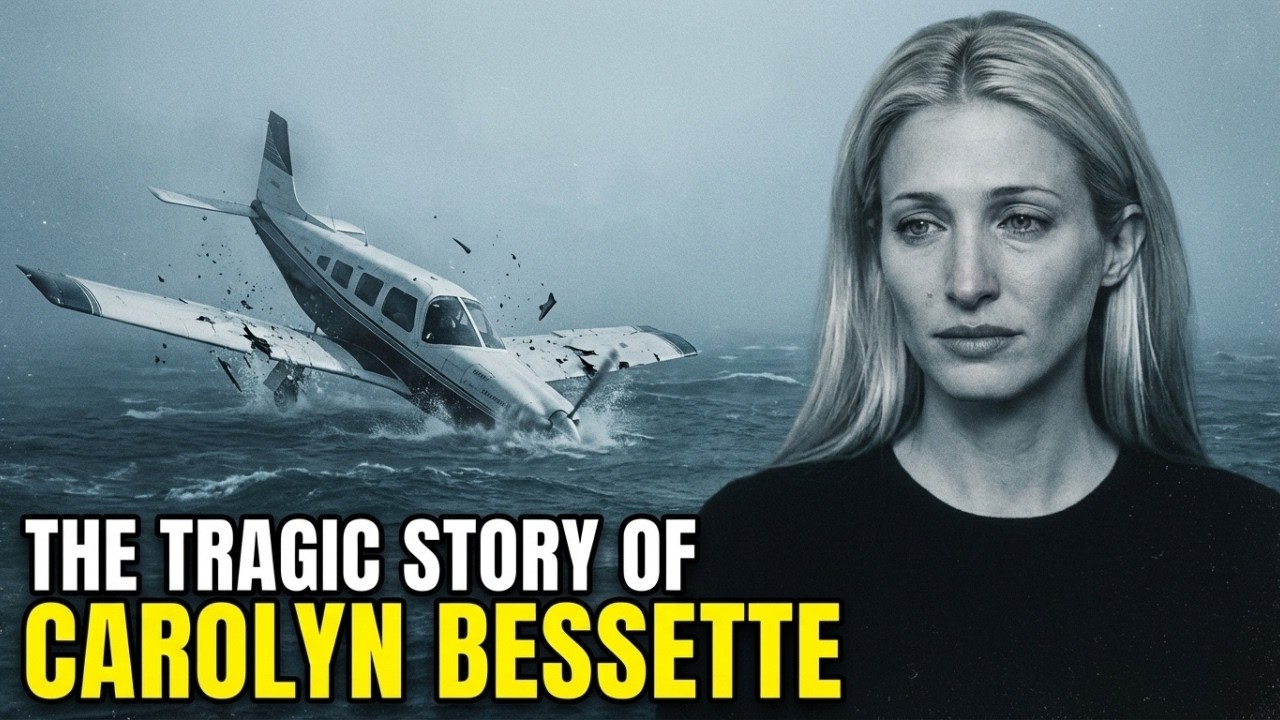
The evening was hazy, with reduced visibility over the water. Experienced pilots later said the conditions were not ideal for visual flight. The plane took off at approximately 8:38 p.m. and turned northeast toward the Vineyard. As it approached the dark waters south of Martha's Vineyard, something went wrong. The plane began descending in what aviation experts described as a graveyard spiral, a condition in which a pilot unable to see the horizon loses all sense of up and down. The plane plunged into the Atlantic Ocean, leaving no possibility of survival.
John F. Kennedy Jr. was 38 years old. Carolyn Bessette Kennedy was 33. Lauren Bessette was 34. The Coast Guard launched a search and rescue operation, and for five agonizing days, the world watched and waited. The wreckage was found on the ocean floor on July 21, 1999, and the bodies of John, Carolyn, and Lauren were recovered shortly afterward. Their ashes were scattered at sea from the deck of the USS Briscoe in a private ceremony.

The public mourned JFK Jr., the golden son of Camelot. Carolyn was mentioned as a supporting character in his story. But the people who knew her mourned a different loss entirely. They mourned a daughter, a sister, a friend, a woman whose warmth and humor the public had never seen. They mourned the future that had been taken away, the Carolyn who had been beginning to emerge again in the months before the crash.
In the years since, there has been a slow process of reconsideration. Friends and family have spoken about who Carolyn really was, and the gap between the public image and the private person has become clearer. The woman the world called cold was one of the warmest people her friends had ever known. The woman the world called difficult was a person in genuine distress, struggling under a weight of public scrutiny that would have broken anyone.
Carolyn lost the right to be ordinary. She lost the right to have a bad day without it being documented, to cry in public without being photographed, to argue with her husband without it being broadcast on national television. She lost the right to be imperfect, to be anxious, to be any of the messy, complicated things every human being is. The Kennedy name gave her access to a world of privilege, but it took from her the freedom to be herself.
The sunglasses she wore were not a fashion statement. They were a shield, the last barrier between her inner world and the world trying to devour it. Behind that shield was a woman of extraordinary emotional depth who had been forced to suppress that depth in public because showing it would only give the media more ammunition. She lived behind glass, visible to everyone and reachable by no one.
Carolyn Bessette Kennedy was 33 years old when she died. She was a daughter who loved her mother, a sister who would have done anything for her siblings, a friend who showed up and cared in ways that were quiet and constant. She was a professional who earned her success through talent and hard work, not through her appearance. She was a wife who loved her husband honestly and fought for their marriage every day.
She was a private person who was denied the most basic human right of privacy. And she bore that denial with a grace that the world mistook for coldness because it did not know what it was looking at. She was not a symbol or an icon. She was Carolyn. Just Carolyn. A woman who deserved to grow old, to have children, to live her own story in her own way. She did not get that chance. But we can say her name and mean the real her, not the image, not the headline, not the photograph, but the actual woman who stood behind all of it, waiting to be seen.