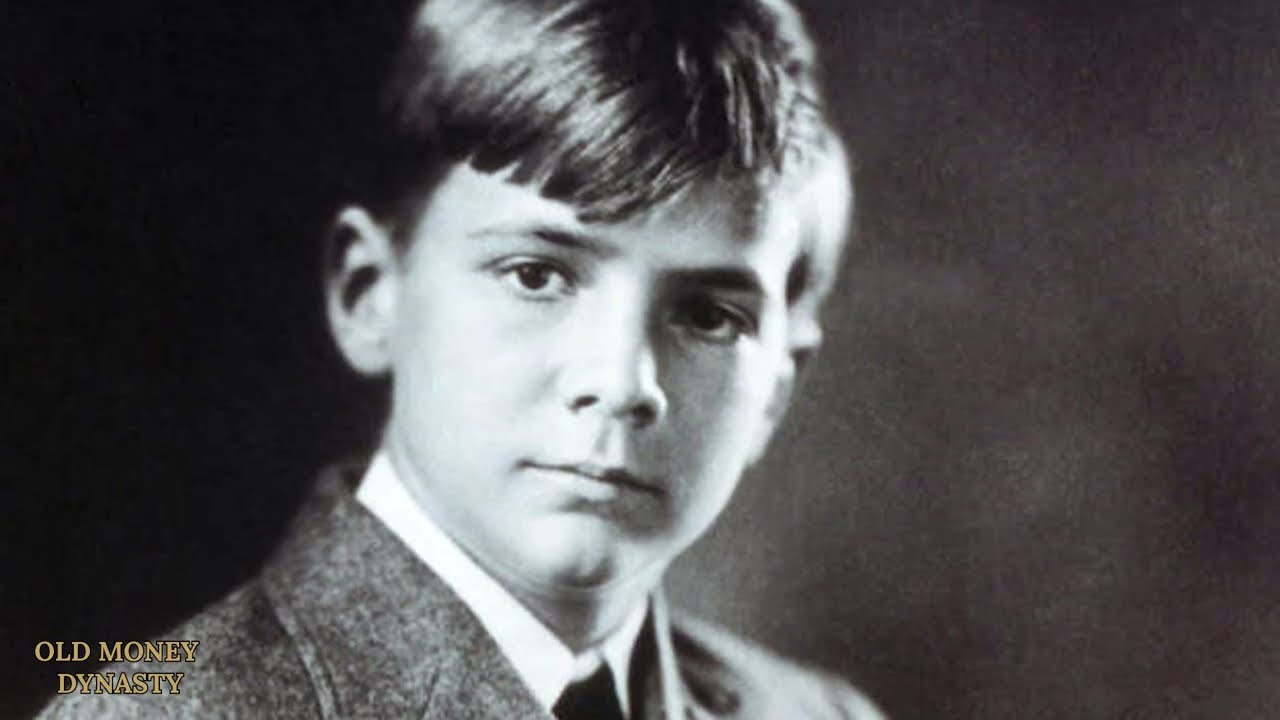
When his body arrived at the morgue in Houston in April of 1976, the staff could not confirm who he was. The richest man in America weighed barely 90 lb. His hair fell past his shoulders. His fingernails had curled. The FBI was called in to match his fingerprints because nothing else about him was recognizable. He was 70 years old. Forty years before that morning, this same man had been the most celebrated pilot in the country. He had set the world speed record in a plane he designed himself. He had flown around the earth in just over 91 hours, come home to a ticker tape parade in New York, and collected a Congressional Gold Medal before he turned 35. He had produced the most expensive movie Hollywood had ever seen. He had dated its most famous actresses. He had owned an airline, a film studio, and a defense company that helped arm the American military. Then he disappeared. Not all at once. But by the time he died, the man behind those achievements had been invisible for over a decade. Sealed inside a hotel penthouse with the curtains drawn, injecting codeine, surrounded by a handful of Mormon assistants who controlled every door between him and the outside world. I have spent a long time with this story. The part that I find hardest to explain is not the wealth or the airplanes or the Hollywood years. It is the fact that the same trait, the obsessive need to control everything he touched, built a $2.5 billion empire and then destroyed the man who owned it. This is the story of how that happened. Chapter 1, The Ghost in the Penthouse. For the last 6 years of his life, Howard Hughes moved from one hotel penthouse to the next across the Western Hemisphere. Always the top floor, always behind covered windows, always attended by the same small group of men who decided what he ate, what he was injected with, and who was allowed to know where he was. He left Las Vegas in November of 1970. The departure was planned in secret and carried out in the middle of the night. His attendants loaded him onto a stretcher, brought him down a service elevator, and drove him to a private airfield outside the city where a plane was waiting. He had spent 4 years in a sealed suite on the ninth floor of the Desert Inn reshaping the Las Vegas Strip with over $300 million in acquisitions, and he left it all without a word to anyone outside the room. Robert Maheu, the man who had run his entire Nevada operation, was removed from his position in the same week. He never received a phone call from Hughes explaining why. Jean Peters, the actress Hughes had married in 1957, was not told her husband was leaving the country. She filed for divorce the following year. The marriage had been conducted largely at a distance for most of its 14 years through intermediaries and telephone calls. Peters rarely spoke about it publicly. By most accounts, the two had been unreachable to each other for a long time before the paperwork made it official. The first stop was the Bahamas. Hughes took over the top floor of the Britannia Beach Hotel and closed the doors. The room was arranged according to a set of rules he enforced without exception. The windows were sealed with tape and covered with heavy material to block all outside light. A single reclining chair sat in the center of the room surrounded by a zone of stacked paper towels and tissues that served as an insulation barrier between him and everything else in the space. His aids were not permitted to touch him, hand him objects directly, or enter the zone without following a specific sequence of steps he had written out on a lined notepad. He watched movies, the same ones over and over. His favorite was a Cold War submarine thriller called Ice Station Zebra, which by some accounts he watched more than 150 times. He would sit in the dark for hours in the chair with the screen running, issuing handwritten instructions on yellow pads that his men would collect and carry out. The memos covered decisions worth millions of dollars in the same handwriting as instructions about the precise way a can of fruit should be opened before it entered the room. The script grew harder to read as the years went on, but the compulsion to dictate every detail never stopped. That pattern followed him from country to country. Nicaragua came next. He was living at the Intercontinental in Managua when, just after midnight on December 23rd of 1972, a massive earthquake tore through the city. The building shook violently, walls cracked open. The surrounding blocks collapsed into rubble. Thousands of people in Managua died that night. The Intercontinental held because it had been built to resist seismic damage, but the upper floors were badly shaken. His men carried Hughes down the stairwell in the dark and got him onto a plane. He was flown to London. Then he moved to Vancouver, then to the Fairmont Princess in Acapulco. Each place looked the same from the inside. The top floor closed off, the windows blocked, the chair, the tissue barrier, the television, the codeine. He had not appeared in public since the early 1960s. The men around him, members of the Church of Latter-Day Saints, handled every transaction, every visitor, every piece of food that entered the suite. They wrapped his utensils in paper before placing them inside the sterile zone. They opened doors with their elbows so he would not have to touch the handles. Some biographers would later argue that these men had deliberately cut Hughes off from the outside world to protect their own access to his fortune. Others believed they were following his orders to the letter exactly as he demanded. The question of who was actually in control inside those rooms has never been answered. His body was coming apart. By the mid-1970s, he had stopped bathing. His teeth had gone dark. He lived on ice cream, chicken, and milk, and sometimes went days without eating at all. He injected codeine using glass syringes fitted with reusable metal needles, and the needles had a tendency to snap off inside the flesh. After his death, doctors found five broken tips still embedded in his arms. The man who had organized his entire existence around the fear of contamination had become, at the end, the thing he spent his life trying to keep out. The medical examiner in Houston listed kidney failure as the cause of death. But the collapse behind that diagnosis had been building for 30 years. It began on a July afternoon in 1946 on a test flight over Beverly Hills when his airplane dropped out of the sky and hit a house. Chapter 2: The Bit That Paid for Everything. His mother was afraid of everything that could make her son sick. Allene Gano Hughes monitored every meal, every playmate, every surface the boy touched. She checked him for signs of illness the way other mothers checked for bruises. She was convinced that polio or typhoid or some unnamed infection carried on the hands of the neighbors' children would find its way into her house and take the only child she had. This was Houston, Texas in the early 1900s. Childhood disease was a genuine threat. Infant mortality in the state was still brutally high. But even by the standards of a dangerous time, Aline's fear of contamination went further than most. It shaped the way her son understood the world. By the time he was old enough to understand what germs were, he had already learned that the air around other people could not be trusted. It would take decades for anyone to see what that lesson had done to him.
Chapter 2, The Bit That Paid for Everything. His mother was afraid of everything that could make her son sick. Allene Gano Hughes monitored every meal, every playmate, every surface the boy touched. She checked him for signs of illness the way other mothers checked for bruises. She was convinced that polio or typhoid or some unnamed infection carried on the hands of the neighbors' children would find its way into her house and take the only child she had. This was Houston, Texas in the early 1900s. Childhood disease was a genuine threat. Infant mortality in the state was still brutally high. But even by the standards of a dangerous time, Aline's fear of contamination went further than most. It shaped the way her son understood the world. By the time he was old enough to understand what germs were, he had already learned that the air around other people could not be trusted. It would take decades for anyone to see what that lesson had done to him. Howard Robard Hughes Jr. was born in 1905, the only child of Aline and Howard Sr. The family was comfortable, but not yet extraordinary. The thing that would change that was a piece of metal that his father had not yet finished designing. Howard Hughes Sr. had come to East Texas chasing the Spindletop oil strike of 1901, when a geyser of crude erupted over 100 ft into the air above Beaumont and triggered the Texas oil boom. He worked as a wildcatter, drilling for oil with the standard equipment of the era, a blunt rotating tool called the fishtail bit. In soft earth, it worked well enough. When it hit hard rock, it stopped. Most wildcatters accepted that as a limit. Hughes Sr. treated it as a problem to be solved. By 1908, he had designed something new. A drill bit with two interlocking steel cones, each one studded with rows of cutting edges that could chew through the hard formations the fishtail could never reach. He called it the Sharp Hughes rock bit after himself and his partner Walter Sharp. It was not a modest improvement. It changed the physics of what a drill could do. Wells that had been impossible to reach were suddenly open. And the oil underneath them was suddenly available to anyone willing to pay for the tool that could get there. The tool was the key, but the business model was the fortune. Hughes Sr. did not sell the bits. He leased them. Drilling companies paid as much as $30,000 per well to rent the equipment, and when the job was finished, the bit came back. He held the patent. He controlled the supply. Every barrel of hard rock oil pulled out of the ground anywhere in the country paid a royalty to Hughes Tool Company, which he founded with his partner Walter Sharp. When Howard Hughes Sr. died in 1924, he left his only child a fortune built on that lease model. The company had no real competition in the hard rock drilling market. The patent was ironclad. The royalties were enormous. And the 18-year-old who inherited it all had no interest in any of it. Chapter 3: The Fastest Man Alive. Howard Hughes dropped out of Rice University shortly after his father's death. He was 19 years old. He had inherited 75% of Hughes Tool Company, worth roughly $4 million by some estimates at the time, and he borrowed against it to buy out the remaining shares from his relatives. Then he did something that no one in the family expected. He moved to Hollywood. He had no training in film, no connections in the industry, and no idea how to make a movie. He had money, a compulsion to control every detail, and a willingness to spend whatever it took to get what he wanted. That turned out to be enough. His first two films lost money. His third, a war comedy called Two Arabian Knights, won the Academy Award for Best Director and made a profit. His fourth, a silent film called The Racket, was nominated for Best Picture. Then, in 1930, he made Hell's Angels, a First World War aviation epic that took 3 years to shoot and cost nearly $4 million, an astronomical sum for the era. It made him famous. It also established the pattern that would define the rest of his life: the absolute refusal to accept that a problem could not be solved by throwing more time, more money, and more obsessive attention at it. The film took so long to finish that the studio system changed around him. The silent era ended while he was still shooting. He had to re-shoot large portions with sound. He hired new actors, rebuilt sets, and spent money at a rate that made the studio heads in Hollywood laugh out loud. When the film was released in 1930, it was a hit. It made money. It also established the template for how he would operate for the rest of his life. He was not a man who managed his obsessions. He was a man who was managed by them. Chapter 3: The Plane That Ate Itself. The H-1 Racer was the first thing he designed that made him a national name. He built it in 1935, when he was 29, with a small team of engineers working in a rented hangar in Glendale, California. The plane was built around a single idea: reduce drag until nothing was left but speed. The wings were so short they looked almost clipped. The fuselage was a smooth teardrop of wood and canvas over a steel frame. The landing gear was retractable, which was still unusual for the time. The engine was a 700 horsepower radial that pushed the airframe to speeds that had never been reached before. On September 13th, 1935, Hughes climbed into the cockpit, took the H-1 Racer up over the dry lake beds outside Los Angeles, and came back down with a new world speed record of 352 miles per hour. He was 29 years old. The flight made him a national figure. It also gave him something he wanted even more than the record. It gave him control. In the air, every variable was his to command. The plane did what he told it to do because he had designed it, built it, and flown it himself. The machine was an extension of his will in a way that nothing else in his life ever was. That feeling, the total command of a machine moving at 350 miles an hour, would become the only thing that reliably brought him peace. It was also the thing that nearly killed him. On July 7, 1946, Hughes was at the controls of the XF-11, a prototype reconnaissance aircraft built for the Army Air Forces. It was a massive twin-engine plane with a wingspan of over 100 ft, designed to fly faster and higher than anything in the American arsenal. He had taken it up for its first test flight that morning. The plane developed a problem in the hydraulics. The rear landing gear would not retract. The flight was supposed to be a simple check of the aircraft's systems. Hughes had ordered the plane built to his own specifications and had personally supervised every stage of its construction. He believed it was the fastest, most advanced aircraft in the world. He was not wrong about that. But on that day, the machine he had designed to fly at 400 miles per hour was about to become a coffin. He made the decision to land the plane back at the airfield. He came in low over the San Fernando Valley, heading toward the Santa Monica Airport. The landing gear was down, the approach was steady. Then the plane began to nose down. The engine had lost power. He was too low to recover. The aircraft clipped a house on Whittier Drive in Beverly Hills, tore through the roof of a second home, and came to rest in a third. The pilot inside was not expected to live. Chapter 3: The Crash That Made Him. The crash of the XF-11 in July of 1946 should have killed Howard Hughes. He was flying a prototype reconnaissance aircraft he had designed for the Army Air Forces, a plane built to outrun anything in the sky. The XF-11 was a machine of extraordinary complexity, a twin-engine aircraft with counter-rotating propellers and a pressurized cabin that could carry a crew of six over 5,000 miles at 400 miles per hour. It was the kind of project that only a man with Hughes' resources could have built. It was also the kind of project that only a man with Hughes' obsessive attention to detail could have kept in the air. On July 7th, 1946, he took it up on its first flight. The flight was supposed to be a routine test. The plane lifted off from the Hughes Aircraft facility at Culver City, California, and climbed toward the San Fernando Valley. Then, about 20 minutes into the flight, the controls began to feel wrong. The hydraulic system was failing. The plane began to yaw, sliding sideways through the air instead of cutting through it. Hughes radioed the ground to say he was coming back. He was about 5 miles from the airport when the nose dropped. The plane lost altitude fast, sheared through the tops of three houses in the Beverly Hills neighborhood of Whittier, and slammed into a fourth home at an estimated 120 miles per hour. The impact tore the wings off, ripped the fuselage apart, and scattered burning wreckage across the street. The house was owned by a man named Charles Meyer, who was at home at the time with his wife and two children. The family was in the kitchen when the plane hit. The engine came through the roof and came to rest in the living room. The house caught fire. The family escaped through a window. Hughes was pulled from the wreckage by a neighbor who ran toward the crash site. His clothes were on fire. His skull was fractured. His collarbone was broken in several places. He had third degree burns over his chest and arms. The doctors who treated him at the hospital that night did not expect him to survive. He was in constant pain for the rest of his life. The crash was the turning point. The pain was the beginning of the codeine habit that would follow him for the next three decades. The burns left him with a permanent need for morphine and its derivatives. The head injury may have done more damage than anyone realized at the time. He was prescribed codeine to manage the pain from his injuries. He was still taking it, in ever increasing doses, when he died. The plane crash also marked the moment when the fear of contamination that had followed him since childhood began to take over his life. He had always been particular about what he touched. After the crash, the particularity became a prison. He began to refuse to sign documents, handle money, or touch anything that had passed through another person's hands. He wore the same clothes for weeks at a time because he could not bear the idea of new fabric against his skin. He stopped letting anyone see him. The crash did not cause the obsessive compulsive disorder that would eventually consume him. But it was the point at which the condition stopped being a quirk and started being a cage. Chapter 3: The Machine That Built the Man. The money that funded Howard Hughes's entire life came from a single source. His father's company, Hughes Tool, was a monopoly. The Sharp-Hughes rock bit was the only tool that could drill through the hard rock formations that covered most of the American Southwest. Every major oil company in the country had to rent it from his father. The patent expired in 1929, but the company had a 30-year head start on every competitor in the world. By the time Howard Hughes inherited the company at 18, he had already been given a fortune that most people could not imagine. But he did not want to run his father's company. He wanted to make movies. He moved to Hollywood in 1925 with no experience in film production and no interest in learning the business from the bottom up. He bought into a small studio, hired a team of writers and directors, and began producing pictures that were built around a single idea: total control. He fired directors who argued with him. He rewrote scripts at night. He shot scenes over and over until he got what he wanted, and he often did not know what he wanted until he had seen it on film. His first major production, Hell's Angels, took three years to make and cost $3.8 million, an astronomical sum for a silent film in 1930. He bought 87 airplanes, hired 137 pilots, and shot the aerial sequences over the skies of Los Angeles. The film was nearly complete when the first talking pictures were released and made silent films obsolete overnight. He reshot the entire movie with sound. It was the most expensive film ever made at the time of its release. It lost money. He did not care. He had already moved on to the next thing. Aviation was the obsession that never left him. In 1935, he set a world speed record in a plane he had designed and built himself, the H-1 Racer. The following year he set a transcontinental record, flying from Burbank to Newark in just over 9 hours. In 1938, he took a Lockheed 14 and turned it into a custom machine with extra fuel tanks and a bigger engine. He flew it around the world in 91 hours and 14 minutes, breaking the previous record by nearly 27 hours. He was a national hero. The ticker tape parade in New York was seen by an estimated 2 million people. He was given a Congressional Gold Medal by a joint session of Congress. He was 33 years old. The crash that would change everything happened 8 years later, on July 7th, 1946. Hughes was testing the XF-11, a reconnaissance aircraft built for the Army Air Forces. The plane had been designed to carry a crew of two and a camera system that could photograph 125 square miles of territory in a single pass. It was one of the most advanced aircraft in the world. It was also, on that particular afternoon, not ready to fly. The test flight was supposed to be a simple taxi test. Hughes took it into the air instead. The XF-11 had a flaw in its design. The rear propeller was driven by a shaft that ran through the fuselage, and the shaft had a tendency to fail. It had failed on the ground during engine tests. It had failed in the air during earlier flights. Hughes knew about the problem. He had been warned about it repeatedly. He climbed into the cockpit anyway. The flight lasted about 4 minutes. The rear propeller went into reverse, the plane began to vibrate violently, and the controls stopped responding. Hughes was flying low over the San Fernando Valley when the aircraft started to come apart. He tried to turn back toward the airfield. The plane was losing altitude too fast. He saw a golf course below and tried to bring the crippled aircraft down on the fairway. He almost made it. The plane clipped a house on Whittier Drive in Beverly Hills, tore through a hedge, and crashed into the back of a second house on Lindbrook Drive. The impact sheared off the roof and the plane exploded into a fireball. A 19-year-old Marine corporal named William Durkin was inside the house at the time. He was asleep in a bed on the second floor when the plane came through the wall. He was killed instantly. Hughes was pulled from the wreckage by a neighbor who dragged him away from the burning fuel. He had a broken collarbone, a collapsed lung, and third degree burns over most of his body. The doctors who treated him did not expect him to survive the night. He was in the hospital for weeks. He nearly lost his life, and he lost something else that afternoon. The accident was not the beginning of his obsessive-compulsive disorder. The signs had been there for years. But it was the moment the pain became permanent. The plane crash of 1946 was the hinge of his life. Everything before it led up to the moment of impact. Everything after it was shaped by the wreckage. He survived the crash with burns across his chest, a broken collarbone, and eight broken ribs. He was given morphine for the pain. He would spend the rest of his life dependent on opiates. The plane he was flying that day was the XF-11, a reconnaissance aircraft he had designed for the US Army Air Forces. He had been testing it over Beverly Hills when the controls locked and the plane went into a dive. He tried to bring it out. The plane did not respond. He tried again. Nothing. He had a choice: stay with the plane and die, or try to force it down on the golf course below. He chose the golf course. He nearly made it. The plane clipped a house, tore through a row of trees, and came apart in a shower of debris. Hughes was pulled from the wreckage with a collapsed lung, a broken collarbbone, and third degree burns over most of his body. He had broken both arms, both legs, and several ribs. His pelvis was fractured. His skin was burned so badly that the doctors did not expect him to survive the night. He did survive. He spent five weeks in the hospital, and when he came out, he was still in pain. The pain never went away. He had been prescribed codeine for the injuries. The codeine was the beginning of the end. Chapter 3: The Boy Who Could Not Be Touched. The plane crash was not the first time his body had betrayed him. It was not even the first time he had nearly died in a machine he had built. But it was the moment when the two parts of his life, the part that could not be touched and the part that could not be stopped, finally merged into one. Before the crash, his obsessions were the engine of his success. After the crash, they became the engine of his destruction. The crash happened on July 7th, 1946. Hughes was testing the XF-11, a reconnaissance aircraft he had designed for the Army Air Forces. The plane had two engines, a pressurized cabin, and a top speed of over 400 miles an hour. It was one of the most advanced machines in the air. On the first test flight, over the hills of Beverly Hills, the rear propeller pitch reversed in flight. The plane went into a dive. Hughes tried to correct, but the controls had locked up. He ejected the landing gear, but the plane kept falling. He was too low to bail out. He aimed for the golf course of the Los Angeles Country Club, but the plane did not make it that far. It clipped a house at 300 miles an hour, tore through a bedroom, and came apart in the street. The house belonged to a woman named Wilbur May. She died in the crash. Hughes survived, pulled from the wreckage by a passing Marine who had seen the plane go down. He had a collapsed lung, a broken collarbone, and burns over most of his body. His ribs were broken. His left arm was crushed. His skin was so badly damaged that doctors could not even take a pulse from his hands. The crash was reported around the world. He was in the hospital for weeks. The accident itself was the second time he had nearly died in an airplane that year. In January, he had survived a hard landing in a Lockheed F-11 that had left him with a fractured pelvis. He had been back in the air within weeks. This time, the recovery was slower. The pain was worse. And it was during this recovery that the first signs of the drug habit that would eventually consume him began to take hold. He was given codeine to manage the pain from his injuries. The codeine did not just dull the physical pain. It quieted the noise in his head. The obsessive loops, the rituals, the fear of contamination that had been with him since childhood, all of it faded when the drug was in his system. The relief was so complete that he never stopped. From that point on, the addiction and the compulsion fed each other. The more he needed the drug, the more he needed to control the world around him. The more he controlled the world around him, the more isolated he became. And the more isolated he became, the more he needed the drug to take the edge off the fear that had followed him his entire life. The empire was still growing. The money was still coming in. But the man at the center of it was already gone. Chapter 3: The Boy Who Built a Fortune on Other People's Fear. The story of Howard Hughes is not a story about money. It is a story about what happens when a brilliant mind with unlimited resources and a pathological need for control meets the limits of what control can actually do. The money was always there. The question was what it did to the man who had it. The fortune came from his father's drill bit. When Howard Hughes Sr. died in 1924, he left his son a company that had a near monopoly on the technology required to drill through hard rock. The younger Hughes was 18 years old. He had no college degree, no business experience, and no interest in the oil business. He had inherited a fortune worth roughly $4.5 million at the time, which is something like $80 million today, and he had no intention of spending the rest of his life drilling holes in the ground. He bought out the other shareholders in Hughes Tool. He put the company on autopilot and turned his attention to the things that interested him. The first was film. He moved to Hollywood in 1925 and began producing movies with the same intensity he would later bring to aviation. He made a name for himself with a series of films that pushed the boundaries of what could be shown on screen. His 1932 film Scarface, about a fictionalized Al Capone, was so violent by the standards of the era that the production code office refused to approve it. He held it back, re-edited it, and released it anyway. It was a hit. Then he made Hell's Angels, a First World War aviation epic that took 3 years to shoot, involved 200 pilots, and nearly killed several of the stunt fliers. He fired the original director, took over the production himself, and spent over $4 million of his own money, an enormous sum for the era. The film made him a household name. But the thing that made him famous was not the movie itself. It was the fact that he had flown the most dangerous sequence in the film himself, and that he had crashed the plane doing it. He walked away from the wreck with injuries that would trouble him for the rest of his life. The story of the crash and the recovery became part of his legend. The plane, a modified Boeing 100, had been built for speed. It was a pursuit plane, designed to climb fast and outrun anything in the sky. Hughes had pushed it to 355 mph over the course of the test flight, a record at the time. Then, over the hills above Beverly Hills, the engine lost power. The plane dropped toward the neighborhood below. Hughes stayed with it, trying to guide the aircraft toward the only open space he could see, the golf course of the Los Angeles Country Club. He almost made it. The plane clipped the roof of a house on Whittier Drive, tore through a tree, and came to rest against a second house. The impact sheared off the landing gear and ripped the wing apart. The fuselage broke in half. Hughes was pulled from the wreckage by a Marine corporal who lived nearby. The pilot who had survived the crash was not the same man who had taken off 20 minutes earlier. His collarbone was broken in multiple places. His ribs were cracked. His chest was crushed. His skin was burned over most of his body. He had a collapsed lung and a broken arm. He had been thrown clear of the wreckage, but not before the fuel tank had ignited. The doctors at Cedars of Lebanon Hospital did not expect him to live. He would spend the next 6 weeks in the hospital, and the pain from his injuries would never fully leave him. He would carry the consequences of that afternoon for the rest of his life. But the crash did not stop him. It did not even slow him down for long. Within a year, he was back in the cockpit of a new aircraft, pushing it faster than before. The same obsessive need for control that had driven him to design his own planes and set his own records had also driven him to survive the crash that should have killed him. He had been given a second chance, and he used it to build the most powerful corporate empire in America. But the crash had done something else too. It had given him a reason to fear the very thing he loved. He had spent his entire adult life in the air. After that afternoon, he would never again fly a plane without knowing, in his bones, that the machine could kill him. The compulsion that had made him a legend was the same one that would eventually destroy him. The need to control everything, to eliminate every risk, to make the world around him obey his rules, was the engine behind his entire fortune. And it was the same engine that would drive him out of the world, one closed door at a time. Chapter 3: The Man Who Bought the Sky. The money that built the empire came from the drill bit. But the empire itself was built on something else: the refusal to accept that the rules applied to him. By the time he was 30, Hughes had inherited the family fortune, bought out his relatives, and turned Hughes Tool into a cash machine. The company was generating so much revenue that he did not need to borrow from banks or answer to shareholders. That independence became the foundation of everything he did next. He bought a movie studio and produced films that won Oscars. He bought an airline and forced it into profitability by ignoring the regulations that grounded his competitors. He bought a defense company and turned it into one of the largest military contractors in the country. And he did it all with the same intensity he brought to everything else. He would disappear into a screening room for days at a time, watching the same footage over and over until he could recite every frame. He rewrote scripts, fired directors, and drove actors to the edge of exhaustion with takes that ran into the dozens. He was not a genius. He was not a visionary. He was a man with an almost superhuman ability to focus on a single problem until he had solved it or destroyed it, whichever came first. That trait made him a fortune. It also made him a prisoner. The same mind that could hold the design of a drill bit or an airplane wing in perfect detail could not let go of a single detail of his own body. The same discipline that let him build an airline from a single aircraft and turn it into a global carrier was the discipline that would eventually lock him inside a single room. Chapter 3: The Machine That Ate the Sky. The H-1 Racer was not a beautiful airplane. It was a machine built for one purpose. Hughes designed it with a single obsession: to make it as fast as possible. He had the plane built to his own specifications in a hangar in Glendale, California, working with a small team of engineers who had learned that their boss did not accept the word impossible. The H-1 was small, compact, with a radial engine and a set of wings so short they looked almost like an afterthought. The landing gear retracted into the fuselage, a feature that was still unusual in the mid-1930s. Every surface was flush-riveted, every seam smoothed over. It was not a beautiful airplane. It was a machine built to do one thing. On September 13th, 1935, Hughes climbed into the cockpit of the H-1 at a dry lake bed outside Santa Ana, California, and pushed the throttle forward. The plane was built to break the world speed record, and it did. He hit 352 miles per hour, shattering the previous mark by nearly 30 mph. The record made him a national figure overnight. But he was not done. In 1937, he set a new transcontinental speed record, flying from Los Angeles to New York in 7 hours and 28 minutes, beating the old mark by more than an hour. Then in July of 1938, he did the thing that made him a global celebrity. He and a crew of four took a Lockheed Model 14 Super Electra, modified it with extra fuel tanks and a navigator's table, and flew it around the world. The trip took 91 hours and 14 minutes. He came home to a ticker tape parade in New York City and was awarded a Congressional Gold Medal by a joint session of Congress. He was 32 years old. He had spent his entire adult life up to that point trying to prove that he was not the sickly child his mother had feared he would be. And he had done it by building the fastest, the most advanced, and the most dangerous machines that money could buy. Chapter 3: The Man Who Built the Future. The company his father left him was the foundation of everything. When Howard Hughes Sr. died in 1924, he left his only child 75% of the Hughes Tool Company. The will was executed when Howard Jr. was 18. He dropped out of Rice University and moved to California, where he bought a film studio and started making movies. The money from the drill bit company funded everything that came after. It was the engine that paid for the movies, the planes, the airline, the casinos, and the paranoia. Without Hughes Tool, there is no Howard Hughes. Not the way we remember him. The company's patent on the rock bit expired in 1929, but the business model did not. Hughes Tool had a near monopoly on the technology that made deep oil drilling possible. Every major oil field in the world paid a toll to the company. The cash flow was enormous. The company was worth roughly $2.5 billion by the time of his death, and it was the only thing that never stopped making money. The fortune was the foundation. But the foundation was not what defined him. What defined him was the need to push the machines he built to the very edge of what they could do, and then to push himself past that edge. Chapter 3: The Man Who Flew Too Much. He was 14 when he declared that he would become the best golfer in the world. He was 15 when he decided to become the best pilot. He was 16 when his father died and he inherited 75% of Hughes Tool, which was then worth roughly $580,000. By the time he was 21, he had bought out all the other shareholders. He was the sole owner of the company that held the patent on the Sharp Hughes rock bit. The money that came out of that patent was enormous. It funded everything that followed. The movies. The planes. The airline. The defense contracts. The entire empire was built on a single piece of metal that chewed through rock. He moved to Hollywood in 1925. He was 20 years old. He had a fortune, a taste for the movie business, and no interest in being told what to do. He produced films that lost money and films that made it back. He bought a film studio, bought out the partners, and turned it into a personal production company. He made a war picture called Hell's Angels that took 3 years to shoot and cost $3.8 million, a fortune at the time. He spent $400,000 on a single scene involving a crashing plane. He shot and reshot the film until the studio was nearly bankrupt. When it was released in 1930, it was the most expensive movie ever made. It became one of the biggest hits of the year. He made Scarface in 1932, a gangster picture that the censors tried to bury, and he held the release for a year before it finally came out. He produced The Front Page, a comedy about newspaper reporters based on the play by Ben Hecht and Charles MacArthur. He bought a controlling stake in RKO Pictures in 1948, which made him the first person in Hollywood to own a major studio outright. But the movies were a side project. The thing that held his attention completely, the thing he could not stop building, improving, and pushing beyond every limit he had reached before, was the airplane. Chapter 3: The Plane That Couldn't Crash. In 1934, Hughes bought a Boeing P-26 fighter and entered the All Star Air Race in Santa Monica. The plane was underpowered for the event, and he knew it. He finished the race in third place. The winner was a man named Roscoe Turner, flying a machine Hughes believed was inferior to his own. He was not angry about losing. He was angry about the reason. The airplane was the limit. The engine was the limit. He decided that if he was going to be the best pilot in the world, he would have to build the plane that could do it. He bought a small aircraft company in Glendale, California. He hired a team of engineers and told them what he wanted: the fastest plane in the world, built around him. The result was the H-1 Racer, a small, polished aluminum aircraft with a 700 horsepower radial engine, retractable landing gear, and a body so compact that the pilot lay nearly flat inside the fuselage. It looked like a missile with wings. On September 13th, 1935, he climbed into the cockpit at a dry lake bed outside Santa Ana, California, and pushed the throttle forward. By the time he pulled back, he had reached 352 miles per hour. The previous record had been 314. He was 29 years old. He had never trained as a test pilot. He had no formal engineering degree. He had taught himself to fly 4 years earlier by taking delivery of a plane he had bought, and refusing to leave the airfield until he had figured out how to get it off the ground. He crashed it into a hedge on his first attempt. The next year, he set the transcontinental speed record by flying from Burbank to Newark in 9 hours and 26 minutes. He was not a natural pilot. He was a relentless one. He studied the mechanics of flight the way other men studied the stock market. He read everything, flew constantly, and pushed the machine to the edge of its design limits. He had learned to fly in 1931 by lying about his age and taking lessons at a small airfield near his home. Within a year, he was flying in air races. Within two, he was designing his own aircraft. By 1935, he had built a plane called the H-1 and flown it to a world speed record of 352 miles per hour. The H-1 was a machine of radical simplicity. It had a short, rounded fuselage, a single radial engine, and a set of wings so small they looked like they belonged on a fighter jet. It was designed for one purpose only, to go fast. And it did. The H-1 set a new transcontinental speed record in 1937 when he flew from Los Angeles to New York in 7 hours, 28 minutes, and 25 seconds. He broke the record again in 1938, flying around the world in 91 hours and 14 minutes. The flight made him the most famous pilot in America. He was greeted by a ticker tape parade in New York City, received a Congressional Gold Medal from a joint session of Congress, and was celebrated as the greatest aviator since Charles Lindbergh. He was 32 years old. But the same man who could plan a flight around the planet with precision could not plan a single meal for himself. The obsession that made him exceptional was the same obsession that would eventually make him helpless. Chapter 3: The Machine That Built the Fortune. The Hughes Tool Company was a cash machine. By the time Howard Jr. took control of the company in 1924, the rock bit was generating over $1 million a year in royalties. Adjusted for inflation, that is roughly $18 million in today's money. And the money was not tied to the success of any single well. The bit was leased to every major drilling operation in the world. Every time a drill bit chewed through hard rock anywhere on the planet, a check went to Houston. It was the perfect business. No inventory risk, no production cost, no need to sell anything twice. The patent on the original design expired in 1929, but the company had kept improving the tool, and the improvements were protected. Competitors tried to reverse engineer the design and failed. The Sharp Hughes rock bit remained the industry standard for decades. By the time Howard Hughes Jr. inherited the company in 1924, it was generating millions of dollars a year in revenue. He was 19 years old. His father had died of a heart attack the year before, and the estate was tied up in litigation. His mother had died two years before that, after a failed surgery. He had been an orphan at 16. The money came to him when he turned 21, but he had already been running the company for two years by then. He bought out the other shareholders, including his father's old partner Walter Sharp, and took full control. The company was the engine that paid for everything that came after. Every movie, every airplane, every hotel, every woman, every headline. It was the thing that made the rest possible. But it was also the thing he never had to think about. The money arrived on a schedule, month after month, year after year. He did not have to manage it. He did not have to explain it. He could walk away from it and it would keep producing. And that is exactly what he did. The fortune gave him the freedom to pursue the things that actually interested him, and the things that interested him were the things that could kill him. Chapter 3: The Fastest Man Alive. The plane was called the H-1 Racer. It was built in 1935 in a hangar in Glendale, California, by a small team of engineers who had been told to do whatever it took to make it the fastest thing in the air. Hughes had designed it himself, working from a set of specifications that most aeronautical engineers of the era considered impossible. The landing gear retracted. The wingspan was just over 31 ft, shorter than the wingspan of a modern Cessna. The fuselage was built around a radial engine that produced over 1,000 horsepower. The surface was covered in a special lacquer that reduced drag. Every rivet was countersunk so that no part of the airframe would catch the wind. The result was a plane that looked like nothing else in the sky. It was small, sleek, and almost impossibly fast. On September 13th, 1935, Hughes took it up over the dry lake beds outside Santa Ana, California, and pushed it to 352 miles per hour, shattering the world speed record. The previous record had been 314 miles per hour. He had broken it by nearly 40 miles per hour. The plane he designed, the H-1, was so far ahead of its time that the Air Force would later study its design when building their own fighters. The speed record made him famous. But it was the flight that followed two years later that made him a national hero. In January of 1937, he climbed into a modified H-1 and flew from Los Angeles to Newark in 7 hours, 28 minutes, and 25 seconds. He landed in a field in New Jersey, was pulled from the cockpit, and was handed a telegram that had already been sent by the plane's manufacturer. It read, simply, "You have made the grade." He had broken the transcontinental speed record. He had done it in a plane he designed himself. Then, on July 10th, 1938, he took off from Floyd Bennett Field in Brooklyn with a crew of four in a silver Lockheed Super Electra that he had bought from the military and rebuilt with extra fuel tanks. He flew to Paris, then Moscow, then across Siberia to Alaska, then down the Canadian coast to New York. The trip took 3 days, 19 hours, and 17 minutes. The old record had been 7 days. He had cut it nearly in half. When he landed back at Floyd Bennett Field, he was greeted by a crowd of over 2,500 people and a motorcade that took him to City Hall. The city gave him a ticker tape parade down Broadway. He was 32 years old. He had produced two of the most successful films in Hollywood history, designed and flown the fastest aircraft in the world, and set a transcontinental speed record in the process. The Congressional Gold Medal came from a special act of Congress in 1938, signed by President Roosevelt, honoring his flight around the world. He was 34. The next decade would bring the Spruce Goose, the largest airplane ever built, and the crash of the XF-11, the plane that almost killed him. It would also bring the beginning of the end. Chapter 3: The Crash. The afternoon of July 7th, 1946 was clear over Beverly Hills. Hughes was piloting the XF-11, a prototype reconnaissance aircraft built for the Army Air Forces. It was the most advanced plane of its kind in the world, a twin engine, twin boom aircraft designed to fly faster and higher than anything in the American arsenal. On paper, it was the future. In the air, it was a machine with a fatal flaw. The XF-11 was fitted with a pair of contra-rotating propellers, one turning in each direction on the same axis. It was a design that promised greater speed and efficiency, but it required a complex gearbox that had to transfer power through a series of shafts and bearings under enormous stress. On the afternoon of July 7th, 1946, Hughes took the plane up for its first flight. He was the only man alive who could fly it, and he had designed it himself. The flight began normally. He climbed to 5,000 ft over the San Fernando Valley and ran through the test sequence. Then the controls went wrong. The plane began to yaw violently, swinging its nose from side to side. The rear rotor pitch mechanism had failed, which meant the tail rotor was no longer counteracting the torque of the main engine. The plane began to spin. Hughes fought the controls, cut the throttle, and tried to bring the plane down. He was over Beverly Hills at the time, a neighborhood of expensive houses and narrow streets. He could have bailed out. The plane was equipped with a parachute. Instead, he stayed with the aircraft and tried to land it. He brought the crippled plane down in the only open space he could find, a residential street in the 800 block of Whittier Drive. The plane hit the ground hard, bounced, clipped a house, and tore through a second one before coming to rest against a third. The crash killed one resident of the neighborhood, a woman named Eula B. Williams, who was inside the first house when the wing sliced through her bedroom. Hughes was pulled from the wreckage with a broken collarbone, a collapsed lung, and third degree burns over most of his body. The doctors who treated him did not expect him to survive the night. He was in the hospital for weeks, and when he came out, he was in constant pain. The pain would never leave him. It followed him through every boardroom, every flight, every relationship, and every sealed hotel room for the rest of his life. The doctors who treated him after the crash prescribed codeine to manage the pain. It was the beginning of a relationship with opiates that would eventually consume him. But the crash itself did not break him. The thing that broke him had happened 16 years earlier, when he was a child. Chapter 3: The Boy Who Learned to Disappear. The Hughes family had a rule about illness. When Howard was a child, his mother kept him out of school for weeks at a time and would not let him play with other children. She was terrified of the polio virus, which had swept through Texas in the summer of 1914. She had read that the disease could be carried on the hands of people who showed no symptoms. She had read that it could live on surfaces for days. She had read that it could enter the body through the mouth, the nose, or a cut in the skin. She did not allow her son to touch doorknobs. She did not allow him to share a drinking glass. She did not allow him to be in the same room as a child who had a runny nose. The fear of contamination that would eventually govern his entire adult life was not something that appeared in his 30s or 40s. It was installed in him before he could talk. His mother's anxiety became his operating system. It shaped the way he saw every handshake, every shared glass, every open door. The world was a place where disease waited on every surface, and the only defense was total control over the environment. That belief never left him. It just grew. The family moved to California when Howard was a teenager. His father died suddenly in 1924, when Howard was 18. The estate was worth roughly $1 million, and the will left Howard a 75% share of Hughes Tool, but only after he turned 21. The young man who inherited the company was not interested in the oil business. He wanted to make movies. He wanted to fly airplanes. He wanted to be famous. He wanted to be in control of everything around him. He was already showing signs of the same obsessive attention to detail that would define his later years, but at 18, it looked like ambition. He moved to Hollywood in 1925 and bought into a small film production company. He produced movies, then he produced bigger movies. Hell's Angels premiered in 1930 after three years of production and cost nearly $4 million, an almost impossible sum for the era. It made his name as a producer. He followed it with Scarface in 1932, and then he bought control of RKO Pictures in 1948. He was not a hands-off owner. He fired directors, rewrote scripts, and demanded reshoots of scenes that had already been shot. He once held up production for weeks because he believed the camera was not capturing the right shade of green in a field of grass. The films made money. The studio made money. The money made him more certain that his way was the only way. The same obsession that built the empire was the same obsession that would eventually destroy the man. Chapter 3: The Crash That Broke Something. The summer of 1946 was the peak of his life as a pilot. He had already broken the world speed record in 1935, flown from Los Angeles to New York in 7 hours 28 minutes in 1938, and then taken the H-1 Racer around the world. He had designed the H-1 and the H-4 Hercules, the flying boat that would become known as the Spruce Goose. He had built TWA into one of the most important airlines in the world. He had bought a controlling interest in RKO Pictures and produced films like Hell's Angels and Scarface. He had dated some of the most famous women in Hollywood, including Katharine Hepburn, Ava Gardner, and Jean Harlow. But the thing he loved most was flying. On July 7th, 1946, he climbed into the cockpit of the XF-11, a reconnaissance plane he had designed for the Army Air Forces. The XF-11 was a twin-engine aircraft with a pressurized cabin, a top speed of 470 miles per hour, and a pair of counter-rotating propellers driven by a single gearbox. It was the most advanced plane of its kind in the world. It was also deeply unstable in the air. The test flight was supposed to be a routine evaluation of the plane's hydraulic systems. He took off from the Hughes Aircraft field in Culver City, California, climbed to 5,000 ft, and began running through the checklist. The plane was flying over the Los Angeles Country Club when the rear propeller suddenly changed pitch without warning. The aircraft pitched violently. Hughes reached for the controls but the plane was already out of his hands. It dropped into a steep dive. He had seconds to decide whether to ride it down or try to bring it back. The plane hit the roof of a house in the 800 block of Whittier Drive in Beverly Hills. It tore through the roof, clipped a tree, and exploded in a fireball that destroyed the house and killed the pilot. The pilot was Hughes. The house belonged to a man named Charles Meyer. He was a 43 year old oil field worker who had been in the house at the time of the crash. He survived. Hughes was pulled from the wreckage by a neighbor. The crash had broken his collarbone, cracked his ribs, and crushed his pelvis. His skin was burned over 30% of his body. The doctors who treated him did not expect him to live. He was in the hospital for weeks. He was in pain for years. He would never fully recover from the injuries. But the crash itself was not the thing that changed him. The thing that changed him happened after the surgery, when he was lying in the hospital bed and the morphine began to wear off. He demanded more. Then he demanded it again. By the time the doctors cut him off, he had already learned what the drug could do. Chapter 3: The Man Who Built an Empire on a Single Idea. His father had died in 1924, leaving him a fortune and a warning. Howard Hughes Sr. had been diagnosed with a tumor in his kidney. He was in Houston, far from the best medical care available at the time, and the surgery to remove it was botched. He died at 54. Howard was 19 years old. He had dropped out of Caltech and taken control of the family business. The Hughes Tool Company was a monopoly. The patent on the rock bit had been held by the company since 1909, and it was the only tool of its kind that could drill through hard rock. Every major oil company in the world rented it. The money came in whether Howard Jr. did anything or not. He did not want to be in the oil business. He wanted to make movies. So he took the money from the tool company and went to Hollywood. He produced films that lost money, then films that made it back, then films that made more money than anyone had expected. He bought control of RKO Pictures in 1948, becoming the first person to own a major Hollywood studio outright since the silent era. He was a producer, a director, a screenwriter, and a studio executive all at once. He fired directors, rewrote scripts, and spent money in ways that terrified the accountants. The most expensive film ever made at the time was his own 1930 production Hell's Angels, a World War One aviation epic that cost nearly $4 million and took three years to complete. He shut down production twice, replaced the director, and spent over a year reshooting the aerial sequences because he was not satisfied with the flying. When the film was finally released in 1930, it was a hit. But the cost of the film had nearly bankrupted the studio. The pattern was set early. He would spend whatever it took to get the thing exactly right, and the cost was never the point. The point was the thing itself. The money was just the fuel. That pattern followed him into the air. Chapter 3: The Plane That Was Too Fast. He learned to fly in the early 1930s, not long after he took control of the Hughes Tool Company from his father's estate. He was 27 years old. The company was generating over a million dollars a year in revenue, and he was spending it on the only thing that mattered to him: airplanes. He bought a Boeing P-26 pursuit plane, painted it with a false civilian registration, and entered it in the All-American Air Race in Miami. He had no formal training as a pilot. He had never flown a military aircraft. He finished the race with a broken jaw, a black eye, and a new understanding of what he was capable of. The crash that nearly killed him in 1946 was not the first time he had survived a plane crash. He had walked away from a series of wrecks in the 1930s and 1940s, each one more serious than the last. But the crash of the XP-70 on July 7th, 1946 was different. He was flying a prototype reconnaissance plane built for the Army Air Forces, a modified version of the P-38 Lightning fighter. The aircraft was equipped with experimental propellers and a new type of control system. He was testing it over the hills of Beverly Hills when the controls locked. The plane dropped out of the sky and hit a residential neighborhood. It tore through the roof of a house on Whittier Drive, clipped a tree, and exploded into a fireball. Hughes was thrown from the wreckage. He had a broken collarbone, a collapsed lung, and third degree burns over most of his body. The doctors who treated him did not expect him to survive the night. He did. But the crash changed the chemistry of his pain. The burns healed. The bones knitted. The internal injuries eventually closed. What did not heal was the relationship between his body and the world around it. He had been prescribed codeine in the hospital to manage the pain from his injuries. He would spend the rest of his life trying to get more. The crash also gave him something else. It gave him a reason to stop trusting the judgment of anyone who was not him. He had designed the plane himself. He had flown it himself. When it failed, he had no one to blame but himself. But the machine that saved his life had also given him a kind of proof that his own judgment was worth trusting. He had survived something that should have killed him. The men who flew for him, who maintained his planes, who ran his companies, they had not been in the cockpit when the engine failed. He had. And that distinction would shape everything that came after. The crash did not end his flying career. He went back up less than a year later, testing another plane, and he kept flying for years after that. But the crash changed something inside him. The pain in his back never went away. The codeine he took for the pain became a daily habit. And the fear of contamination, the thing his mother had planted in him as a child, began to grow into something that would eventually swallow every other part of his life. Chapter 3: The $2.5 Billion Empire. The empire was built on three pillars. The first was the Hughes Tool Company, the business his father had left him when he died in 1924. Young Howard was 18 when he inherited the company, and he was not interested in running it. He wanted to make movies. But the company was the engine that paid for everything else. The Sharp Hughes rock bit had made his father a fortune, and by the time Howard Jr. took over, the patent had made the company the dominant supplier of drilling equipment to the oil industry. It was not a business that required much management. It was a monopoly that printed money. Every time a drilling crew anywhere in the world needed to punch through hard rock, they rented the bit from Hughes Tool. The company had no serious competition. The patent was ironclad. And the royalties rolled in year after year after year. That income funded everything else. It paid for the movie studio, the airline, the defense contracts, the casinos, the Las Vegas real estate, the endless stream of experimental aircraft that never flew. Every one of those ventures lost money at some point. The oil tool company never stopped making it back. The empire was built on a single piece of metal that his father had designed in a Houston machine shop in 1908. And the empire was enormous. At its peak, the Hughes Tool Company was valued at $2.5 billion in today's money. That number is the foundation of everything else in this story. Without it, there is no movie career, no airline, no Vegas, no penthouse, no codeine. The money came first. The madness came later. But the two were never separate. The same mind that could not stop fixing, adjusting, and controlling every detail of the world around him was the same mind that built the company that paid for the planes and the movies and the women and the hotels. The same obsession that destroyed him had built him. And it started with a drill bit. Chapter 3: The Boy Who Couldn't Be Touched. The house on Yoakum Boulevard in Houston was one of the largest in the neighborhood. It had high ceilings, a wide front porch, and a lawn that was kept perfectly trimmed. But the house was not the point. The point was the boy who lived inside it, and the rules that surrounded him. Howard Hughes Jr. was not allowed to play with the other children on the block. He was not allowed to attend public school. He was not allowed to eat food that had been prepared by anyone outside the family. He was not allowed to touch the banisters, the doorknobs, or the railings in his own home. The family's cook was required to boil his vegetables for 20 minutes before serving them. His mother would not let him go to birthday parties, or the movies, or the park. When he was a child, she told him, "You're not sick, you're a carrier of disease." It was a strange thing to say to a child. But it tells you everything about the world he was raised in. He was not allowed to be a child. He was not allowed to touch, taste, or experience anything that had not been inspected and approved by the woman who had decided, from the moment he was born, that the world was a place full of things that could kill him. His father, Howard Sr., was a different kind of presence. He was absent, brilliant, and unpredictable. He had built the family fortune on the Sharp-Hughes rock bit, but he was not a steady man. He drank. He gambled. He chased business schemes that went nowhere. He was, by every account, deeply disappointed in his son. The boy was sickly and quiet. He had a stutter. He was small for his age and he had no interest in the rough-and-tumble world of early 20th century Texas boyhood. His father wanted a son who could take over the company. What he got was a boy who preferred to stay indoors, who was terrified of germs, and who spent his childhood being told by his mother that the world outside would hurt him. The two of them, the anxious mother and the distant father, shaped the man he would become. But it was the father who gave him the thing that made everything else possible. When Howard Hughes Sr. died in 1924, he left his only son 75% of Hughes Tool Company. The will was contested by his father's side of the family, but the young man won. He was 18 years old when the court handed him the keys to the company, and he immediately did something that would define the rest of his life. He bought out every other heir in the family. He borrowed against his own inheritance to do it. He did not want partners. He did not want investors. He did not want anyone who could tell him what to do. From that moment forward, the fortune was his alone to spend, and he would spend it on exactly one thing. Whatever he wanted, whenever he wanted it, for as long as the money held out. Chapter 3: The Man Who Bought the Sky. The money from the drill bit company was not just a fortune. It was a river of cash that never stopped flowing. Every oil well drilled with a Hughes bit paid a royalty to the company. The patent expired decades ago, but the company still held the market. By the time Howard Hughes was in his 20s, he was pulling millions of dollars a year out of the ground without ever leaving his office. He did not have to work. He had never had to work. What he had instead was the ability to buy anything that interested him, and what interested him most was speed. He bought the Houston film studio in 1925 and moved to Hollywood. He produced movies that lost money and movies that made it. He spent a fortune on the most expensive film ever made at the time, a 1930 aerial epic called Hell's Angels, and he nearly bankrupted himself in the process. He was a perfectionist. He would not accept the footage he had. He re-shot the entire film when sound arrived because he wanted it to be the first great aviation film with sound. He spent $2.8 million on it, which was an enormous sum for a movie in 1930. It was the most expensive film ever made at the time. It made money back and then some. But the pattern was set. The same obsessive drive that made him a great producer and a great pilot would eventually become the thing that destroyed him. He was not content to write a check and wait for the result. He had to control the camera, the script, the editing, the distribution. He had to control the weather. He had to control the airplane. He had to control the people in the room. And eventually, he had to control the air itself. Chapter 3: The Plane That Made Him. The H-1 Racer was not designed to be a commercial airplane. It was built to be the fastest thing in the sky. Hughes designed it with his chief engineer, Glenn Odekirk, in a small hangar in Glendale, California. The plane was built around a single radial engine and a set of wings so small they looked like they belonged on a fighter plane. The fuselage was covered in a special plywood skin with a polished finish that reduced drag. The landing gear retracted completely into the body. The canopy was flush with the fuselage. There was nothing on the outside of that airplane that would slow it down. Hughes flew it for the first time in September of 1935. The test flight ended with a forced landing in a beet field because the engine had run out of fuel. He had it trucked back to the hangar, refueled, and took it up again the same day. By November he was ready to see what it could do. He set a speed record of 352 miles per hour over a measured course near Santa Ana, California, breaking the existing record by more than 50 miles per hour. The plane was a modified version of his H-1 Racer, a machine he had designed himself with a small team of engineers. It had a radial engine, a short fuselage, and wings that were so small they looked like they belonged on a fighter. The landing gear could be raised into the fuselage to reduce drag. He had built it to win, and it won. The record made him a national figure. But the plane that made him famous was not the one that nearly killed him. That distinction belongs to the XF-11, a twin engine reconnaissance aircraft he built for the Army Air Forces during the Second World War. On July 7, 1946, Hughes took the XF-11 up on a test flight over Los Angeles. The plane was a prototype, one of the most advanced aircraft in the world at the time, built to fly faster and higher than anything the military had. It was also, by Hughes's own design, a machine with no margin for error. About 45 minutes into the flight, the controls stopped responding. The plane began to lose altitude. Hughes had a choice: bail out and let the machine crash into a neighborhood of expensive homes, or stay with it and try to bring it down. He stayed with it. The plane clipped the roof of a house in the Beverly Hills neighborhood of Whittier Drive, tore through a tree, and came apart on impact. Hughes was pulled from the wreckage with a collapsed lung, a broken collarbone, and severe burns across his body. He was taken to Cedars of Lebanon Hospital, where he would spend the next several weeks. He was alive. The crash also left him with a deep psychological scar that he would spend the rest of his life trying to manage. The pain from his injuries required opiates. The opiates required more of the same to keep working. The pattern of addiction that would eventually consume him had its roots in that July afternoon over the rooftops of Beverly Hills. Chapter 3: The Plane That Almost Killed Him. The crash happened because he was testing a machine that should not have flown. The XF-11 was a reconnaissance aircraft built for the Army Air Forces. It was designed to fly at 400 mph at 40,000 ft with a range of 5,000 miles. It was a machine of extreme specifications, and Hughes had pushed it beyond them. On July 7th, 1946, he took the second prototype up for a test flight over the hills west of Los Angeles. The flight lasted about 45 minutes. At some point during the flight, a problem developed with the rear landing gear, and the flight was cut short. Hughes brought the plane back to the airfield, but he did not land. He flew past the runway, circled around, and went back up. He wanted to try the gear again. The plane was still climbing when the nose dropped. The XF-11 came down over the roof of a house in the Beverly Hills neighborhood of Whittier. It clipped the roof, sheared through a tree, tore through a power line, and slammed into the side of a home on Whittier Drive. The impact tore the airplane apart. The fuselage broke in half. The cockpit was thrown into a neighbor's yard. The engine went through the roof of the house and came to rest in the basement. The house belonged to a woman named Annette Gano, who was related to Hughes by marriage. She was not home at the time. Hughes was found in the wreckage, pinned against a wall, bleeding from a wound in his head. The plane's fuel tanks had ruptured, and the wreckage was soaked in aviation gasoline. The first person to reach him was a Marine corporal named William Durkin. He pulled Hughes out of the burning wreckage and dragged him away from the plane. Hughes's clothes were on fire. His chest was crushed. He had burns over most of his body, a broken collarbone, and a collapsed lung. He would spend the next six weeks in the hospital, and he would carry the pain of that crash for the rest of his life. But he survived. And the first thing he did, as soon as he could sit up in bed, was to demand a report on the plane. He wanted to know what had failed. The answer was a leak in the landing gear hydraulic system. The fix was a simple valve change. He had the plane repaired, and he flew it again. That was the pattern. Every time a plane failed, he went back and flew it again until he understood exactly why it had failed and how to correct it. The 1946 crash was not the first time he had been badly hurt in an airplane. It was not even the worst. But it was the one that left the deepest mark, because it was the one that nearly killed him. The crash happened on July 7th, 1946, over Beverly Hills. Hughes was testing the XF-11, a prototype reconnaissance aircraft he had designed for the military. The plane was built to fly at extremely high altitude with a pressurized cabin and two massive engines. On its second test flight, a hydraulic leak caused the rear landing gear to lock. He tried to troubleshoot it in the air. He was flying low over the golf course at the Los Angeles Country Club when the controls stopped responding. The plane clipped a residential neighborhood and came down hard. It tore through the roof of a house, sheared off a tree, and cartwheeled into a second home before coming to rest. The crash site was a block away from the house where Hughes had grown up. The plane was destroyed. The house was destroyed. The man inside the plane was not. He had been thrown from the wreckage and landed on the neighbor's lawn. When the first responders reached him, he was still conscious. He asked them to call his assistant. He was taken to Cedars of Lebanon hospital with a collapsed lung, a broken collarbone, a smashed pelvis, and third degree burns across a third of his body. His ribs were broken. His left arm was crushed. Every rib on his left side was cracked. The doctors who treated him did not expect him to live through the night. He survived. But the crash changed the architecture of his mind. The pain from his injuries never fully went away. The broken ribs healed, the pelvis healed, the burns healed. What did not heal was the thing that had been growing inside him since he was a child in Houston, the fear that the world outside his body was contaminated and dangerous. The morphine he was given in the hospital for the pain became codeine. The codeine became a daily habit. And the habit became the thing that would eventually separate him from every person who tried to get close to him. Chapter 3: The Plane That Could Not Crash. The crash itself was not the beginning of the end. It was the moment when the trajectory of his life became visible to anyone who cared to look. On July 7th, 1946, Hughes took the XF-11 up for its second test flight over the hills west of Los Angeles. The XF-11 was a reconnaissance aircraft built for the US Army Air Forces. It was designed to fly at 400 mph at 40,000 ft, faster and higher than almost anything else in the air. Hughes had designed it himself. The plane was his. The engineering was his. The failure was his. About 45 minutes into the flight, a hydraulic leak developed in the rear landing gear. The gear lowered, but the indicator light did not come on. Hughes could not tell if the gear had locked. He called the control tower at Clover Field in Santa Monica to ask for a low pass so they could look at the undercarriage from the ground. The tower told him to climb to 5,000 ft and make a practice approach. He did. He was coming back down over the golf course in Beverly Hills when the plane's pitch changed. The aircraft, a modified F-11 fighter plane he had designed himself, was not built for the way he was flying it. The rear landing gear did not lock into place, and the plane began to handle erratically. The aircraft dropped out of the sky and hit the roof of a house at 803 North Whittier Drive. The impact tore through the second floor, clipped a tree, and came to rest in the home of a man who was not home at the time. The plane exploded. The house caught fire. A neighbor, a 34 year old Marine by the name of Sergeant William Durkin, ran into the burning building and pulled Hughes from the wreckage before the fuel tank went up. Hughes was alive. His collarbone was broken. His ribs were cracked. The skin on his chest was burned. He had a deep gash in his skull that would take a metal plate to repair. But he was alive. And the crash that should have killed him changed something inside him that never healed. He had been in a plane crash before. He would be in another one later. But this one was different. This was the one that broke the seal. The one that opened the door to the codeine and the pain and the long withdrawal from the world. The crash happened on July 7, 1946, on a test flight of the XF-11, a reconnaissance plane he had designed for the military. The aircraft had a mechanical failure over Beverly Hills. Hughes stayed with the plane until it was too low to save himself, then tried to bail out. The parachute caught on the tail. He fell 500 ft. The plane hit a house in a residential neighborhood, killing a woman inside. Hughes survived with a broken collarbone, a collapsed lung, a smashed chest, and burns over most of his body. He would carry the pain of that crash for the rest of his life. He was prescribed codeine for the pain. He never stopped taking it. Chapter 3: The Crash That Built the Legend. The crash was not the first time he had nearly died in an airplane. But it was the first time the injuries were serious enough to change the course of his life. He was testing the XF-11, a reconnaissance aircraft he had designed for the Army Air Forces. The plane was built to fly faster and higher than anything in the sky. On July 7th, 1946, he took it up for its first flight. The flight lasted about a minute. A mechanical failure in the landing gear caused the plane to lose power over the hills of Beverly Hills. The XF-11 stalled, clipped a residential neighborhood, and came down hard. The plane tore through three houses before it stopped. Hughes was pulled from the wreckage with a collapsed left lung, a shattered collarbone, a broken ankle, and third degree burns over his body. The doctors did not expect him to survive the night. He did. But the crash changed the chemistry of his body and the course of his mind. He was given morphine for the pain. He would spend the rest of his life dependent on opiates, first the ones the doctors gave him, then the ones he obtained for himself. The exact date of the first injection is not recorded. But by the time he was released from the hospital, the pattern was set. He was prescribed codeine to manage the pain from his injuries. The dose went up as his tolerance grew. By the early 1950s, he was taking it daily. By the 1960s, he had moved to injections. By the 1970s, the injections were the only thing that mattered. The plane crash that nearly killed him in 1946 did not cause his addiction. It gave him a reason to start. The compulsion that would eventually seal him off from the world was already there, waiting for an excuse. The crash gave him the excuse. The man who had spent his entire life trying to control every detail of his environment found, at last, the one thing he could not control. His own body. And he spent the next 30 years trying to fix that with codeine. Chapter 3: The Plane That Couldn't Crash. The H-1 Racer was the most beautiful thing he ever built. It was small, built for one person, with a radial engine that produced over 1,000 horsepower and a set of wings that looked like they had been designed by a man who had never once been told what an airplane was supposed to look like. The fuselage was covered in a smooth, lacquered surface that caught the light like a polished shell. The wings were short, stubby, and mounted low on the body. The landing gear was retractable, which was rare for the time. The propeller was a custom design. The whole machine was built for one purpose, to go faster than anyone had ever gone before. Hughes had designed it himself, working with a small team of engineers he had hired away from other aircraft companies. He was not an engineer by training. He had dropped out of Rice University in Houston after his father died, sold the family business at a young age, and moved to Hollywood to make movies. But he understood machines the way other people understand music. He could look at a plane and see the flaws in its construction the way a conductor hears a wrong note in an orchestra. The H-1 Racer, as he called it, was built for pure speed. It had a short, round fuselage and a set of wings so small they looked almost like an afterthought. The engine was a 1000 horsepower radial that could push the plane to speeds no one had reached before. On September 13th, 1935, he climbed into the cockpit at a dry lake bed in California and flew it 352 miles per hour, breaking the world speed record. He was 29 years old. The plane was not built for comfort. It was built for one purpose, to go fast. And it did. But the same machine that made him a national hero would also come close to killing him. Chapter 3: The Crash. The crash happened on a Saturday afternoon in July of 1946. Hughes had been testing the XF-11, an experimental reconnaissance aircraft built for the Army Air Forces. It was a plane designed to fly faster and higher than anything the military had, and Hughes had a personal stake in it beyond the contract. He had designed the plane himself. The test flight started normally. The XF-11 lifted off from the Hughes Airfield in Culver City, California, and climbed into the sky over the San Fernando Valley. What happened next has been reconstructed from witnesses and the crash report. The plane was in the air for less than 4 minutes. Witnesses on the ground saw it start to lose altitude over the exclusive residential neighborhood of Beverly Hills. The plane clipped the roof of a house at 8,038 North Whittier Drive, sheared through a tree, and plowed into a second home. The impact tore the wings off the fuselage. The cockpit was crushed. The plane carried 2,000 gallons of fuel, and the wreckage immediately caught fire. The first people to reach the crash site were certain that no one could have survived. Hughes was found in the wreckage, thrown clear of the burning fuselage and lying in the yard of a neighboring house. He had a collapsed lung, a fractured collarbone, a shattered pelvis, and third degree burns over most of his body. He was alive. He would spend the next several weeks in the hospital, where he designed his own recovery program. He insisted on a bed that could be adjusted with a series of pulleys and levers. He demanded a specific brand of orange juice that he believed would help him heal. He refused to let the nurses touch him unless they were wearing white gloves. The crash had broken his body, but the recovery was where the deeper damage began. The painkillers he was given in the hospital were the first time he had experienced opiates. He liked them. Chapter 3: The Plane That Was Too Fast. The crash was not the first time he had nearly died in an airplane. He had been flying for 10 years by then, and he had already survived a series of incidents that would have ended most pilots' careers. He had walked away from a crash in a field near Houston in 1941. He had ditched a plane in a lake in 1942. He had survived a fire in the air over California in 1943. Each time, he climbed back into the cockpit within weeks. The pattern was not recklessness. It was the same compulsion that had driven him to build the H-1 Racer in the first place. He wanted to be the fastest man in the world, and he was willing to risk his life to prove it. The H-1 was a machine that should not have worked. It had short, rounded wings, a radial engine with a propeller hub that was longer than the landing gear, and a fuselage so small the pilot's head stuck up above the line of the canopy. It looked like a toy. It was built for one purpose, to be the fastest thing in the air. On September 13th, 1935, at a dry lake bed north of Los Angeles, Hughes took it up and hit 352 miles per hour, shattering the world speed record. He was 29 years old. The plane had been designed by a small team he had assembled himself, and it was built around a single obsession. Every surface, every curve, every piece of metal had been shaped to reduce drag and nothing else. He had spent his own money on the project, and he had spent it without limit. The plane was so fast that the landing gear could not be raised after takeoff because the doors would not close properly. He flew it anyway. The record made him famous. The fame gave him access to Hollywood, where he had already produced films. And the money from his father's drill bit company funded all of it. The empire he built was not built on the movies. It was built on the royalty payments that came in every time a drilling company rented a Sharp Hughes bit. The film studio, the airline, the defense contracts, the hotels, the casinos, all of it was paid for by a piece of steel that chewed through rock. The bit was the foundation of everything. And the man who designed it never lived to see what his son would do with the fortune it created. Howard Hughes Sr. died in 1924 at the age of 54. His son inherited 75% of Hughes Tool Company, worth roughly $4 million at the time, about $70 million in today's money. He was 18 years old. The inheritance came with a condition. The terms of the trust required him to wait until he was 21 to take full control. He did not wait. He borrowed against his share of the company to buy out his relatives and take control of the board before he was old enough to sign a legal contract. He dropped out of Rice University, moved to Los Angeles, and started making movies. The rest of the story is the rest of the story. But the bit that paid for everything, the drill bit that could chew through rock, was the foundation. The Hughes Tool Company was the goose that laid the golden egg. It funded the movies. It funded the airplanes. It funded the airlines, the defense contracts, the Las Vegas acquisitions, and every other project that would eventually collapse under the weight of his own control. Chapter 3: The Airplane That Almost Killed Him. The crash happened on July 7th, 1946. Hughes was test flying the XF-11, a reconnaissance aircraft he had designed for the Army Air Forces. The plane was fast, the fastest in the world at the time. It was also, on that particular flight, leaking hydraulic fluid. He knew it was leaking. He had been told about the leak before takeoff. He went up anyway. The XF-11 was a twin engine prototype built for high altitude photo reconnaissance. It was made of a new material called R-3350, a metal that had never been tested at the speeds and altitudes Hughes was about to attempt. The flight plan called for a 30 minute test over the Pacific. He had been in the air for about 3 hours when the controls stopped responding. The hydraulic system had failed completely. The plane began to pitch. He was over the Los Angeles basin at about 5,000 ft when he tried to bring the aircraft down. The XF-11 dropped below 500 ft over the Beverly Hills neighborhood. He was flying too slow to maintain control. The plane clipped a row of trees, then a house, then a second house. It tore through a third home before coming to rest against a fourth. The crash was so violent that the plane's fuel tanks exploded, and the house at 803 Whittier Drive caught fire. Hughes was pulled from the wreckage by a Marine who happened to be walking by. The man's name was Sergeant William Durkin. He was a combat veteran who had seen bodies torn apart by artillery fire in the Pacific, but he later said that what he saw when he pulled Hughes from the wreckage was the worst thing he had ever witnessed. Hughes had a collapsed lung, a crushed chest, a broken collarbone, and third degree burns over most of his body. His pelvis was fractured in several places. His ribs were broken. His left arm was a compound fracture. The doctors at the Good Samaritan Hospital in Los Angeles did not expect him to survive the night. He was given the last rites. He was still in the hospital when the news arrived that the Army Air Forces had canceled his contract for the XF-11 reconnaissance plane, the aircraft he had been testing when he went down. The military had lost faith in him. He was in the hospital for 6 weeks. He was in a wheelchair for 6 months. He was in pain for the rest of his life. And he never flew a plane again without a copilot. Chapter 3: The Boy Who Was Afraid of Everything. The crash was not the beginning of his fear. It was the moment the fear stopped being abstract. From then on, the thing he had always suspected about the world was confirmed. The world was a place where a piece of machinery could turn on you without warning. The only defense was absolute control over everything around you. And control, for a man who could not control his own body, meant isolation. He had grown up afraid. His mother had taught him that the world was full of invisible threats that could kill him if he was not careful enough. The lesson had worked. He had survived childhood, which in that era was not guaranteed. But the cost of that survival was a permanent sense that danger was everywhere. The first time he was left alone with it, he was 18. His mother died of an ectopic pregnancy in 1922. His father died 18 months later of a heart attack. Howard Hughes Jr. was 18 years old, an only child, and the inheritor of a fortune he was not old enough to control. He bought out his relatives, borrowed against the company, and took control of Hughes Tool at 19. The first thing he did was hire a team of engineers to design a better airplane. The second thing he did was start making movies. The third thing he did was begin the slow process of becoming the man who would one day die in a darkened hotel room with a needle in his arm. But that was still decades away. In 1925, he was just a kid from Houston with a fortune, a driver's license, and a need to prove something to the world. Chapter 3: The Man Who Couldn't Stop. The money arrived early and it arrived all at once. When Howard Hughes Sr. died in 1924, he left his son a fortune worth roughly $4.5 million in cash and assets, the equivalent of over $60 million today. Howard Jr. was 18 years old. He had dropped out of Rice University, where he had studied engineering, and he had no interest in running the family business. He bought a stake in a Houston radio station, hired a production company to make a movie, and moved to Hollywood. The movie was called Swell Hogan. It was a comedy about a small town con man. It was not a success. Hughes was not discouraged. He fired the director, hired a new one, and made another. Then another. He learned the craft the way he learned everything else, by taking control of the process himself. By the time he was 25, he had produced two films and lost a fortune on both. Then he made Hell's Angels. The film took 3 years to shoot, cost nearly $4 million, and nearly destroyed him. He bought 87 vintage planes to shoot the aerial combat sequences. He hired 40 pilots. He built a full-scale replica of a World War I airfield in the middle of the San Fernando Valley. He fired the original director and the original leading lady. He shut the production down for a year and a half to wait for clouds. When the film was finally released in 1930, it was the most expensive movie ever made. It was also a massive hit. Hell's Angels made back its costs and then some. It turned the 24-year-old into a Hollywood power player, and it gave him the confidence to do whatever he wanted with his money. The pattern would repeat itself for the rest of his life. He would take on a project, spend whatever it took to make it perfect, refuse to accept the limits that ordinary people accepted, and then abandon the whole thing the moment it stopped being interesting. The pattern was the same in every part of his life. It was the same in business. It was the same in movies. It was the same in the air. Chapter 3: The Plane That Was Too Fast for Its Own Good. The H-1 Racer was built in a rented hangar in Glendale, California, by a small team of engineers Hughes had hired away from other companies. He paid for the project out of his own pocket, as he did with most of his aviation work. The plane was designed around a single goal: to be the fastest landplane in the world. Hughes had set his sights on the transcontinental speed record, the time it took to fly from one coast of the United States to the other. On January 13th, 1936, he climbed into the cockpit of the H-1 and flew from Burbank to Newark in 9 hours, 26 minutes, and 10 seconds. The record he broke had been set by Roscoe Turner, a pilot who had flown the same route in 10 hours and 45 minutes. Hughes beat it by nearly an hour and a half. The plane was a product of his own design. He had founded Hughes Aircraft in 1932, and he was the test pilot for his own machines. He was not a trained engineer. He had never attended college. But he had spent years learning the physics of flight, and he had a gift for identifying the single detail that would make a design work. The H-1 racer was built around a set of choices that were radical for the time. The wings were short, just 32 ft, which gave it speed but made it difficult to land. The landing gear retracted completely into the body, which reduced drag. The rivets were countersunk into the skin so that the surface stayed smooth. Every decision was made in service of one goal: to make the plane as fast as possible. On September 13, 1935, Hughes took the H-1 up over the dry lake beds outside Los Angeles and set a world speed record of 352 miles per hour. The record made him famous. The plane made him rich. The flight itself was a demonstration of the thing that would define his life. He was not a passenger in his own story. He was the pilot. Chapter 3: The Crash That Started Everything. The crash happened on a Saturday afternoon in July of 1946. Hughes was flying a prototype reconnaissance plane for the Army Air Forces, a plane he had designed himself. The XF-11 was built to fly faster and higher than anything else in the air. He had been testing it over the Pacific Ocean when something went wrong. The plane began to vibrate violently. The controls stopped responding. He tried to bring it down at the Beverly Hills Country Club golf course, but the plane was not going to make it. It clipped a house, then a second, then a third. The fuselage tore through a bedroom in a house on Whittier Drive and exploded in the backyard of a home across the street. The plane came to rest in a fireball. Hughes was pulled from the wreckage by a neighbor who had served in the military and recognized the sound of a plane in distress. He was taken to Cedars of Lebanon Hospital with a collapsed lung, a broken collarbone, and third degree burns over most of his body. His ribs were crushed. His left arm was broken. The doctors who treated him did not expect him to live through the night. The crash had been caused by a failed propeller linkage on the XF-11, a reconnaissance aircraft he had built for the Army Air Forces. The same plane had been designed to carry him to the edge of the world's speed record. Instead, it nearly carried him to his death. He was in the hospital for weeks. He nearly lost his right arm to infection. He was given a synthetic narcotic called Demerol to manage the pain, and the drug became a permanent part of his life. The injuries healed. The addiction did not. Chapter 3: The Man Who Could Not Stop Building. The crash did not slow him down. It did the opposite. In the years after the 1946 accident, Hughes threw himself into the work of building the largest airplane ever conceived. The Spruce Goose, the flying boat that was supposed to carry 750 soldiers across the Atlantic, was a project of such enormous scale that it seemed to belong more to fantasy than engineering. The plane was built almost entirely of wood because the war effort had restricted the use of strategic metals. It was 218 ft long with a wingspan of 320 ft, larger than a football field. The government had given him a contract to build it, and he had poured millions of his own money into the project. The plane flew exactly once, for about 25 seconds, with Hughes at the controls. It never flew again. But the project was not the failure it is often described as. The H-4 Hercules, the Spruce Goose, was the largest flying machine ever built at the time. It was made of birch, not spruce, and it was not a failure. It was a monument to what happens when a man who cannot accept limits meets a problem that refuses to be solved by conventional means. The plane was a prototype for a new kind of military transport, designed to carry troops and equipment across the Atlantic, where German U-boats were sinking Allied ships faster than they could be replaced. The war ended before the plane could be mass produced, but the engineering that went into it was real. The plane was built almost entirely of wood because the military brass at the time believed that metal would be needed for the war effort. The H-4 Hercules, nicknamed the Spruce Goose, was the largest aircraft ever constructed at the time. It had a wingspan longer than a football field. It was powered by eight engines. It was built out of birch plywood and resin, not spruce, and it was designed to carry 750 troops or a full tank across the Atlantic. It was a flying boat, which meant it did not need a runway. It could land on water. The plane was so large that it could only be built in sections. The sections were built by different manufacturers and transported to the assembly site in Long Beach, California. The project was funded by the US government as a wartime contract. But it was not finished in time for the war. The plane was completed in 1947, two years after the war ended. It flew exactly once, a short hop across Long Beach Harbor with Hughes himself at the controls. The flight lasted less than a minute and covered less than a mile. It never flew again. The Senate investigation into the project had already begun by then. Hughes was called to testify in Washington in August of 1947 about the millions of dollars in cost overruns and the delays. He was questioned about the fact that the plane had not yet been delivered to the military despite years of work and hundreds of millions in government funds. The hearing was held in a Senate office building. Hughes arrived looking thin, pale, and unshaven. He had not slept in days. He gave a rambling, defensive performance that did nothing to help his case. The press called it the greatest flop in the history of aviation. The plane, the H-4 Hercules, flew exactly once, a little over a year after the hearing, with Hughes at the controls. It lifted off the water in Long Beach, California, stayed in the air for about 26 seconds, and never flew again. The government contract was cancelled. The plane went into storage. The $2.5 billion figure that gets attached to Hughes's empire was not the value of his cash. It was the value of the Hughes Tool Company, the drill bit business his father had built, which was sold for $1.2 billion in 1972. The rest of his fortune was tied up in TWA, which he had bought in 1939 and which had grown into one of the largest airlines in the world before he was forced to sell his stake in the 1960s. The empire was enormous. But it was built on a foundation that had been cracking for decades. The same obsessive need for control that made him a great engineer and a fearless pilot also made him unable to trust anyone enough to let them close. And the same mind that could hold the entire blueprint of a prototype aircraft in his head could not hold on to the difference between a real threat and an imagined one. The crash that changed everything happened on a Saturday afternoon in July of 1946. He was testing the XF-11, a reconnaissance aircraft he had designed for the Army Air Forces. The plane was built to fly at 400 miles an hour at 40,000 ft. It was the most advanced machine of its kind in the world. He took it up over Beverly Hills, and 45 minutes into the flight, the rear propeller failed. The plane pitched forward and began to fall. He tried to correct. The controls did not respond. He had designed the plane with a system that was supposed to keep it flying even if one engine failed, but the system had never been tested in the air. He was 900 ft above the ground when he realized he was not going to be able to save it. The plane hit a house in a residential neighborhood. It tore through the roof and came to rest in the living room. The house belonged to a man named Wilbur Mays. The plane crashed through the ceiling and exploded. The fire burned for 20 minutes before the fire department could bring it under control. The house was destroyed. The pilot's seat had been thrown clear of the wreckage and was found 100 ft away. Hughes was still in it. A witness pulled him from the wreckage. The only thing that saved his life was the fact that the fuel tanks had been positioned behind the cockpit, and the impact had thrown him clear of the flames. He had a collapsed lung, a crushed chest, a broken collarbone, a broken ankle, and third degree burns over most of his body. The doctors who treated him in the emergency room did not expect him to survive the night. He was given last rites. He was in the hospital for a month. But he recovered. And within a year, he was flying again. That crash was the first time he came close to dying. It would not be the last. The accident in 1946 was the moment when the public story of Howard Hughes, the pilot, the producer, the playboy, the billionaire, began to give way to the private story of the man who was losing control of his own mind. He was 40 years old. He had 30 years left to live. And almost all of them would be spent inside a darkness that he built for himself, one sealed room at a time. Chapter 3: The Empire of the Air. The money came from the ground, but the empire came from the air. Hughes Tool Company, the oil drilling equipment business his father had built, paid for everything that came after. It generated enormous cash flows. It had no real competition in its niche. And it required almost nothing from Howard Hughes except that he not interfere with it. That was the machine that funded the rest of his life. The airline, the film studio, the defense contracts, the Las Vegas casinos, all of it was built on the back of a single patented tool that his father had invented before he was old enough to understand what a patent was. He used that money to buy RKO Pictures in 1948, and he ran it like a man who had never been told that movies were supposed to make money. He spent $4 million on a single film, the western The Outlaw, and another $3 million on a movie about a gambler that would eventually be called The Racket. Neither of those numbers made sense in the context of the industry at the time. He bought RKO for $8.8 million in 1948 and sold it in 1955 for $23.5 million. But the real fortune, the one that kept the whole machine running, was not in Hollywood. It was in the drill bits. Hughes Tool Company had been printing money since 1909. By the time Howard took control of the company in 1924, it was already one of the most profitable businesses in Texas. The royalties from the rock bit were the foundation of everything he built. They paid for the movies. They paid for the airplanes. They paid for the airline. They paid for the Nevada real estate. They paid for the hotel suites and the syringes and the silence of the men who guarded the doors. The empire was worth an estimated $2.5 billion by the time he died. It was built on the back of a single piece of technology that his father had invented before Howard was old enough to understand what money was. Chapter 3: The Man Who Made His Own Luck. Howard Hughes was not a natural pilot. He was a natural engineer. The difference matters. He had learned to fly as a teenager, but his real talent was not in the air. It was in the way he thought about machines. He did not just want to fly faster than anyone else. He wanted to understand why the plane was fast, what was holding it back, and what would happen if you removed the limits. He bought his first airplane in 1934. It was a Boeing P-25 pursuit plane, and he had it modified, then modified again, then rebuilt from the ground up. He was not satisfied with the way the plane handled. He was not satisfied with the way it looked. He was not satisfied with the way it performed. He kept pushing the engineers at Hughes Aircraft to make it faster, lighter, more responsive. He spent his own money on the work, which made him unusual in an industry where most test pilots were flying aircraft built by someone else's company with someone else's money. By 1935, he had a plane that could do what he wanted. It was called the H-1. It was a small, sleek, silver machine with a radial engine and a set of retractable landing gear that he had designed himself. On September 13th of that year, he took it up over the dry lake beds near Santa Ana, California, and set a world speed record of 352 miles per hour. The record would not stand for long. Records never do. But it was the first time the world had seen what he could do with an airplane when he was the one holding the controls. He was 29 years old. The plane that carried him across that finish line was the same one that would nearly kill him 11 months later when the landing gear failed on a test flight over the San Fernando Valley. The crash on that July afternoon in 1946 left him with a collapsed lung, a shattered collarbone, and a broken jaw. His ribs were crushed. His pelvis was broken. The doctors who treated him said the injuries were so severe that they were surprised he survived. He spent the next several weeks in the hospital, then checked himself out against medical advice and went back to work. The pain never stopped. The codeine he was given for the pain never stopped either. That was the beginning of the end. Chapter 3: The Plane That Ate the Sky. The H-1 Racer was not the fastest plane ever built when Hughes first flew it in 1935. It was something more important. It was the fastest plane that had ever been built by a man who was willing to risk his life to make it faster. Hughes designed it himself. He had no formal engineering training. He had learned to fly because he wanted to test his own aircraft, and he had learned to design aircraft because he refused to accept the limits of the planes he could buy. The H-1 was built around a single obsession: reduce drag. The plane was a collection of carefully engineered compromises, each one chosen to make it slip through the air with less resistance than anything else in the sky. The wings were short and round. The fuselage was a polished metal tube with a single radial engine mounted in the nose. The landing gear was retractable, which was still unusual for the time. The plane had no flaps, which made it dangerous to land, but it did not matter because the H-1 was not built to land often. It was built to go fast. On September 13th, 1935, Hughes climbed into the cockpit at a dry lake bed outside Los Angeles and pushed the throttle forward. The plane tore down the runway, lifted off, and climbed into the sky. He flew three passes over the course, and when he landed, the average speed was 352 miles per hour. The previous record had been 314. He had broken it by nearly 40 mph. The H-1 Racer was a machine built around a single idea: reduce everything that did not contribute to speed. The wings were short, the fuselage was compact, the landing gear retracted completely into the body. It was designed by a team he had assembled himself, led by a young engineer named Richard Palmer. It was the first plane to use flush rivets and a fully retractable landing gear in its class, and it handled like nothing else in the air. Hughes himself was in the cockpit when it set the record. He had taught himself to fly in his 20s, and by the mid-1930s he was one of the most accomplished pilots in the country. The record was not a publicity stunt. It was a technical achievement that required a machine that did not exist yet and a pilot willing to push it to the edge of its performance envelope. The plane he designed for the attempt, the H-1, was built around a single obsession. It was small. It was light. It was covered with a revolutionary paint that reduced drag. The landing gear retracted fully into the fuselage, which was almost unheard of at the time. The engine was a 1,000 horsepower radial that had been modified to produce over 1,800 horsepower for the record attempt. On September 13th, 1935, he climbed into the cockpit at Santa Monica and flew to a small course near the city. He made three passes over the measured course. His average speed was 352 miles per hour. The previous record had been 314 miles per hour. He broke it by nearly 40 miles an hour. The flight made him a national figure overnight. But he was not satisfied. The H-1 racer, the plane he had designed for the record, was built around a single obsession. Every surface, every curve, every rivet was shaped to reduce drag. He had designed the landing gear to retract fully into the fuselage, a feature that was still rare in the mid-1930s. He had used flush rivets, countersunk into the skin so the air would not catch on the heads. He had made the wings so thin that the pilot's cockpit had to be set far back to balance the weight. The plane was a single-minded exercise in control, and it worked. On September 13th, 1935, he climbed into the cockpit of the H-1 Racer at Santa Ana, California, and pushed the throttle forward. The plane reached 352 mph, shattering the previous world speed record. The H-1 was built for speed, but Hughes was already thinking about something else. He wanted to be the first person to fly around the world. In July of 1938, he took off from New York in a Lockheed Model 14 Super Electra that had been modified for long range flight. He flew with a crew of four. They landed back at Floyd Bennett Field in Brooklyn 91 hours and 14 minutes later, having crossed the Atlantic, the Soviet Union, and the Pacific, with stops in Paris, Moscow, Omsk, Yakutsk, and Fairbanks. The flight was a sensation. The New York Times called it the greatest flight in the history of aviation. The city gave him a ticker tape parade down Broadway. Congress gave him a gold medal. He was 33 years old. The man who had been afraid of germs since childhood had just spent four days in a cockpit with two other men, flying over two oceans and half the planet, and he had done it because the plane he was flying, the Lockheed 14, was the only one in the world that could make the trip. He had designed it himself. That was the pattern of his entire life. The same obsessive attention to detail that would eventually seal him off from the world was, for decades, the thing that made him exceptional. He did not accept the limits of the machines he was given. He rebuilt them. He pushed them past what the engineers who designed them thought possible. And then he pushed himself past what the human body was designed to endure. The same mind that could not stop fixing the details of a drill bit or a movie script or a flight plan was the same mind that could not stop counting the cans of fruit in his own hotel room. The same compulsion that built the empire destroyed the man. And the hinge between those two outcomes, the moment when the obsession stopped being useful and started being fatal, happened in the air over Los Angeles on July 7, 1946. Chapter 3: The Crash. The XF-11 was the most advanced aircraft Hughes had ever built. It was a reconnaissance plane designed to fly faster and higher than anything in the American arsenal. It had been commissioned by the US Army Air Forces during the war, and by 1946 it was still in its test phase. The plane was built almost entirely of a new material called XB-70, a type of formed birch plywood that was lighter than aluminum and could be shaped into smooth, aerodynamic curves. The XF-11 was powered by two Pratt and Whitney R-4360 engines, each producing 3,000 horsepower, driving counter-rotating propellers mounted in the tail. It was the fastest thing in the sky. On July 7th, 1946, Hughes took the second prototype up for its first flight. The first prototype had been destroyed in a crash that killed its test pilot. Hughes was not supposed to be flying this one. He had not flown in months. His insurance company had warned him that his life insurance policy would be voided if he flew again. He had been told by his own engineers that the flight plan he intended to attempt, a flight over the Pacific coast to test the aircraft's performance at altitude, carried risks that had not been fully resolved. He went anyway. The plane was the XF-11, a reconnaissance aircraft built for the US Army Air Forces. It was the most advanced machine of its kind in the world at the time, a twin engine, twin boom aircraft with pressurized cabins and a top speed of over 400 mph. Hughes had designed it himself. He had staked his reputation and a large part of his company's future on it. He took it up over the Pacific on July 7, 1946. The flight was supposed to be a routine test of the plane's hydraulic systems. It was not. About 45 minutes into the flight, the rear landing gear failed. The plane began to lose hydraulic fluid. Hughes radioed the tower at the Beverly Hills airport and told them he was coming back. He had a choice to make. He could have bailed out. The plane was still flying. He could have climbed out and let the machine go down on its own. Instead, he stayed with it. He tried to bring it down on the golf course of the Los Angeles Country Club, a flat stretch of open ground that sat between two residential neighborhoods. He almost made it. The plane clipped a chimney, then a power line, then a tree. It tore through the roof of a house on Whittier Drive and crashed through the bedroom before coming to rest in the backyard. The house belonged to a family named Meyer. They were not home at the time. Hughes was pulled from the wreckage by a Marine who happened to be driving past. The plane had exploded into a fireball on impact. Hughes was trapped inside, his clothes on fire. The Marine pulled him out and rolled him on the ground to put out the flames. Hughes was taken to Cedars of Lebanon Hospital in Los Angeles. The doctors who treated him did not expect him to survive the night. He had a collapsed lung, a broken collarbone, 3rd degree burns over most of his body, and 11 broken ribs. His chest was crushed. His left arm was broken in several places. His pelvis was fractured. He had third degree burns over his hands and face. He was alive. But the crash changed the chemistry of his brain. The codeine he was given for pain in the hospital became the codeine he could not live without. The plane crash that nearly killed him in 1946 is the hinge on which his entire story turns. Before the crash, he was a man who pushed boundaries and expected the world to keep up. After the crash, he was a man who could not leave his own room. The pain from his injuries never fully left. The medication he took for it never let go. The man who had spent his whole life moving forward at full speed spent the last 30 years of his life moving backward, one injection at a time. Chapter 3: The Man Who Bought the Sky. The crash was not the beginning of the end. It was the moment the end became visible. But the empire that would eventually collapse around him was built long before the plane ever hit the house on North Linden Drive. By the time he was 20, Howard Hughes had inherited his father's fortune and his mother's fear. He had dropped out of Caltech, moved to Hollywood, and started making movies. He produced his first film, Swell Hogan, in 1926. It was a critical and commercial failure. His second, The Racket, was nominated for an Academy Award. By the end of the 1920s, he had produced a string of successful pictures, but he was still best known as the son of the drill bit. Then he made Hell's Angels. The movie took three years to make, cost $4 million, and nearly destroyed him. He directed it himself after the original director quit. He fired the first leading lady and replaced her with a 19-year-old actress named Jean Harlow. He spent months shooting aerial sequences over the San Fernando Valley, and he bought his own fleet of planes for the production. When the film was finally released in 1930, it was a hit. But the cost of the production had changed the way he thought about money. He had spent more on a single film than most studios spent on a year of production. He had also discovered that he could use his fortune to buy the exact thing he wanted, no matter the price. That discovery would shape everything that followed. The movie business was the first thing he bought his way into. He moved to Hollywood in 1925 with an inheritance from his father, who had died of a heart attack the year before. He was 19 years old. He had inherited 75% of Hughes Tool Company, and he had sold his shares in the company to the investment bankers at Merrill Lynch for $546,000, which in 1925 was a fortune. He used the money to fund two films, the first of which, Swell Hogan, was so bad it was never released. The second, a 1927 comedy called Two Arabian Knights, won the first Academy Award for Best Director for Lewis Milestone. Hughes produced it. He was 22 years old. He was not a natural filmmaker. He was a natural obsessive. He spent two years and $3.8 million making Hell's Angels, a World War I aviation picture that nearly destroyed him. He crashed three planes during production and killed four pilots. He fired the original director and took over the film himself. He waited 6 months for clouds to clear so he could shoot a single scene. He spent $400,000 on a single shot. The movie was released in 1930, the same year he turned 25. It made money, but not enough to matter. The pattern was set. He would spend whatever it took to make the image in his head real, and the cost would never be the point. The point was the thing itself. Chapter 3: The Airplane That Ate the Sky. The H-1 Racer was built in a rented garage in Glendale, California. Hughes designed it with a young engineer named Glenn Odekirk, who would stay with him for decades. The plane was small, with a short fuselage, a radial engine, and retractable landing gear. What made it different was the way it was put together. The rivets were countersunk. The skin was polished until it was smooth as glass. Every seam was filled and sanded flush. The wings were so thin that a man could not stand upright between them at the root. The plane looked like nothing else in the air because it was built for one purpose only, to go fast. In 1935, Hughes flew it to 352 mph, breaking the world speed record. He did it in a plane he had designed himself, built with his own money, and piloted with his own hands. The record made him a national figure. The crash that followed made him something else. On July 7, 1946, Hughes took the XF-11, a reconnaissance aircraft he had designed for the Army Air Forces, up on its second test flight. The plane was a prototype, one of the most advanced machines of its kind. It had been built to fly faster and higher than anything in the air. He had been flying it for less than 10 minutes when something went wrong. The plane dropped out of the sky over Beverly Hills and plowed through a house, tearing a path through the roof and out the back. Hughes survived the crash but was badly burned. His ribs were broken. His collarbone was crushed. His left arm was shattered in a way that left it permanently shorter than the right. He spent the next year in a hospital bed, and the pain from that crash never fully left him. He was given codeine for the pain. He would spend the rest of his life trying to get away from it. The accident did not slow him down. Within 2 years of the crash, he was back in the air testing a new aircraft. Within 3, he had set another world speed record. Within 5, he had bought a controlling stake in a struggling airline and turned it into one of the most successful carriers in the country. But the man who climbed out of that wreckage was not the same man who had climbed into it. The crash had done something to him that no one could see from the outside. He had always been obsessive. After the crash, the obsession started to turn inward. Chapter 3: The Plane That Ate the Sky. The H-4 Hercules was designed to carry troops and equipment across the Atlantic, out of reach of German submarines that were sinking supply ships faster than they could be replaced. The military needed something that could fly over the problem. The problem was that no existing aircraft could carry that much weight. The solution, as Hughes designed it, was the largest airplane ever built. It had a wingspan of 320 ft, longer than a football field. It was 218 ft long and 80 ft high. It was made almost entirely of birch wood because the military metals were rationed during the war. The plane was so large that it could carry 750 soldiers or two Sherman tanks. The original contract for the aircraft called for three prototypes at a cost of $18 million. By the time Hughes was done, the government had paid over $40 million and the plane had never left the ground. The project was supposed to take 2 years. It took 4. The plane was not ready until 1947, two years after the war had ended. The Senate War Investigating Committee, led by Harry Truman, opened an inquiry into the cost overruns and the delays. Hughes was called to testify. He arrived with a team of lawyers and a prepared statement that ran 75 pages. He sat through 3 days of questioning and gave nothing. The committee eventually dropped the investigation. The plane flew for the first time in November of 1947, with Hughes at the controls. It flew for about a mile. It was the only flight the Spruce Goose ever made. The plane was so expensive, so enormous, and so far beyond what any commercial market could support that the project was quietly shelved after the war ended. The plane itself became a museum piece. The same pattern repeated across his life. He would identify a problem that no one else could solve, throw unlimited money at it, and then lose interest the moment the problem was solved. The drive that made him a legend was the same drive that would eventually destroy him. Chapter 3: The Plane That Ate the Sky. In 1934, Hughes bought a Boeing P-26, a military pursuit plane, and entered it in the All-American Air Races in Miami. He was not a trained pilot. He had never flown in combat. He had been flying for less than two years. He finished the race in third place. The next year, he bought a different plane, a modified racing aircraft, and set his first official speed record. By 1937, he had designed his own plane, the H-1, and flown it to a new transcontinental speed record across the United States. Then he broke the world speed record in it. Then he flew around the world in 91 hours, 14 minutes, and 10 seconds, shattering the previous record by nearly 4 hours. He returned to New York to a ticker tape parade and received a Congressional Gold Medal from a joint session of Congress. He was 32 years old. The same man who would one day be unable to leave a dark room had stood in front of the entire country at the height of its confidence and been celebrated as the proof that American engineering could do anything. The crash that changed everything came 8 years later, on July 7, 1946. He was test flying the XF-11, a reconnaissance aircraft built for the Army Air Forces. The plane was supposed to be the future of aerial photography, a twin engine, twin boom aircraft that could fly faster and higher than anything the military had. It was also, by Hughes's own admission, a machine he had designed to be flown by a pilot who was not himself. He had been warned about the plane. The hydraulic system had failed on an earlier flight. The landing gear was known to jam. He took it up anyway. The flight was over Beverly Hills when the XF-11 lost control. The plane dropped out of the sky and tore through three houses before crashing into the ground. Hughes survived the crash but was badly burned. His collarbone was crushed. Every rib on his left side was broken. His pelvis was fractured. He had third degree burns over most of his body. The doctors at Cedars of Lebanon Hospital in Los Angeles did not expect him to live through the night. He survived. He would spend the next several years in and out of hospitals, undergoing surgeries to rebuild his body, and it was during that recovery that the first signs of the obsessive behavior that would define his later life began to appear. He started to refuse painkillers, then to refuse food prepared by anyone he did not personally trust. He began to develop elaborate rules about how objects in his hospital room should be arranged. He demanded that the staff open bottles and jars in front of him before they were served.