In June 1988, a Los Angeles police report was filed naming Lionel Richie’s own wife, Brenda Harvey, as a suspect. It was roughly 2:30 in the morning when Harvey arrived at the Beverly Hills apartment of Diane Alexander, the woman with whom Richie had been involved for years. Neighbors heard the confrontation and called the police. Harvey was booked on suspicion of corporal injury to a spouse, battery, resisting arrest, and vandalism, then released on $5,000 bail.
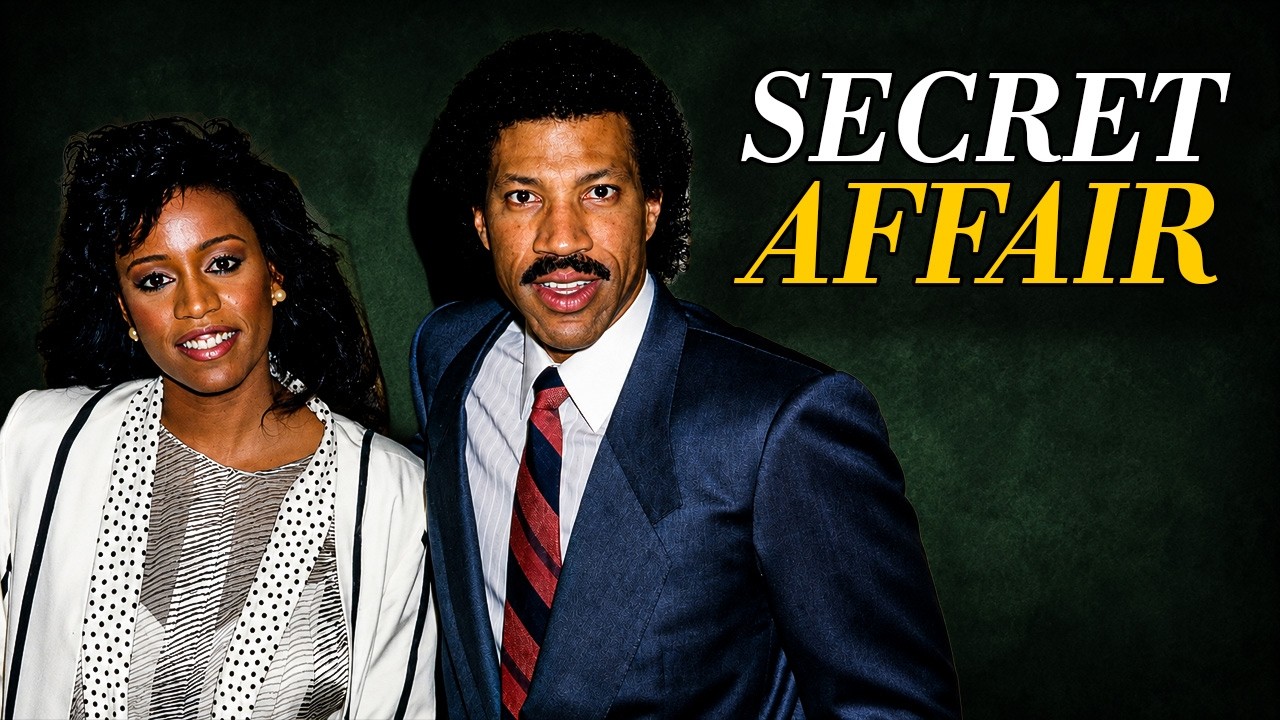
The charges were serious. They were also later dropped. Richie stayed silent about the night for 37 years. By then, Richie was already one of the biggest names in American pop music.
He had first risen to fame as a member of the Commodores, then built a solo career on hits like All Night Long and Hello, reportedly selling more than 100 million records. That scale mattered because his public image was a brand built over decades in front of an enormous audience: calm, warm, dependable, the man who wrote songs like Endless Love. It was an image that had to hold together through two marriages that both ended in court. Richie’s first marriage to Brenda Harvey began in 1975.
Together they adopted a daughter, Nicole, who would later build her own public career. The couple stayed married for close to 18 years before the marriage ended in August 1993. On paper, it sounded like an ordinary long marriage running its course. The documented record says otherwise.
Richie met Diane Alexander at the closing ceremony of the 1984 Los Angeles Olympics, where he performed before a global television audience. She later appeared as a dancer in his 1986 video for Dancing on the Ceiling, and the two grew close during his Outrageous World Tour that same year. The affair ran for roughly two years before the public had any idea it existed. During that time, Richie was still legally married to Harvey, and magazines were still running photos of the couple as a settled Hollywood pair.
By 1988, Richie and Harvey were living apart, though still legally married, while Richie continued seeing Alexander. That distinction mattered because it was the exact seam where a private marital breakdown became a police matter. Richie later said he was kicked during the confrontation. He left the apartment hoping Harvey would follow him away from Alexander.
Instead, according to his own account, the argument continued until police arrived and the scene became public property. At the time, Richie was near the peak of his commercial career, a multiple Grammy winner still riding the momentum of some of the biggest singles of the decade. This was not a young performer with nothing to lose. It was a household name absorbing a domestic arrest report at almost the exact moment his reputation for warmth and romance was most valuable.
For nearly four decades afterward, Richie said almost nothing about any of it. Not in interviews, not in documentaries. The silence itself became part of the record, sitting quietly underneath the warm public image the whole time. That changed in 2025 when Richie published his memoir, Truly, and addressed the night directly for the first time in his own words.
He described it as “the scandal of my century” and called the fallout raw, ugly, and disastrous, saying the story took on a life of its own once it became public. The deeper revelation was not the fight itself, which was already public record. It was the 37 years of silence built around it, and what that silence suggested about how carefully a warm, dependable image has to be managed to survive something this messy in the middle of a rising career. It would be reasonable to think the divorce from Harvey in 1993 closed that chapter.
For a stretch of years, that reading seemed to hold. Richie married Alexander in December 1995 in a wedding covered as the happy resolution to a well-known scandal. They had a son, Miles, born in 1994, and a daughter, Sofia, born in 1998. For a while, the second marriage looked like the correction, the stable version of a love story that had started under genuinely difficult circumstances.
Then, in January 2004, after roughly eight years of marriage, Richie filed for divorce, citing irreconcilable differences. The public reason was almost deliberately vague. What followed in the courtroom was the opposite. Richie’s opening offer to Alexander was reportedly $55,000 a month plus the couple’s $5 million home outright, an offer that sounded generous by almost any ordinary standard.
She rejected it. Five months later, her counter demand, filed through the court process, asked for $300,000 a month broken into specific itemized categories: $50,000 monthly described as personal services, covering things like massages and manicures; $15,000 monthly for clothing; and $20,000 a year set aside for cosmetic procedures. Additional figures reported by entertainment and legal outlets put further line items toward dermatology, laser hair removal, and jewelry. Coverage at the time described it as one of the most expensive celebrity divorces of its era.
Multiple reports converged on a settlement in the neighborhood of $20 million along with an even split of whatever remained on the couple’s mortgage once their home eventually sold. The gap between the two opening positions was enormous. $55,000 a month was, for almost anyone watching, an unreachable sum. Inside that negotiation, it was the starting offer, a number one side considered a reasonable floor and the other side considered an insult.
Most divorce settlements get summarized publicly as one lump number. This one survived line by line because someone sat down and wrote out a monthly manicure budget and asked a court to enforce it as spousal support. It was a specific, granular record of exactly how contentious the end of that marriage became, and it happened to the same man who a decade earlier had already lived through an arrest report connected to the collapse of his first marriage. Outside the courtroom, the public version stayed remarkably gentle.
Richie continued co-parenting all three of his children, and in later interviews he pointed to the pressures of his own career, the touring schedule, and the workaholic pace that came with staying on top for decades as a major reason both marriages struggled. He framed them as difficult chapters rather than betrayals and credited family and faith for helping him hold everything together afterward. Put both marriages side by side and the pattern is hard to miss. The first ended with a police report bearing his estranged wife’s name as a suspect, later cleared of the charges but never cleared from the public record entirely.
The second ended with an itemized monthly demand precise enough to specify a hair removal budget. Neither of those is the soft, blurry “they just grew apart” version most audiences carry around. The cultural memory of the 1988 night drifted even further from the record over time. By the time an adult animated series turned the confrontation into a punchline years later, most viewers laughing along had no idea there was an actual arrest report behind the joke, no idea about the corporal injury charge, the bail, or the officer who wrote it all down before any of it was cleared.
The joke survived. The paperwork didn’t travel with it. None of this requires believing Richie was secretly a different person than the one on stage. The ballads were real.
The charm was real. So was an arrest report, and so was a court filing with a hair removal line item on it. A public figure can be exactly as warm as he appears and still be sitting on top of a legal record that warmth was never built to advertise. Today, decades removed from both marriages, Richie is settled with a long-time partner, and by most public accounts, the years since have looked considerably calmer.
That calm is worth noting, not as a tidy bow on the story, but as one more contrast. The same man capable of decades of quiet, careful image management around 1988 is also the man who chose, on his own timeline and for his own reasons, to finally put it in writing. Whatever the real motivation was, it isn’t fully knowable from the outside. Somewhere in an archive, that 1988 report is still filed under his name, unchanged by time or by fame.
Under the studio lights, the chair behind the judges table sits empty between takes, waiting for the next season, the same table it has always been. What changed is not the room. It’s what anyone watching now understands was sitting underneath it the whole time.