Few names in the history of the American West carried the weight of dread that Frank Stillwell’s did. A man of fierce temper and violent instincts, he left a trail of blood across the Arizona Territory that led him down a path toward one of the most infamous feuds in frontier history. Born in Iowa in 1856, Frank C. Stillwell grew up near Palmyra, Kansas, on the Santa Fe Trail after his family moved west when he was young.
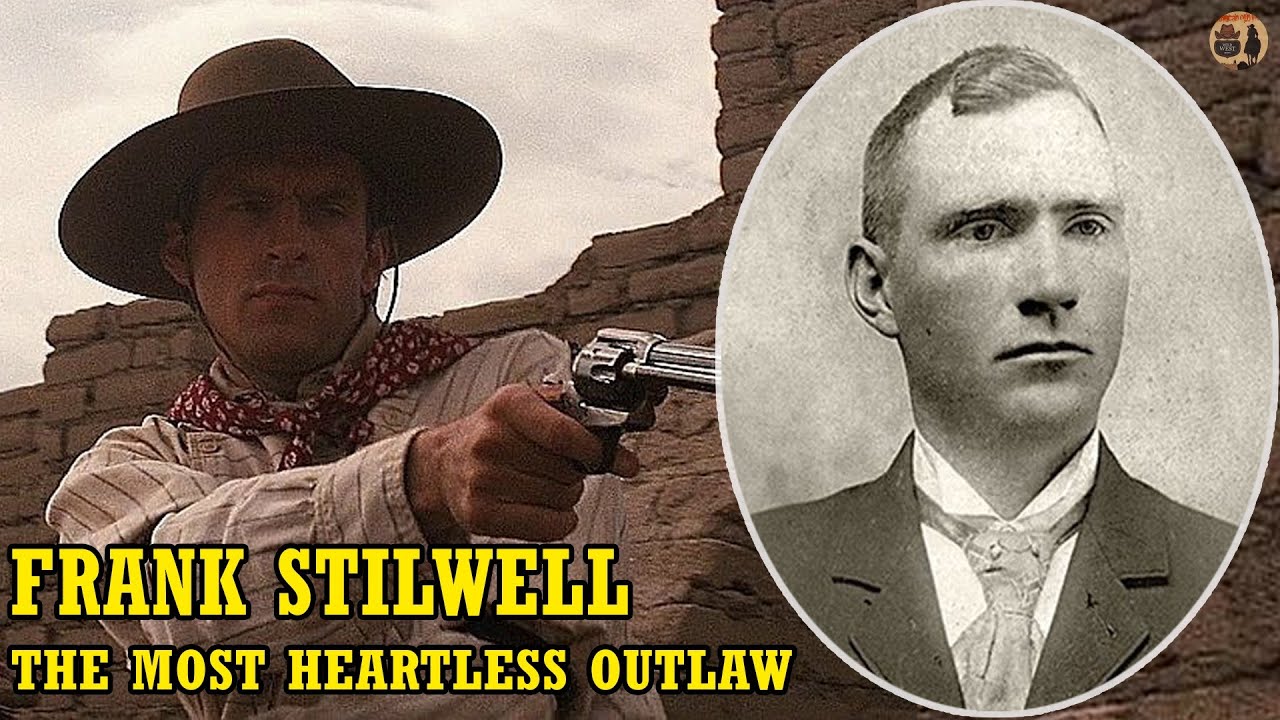
His home life crumbled in 1863, when his parents divorced, and his father, William, took Frank and two brothers while his mother kept two daughters. The separation left a deep mark on the young Frank. His father served in the Union Army during the Civil War, a private in the 18th Missouri Volunteer Infantry under General William Tecumseh Sherman, marching in the great campaign that helped end the war. Frank’s brother Simpson “Jack” Stillwell became an Indian fighter, scout, deputy marshal, and police judge.
But Frank took a different road entirely. In 1877, he and his brother traveled from the Indian Territory to Prescott, Arizona Territory, where Frank found work at a nearby rancher’s spread. It was there, on October 18, 1877, that he committed his first act of violence. A heated argument with a newly hired cook named Jesus Bega escalated until Frank drew a gun and shot the man in the lung.
Bega died. Frank was acquitted on grounds of self-defense, but the killing set the stage for what followed. Afterward, Frank left the ranch and drove a team for a man named C. H.
Haml. He later claimed a mine in Mojave County, but his ventures in the ground were just as violent. On November 9, 1879, a dispute over a mining claim with Colonel John Van Houten turned brutal. Van Houten was beaten with a rock and died of his wounds.
Frank Stillwell and James Cassidy were charged with murder, but both escaped indictment when the evidence fell short. Frank was learning that in the territories, a man of nerve could slip free of the law’s grip. By 1880, he was living in Charleston and working as a firefighter, though he gave false information about himself and his past, a habit he never broke. Then came the robbery that changed everything.
On September 8, 1881, masked robbers held up a passenger coach on the Sandy Bob line near Tombstone, robbing everyone aboard and making off with a safe worth thousands of dollars. One of the thieves carelessly used the word “sugar” to describe the money, a clue that caught the attention of Virgil Earp and his men. Undercover agent Fred Dodge found a distinctive shoe print left by someone wearing custom-repaired high heels. The trail led to a shoe repair shop in Bisbee known for fitting wide-leg boots, and the print was linked to Frank Stillwell.
When Stillwell arrived in Bisbee with his partner Pete Spence, he was arrested by Virgil Earp, Wyatt Earp, and Billy Breakenridge based on the gathered evidence. Judge Wells Spicer set a bond of $7,000. At the preliminary hearing, Stillwell and Spence produced witnesses supporting their alibi, and the prosecution’s case rested on a single slang word and a boot print. The charges were dropped for insufficient evidence, just as similar charges against Doc Holliday had been dropped earlier that year.
Yet many historians believe Frank Stillwell was genuinely involved in the Sandy Bob robbery. The acquittal only deepened the tension. On October 13, 1881, just two weeks after Stillwell walked free, Virgil Earp, now Deputy U. S.
Marshal, filed new federal charges against Stillwell and Spence for interfering with a mail carrier. Both men were taken to the Territorial Prison in Tucson to await trial. While Virgil was away, he left his brother Wyatt in charge as assistant city marshal in Tombstone. The Cowboys, a loose band of outlaws in the region, saw it as a moment to strike back.
Frank McLaury, a friend of Stillwell and Spence, confronted Morgan Earp and warned that if the Earps tried to capture their friends again, they would be killed. The newspapers fanned the flames, inaccurately reporting that Stillwell and Spence had been arrested for a stage robbery near Contention City on October 8, though both were locked up in Tucson at the time. The false reporting fed the belief among many that the Earps were targeting innocent men. Eventually, the case was dropped for lack of evidence.
The feud reached its breaking point on the day after Morgan Earp was brutally assassinated. Investigator Dr. H. M.
Matthews launched an intense inquiry, and Marietta Duarte, the wife of notorious outlaw Pete Spence, made a startling confession. She said her husband had returned home just an hour after the shooting, accompanied by Frank Stillwell, Indian Charlie, Frederick Bode, and an unidentified accomplice. She also claimed Spence threatened her with force if she spoke to authorities. Witnesses confirmed that Frank Stillwell was seen fleeing the crime scene.
It was believed that Stillwell, Bode, Freis, and Indian Charlie were all involved in Morgan’s murder. Pete Spence surrendered and was held in prison, but the legal system was broken, and Wyatt Earp decided he could no longer rely on courts to deliver justice. He resolved to track down his brother’s killers himself. On March 20, 1882, Wyatt received word that Frank Stillwell, Ike Clanton, Hank Swilling, and another Cowboy were plotting to kill Virgil Earp to avenge their friends who had fallen at the O.
K. Corral. Wyatt acted quickly, assembling a team that included Warren Earp, Doc Holliday, Turkey Creek Jack Johnson, and Sherman McMaster. They accompanied Virgil and his wife Allie by train to Tucson, fully armed and determined to protect him at all costs.
When the train arrived in Tucson, the Earps saw Stillwell and his comrades at the station. Virgil later told the San Francisco Examiner that most of the first men he and his party met on the platform were Stillwell and his friends, all armed and mixed in with the crowd. The Earps escorted Virgil to a hotel for dinner, watching constantly and ready for action. As the train left the station, gunshots rang out.
Witnesses saw armed men fleeing but did not identify anyone. Wyatt later claimed he saw Stillwell and Ike Clanton and that the two fled when he and his men approached. In a story published in the Denver Republic, Wyatt testified that he shot Stillwell as Stillwell tried to push the barrel of a shotgun away. Ike Clanton escaped and told his own version to the press.
He claimed he and Stillwell had gone to Tucson to clear their names from federal charges connected to Stillwell’s involvement in the Bisbee robbery of 1881, but that was not the real reason for their journey. Later, it was revealed the true motive was revenge on Virgil Earp, whom they believed played a role in Stillwell’s arrest. Clanton also testified that Stillwell had disappeared from the hotel before he was found dead near the tracks with multiple gunshot wounds. Witnesses reported seeing Stillwell and his gang armed on the platform waiting for Virgil to arrive.
Some say Clanton and Stillwell were there to meet a witness named McDowell who would testify before a grand jury, and when they realized the Earps were there, trouble was inevitable. Stillwell’s body was discovered the next day along the tracks, riddled with bullet holes. The funeral of Frank Stillwell was a somber, lonely affair. On March 28, 1882, the Tucson Weekly Citizen reported that his coffin had been delivered to the grave by an express carriage without an escort.
It was a sad ending for a man who had lived a life of violence and crime. He was originally buried in the old city cemetery in Tucson, and when that cemetery was moved, most of its residents were reburied in a mass grave at Evergreen Cemetery. In the end, Frank Stillwell’s fate was sealed not by the courts, but by the guns of the same frontier violence he had embraced his entire life.