Lee Radziwill spent much of her life in the shadow of her older sister, Jacqueline Kennedy Onassis. For decades, the public saw a glamorous socialite and style icon, but the private story of the two sisters was far more complicated. Now, years after Lee’s death, revelations from her daughter have shed new light on a relationship marked by admiration, rivalry, and deep emotional wounds.
Born Caroline Lee Bouvier in 1933 in Manhattan, Lee was the second daughter of stockbroker John Vernou “Black Jack” Bouvier III and socialite Janet Norton Lee. From birth, she was called by her middle name, Lee, a name that stayed with her for life. The Bouvier sisters grew up on Park Avenue with quiet summer escapes to the Hamptons.
Their father was a prominent Wall Street figure, but his gambling, drinking, and affairs led to the family’s split when Lee was young. After the divorce, Lee and Jackie lived with their mother, who remarried Hugh D. Auchincloss, creating a larger blended family.
Lee entered high society in 1950, but she often felt she lived in Jackie’s shadow. Jackie was seen as the favored daughter, and this dynamic shaped Lee’s personal life and ambitions for years to come.
Lee was exacting in her choice of partners, following a strict rule of three attempts. At 21, on April 18, 1953, she married publishing executive Michael Temple Canfield. Her biological father proudly walked her down the aisle, fulfilling her childhood dream of a fairy-tale wedding.
Michael seemed the perfect match—charming, intelligent, and well-connected—and the couple settled in a beautiful home in Chester Square, London. But Michael suffered from severe alcoholism, which quickly cast a dark shadow over their marriage. Despite his prestigious position as head of Harper & Brothers, his addiction was impossible to overcome.
Lee witnessed harsh realities when Michael was found unconscious in their home. His brief attempts at sobriety never lasted, creating growing tension between them.
During this difficult period, Lee found solace and love with Polish-Lithuanian Prince Stanisław Albrecht Radziwiłł. However, she needed to end her marriage to Michael first. The Kennedy family, including Jackie and John F.
Kennedy, used their influence to petition the Pope and the Vatican for an annulment, which succeeded. On March 19, 1959, Lee married Prince Stanisław, marking her second marriage and entry into royalty. Interestingly, rumors circulated that Michael Canfield may have been the illegitimate son of Prince George, Duke of Kent, which would have made him a prince as well.
Lee and Stanisław had two children, Anthony and Christina, and lived near Buckingham Palace, embracing their royal lifestyle. However, the marriage eventually collapsed due to the prince’s numerous affairs and Lee’s growing relationship with Greek shipping magnate Aristotle Onassis. Rumors also linked Lee to photographer Peter Beard.
The couple divorced in 1974.
In a final search for lasting love, Lee married film director Herbert Ross in 1988, known for successful works like Steel Magnolias and The Goodbye Girl. They married in her Fifth Avenue apartment and celebrated with a private lunch at Jackie’s home. Despite their efforts, the marriage ended in divorce in 2001.
Throughout it all, Jackie remained her longest and closest supporter.
Lee and Jackie enjoyed a close bond, though Lee often felt overshadowed by her more famous sister. Their relationship was especially strong during Jackie’s time as First Lady, with many significant moments shared together—family holidays, formal events, and visits to the White House. The sisters also hosted the Kennedy family at their London home.
One memorable experience was their month-long 1962 journey through Italy, India, and Pakistan, which strengthened their connection. The Kennedys honored Lee by naming their first daughter Caroline after her, and President Kennedy personally blessed Lee’s daughter, Anna Christina Radziwiłł.
Everything changed after President Kennedy’s assassination in 1963. Lee immediately traveled from London to Washington, D. C.
, to support Jackie through her darkest days. She stood by her sister as Jackie bore the heavy burden of public mourning, the transfer of the president’s casket to the Capitol rotunda, and the funeral at St. Matthew’s Cathedral.
At Arlington National Cemetery, Lee was deeply moved, even shedding tears as the presidential plane dipped its wing in tribute. Despite her own grief, Lee admired Jackie’s courage, often leaving notes on her sister’s pillow to offer love and encouragement. She supported Jackie through the difficult transition out of the White House, helping her move into diplomat W.
Averell Harriman’s home in Georgetown. Later, Lee helped Jackie settle in New York City, finding her an apartment just a few buildings away on Fifth Avenue.
Although they seemed inseparable and their sisterly love appeared strong, tensions would eventually arise, especially around personal and emotional matters, complicating their lifelong relationship.
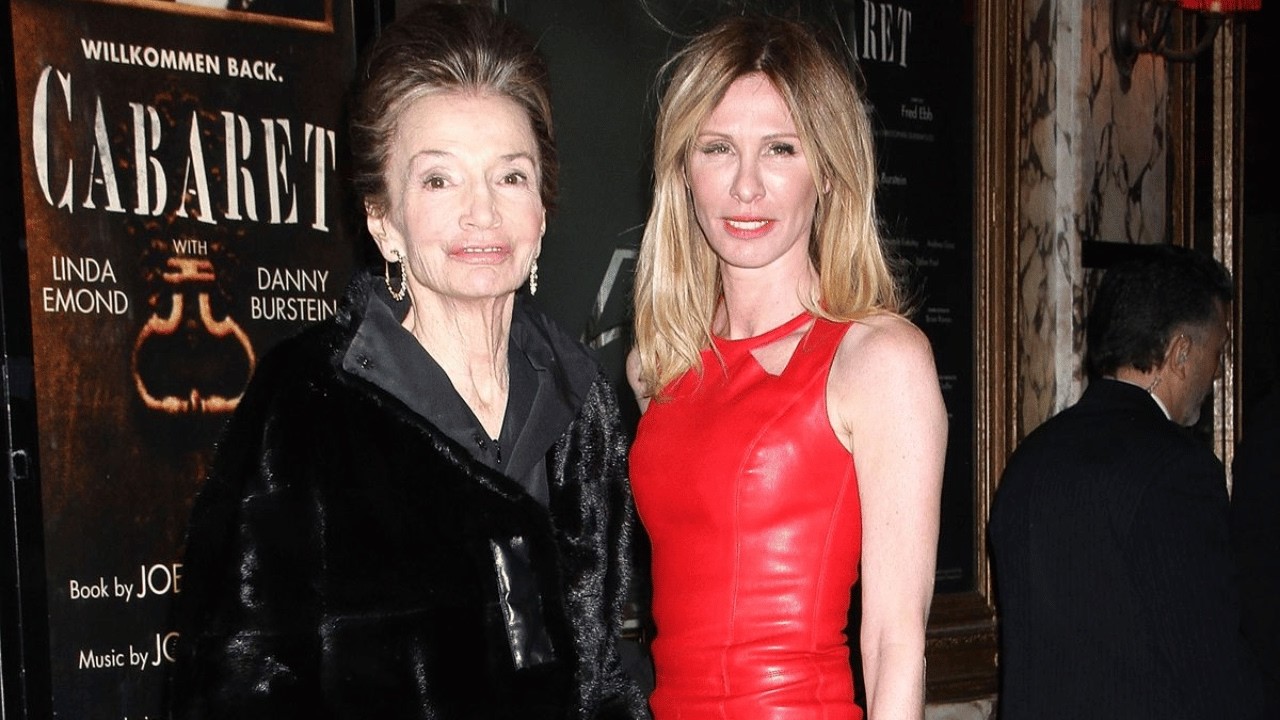
Many rumors circulated about a romantic relationship between Lee Radziwiłł and Aristotle Onassis, the famous Greek shipping magnate known for his charm and romantic adventures, though these claims were never fully confirmed. Aristotle was an old friend of the Radziwiłł family, and his presence in their social circles was not unusual given their high-society status. Lee and her then-husband, Prince Stanisław Radziwiłł, frequently hosted Aristotle at their London home and spent time on his luxurious yacht, Christina.
Tension between Lee and Jackie began to emerge in August 1963 when Lee invited Jackie to join a cruise on Aristotle’s yacht following the premature birth and tragic death of Jackie’s third child, Patrick. Seeking privacy and solace, Jackie accepted the invitation and embarked on a long journey through the Aegean Sea with Lee and the Radziwiłł family. This trip marked a turning point in the sisters’ relationship, according to Diana DuBois’ 1995 biography In Her Sister’s Shadow.
Aristotle became captivated by Jackie during the voyage, much to Lee’s dismay. Lee insisted to close friends that her invitation was meant only to help Jackie recover from her grief, but she felt deeply betrayed by the way Jackie seemed to manipulate Aristotle’s attention. This perceived manipulation created a barrier between the sisters, one that only widened over time.
Contemporary news reports suggested that Jackie’s closeness to Aristotle, along with her growing relationship with Robert Kennedy after President Kennedy’s assassination, began to permanently redefine the sisters’ dynamic.
During the yacht trip, the chemistry among the three changed noticeably. Aristotle, known for his influence and charisma, focused increasingly on Jackie, leaving Lee on the sidelines. The once-strong bond between the sisters began to crack.
Lee confided to friends that she felt marginalized, as if Jackie had taken something precious that should have been hers. The world watched the glamorous former First Lady seek refuge on the luxury yacht, fueling media speculation about her relationship with Aristotle and deepening the divide between the sisters.
Adding to the tension was Jackie’s growing closeness to Robert Kennedy after President Kennedy’s assassination. The shared trauma and subsequent public and private responsibilities drew Jackie and Robert closer, further isolating Lee. This combination of events—the assassination’s aftermath, Jackie’s relationship with Aristotle, and her bond with Robert—transformed what had been a close sisterly bond into a relationship marked by distance and strain.
Reports suggested that Robert Kennedy provided Jackie with deep emotional support in the months following her husband’s death. Their frequent, intense conversations sparked rumors that their relationship may have gone beyond friendship. Though nothing was proven, the rumors caused significant public and private controversy.
In June 1968, while Lee was in London, she was devastated by the news of Robert Kennedy’s assassination. The shock caused her to lose control of her car, resulting in a collision. Jackie, even more shattered, felt that America had become unsafe for anyone bearing the Kennedy name and decided she must leave the country for her own safety.
Aristotle Onassis intervened at this critical moment, providing Jackie with the means to escape. They soon began a romantic relationship that culminated in a prenuptial agreement guaranteeing Jackie millions of dollars.
In 1968, five years after President Kennedy’s assassination, Jackie married Aristotle in a heavily covered ceremony on his private island of Skorpios. The wedding, attended by Lee, was a sensational event that drew intense media attention. Many viewed Jackie’s marriage to Aristotle as a strategic move to protect herself and her children after a series of violent personal losses.
Aristotle’s vast wealth and influence provided her with a sense of security and stability she desperately needed. Lee supported her sister through the wedding and afterward, despite ongoing tensions. In later interviews, Lee mocked persistent rumors of her own romantic involvement with Aristotle, flatly denying any such relationship.
However, casual observers recognized that a deep rift had formed between the sisters, one that was never publicly addressed or repaired.
In private, Lee often confided that Aristotle had once been hers until Jackie intervened—a painful repetition of a pattern from their youth, where Lee felt her sister’s charm and influence overshadowed her own. This personal betrayal was only one aspect of Lee’s troubles. Her relationship with her daughter Christina also deteriorated over time.
Christina suffered from low self-esteem, especially regarding her weight, a sensitivity exacerbated by having a beautiful, slim mother like Lee. The mother-daughter relationship became strained, with Christina growing more distant and uncomfortable in Lee’s presence. Feeling neglected and judged, Christina found solace and warmth in her aunt Jackie’s presence.
Eventually, Christina decided to move in with Jackie, who lived just a few buildings away. She left quietly, packing her belongings without telling her mother—a step that deepened Lee’s jealousy and widened the gap between the sisters further.
Amid this family turmoil, Lee sought comfort and a renewed sense of purpose through the arts. She developed friendships with artists and creatives, which helped revive her professional ambitions and provided a welcome distraction from her personal struggles. While her relationship with Jackie remained complex and competitive, Lee found new meaning and resilience in her artistic pursuits, carving her own path despite the shadows of family drama.
In the 1960s, as the close bond between Lee and Jackie faded, Lee sought comfort and inspiration from new artistic circles. She developed friendships with some of the era’s most famous figures, including ballet legends Rudolf Nureyev and Margot Fonteyn, as well as Cecil Beaton, the renowned photographer and designer. Among these new acquaintances, Lee also became one of Truman Capote’s famous “swans”—an exclusive group of elegant, influential women who captivated the writer’s attention.
Lee and Truman shared a special relationship, both feeling marginalized in their own worlds. Truman, as an openly gay man, often faced rejection within elite social circles, while Lee had lived most of her life in the shadow of her dazzling older sister Jackie. This mutual sense of being second-best formed a strong bond between them.
After Jackie’s marriage to Aristotle Onassis in 1968—a man Lee herself had admired—Lee turned to Truman in tears, struggling to accept the reality of her sister marrying the man she believed should have been hers.

Truman, eager to support Lee and help her emerge from Jackie’s shadow, encouraged her to pursue acting professionally. In 1967, Lee began training at prestigious institutions such as the Royal Academy of Dramatic Art and the London Academy of Music and Dramatic Art. Truman suggested she make her acting debut in Philip Barry’s comedy The Philadelphia Story, playing the role of Tracy Lord, a sophisticated and vivacious socialite.
Thanks to her status as Jackie Kennedy’s sister, Lee’s debut attracted intense media attention. However, critical reviews were unkind. The Chicago Tribune stated, “No new star was born,” while others criticized her performance as stiff and unconvincing.
Despite the harsh reception, Lee remained determined to continue acting. Truman continued to support her, persuading producer David Susskind to cast Lee in a television version of Otto Preminger’s 1944 classic Laura, a role originally made famous by Gene Tierney, whom Lee greatly admired. Truman even co-wrote the teleplay, which aired in January 1968 on ABC.
Yet critical opinion remained the same. Jack Gould, a New York Times critic, noted that despite Lee’s charm, no one expected her to deliver a brilliant acting performance. Lee returned to London discouraged, her hopes of stardom dashed.
During this period, Lee’s friendship with Truman Capote began to unravel. Their relationship soured over Lee’s refusal to testify in a libel suit between Truman and writer Gore Vidal. Truman had accused Vidal of being thrown out of the Kennedy White House for drunkenness, while Vidal claimed he was simply escorted to his hotel after a clash with Attorney General Robert Kennedy.
Without Lee’s testimony, Truman lost the case and had to apologize. This legal defeat strained their friendship, but the final break came when Truman betrayed Lee’s confidence by publicly revealing her private confessions, especially about her complicated relationship with Jackie and her most intimate thoughts.
Truman was notorious for collecting the secrets of his celebrity friends, possibly intending to use them in a final book that was never published. However, a few leaked pages revealed many confidential details, sparking a scandal. This betrayal turned Truman into a social pariah, with many distancing themselves from him.
For Lee, the damage was done. Their friendship was shattered, and the wounds left by Truman’s actions lingered long after.
While Lee initially pursued acting, she soon discovered her true talent lay in design and fashion. She had a brief foray into interior design by working with Italian stage designer Lorenzo Mongiardino to decorate the beautiful Turville Grange estate, which she shared with her second husband. Their work on the interiors was so stunning that iconic photographers like Horst P.
Horst and Cecil Beaton frequently photographed the home, drawing inspiration from its elegant and refined style.
Building on this recognition, Lee decided to focus her talents on interior design. One of her notable projects involved designing a home for clients who only stayed there a few days each year. The success of this project inspired Lee to launch her own interior design company in 1976.
Her sophisticated work quickly gained wide attention, receiving positive media coverage, including a feature in Architectural Digest. This exposure helped attract both corporate clients and wealthy patrons eager for her distinctive style.
Lee’s refined fashion sense received formal recognition in 1996 when her name was added to Vanity Fair’s International Best-Dressed List Hall of Fame. Her taste extended beyond clothing to her living spaces. She owned elegant residences such as an apartment in Paris on Avenue Montaigne and a home in Manhattan on East 72nd Street, both known for their sophistication.
Elle Decor featured her homes in its April 2009 issue, highlighting her evolved approach to interior design. In February 2013, Lee appeared on the cover of the New York Times Style section, discussing her life and the importance of privacy in an interview with director Sofia Coppola. Later that year, The Guardian honored Lee’s enduring influence on fashion and style by naming her one of the 50 most stylish people over 50.
After Jackie’s marriage to Aristotle Onassis, her relationship with Lee became increasingly strained. Rumors of problems in Jackie’s marriage began surfacing shortly after the wedding, and the bond between the sisters continued to weaken. Eventually, Jackie’s marriage to Aristotle ended, and she chose to spend more time in New York, where her children were studying.
When Aristotle died in 1975, Jackie inherited an estimated $20 to $26 million. However, the bulk of his fortune went to his daughter, Christina Onassis.
After Aristotle’s death, Jackie turned her focus toward a new chapter in her life, one that allowed her to pursue her intellectual and cultural passions. She joined Doubleday as an associate editor, then as a senior editor, before taking on a consulting role at Viking Press. In addition to her publishing career, she remained actively involved in historic preservation and the arts.
One of her most prominent efforts was her instrumental role in the successful 1970s campaign to save Grand Central Station in New York City, preserving the iconic structure for future generations.
In her personal life, Jackie was romantically linked to various men, but her longest and most significant relationship after Aristotle was with Maurice Tempelsman, a Belgian-born diamond dealer. He became her devoted companion and partner during the last twelve years of her life. In 1994, Jackie was diagnosed with non-Hodgkin’s lymphoma and died shortly afterward in her New York City apartment.
She was buried at Arlington National Cemetery beside her first husband, President John F. Kennedy, and their two deceased children.
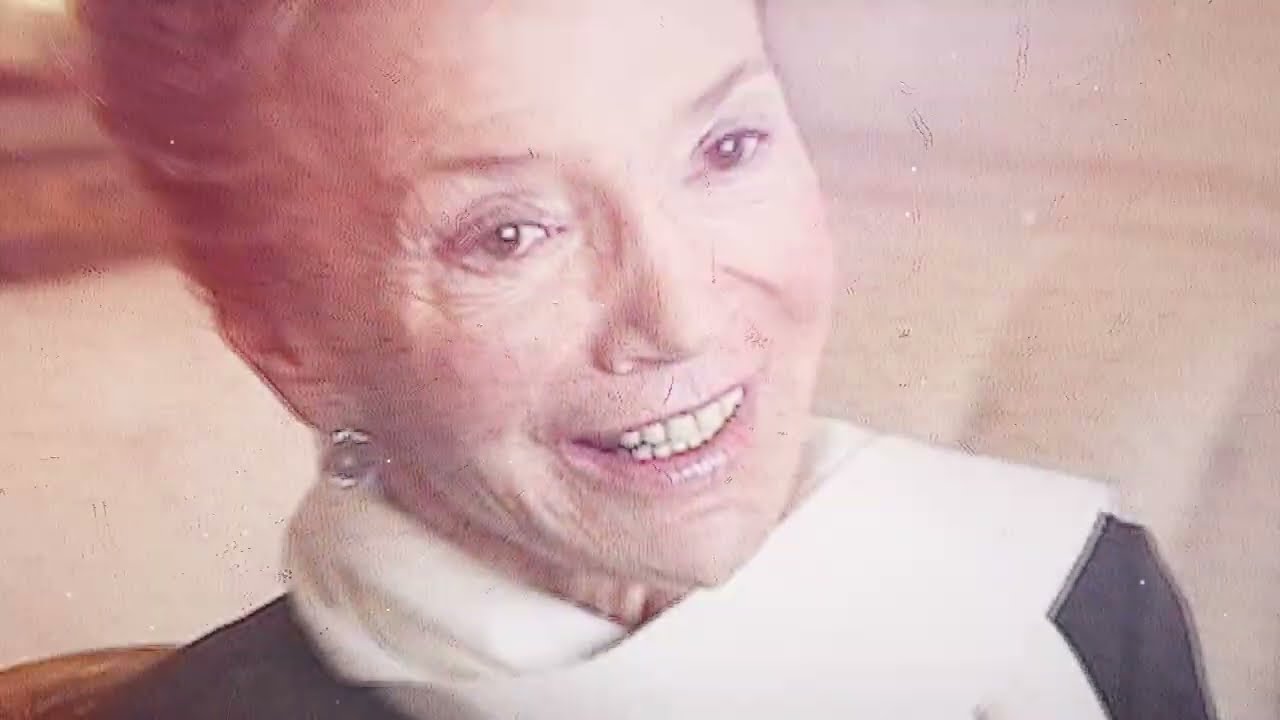
After her death, Jackie’s will revealed a final, telling chapter in the long-standing rift between her and Lee. While she provided generously for her children, close associates, and charitable causes, she left nothing to her sister Lee. Instead, she bequeathed $500,000 to each of Lee’s children, Anthony and Tina.
In the will, Jackie stated that she had done everything she could for Lee during her lifetime and saw no reason to leave her anything else. This exclusion confirmed the depth of their estrangement, marking the end of a complex and often painful sisterly relationship.
In Lee Bouvier Radziwill’s last will and testament, her only surviving daughter, Anna Christina “Tina” Radziwill, was named the primary beneficiary of her estate, valued at approximately $50 million. Surprisingly, her daughter-in-law, Carole DiFalco Radziwill, the former star of The Real Housewives of New York City, was completely excluded from the will and not mentioned at all. Lee died at age 85 of natural causes on February 15, 2019, in her Upper East Side Manhattan apartment.
The 16-page will, signed by Lee on September 20, 2018, less than five months before her death, was filed in Manhattan on March 22, 2019.
Notably, Lee’s niece, Caroline Kennedy Schlossberg, or any of her three children—Rose, Tatiana, and John—were not mentioned in the will. When Jackie Kennedy Onassis died in 1994, her will generously allocated $500,000 to each of Lee’s children. Since Lee’s son, Anthony, had predeceased her, Lee’s will stipulated that her only surviving daughter, Tina, would inherit her estate.
The will instructed executors to sell Lee’s apartment at 160 East 72nd Street in Manhattan, where she resided at the time of her death, along with any securities and related claims, and distribute the proceeds as part of her residual estate. Lee had previously split her time between this apartment and one in Paris, which she put up for sale in 2017 for $4 million as part of cost-cutting efforts.
Lee’s will highlighted a trust established for her decades earlier by her mother, Janet Lee Auchincloss. This trust, created under an agreement dated August 11, 1975, gave Lee special power to appoint beneficiaries from the trust’s assets. Tina, as the surviving heir, would become the beneficiary of this trust and others established in her name and her mother’s, though the capital value was not disclosed in the will.
This paragraph, found on the second page of the will, was the only reference to Jackie in Lee’s document.
Instead of naming her daughter Tina or any other family member as executors, Lee chose two friends for the role: Hamilton South of Cornwall, Connecticut, and Martin P. O’Connor II of Harding Township, New Jersey. South, who was also a close friend of Lee’s late niece Caroline Bessette Kennedy, delivered the eulogy at Lee’s funeral Mass at St.
Thomas More Church in New York City on February 25. In a rare tweet that day, the public relations expert wrote, “Lee Radziwill was above all of us. She left this world unimpressed by us all.”
O’Connor, meanwhile, serves as managing partner of the law firm O’Connor, Morris & O’Connor in Elizabeth, New Jersey.
In a letter from Lee to O’Connor dated August 22, 2018, she wrote, “In my will, which I signed today, I appointed you and Hamilton South as co-executors. You have acted as my attorney in the past. We have been friends for many years, and I have great confidence in your integrity and abilities.”
Lee also emphasized the importance of his financial expertise in her decision to appoint him as co-executor. She also named him and Hamilton as successor co-trustees under the revocable trust agreement. Depending on the value of Lee’s probate estate, the executors could earn commissions ranging from 2 to 4%, as outlined in her letter.
For example, if the probate estate were valued at $1 million, the executor would be entitled to commissions of $34,000 based on New York State legal rates.
In addition to providing legal advice, O’Connor, who is married to former Vanity Fair features editor Jane Sarkin, accompanied Lee to social events in New York City, such as art exhibition receptions. Lee’s relationship with her daughter-in-law Carole fluctuated over the years following the tragic deaths of Anthony Radziwill and his cousin John F. Kennedy Jr.
in 1999. However, they remained close and supported each other, especially after Anthony’s passing. In a heartfelt tribute to Lee written for Daily Mail TV shortly after her death, Carole reflected on their bond despite the absence of direct blood ties.
She described how Lee always introduced her as her daughter-in-law despite there being no children between them. Although they were unable to meet in person shortly before Lee’s death, they had a final phone call two weeks earlier.
Lee’s funeral, designed by David Monn, drew many prominent figures from the worlds of fashion, publishing, and society. After the service, Lee’s remains were cremated, and her ashes were later given to Tina. Despite her financial difficulties during her lifetime, Lee specified in her will that her funeral expenses be paid promptly and advised against attempting to evade death taxes through extraordinary means or loopholes.
Despite facing jealousy, professional setbacks, and troubled relationships, Lee Radziwill ultimately achieved significant success through her refined taste in fashion. Museums now showcase her exceptional aesthetic vision through exhibitions in her former residences, although she sold her Paris apartment in her later years. Lee’s innovative fashion choices, such as her signature sunglasses and classic hats reminiscent of Jackie Kennedy’s, continue to captivate audiences even after her passing.
Despite her reserved approach to managing her wealth, the size of her inheritance at her death in February 2019 reflected the taste that influenced so many.
Until her death at age 85, Lee Radziwill remained an enigmatic figure, captivating hearts with her aristocratic charm and worldly intelligence. Though often overshadowed by her sister, Lee lived a life full of remarkable achievements and timeless elegance.