On the morning of June 4, 1942, six American fighters lifted off from the decks of the carrier Yorktown, ordered to escort a squadron of torpedo bombers toward the Japanese carrier force north of Midway Atoll. Twelve slow, heavily loaded torpedo planes flew low over an empty expanse of water. Leading the escort was a lieutenant commander named John Thach. He had been flying fighters for more than a decade, but the previous six months he had spent doing something almost no one else in the Navy had done: he had taken the intelligence reports on the Japanese Zero seriously.
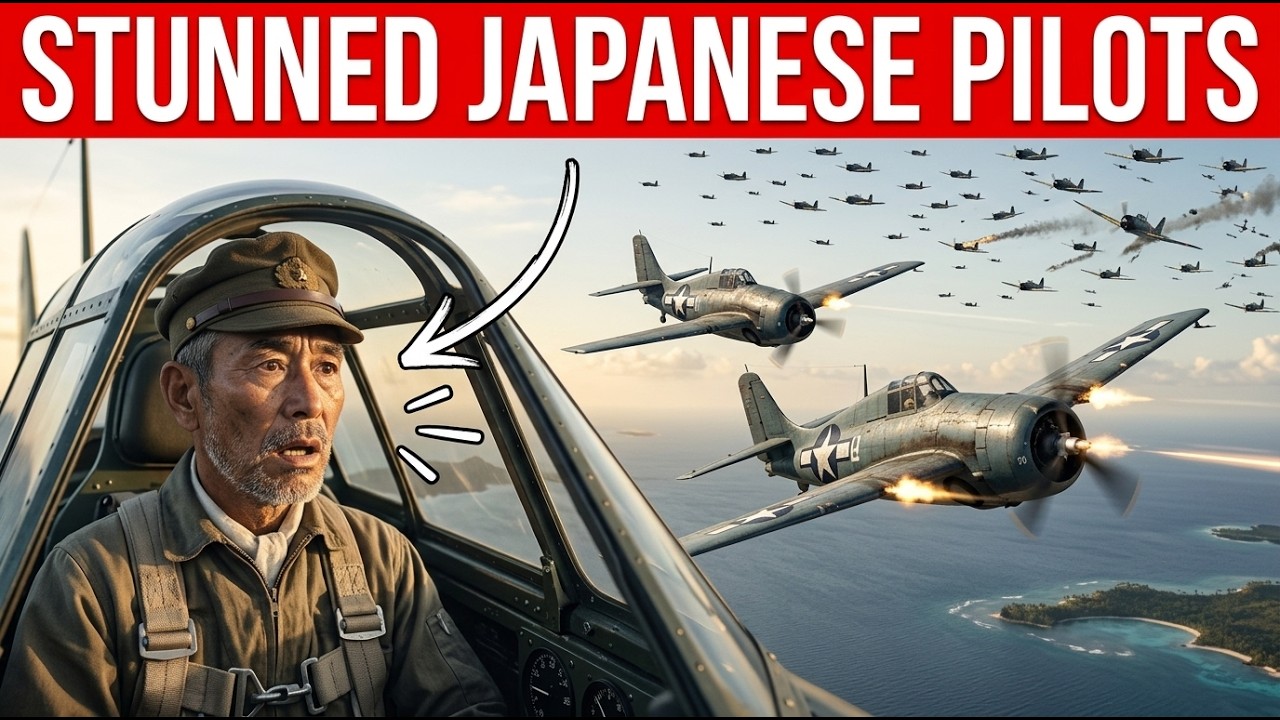
Those reports said the enemy fighter climbed better than his own, turned more nimbly at any significant speed, was faster, and carried cannon. Taken honestly, they said that in a one-on-one duel between an American fighter and a Zero flown by a competent pilot, the American lost. That morning, Thach’s fighters ran into a swarm of Zeros, roughly twenty or more. Within minutes the American formation was scattered and reduced.
Thach found himself with two other planes, then effectively one, flown by a young pilot named Ram Dibb. Two fighters against an enemy force superior in every measure of performance, piloted by men who had been at war since 1937 and had spent the previous six months destroying every Allied air force in the Pacific. They did not die. They shot down Zeros and came home.
The reason was that Thach, months earlier, working at his kitchen table with a box of matches in the dark because he could not sleep, had concluded that the basic unit of air combat was not one airplane but two. The Japanese pilots who fought him that morning could not have understood what they were watching. They were watching the end of their air weapon, planned in advance by a man with a box of matches. The Japanese assessment of the Zero had been earned.
In the first six months of the Pacific War it was not arrogance but a careful reading of the evidence. The Mitsubishi A6M was the finest carrier fighter in the world in 1941. It could climb at a rate no Allied naval fighter could match. It could outmaneuver anything in the theater.
It carried two 20mm cannon in addition to machine guns, and its range seemed to Allied intelligence officers like a clerical error. Japanese fighters could escort bombers on missions Allied planners were confident were beyond the reach of any single-engine aircraft. Against it, the American carrier fighter, the Grumman F4F Wildcat, was a stubby, barrel-shaped aircraft with manual landing gear that required the pilot to crank a handle about twenty-four times after takeoff while the plane shook. It was slower, climbed worse, and could not turn with a Zero.
Any pilot who tried died. In those early months, Japanese naval pilots swept through the Philippines, the Dutch East Indies, Malaya, and the seas between them. Their contempt for Allied fighters was based on results. The Zero achieved all this through the central engineering fact of the Pacific air war.
It was built by removing things. Performance came from obsessive weight reduction: light structure, light engine, and the decisions that mattered. There was no armor plate behind the pilot and no self-sealing fuel tanks in the wings. This was a consistent choice, not a stupid one.
Every pound saved meant better climb, maneuverability, and range. The Japanese naval air arm in 1941 was built around brilliantly trained pilots flying a brilliantly agile aircraft, under a doctrine in which the answer to being shot at was not to be where the bullets were going. It worked supremely until it met an enemy that made the opposite choice. The Wildcat was heavy because Grumman put things into it that the Zero did not have.
Armor plate behind the pilot’s back and head. Self-sealing fuel tanks that closed around bullet holes. An airframe built to standards so solid that pilots called the factory the Grumman Iron Works. Six .
50-caliber machine guns. Every one of these elements cost speed, climb, and maneuverability. Grumman insisted on them anyway. Look at what that trade actually achieved, because it was not symmetrical.
When Wildcat fire hit a Zero, the Zero was, measurably, unprotected. There was no armor to stop a bullet, nothing to keep a wing tank from burning. Japanese aircraft of that period had a documented tendency to ignite when hit directly. A burning Zero at altitude usually meant the pilot’s death: no self-sealing lining, no armor, and often no realistic chance of surviving a bailout over open water without rescue equipment at hand.
Now put a Wildcat under Zero fire. The 20mm shells could do terrible damage, but the armor stopped some of what would have killed the pilot. Fuel tanks often did not burn. The airframe held together.
The most quoted testimony on this point comes from the other side. Saburo Sakai, one of Japan’s leading fighter aces, a man with no reason to flatter the Americans, described attacking a Wildcat over Guadalcanal in August 1942. He poured rounds into it and watched the plane keep flying. He wrote about it later with something close to disbelief.
He was accustomed to aircraft that came apart. This one did not. That is the core of the exchange rate in the Pacific air war in a one-on-one fight. The Japanese fighter won the duel but could not survive being hit.
The American fighter lost the duel but survived. Because carrier pilots could not be replaced as quickly as airplanes, the exchange rate that decided the campaign was not plane against plane. It was pilot against pilot. None of this helps if you are alone at 15,000 feet and a Zero comes out of the sun at you.
Toughness is what you use after tactics fail. The Navy needed something to deploy before relying on toughness. John Thach took on that job. In 1941, before America entered the war, Thach commanded a fighter squadron and read intelligence reports on Japanese aircraft that most of his colleagues treated skeptically.
The performance figures seemed too good, and many simply did not believe Japanese aviation was capable of them. Thach believed the reports and did the arithmetic honestly. The arithmetic showed his squadron would be slaughtered. So he sat at his kitchen table at night with a box of matches and moved them around, looking for a maneuver that would let a slower, less agile airplane survive against a faster, more agile one.
What he arrived at was stunningly simple, and it worked because it stopped trying to solve the problem the enemy was better at. Two planes fly side by side, separated by a distance slightly wider than their turning radius. When an enemy attacks one, that plane turns hard toward its partner. The partner turns toward it at the same moment.
They cross, and the attacking fighter, which was pursuing its target through the turn, suddenly finds itself facing a Wildcat coming head-on with six . 50s firing. The official name was the beam defense position. Pilots have called it the Thach Weave for eighty years.
Read what the maneuver assumes and you see the entire American approach to the war. It assumes you cannot outturn your enemy, so it does not try. It assumes you will be attacked, and makes being attacked the starting point of the defense rather than something to prevent. It assumes the enemy pilot will do the right, aggressive, tactically ideal thing, pursue his target, and it turns that correctness into a firing opportunity for someone else.
Above all, it assumes no pilot is alone. The tactic does not exist for a single aircraft. The unit of combat is the pair. Thach tested the tactic before the war in exercises, handicapping his own planes to simulate the performance gap.
It worked. Then on the morning of June 4, 1942, north of Midway, he executed it for real against a squadron of Zeros, with a novice pilot beside him who had been briefed on it but never used it in combat. It worked again. The maneuver did not save the torpedo squadron they were escorting.
The honest version of Midway is brutal. The American torpedo squadrons that came in low that morning were almost entirely wiped out. What the fighters could do was survive, occupy the Japanese combat air patrols, keep enemy fighters low and busy. A few minutes later, American dive bombers arrived from high altitude, and in roughly five minutes three Japanese carriers took fatal hits.
The men who flew Wildcats in 1942 flew an airplane they knew was inferior, and still they launched every time the alarm sounded. The second fight, the one named in the title, happened four months before Midway and is the clearest example of the same principle. On February 20, 1942, the carrier Lexington, operating toward Rabaul, was sighted and attacked by Japanese land-based bombers. In the second wave of that attack, a section of two Wildcats was launched: Lieutenant Edward O’Hare, known as Butch, and his wingman.
They went into the fight, and it was decided immediately because the wingman’s guns jammed. A malfunction that could not be fixed in flight. The wingman stayed with the formation but could do nothing. O’Hare went on alone against the incoming bomber formation.
What he did in the following minutes has been examined many times, and postwar cross-checking with Japanese records reduced the original credited total, which happens with almost every combatant. The exact number of planes he destroyed remains in dispute. What is not in dispute is that a single American fighter attacked a formation of enemy bombers again and again from the sides and rear, hitting engines and wing roots, and broke up an attack on his carrier. He received the Medal of Honor.
Read that story beside Thach’s and you see the same argument from two angles. O’Hare’s fight is what happens when a pair is reduced to a single aircraft by mechanical failure. Extraordinary courage, an exceptional pilot, and a result that could very easily have gone differently. Thach’s fight is what happens when the pair works as designed.
Two ordinary planes, flown by a pilot in his first real combat, survive against a force superior in numbers and performance because doctrine did the work, not the airframe. The Navy spent 1942 systematically converting the first kind of story into the second. The standard three-plane divisions were reorganized into two-plane sections and four-plane divisions because Thach’s calculations only work in pairs. The weave was taught, then taught to everyone, then built into training programs.
The standing instructions on how to fight a Zero became a list of prohibitions: do not try to turn with it, do not try to climb with it, do not try to chase it. And a list of positives: fight in pairs, use diving speed, take the head-on shot, fire at a target that has no armor and no self-sealing fuel tanks. Add the other systems the Americans were building at the same time and the picture completes. Radar on ships providing warning and altitude.
Coastwatchers in the Solomon Islands, Australians and locals sitting in the jungle with radios on the approach routes, giving the fighters at Guadalcanal something no air force had in 1942: forty minutes of advance warning, exactly the time a Wildcat needed to reach altitude, because climbing was the one thing it could not do quickly. Toughness, plus tactics, plus early warning, plus a rescue system that brought downed pilots back to their cockpits. Every one of those things was worth more than an extra hundred horsepower. The rescue system deserves precision because it is the least glamorous item on that list and possibly the most decisive.
An American naval pilot who went into the water had a realistic expectation that someone would come looking for him. A destroyer detaching from its squadron, a seaplane, a patrol boat, a submarine on rescue duty, even an islander in a canoe. That expectation changes how a man flies. A pilot who believes he will be rescued presses an attack he would otherwise break off.
Across four years in a mostly empty ocean, the side that went back for its people accumulated an advantage that never appeared on any performance sheet. The judgment is this: the two planes were designed to answer two different questions, and only one of those questions was the one the war would ask. The Zero was designed to win the duel. Everything about it, the climb, the turn, the light structure, the deletion of armor and self-sealing tanks, was an answer to the question, how do I beat the other fighter in a one-on-one fight right now?
It answered that question better than any carrier aircraft in the world and kept answering it well into 1942. The Wildcat was designed, first by accident and then by furious intent, to answer a different question: how do I come back? Not how do I win, but how do I survive the mistake, get home, land on the deck, and go up tomorrow with the same trained pilot in the cockpit? Over four years, those two questions produced results that cannot be compared, because the pilot who comes back is a more dangerous pilot the following week, and the pilot who burns over open water is a permanent loss from a training pipeline Japan could not expand.
That is the mechanism that killed Japanese naval aviation. Not one battle, not even Midway, though Midway took four carriers and an irreplaceable number of aircrew. It was the steady conversion of every engagement into an exchange in which the American side recovered its people and the Japanese side did not. Later United States Navy tables credited the Wildcat with a roughly six-to-one air-to-air exchange ratio for the war, a number belonging to an aircraft that, by any specification sheet, was the weaker fighter for most of its service.
That number is not a claim about the airplane. It is a claim about the system the airplane was part of: armor, self-sealing tanks, the two-plane combat doctrine, radar, coastwatchers, deck crews, rescue operations, and a training establishment that produced pilots faster than the enemy could kill them. John Thach ended the war a captain and retired an admiral. The maneuver he worked out with matches on a kitchen table is still taught, in principle, to fighter pilots flying aircraft he could not have imagined.
Butch O’Hare did not come home. He was killed in November 1943 in a night battle over the Pacific at the age of twenty-nine. The airport that most Americans pass through every year without realizing it bears his name. The Japanese pilots who laughed at the stubby little Grumman in early 1942 were not fools, and they were not wrong about the airplane itself.
They were wrong about the essence of the matter. They thought the question was which fighter was better. In fact, the question was which air arm would still have its veterans in 1944.
The answer to that question depended on armor plate, self-sealing rubber lining, and a man who could not sleep because he read an intelligence report and believed it.