In February 1859, Teresa Bagioli Sickles sat in her Washington home and wrote out a confession. Under pressure from her husband, the young wife admitted to a year-long affair with Philip Barton Key II, a handsome widower and the son of the man who wrote the Star-Spangled Banner. Three days later, Daniel Sickles gunned Key down in Lafayette Square, in front of the White House, and America would never look at marriage, murder, or madness the same way again. Teresa had grown up surrounded by art and music.
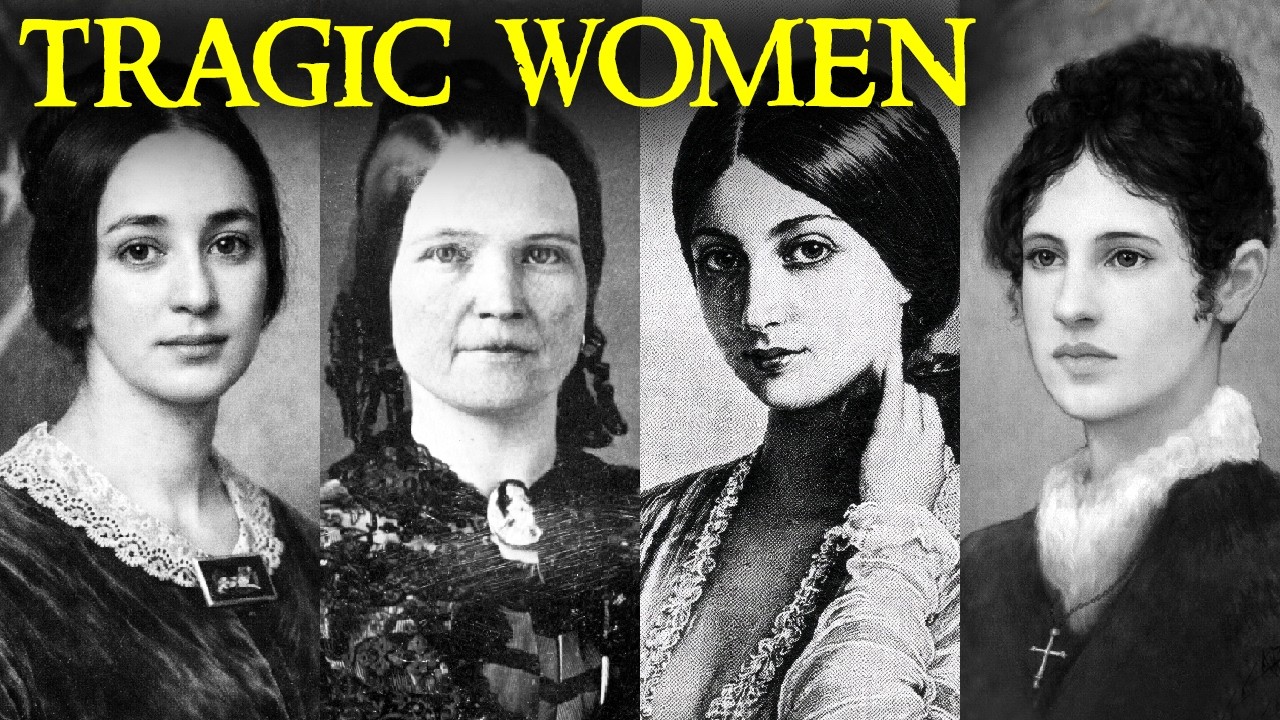
Born in New York City in 1836, she was the daughter of an Italian composer and opera director who moved in the city’s most cultured circles. Much of her youth was spent in the home of Lorenzo Da Ponte, the celebrated librettist who had once worked with Mozart. By her teenage years, Teresa spoke multiple languages and played several instruments. She was also strikingly beautiful, and her charm drew attention.
One of those who noticed her was Daniel Sickles, a lawyer and rising New York politician nearly 17 years her senior. Their families had known each other for years, and Daniel had even lived for a time in Lorenzo Da Ponte’s household when Teresa was still an infant. When the two met again in 1851, Daniel was immediately taken with her. Teresa’s family initially refused to consent to the match, but Daniel married her in a civil ceremony in September 1852.
She was about 16 years old. A religious ceremony followed after her family gave in. The marriage looked conventional at first. A daughter, Laura, arrived in 1853.
But Daniel was a known womanizer who had been censured by the New York Assembly for bringing a prostitute into the chamber. Shortly after Laura’s birth, he traveled to Britain on a trade mission and scandalously introduced the same woman to Queen Victoria. Back home, he won a seat in the U. S.
House of Representatives in 1856, and the family moved to Washington, settling near Lafayette Square. Teresa quickly became one of the capital’s most admired hostesses, earning the nickname Queen of Washington Society. Behind the scenes, her husband’s affairs continued. During President James Buchanan’s inauguration in March 1857, Teresa met Philip Barton Key II.
Philip was the U. S. Attorney for the District of Columbia, a widower with four children, and widely regarded as one of the most handsome men in the city. He was 18 years older than Teresa.
The two moved in the same social circles, and with Daniel frequently away on political business, they grew close. By the spring of 1858, the friendship had become an affair. For nearly a year, they met in secret. Philip rented a small house just minutes from the Sickles residence and signaled to Teresa by waving his handkerchief as he passed her home.
If she responded in kind, they would meet. The affair was known among the household staff, if not to Daniel himself. That changed on February 24, 1859, when Daniel received an anonymous letter revealing his wife’s betrayal. He confronted Teresa, who initially denied everything, then broke down and wrote a detailed confession.
Daniel forced her to promise she would never see Philip again. But Philip, who had heard nothing from Teresa for days, grew anxious. On February 27, he appeared in Lafayette Square, across from the Sickles home, and waited. Daniel saw him and believed he was signaling Teresa.
He armed himself with pistols and went out to confront him. According to an eyewitness, Daniel shouted, “You scoundrel, you have dishonored my house; you must die. ” Philip asked what for. Daniel fired.
The first shot grazed Philip’s hand. The two wrestled, and Daniel fired again, hitting Philip below the groin. Wounded, Philip staggered and tried to hide behind a tree, shouting, “Murder! Don’t kill me!
” Daniel moved closer and fired twice more from point-blank range. One shot misfired. The other struck Philip in the chest. Philip died in a nearby house shortly afterward.
Daniel surrendered at the home of Attorney General Jeremiah Black and was arrested. The killing became a national sensation. Daniel was held in a grim prison but received unusual comforts: meals from home, a heated room, and a steady stream of visitors. He hired eight lawyers led by James Brady of New York.
The prosecution was led by Robert Ould, a man of limited ability. When the trial opened on April 4, a huge crowd gathered outside the courthouse. During jury selection, observers estimated that 72 of the 75 men considered could be sympathetic to the defendant. The defense made an unusual argument: Daniel could not be held responsible because he had been temporarily insane, driven mad by the revelation of his wife’s affair.
As one of his lawyers put it, if Daniel had been in a state of white heat, was that not a justified passion for a man who had seen the unrelenting seducer of his wife? In effect, the murdered man became the one on trial. The defense tried to introduce Teresa’s confession as evidence, but the judge ruled it inadmissible. Daniel then leaked the confession to the press, where it was published in full, exposing Teresa’s private life to the nation.
The judge instructed the jury to consider that three days had passed between Daniel learning of the affair and the killing, which suggested premeditation rather than a spontaneous crime of passion. The jury deliberated for only an hour. They returned a verdict of not guilty, accepting the temporary insanity plea. That evening, Daniel hosted a party for 1,500 guests.
The aftermath was strange. Teresa and Daniel were briefly estranged but did not divorce. Teresa was vilified in the press and shunned by society. Daniel returned to Congress.
The couple eventually reconciled, which further outraged the papers. Then the Civil War swept the scandal from public attention. Daniel commanded troops at the Battle of Gettysburg in July 1863, where his right leg was shattered by a cannonball and amputated. The bones remain on display at the National Museum of Health and Medicine.
He later served as U. S. Minister to Spain and remarried after Teresa’s death. He died in 1914 at 94, and notably, he remains the only senior commander from Gettysburg without a statue, a silence that speaks to the shadow of the killing that defined him.
Teresa never recovered from the scandal. She withdrew from public life and spent her remaining years mostly in New York. She died of tuberculosis in Brooklyn on February 5, 1867, at just 30 or 31 years old. Despite the disgrace, her funeral in Greenwich Village was well attended because of her family’s connections.
The trial that consumed the nation had made her a byword for betrayal, but the legal principle it established, the temporary insanity defense, would echo through American courtrooms for generations to come.