For more than a century, the standard answer to the question of how many Americans died in the Civil War stood at roughly 620,000. That figure, long treated as the definitive toll of the bloodiest conflict in the nation’s history, was the product of painstaking scholarship by Union veterans and researchers in the late nineteenth century. Their work drew on military dispatches, regimental muster rolls, casualty reports, cemetery registries, census records, and pension applications, all pieced together into the most detailed accounting of wartime loss that the era could produce. In 1900, Thomas Leonard Livermore published Numbers and Losses in the Civil War in America, 1861 to 1865, a 171-page study that synthesized these findings and became the foundation of Civil War mortality statistics for generations.
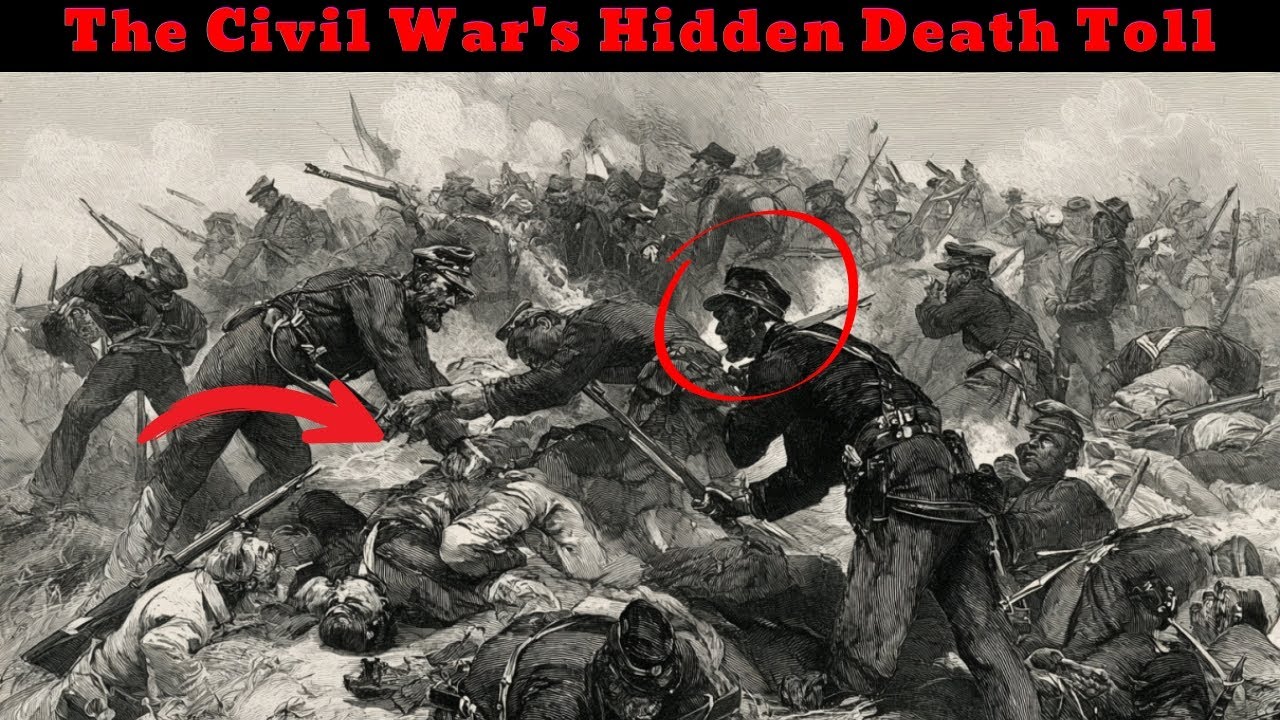
That estimate was never beyond dispute. Many historians suspected it understated the true cost, particularly for the Confederacy, whose recordkeeping was fragmented and whose soldiers suffered from disease and malnutrition at rates that were not captured by the standard calculations. The old figure rested on incomplete archives and rudimentary analytical methods, but no one had yet found a way to test it systematically. Then, in 2011, a demographic historian at the University of Minnesota upended the accepted number.
J. David Hacker, an associate professor of history, turned not to battlefield reports but to the census. By analyzing newly digitized census data from 1850, 1860, and 1870, Hacker examined the population of young men who should have been present in the 1870 count if the war had not occurred. He found a striking demographic void: roughly 750,000 young men were missing compared to projected peacetime survival rates.
The most logical explanation for their absence, he argued, was the war itself. His revised estimate placed Civil War deaths at approximately 750,000, with a plausible range between 650,000 and 850,000. The study, published in the journal Civil War History under the title “A Census-Driven Estimate of Civil War Fatalities,” was immediately recognized as a landmark. Historian Eric Foner called it a transformative milestone that amplified the war’s significance to an unprecedented degree.
Hacker was careful to clarify that his figures measured men missing from the census, not a definitive count of battlefield casualties, and he adjusted for undercounting, migration, and other demographic variables. The most compelling and logical explanation for their absence, he insisted, was the devastating toll of the conflict. Hacker’s methodology addressed a weakness in the traditional estimate. The 620,000 figure carried an unacknowledged margin of error, and its apparent precision was an illusion.
The original calculations relied on incomplete records and early postwar assumptions, and they failed to account for unrecorded deaths, particularly among African American soldiers and civilians in the South, where recordkeeping was often chaotic or deliberately suppressed. His demographic approach captured losses that the written records had missed entirely. His analysis also revealed stark regional disparities. White males born in southern states faced an elevated mortality rate of 13.
1 percent for those aged ten to forty-four. In the border states of Missouri, Kentucky, Maryland, and Delaware, the rate stood at 12. 7 percent. By contrast, men born in free states and territories experienced a considerably lower rate of 6.
1 percent. Most striking of all, the data showed that an astonishing 22. 6 percent of southern men aged twenty to twenty-four in 1860 died as a direct consequence of the war. That catastrophic loss decimated a generation, fractured families, disrupted economic structures, and left a lasting imprint on southern society.
Widows, orphans, and bereaved parents faced not only emotional devastation but the practical burdens of rebuilding their lives in a region ravaged by years of fighting. The revised number did not go uncontested. The American Battlefield Trust, while acknowledging the rigor of Hacker’s methodology, continued to uphold the traditional estimate of 620,000. The trust argued that Hacker’s broader range incorporated civilian fatalities and extended beyond the strict years of the conflict from 1861 to 1865.
His demographic approach captured deaths from disease outbreaks and economic collapse in war-torn regions, not merely losses on the battlefield. The trust maintained that battlefield and war-related casualties should remain the cornerstone of any estimate. Hacker defended his work in response. The traditional tally, he argued, carried an unacknowledged margin of error, and its apparent precision masked significant uncertainties.
The original figure derived from incomplete records and early postwar calculations that could not account for all the dead. By integrating modern statistical techniques, his research painted a more comprehensive picture of the war’s human cost. He invited historians and the public to think of the toll not as a fixed number etched in stone but as a range reflecting the complex and devastating realities of the era. Hacker’s analysis did not attempt to separate Union and Confederate casualties, because historical census data lacks the specificity needed to make such distinctions.
The evidence of regional mortality patterns, however, made the uneven burden of the war unmistakable. The South bore a disproportionate share of the loss, a fact that would shape its social and economic recovery for decades. Looking ahead, Hacker acknowledged that further refinements to national census data were unlikely to produce a markedly more accurate overall figure. But he and other quantitative historians saw promising opportunities ahead.
In 2022, comprehensively digitized US census records spanning 1850 to 1940 were released, giving researchers an unprecedented tool. The new dataset allowed scholars to trace individuals across multiple censuses, connect enslaved people to their enslavers, chart migration routes, and document changes in marital status, family structures, and household dynamics. By cross-referencing these records with military files, personal correspondence, and local registries, researchers could now examine how wartime displacement reshaped kinship networks and how economic upheaval altered household composition at the county level. Hacker described the moment as a thrilling era for historical scholarship.
The digitized archives promised to illuminate not only the statistical toll of the conflict but also its human dimensions, revealing stories of resilience, loss, and transformation that had never been visible before. The debate over the Civil War’s death toll is more than an academic exercise. It reshapes the nation’s understanding of a conflict that tore it apart. Each number in Hacker’s analysis represents not merely a data point but a narrative of individual sacrifice, communal grief, and endurance.
His research, grounded in demographic evidence, revised the quantitative record and deepened the comprehension of the war’s lasting reverberations across American life. The figures now point toward a tragedy of even greater magnitude than the one long taught in classrooms: the loss of more than 750,000 lives, each one a soldier who perished on battlefields like Gettysburg and Antietam, a family fractured by loss, a community forever altered. The re-assessment compels future generations to grapple with the moral and historical weight of a war whose full cost is still being counted.