On the evening of October 6, 1966, Doris Duke, one of the wealthiest women in America, sat behind the wheel of a rented car outside the gates of her Newport, Rhode Island mansion. Her art curator, Eduardo Tirella, had stepped out to open the iron gates. In the moments that followed, the car lurched forward, pinning Tirella between the vehicle and the gate. He died shortly afterward from his injuries.
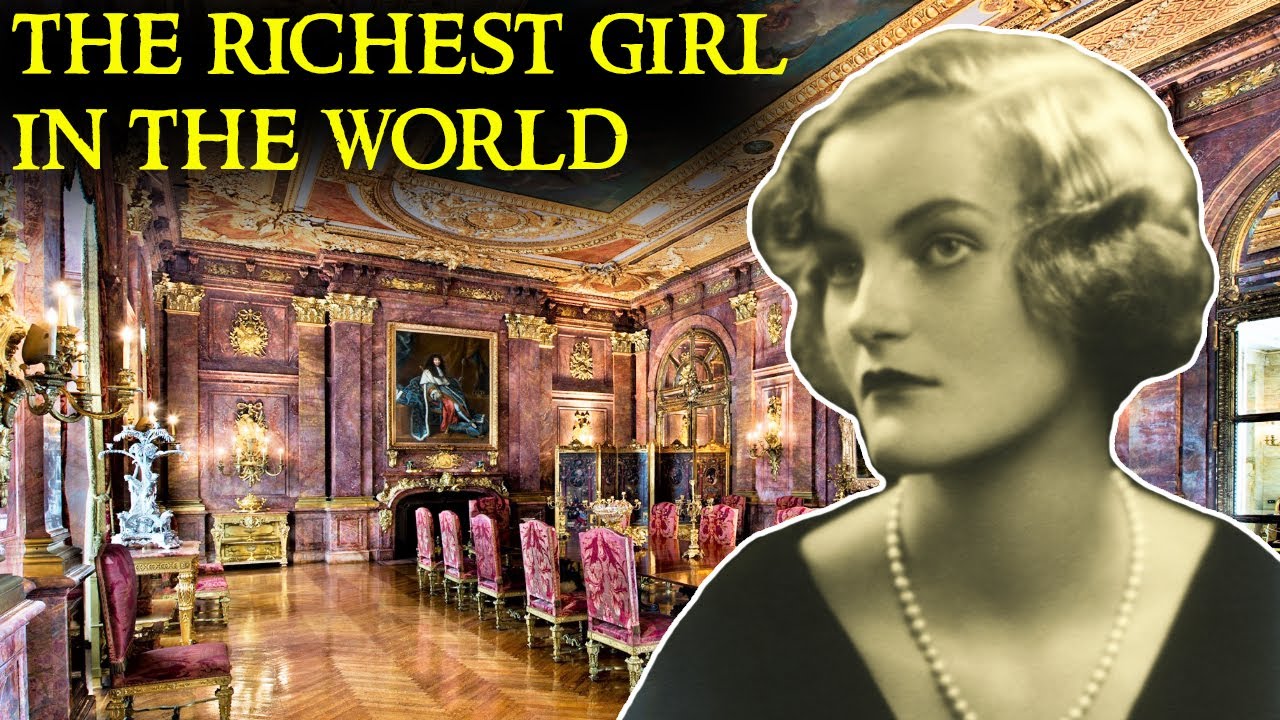
Duke later testified that she had only meant to move the car forward to collect him once the gates were open and had accidentally hit the accelerator. The physical evidence at the scene did not match that explanation, and the case would shadow the rest of her life. Doris Duke was born on November 22, 1912, in New York City, the only child of James Buchanan Duke and his second wife, Nanaline Holt Inman. James Duke had founded the American Tobacco Company in 1890 and had transformed the cigarette industry through innovations in paper rolling and the chemical manipulation of tobacco.
By the end of the nineteenth century, his company sold roughly ninety percent of all cigarettes smoked in the United States, at a time when smoking was more common among adults than not. The fortune this generated made the Dukes one of the wealthiest families in the country. James Duke also gave generously to Trinity College in North Carolina, which was later renamed Duke University in recognition of his funding. Doris grew up on Duke Farms, a 2,700-acre estate in Hillsborough Township, New Jersey.
When her father died in 1925, she inherited the bulk of an estate valued at upwards of one hundred million dollars, a sum exceeding one billion dollars in today’s terms. Because of her youth, control of the estate was structured to pass to her in tranches as she moved through her twenties. She came of age just as the United States plunged into the Great Depression. In the early 1930s, lavish debutante parties for Doris and her contemporary Barbara Hutton, the Woolworth heiress, drew both fascination and criticism from the American press.
The two were nicknamed the Gold Dust Twins, and Doris was individually labeled the richest girl in the world. In 1935, at the age of twenty-two, Doris stunned the celebrity press by marrying James Cromwell, an aspiring politician sixteen years her senior. Cromwell used her wealth to advance his own political ambitions. After an extended two-year honeymoon around the world, the couple settled briefly in Hawaii, where they built a mansion they named Shangri-La.
Their marriage began to unravel in the early 1940s. Cromwell was appointed U. S. ambassador to Canada, but Doris disliked the country and returned to Hawaii.
That summer, their first child was born prematurely and died the following day in Honolulu. The couple gradually drifted apart and divorced in 1943. The death of her child and the breakdown of her marriage marked a turning point in Doris’s life. Compounding her grief was the news that complications from the pregnancy made it almost certain she could never have more children.
She began consulting fortune tellers and others she believed could help her communicate with her dead daughter. More troubling was her growing reliance on alcohol and prescription drugs, including opiates. In 1947, she married for the second and final time. Her husband was Porfirio Rubirosa, a diplomat and playboy from the Dominican Republic.
The union caused considerable controversy, with the U. S. State Department warning Doris about allowing Rubirosa to use her wealth for his own political purposes. She provided him with immense sums regardless.
The marriage, marked by mutual infidelity, ended in 1951, with Rubirosa receiving a huge financial settlement that bizarrely included a converted B-25 bomber plane. Doris never married again, but she remained in the public eye through rumors of affairs with figures such as actor Errol Flynn and jazz pianist Joe Castro. One of the most unusual rumors held that she had briefly had an affair with General George Patton, but given that Patton was nearly thirty years older, this seems unlikely. Whatever the uncertainty around her personal relationships, her philanthropy was a matter of public record.
Between the 1940s and the 1980s, she invested substantially in the arts and horticulture. She had a particular interest in Islamic and Southeast Asian art, building an extensive collection of pieces from the medieval and early modern periods. Her horticultural interests centered on Duke Farms, where she had grown up. In the late 1950s, she began developing Duke Gardens, an extensive series of greenhouses, botanical gardens, and conservatories with artificial lakes and patios.
She took immense personal pride in the project and often spent long days working there herself. She also cultivated friendships with leading figures in the field, including Louis Bromfield, the Pulitzer Prize winner who established Malabar Farm in Mansfield, Ohio, on nearly a thousand acres with funding from Duke. She also wrote, briefly working as a journalist in Europe at the end of the Second World War for the International News Service, and later for a time as a correspondent. But as Duke aged, her mind began to deteriorate and her writing efforts trailed off.
By the 1960s, Duke owned homes across America, including properties in New Jersey, New York, Los Angeles, Rhode Island, and Hawaii. This required many staff to manage and maintain her estates. Eduardo Tirella, her art curator, had been employed by her for years, but in 1966 he decided to pursue a career in production design in Hollywood. When he went to tell her of his decision on the evening of October 6, the two ended up in a heated argument at her house at Rough Point in Newport.
They then got into a rented car to drive up to the house. When they reached the gates, Tirella exited the car to open them, leaving the engine running. Duke moved into the driver’s seat. The car crashed into him, smashing him between the vehicle and the gate.
The Tirella family sued Duke for wrongful death and received a settlement of approximately seventy-five thousand dollars, equivalent to about half a million dollars today. The investigation remained pending for several years, but Duke, who was quite probably intoxicated that evening, eventually avoided criminal charges. According to the accounts surrounding the case, she was able to do so through bribes and large public donations to the Newport town council and local charities. Although she avoided jail time, her reputation in Newport’s high society never fully recovered.
In the 1970s and 1980s, she became increasingly reclusive, and her already considerable alcohol and drug use increased further. Toward the end of her seventies, Duke’s medical advisors convinced her to undergo a series of operations. Some were necessary, such as a knee replacement, while others, including a facelift, were purely cosmetic. The knee replacement, though routine today, was still difficult in the early 1990s.
In Duke’s case it was botched, leaving her confined to a wheelchair for the rest of her life. During this post-operative period, increasingly frail and disoriented, Duke signed a new will making her butler, Bernard Lafferty, the primary beneficiary of her estate. Lafferty had been hired years earlier more as a drinking companion than for any real skill in service. The change took on a sinister tone just months later when Duke experienced a bout of choking on her food and Lafferty refused to call an ambulance.
Weeks later, after several trips in and out of the hospital and while medicated on large amounts of morphine and other painkillers, she died on October 28, 1993, at the age of eighty. Her ashes were scattered in the Pacific Ocean. Contention over her estate, valued at 1. 3 billion dollars, erupted immediately.
Lawyers representing various parties accused Lafferty of manipulating Duke into altering her will in her final months. The California courts eventually intervened, deciding that the Doris Duke Charitable Foundation would receive a very large proportion of the estate. Lafferty still received a one-time payment of 4. 5 million dollars and half a million dollars annually thereafter.
He left for Los Angeles, where he died in 1996. Shortly before his death, he was exonerated in an investigation launched by the district attorney of Los Angeles to determine whether Duke had been murdered or died from complications of her medical conditions. In 2020, investigative journalist Peter Lance of the Newport Daily News published a new report on the circumstances of Eduardo Tirella’s death in 1966. After a fresh assessment of all the evidence, Lance concluded that Duke had not only purposefully driven into Tirella while he was opening the gate, but had also run over him a second time after he was on the ground.
He further concluded that official reports had been doctored, with parts removed from what was made available to the Tirella family. The exact truth of what happened that night may never be fully known, but the accusation added a final, unresolved chapter to the life of a woman whose wealth had always set her apart, and whose later years were defined by tragedy, controversy, and the suspicion of far worse.