Lady Sarah Spencer was the first Spencer daughter to catch the eye of the Prince of Wales. She was born in 1955 at Park House on the Sandringham estate, into a family that seemed to come already framed in oil paint. Her father, John Spencer, Viscount Althorp, had served as an equerry to both King George VI and Queen Elizabeth II.
Her mother, Frances Roche, was young, beautiful, and connected to the court through her own formidable mother, Ruth Fermoy, a close friend and lady-in-waiting to the Queen Mother.
The Spencer marriage looked perfect from the outside, but beneath the polish sat the old pressure that haunted great families: produce heirs, behave well, and never let private misery become public property. Sarah arrived first, bright and red-haired, a daughter where a son was wanted. Two years later came Jane, quieter and steadier.
Then came a baby boy, John, who lived only a few hours. Diana arrived in 1961, another girl, another soft blow to dynastic hopes. Finally, in 1964, came Charles Spencer, the longed-for son.
Sarah was not made for the shadows. She had a boldness about her, a sense that life was happening somewhere nearby and she ought to be in the middle of it. She had wit, and wit in a young aristocratic woman could be both an ornament and a danger.
It pleased people at dinner. It worried them in print.
The Spencer marriage began to crack when the children were still young. Frances, who had married at 18, found herself trapped in a life that had looked glamorous from the outside and suffocating from within. She fell in love elsewhere, and in 1967 she left.
By 1969, the marriage was legally over. The custody battle that followed left marks. Their father kept the children.
Their mother, judged and criticized in the brutal way society often reserved for women who left, became both present and absent, beloved and blamed.
Sarah was old enough to understand more than the adults wished she did. Diana was young enough to feel abandoned without being able to untangle why. Jane learned to be careful.
Charles, the little brother, inherited the weight of everyone's hopes.
By the time Sarah came of age, Britain itself was changing faster than her family's world wanted to admit. The 1960s had loosened tongues and taught young people that confession could be fashionable. The 1970s brought economic gloom, strikes, and a press that had grown less reverent.
The palace still preferred silence. Society still preferred coded speech. But newspapers were beginning to understand that the private lives of public people could sell more copies than any formal portrait.
Prince Charles was growing up inside that tension. He was born to be king, which meant everyone around him treated romance as if it were a matter of national maintenance. He was expected to choose a wife who was aristocratic enough, Protestant enough, untouched enough, discreet enough, and willing enough to live inside a machine that ate privacy for breakfast.
Most of all, she had to know when to speak and when to let silence do the work. That last requirement would become Sarah Spencer's undoing.
In 1975, Sarah's grandfather died, and her father became the eighth Earl Spencer. The family moved more fully into the world of Althorp, the great Spencer seat in Northamptonshire. Sarah became Lady Sarah.
Jane became Lady Jane. Diana became Lady Diana. Titles can sound like gifts, but they can also turn young women into possibilities.
At Althorp, Sarah was not just a daughter. She was a Spencer daughter.
Sarah entered London life with the energy of someone determined not to be buried under ancestral expectations. She had had struggles, including anorexia in her early 20s, a painful fact that later became part of the public story in a way no private wound should. Beneath the bright hair and quick tongue was a young woman living under pressures that were not decorative.
They were real.
And then came Charles. They met in the late 1970s at a moment when the Prince of Wales was approaching the age where his bachelorhood had become less charming to the people around him and more inconvenient. Sarah seemed at first like an excellent candidate.
She was aristocratic. She was from a family the royals knew. She understood horses, country houses, and the peculiar social grammar of people who could insult one another with a seating plan.
She was not dazzled by royalty in the way an outsider might be, because royalty had always been nearby.
Sarah had personality. Not the bland, polished sweetness that royal advisers often mistook for stability, but real personality. She could tease, she could talk, she could make a room feel less embalmed.
Charles, who could be shy and self-conscious, was drawn to women who made him feel less trapped inside his role. But there is a catch with women who make powerful men feel ordinary. Sometimes the men love it only until other people notice.
Their romance was never the great love story that later mythmakers tried to find in every corner of Charles's life. It was a courtship of dinners, weekends, mutual circles, and possibility. Still, possibility was enough.
The press began to look. Friends began to speculate. Older women, the unofficial marriage brokers of Britain's upper class, began to calculate.
In 1977, Charles came to Althorp while he was seeing Sarah, and Diana, then 16, crossed his path. Later retellings would turn this into a scene thick with destiny. Real life was more casual and more revealing.
Diana was not presented as a future princess. She was Sarah's little sister, the girl on the edge of the adult world, noticing everything. Charles noticed her, too, but not as a man notices his future wife in a fairy tale.
There was no thunderclap. Just a meeting that meant little at the time and everything later.
Sarah remained the woman in view. She was the one invited, discussed, and photographed. But the more attention gathered around her, the more dangerous her own nature became.
Sarah liked to talk. Not foolishly all the time, and not maliciously, but openly, with a casual bravado of someone who had not yet learned that journalists do not collect remarks like friends collect confidences. They collect ammunition.
Among journalists, Sarah's openness made her interesting. She was far easier to approach than the palace. The palace was a fortress of statements, denials, and frosty nothingness.
Sarah was lunch.
The lunch became famous for a reason, but not because it began as a great conspiracy. Sarah met two reporters, James Whitaker and Nigel Nelson, at a restaurant, and the conversation turned toward Charles, the romance, and Sarah herself. Perhaps she thought she could charm them.
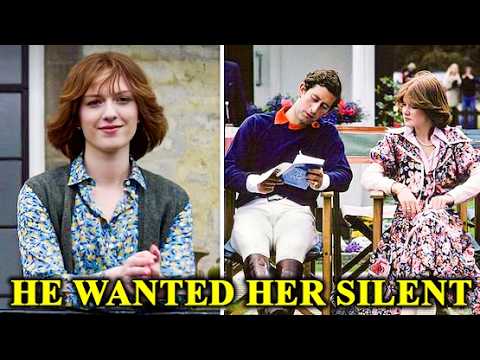
Perhaps she thought she could control the tone. If so, she misunderstood the age she was living in.
Sarah gave them what every reporter dreams of: a subject who did not sound rehearsed. She spoke about herself in a way that would have been startling even without Charles. She referred to her struggles with anorexia, a deeply private illness that society at the time barely knew how to discuss with kindness.
She talked about trouble at school, about drinking, about her past, about boyfriends. But once spoken, it no longer belonged to her.
And then came the line that attached itself to her like a label sewn inside a coat. Sarah said she was not in love with Prince Charles. She said she would not marry anyone she did not love, whether he were a dustman or the king of England.
It was a magnificent sentence in every way except the one that mattered. As a statement of romantic principle, it was almost noble. As a remark from a young woman being considered as a possible future Princess of Wales, it was dynamite wrapped in lace.
What she really said, whether she intended to or not, was this: the prince is not enough. That was the unforgivable part. The wound was in the suggestion that Charles, with all his titles, houses, uniforms, and destiny, still had to be loved as a man.
And if he was not loved, he could be refused.
When Charles saw the article, he was furious. His anger was not only the anger of a boyfriend embarrassed by a girlfriend. It was the anger of a man who believed a sacred line had been crossed.
He had allowed Sarah near his private life, and she had taken that nearness into print. He is said to have told her she had done something incredibly stupid. It was a cold sentence, and coldness from Charles could be more punishing than rage.
The press, of course, had its story. Sarah was no longer simply the eligible aristocrat beside Charles. She became the girl who talked.
The phrase was not always spoken aloud, but it hovered around her. She had talked about herself. She had talked about the prince.
She had talked too freely, too brightly, too much.
Charles did not forgive easily when embarrassment was involved. The romance, such as it was, began to curdle. In their world, endings often came disguised as fewer invitations, a call not returned quickly, a weekend that somehow did not include her, a tone that altered.
Sarah had not been formally engaged, so there was nothing to break. She simply moved from possible future princess to cautionary tale.
Diana was watching all of this from the younger sister's place, near enough to feel the heat, not yet old enough to be burned by it. She saw Sarah rise into royal notice, and then, with astonishing speed, lose her footing. She saw that Charles's warmth could vanish.
She saw that the press could flatter a woman one day and trap her the next. But Diana did not yet know that these lessons were being stored for her.
Sarah's disaster with the press would become one of the first strange bridges between Diana and Charles. Without Sarah, Charles might not have noticed the younger sister in quite the same way. Without the failed romance, Diana might have remained only a Spencer child on the edge of his acquaintance.
Sarah's offense was different from anything Diana would later do. She embarrassed Charles at exactly the point where he was most vulnerable: the gap between being desired as a prince and being loved as a man. Her dustman line had made the public laugh or gasp or lean closer over breakfast.
But for Charles, it asked a private question he did not want printed in black ink. If he were not the Prince of Wales, would he be enough?
After Sarah, Charles did not stop needing women. He simply became more careful about which women were allowed to be seen needing him back. A woman who talked could not be trusted.
A woman who seemed unlikely to talk too much could be idealized. Sarah had shown him what he feared. Diana would soon show him what he wanted to believe.
In May 1980, Lady Sarah Spencer married Neil McCorquodale, a tall, steady figure from a family with the right sort of connections and none of the constitutional thunder that came with Prince Charles. It was a good marriage in the way aristocratic marriages like to appear good. Neil was not a prince.
That may have been his greatest recommendation. He did not require a young woman to become a symbol before breakfast.
Diana, meanwhile, was walking towards the stove with flowers in her hands. The courtship between Charles and Diana moved with a speed that looked romantic from a distance and alarming up close. They had not spent very much time alone together.
Diana was 19, which sounds painfully young now, and was painfully young then, too. She had the right blood, the right religion, the right family, the right blush, and the right lack of a complicated past. In the cold language of palace suitability, she was almost perfect.
Charles proposed in February 1981. Diana accepted, of course. The engagement announcement was staged with the careful cheer of royal theater.
Then a reporter asked whether they were in love. Diana answered quickly. Of course.
Charles added, "Whatever in love means." There are sentences that behave like cracks in porcelain. At first, people pretend not to see them.
Later, they say the crack was always there.
By the time of the engagement, Diana had become aware that Camilla Parker Bowles was not merely an old friend. The famous lunch between Diana and Camilla before the wedding has often been retold because it contains the particular poison of polite society. Two women, one young and engaged, the other older and established, sitting together as if everything were civilized.
Beneath the manners lay a message Diana could feel, even if she could not yet fully name it. There are parts of him I understand better than you do.
As the wedding approached, Diana's doubts grew. She found a bracelet Charles had intended for Camilla, engraved with private initials. She confronted Charles, and the explanations did not heal her.
Diana reportedly considered calling the wedding off. Her sisters Sarah and Jane are remembered as telling her it was too late, that her face was already on the tea towels. By then the wedding was not merely a family event.
It was a national production.
On the 29th of July 1981, St. Paul's Cathedral became the stage for one of the most watched weddings in modern history. Sarah was there, of course.
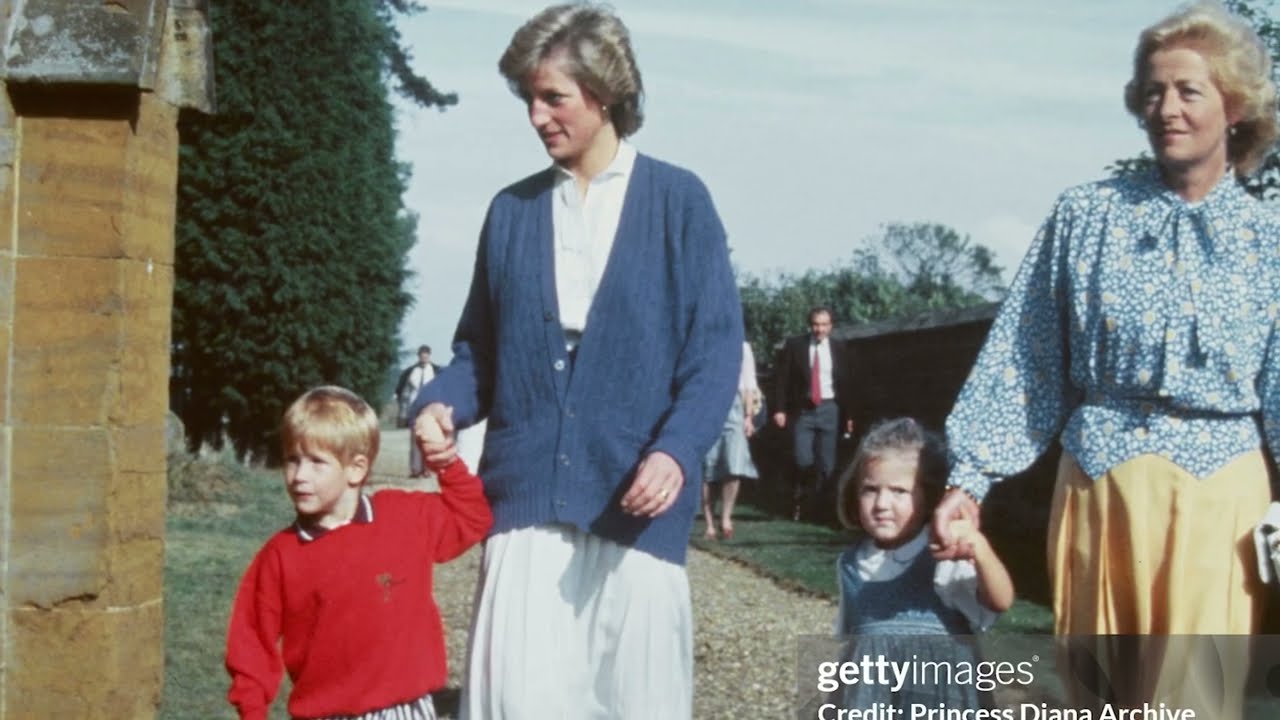
She was not the bride, not the future queen, not the center of the world's gaze. She was family, witness, former possibility. She had once been the red-haired Spencer girl linked to Charles.
Now she watched her younger sister marry him before the world.
But a wedding is not a marriage. It is only the most expensive question. In the early days, Diana tried to become what everyone needed.
She wanted Charles to look at her not as the suitable girl everyone had approved, but as the woman he could not bear to lose. Charles found her appealing, affectionate, and at times charming, but the emotional demands of marriage soon unsettled him. Diana needed reassurance with an urgency he did not know how to meet.
His response was often to withdraw, which only deepened her panic.
Sarah had rejected Charles because she was too publicly uncontrolled. With Diana, he discovered a different form of emotional force. Diana did not embarrass him at lunch with reporters.
Not then. She embarrassed him in private by needing more than he could comfortably give. Sarah had made him feel exposed to the world.
Diana made him feel exposed at home.
Soon came pregnancy. When William was born in June 1982, the public celebrated as if the fairy tale had produced its proof. The heir had an heir.
Motherhood gave Diana a love that was immediate and fierce. In William, she found the unconditional bond she had craved. Charles was pleased, proud, and relieved.
But fatherhood did not repair the emotional mismatch between husband and wife.
By the time Prince Harry was born in September 1984, the marriage had both fulfilled its central public duty and deepened its private fracture. Diana had given birth to two sons, securing the succession handsomely. What they did not have, at least not in the way Diana needed and Charles could sustain, was each other.
The public loved the version of Diana it saw. She drew crowds, softened Charles's image, and revived glamour around the monarchy. She bent toward children, smiled at old women, and looked at ordinary people as if she actually saw them.
That was not training. That was instinct. The public felt it immediately.
Charles felt something else, too. He was being eclipsed. Crowds began calling for Diana when Charles was standing beside her.
The man born to be king found himself playing second lead in his own marriage.
Diana's loneliness did not remain decorative. It moved into her body. Her struggle with bulimia, which had begun early in the marriage, became one of the secret languages of her distress.
There is a family echo here that is almost too painful. Sarah herself had suffered from anorexia as a young woman. She knew in her own way what aristocratic pressure, emotional chaos, and female scrutiny could do to a body.
She had once spoken about it too openly, and the admission had been folded into the evidence that she was unsuitable. Now her younger sister was suffering under a larger, crueler spotlight.
By the late 1980s, Charles and Camilla's closeness had deepened again. Their relationship, complicated from the beginning, was no longer merely a memory of youth or a harmless friendship. It became, in emotional truth and then in physical truth, the central intimacy Charles did not find in his marriage.
To Diana, that was not comfort. It was theft.
In 1986, Diana did something that revealed the change in her. At a party, she confronted Camilla. Diana found a moment away from the crowd and told Camilla she knew what was going on.
Camilla reportedly asked what more Diana could want, since she had all the men in the world falling in love with her and two beautiful children. Diana's answer was the simplest and most devastating one. She wanted her husband.
By the early 1990s, Diana had learned the terrible difference between being loved by the public and being protected by a family. The public could cheer her, but it could not sit beside her at night when the marriage had gone silent again. So Diana began to do what the royal world feared most.
She began to think about telling.
Andrew Morton's book appeared in 1992 and it landed like a chandelier falling in a ballroom. It told of Diana's bulimia, her loneliness, her suicide attempts, her misery within the marriage, and the shadow of Camilla. It presented the fairy tale not as a dream gone slightly cold, but as an emotional disaster wrapped in silk.
The prince who had once recoiled from Sarah's careless candor now faced a wife whose pain had become a national text.
In December 1992, Prime Minister John Major announced in the House of Commons that Charles and Diana were separating. The language was formal, restrained, and almost bloodless. The fairy tale had not merely cracked.
It had been removed from public display.
Then came the tapes. A telephone call between Diana and a close male friend, James Gilbey, was recorded years earlier and eventually found its way into the press. It was intimate, foolish in places, affectionate, and deeply embarrassing.
Then Charles suffered his own humiliation, far worse in consequence. Another intercepted call, this one between Charles and Camilla, emerged into public knowledge. It was private, affectionate, and sexual in a way that made people both gasp and laugh.
The future king raised inside ceremony had been reduced to an object of tabloid ridicule.
In 1994, Charles cooperated with a televised documentary by Jonathan Dimbleby meant to show him as thoughtful, serious, and human. It also produced the admission that his marriage had broken down before he resumed his relationship with Camilla. After years of hints, evasions, and coded reports, the heir to the throne had acknowledged adultery on television.
Diana watched and the old wound opened publicly again. Her response was not a speech. It was a dress.
That same evening, she attended a party at the Serpentine Gallery, wearing a black off-the-shoulder dress so striking that newspapers later turned it into a symbol of revenge. She did not need to say a word. The message was legible from across the Atlantic.
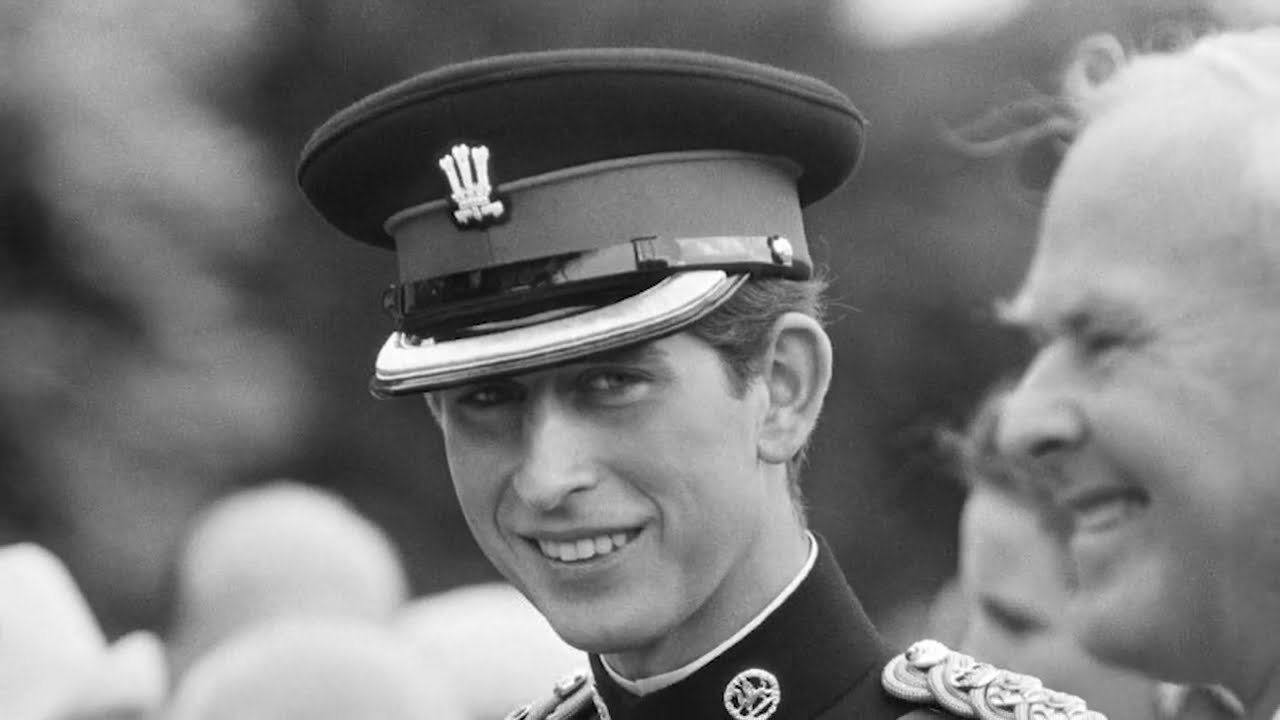
When Diana finally sat down for the interview that would change everything, she did not look like a woman about to overthrow a palace. She looked calm, almost too calm, in a dark suit, with her head tilted slightly forward and her eyes fixed in that familiar mixture of softness and steel. The interview aired in November 1995, and it felt less like television than a door opening inside a locked house.
She spoke about bulimia. She spoke about self-harm. She spoke about feeling unsupported.
She spoke about Camilla. And then came the sentence that landed with the force of a glass breaking in church. "There were three of us in this marriage, so it was a bit crowded."
It was devastating because it sounded almost polite. Diana had turned years of humiliation into one line that any woman could understand.
For Charles, this was the final form of the nightmare that had begun in miniature with Sarah. Sarah had once talked and embarrassed him. Diana talked and changed his life.
Sarah's careless lunch had made him feel publicly judged as a man. Diana's interview made him publicly judged as a husband, a prince, and the future king.
In December 1995, the Queen wrote to Charles and Diana advising them to divorce. The divorce was finalized in August 1996. Diana remained Diana, Princess of Wales, but she lost the style of Her Royal Highness.
She was still famous, still beloved, still the mother of the future king, but not fully inside the royal shield.
After the divorce, Diana's personal life became a new theater for public judgment. By 1997, her closeness with Dodi Fayed, son of Mohamed Al-Fayed, was being photographed with a hunger that felt almost feverish. Summer images from the Mediterranean made the former princess look glamorous, free, and pursued all at once.
On the last night of August 1997 in Paris, privacy and pursuit collided catastrophically. Diana and Dodi left the Ritz Hotel. Photographers followed.
The car entered the tunnel near the Pont de l'Alma. Then came the crash that stunned the world into a silence unlike any royal silence before it. Diana was dead at 36.
For Sarah, this was not the death of an icon first. It was the death of her sister. The world lost Diana, Princess of Wales.
Sarah lost the little girl who had once watched her from the edge of the Spencer childhood. Prince Charles flew to Paris to bring Diana home, and Sarah and Jane went with him. There is something unbearably layered in that journey.
Charles, the former husband. Sarah, the former girlfriend he had never forgiven for talking. Jane, the sister tied through marriage to the royal household.
Together they traveled towards the body of the woman who had connected them all and broken them all open in different ways.
When Diana's coffin returned to Britain, the public grief became a phenomenon the monarchy had not expected and did not immediately understand. Flowers piled outside Kensington Palace. People cried in the streets.
The Queen stayed at Balmoral at first with William and Harry, trying to protect the boys in the royal family's own way. But the public read that restraint as coldness.
Charles Spencer, Diana's younger brother, became the voice of family fury at the funeral. His eulogy at Westminster Abbey was one of the most extraordinary public rebukes ever delivered under royal stone. He praised Diana's compassion and criticized the forces that had hunted her.
He promised that her blood family would help guide William and Harry, so their souls were not simply immersed in duty and tradition.
Sarah was there, listening as her brother spoke not only to mourners, but to the institution that had shaped and wounded their sister's life. It was a Spencer moment in the most dramatic sense. Proud, emotional, theatrical, aristocratic, and defiant.
Diana was buried at Althorp on an island in the ornamental lake, away from the crowds and yet forever drawing them. It was a final return to the Spencer landscape. The Windsors had given her title.
The Spencers gave her burial.
Sarah's role after Diana's death became quieter, but meaningful. She helped with the work surrounding Diana's memory, including the memorial fund created in her name. Time transformed her from gossip item to witness.
But the old label followed her. Charles's girlfriend who talked.
It sounds almost comic until one sees the whole pattern. Sarah talked and Charles never forgave it. Diana talked and the monarchy never fully recovered from it.
Charles talked too eventually in interviews meant to explain him and found that confession did not always produce sympathy. Camilla did not talk much at all for years, and her silence became both shield and accusation.
Sarah's famous line about not marrying anyone she did not love, whether he were a dustman or a king, remains striking because it is the simplest moral statement in the entire saga. It was treated as foolish because it embarrassed a prince. It now sounds almost prophetic.
She had named the question everyone else tried to decorate. Can rank replace love? Can duty substitute for devotion?
Sarah answered no before anyone wanted to hear it. Diana answered no later, after trying with all her heart to make yes possible.
That is why Sarah's story should not be dismissed as a prelude or a funny old royal anecdote. She was the warning at the gate. She showed in one youthful burst of candor that the royal marriage market was not only about romance.
It was about obedience, discretion, and the careful management of male pride. And Charles, in failing to forgive her, revealed himself, too. He was not simply a prince offended by gossip.
He was a man deeply sensitive to being made small.
In the end, Lady Sarah Spencer's greatest significance lies in the thing she was punished for: speech. Not wise speech, not strategic speech, not polished speech written by advisers. Human speech.
Careless, proud, wounded, self-protecting, alive. She spoke as if a prince were not automatically a destiny. She spoke as if love mattered more than rank.
She spoke as if she still belonged to herself.
That is why Charles did not forgive it. Because for one bright, reckless moment, Sarah Spencer treated the Prince of Wales not as the future king of England, not as the prize at the center of a national courtship, but as a man who could be weighed, doubted, and even declined. The palace heard indiscretion.
History hears something sharper. Before Diana's wedding, before the crowded marriage, before the tapes, before the black dress, before the interview, before the flowers outside Kensington Palace and the funeral at Westminster Abbey, Sarah Spencer had already asked the question that would haunt them all. What is a crown worth without love?
No one in that world wanted to answer her then. They spent the next 20 years answering anyway.