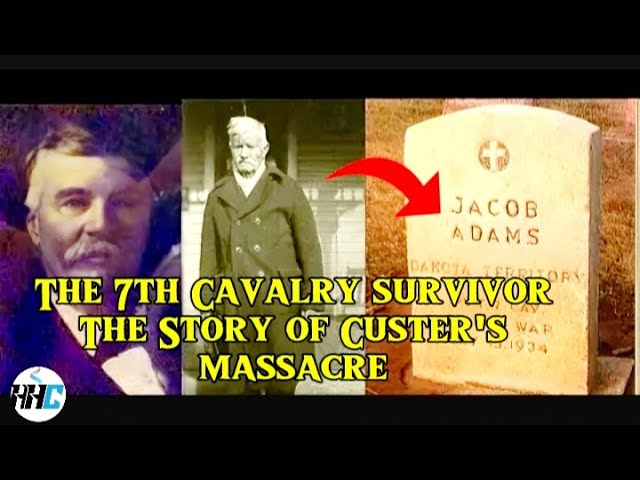
The account of Private Jacob Adams, a survivor of the 7th United States Cavalry, offers a rare and harrowing glimpse into the events surrounding the Battle of Little Bighorn. His recollections, preserved from a suppressed 1876 account, detail the lead-up to the infamous conflict, the brutal realities of the fight, and the grim aftermath that claimed the life of General George Custer.
Adams began his service with Company H of the 7th Cavalry in Yankton, South Dakota, before a transfer to Fort Lincoln. The unit prepared for the Yellowstone expedition, engaging in a skirmish with Indians near the Yellowstone River on August 4th. It was during this period that tensions with the Sioux intensified, particularly involving a chief known as Rain in the Face.
Rain in the Face was implicated in the deaths of two civilians, including Dr. Hansinger, near the Standing Rock agency. Captain Tom Custer was dispatched with 50 men to apprehend him.
A scout provided a description of Rain in the Face, and he was captured at a store and taken to the guard house at Fort Abraham Lincoln to face murder charges. While imprisoned, Rain in the Face formed a friendship with a private soldier who showed him kindness, a detail that Adams noted as significant. Rain in the Face later escaped and joined Sitting Bull’s hostile forces.
In the spring of 1876, an expedition was organized at Fort Abraham Lincoln. Adams was part of the unit that traveled to the Powder River, covering roughly 500 miles before setting up camp. During a scouting mission, Major Reno and six companies uncovered a substantial Indian trail and alerted General Terry, the commanding officer.
The command was ordered to march, and by June 23rd, they had covered significant ground. Adams was assigned to a detail under Captain McDougall.
On the morning of June 25th, the troops prepared for action. General Custer organized his forces into three battalions. Companies A, G, and M were assigned to Major Reno.
Companies D, H, and K were entrusted to Captain Benteen. Custer retained Companies C, E, F, I, and L for himself. As Custer led his five companies toward the Indian village, he raised his hat and rallied his men, setting the pace for the attack.
The terrain presented a natural obstacle. A bluff with steep, rocky sides stretched roughly five miles parallel to the river. The final mile leading to the head of the village was fully visible to the Indians, giving them ample time to concentrate their forces.
Adams observed that the troops were shaken by the first volley and withdrew from the ford to the hills approximately 300 yards behind. The ground at the ford showed numerous dead horses, indicating the intensity of the initial assault.
Adams later found General Custer on a small, barren rise, surrounded by a ring of dead horses that had been shot to form a makeshift barricade. Captain Tom Custer, Boston Custer, and Assistant Adjutant General Cook were with him. General Custer had two wounds, one above his left eye and one in his right side.
He had not been scalped, but a single cut on his neck appeared to have been inflicted after his death. Blood was still leaking from the cut, dripping down his face and mustache.
Captain Tom Custer’s body was badly mutilated and stripped bare, save for his stockings. Adjutant Cook, known for his lengthy side whiskers, had them cut off along with other mutilations. Adams noted that one private soldier who had shown kindness to Rain in the Face remained untouched, save for his coat being placed carefully over his face as if to protect it from the sun.
Adams believed that Rain in the Face had ordered the Indians not to harm this soldier.
The entire command of five companies met a tragic end. Only two people from Custer’s command escaped. One was a Crow Indian scout named Curly, who arrived at Benteen’s position.
Many soldiers thought Curly had never really been in the battle, but had fled at the first hint of trouble. The other was General Custer’s orderly bugler, John Martin, who was sent back with a dispatch. He told the soldiers that when he left Custer’s side, they were still within sight of the Indians.
Meanwhile, Major Reno’s troops had to cover roughly five miles to reach the ford on the left side of the village. They were aiming to synchronize with Custer’s arrival, but the situation became chaotic. Reno’s men faced an open stretch after crossing the river, and the Indians unleashed a devastating volley.
Troopers were lassoed from their horses and dragged into the center of the village. The horses stopped and retreated uncontrollably as they charged across the barrage of Indian fire.
Benteen’s battalion moved toward the center, bringing along the pack train, which had been positioned roughly a mile behind. Benteen’s soldiers saw the dire circumstances of Reno’s men, and only a small number of Reno’s soldiers were able to escape the deadly ambush and arrive at Benteen’s position. Adams was at the pack train, about a mile from Benteen’s presence.
Captain McDougall warned him, “Back your horse, Adams, or you’ll get yourself killed.”
When Adams arrived at Benteen’s battalion, there was a brief pause in the fighting. He rode up to the crest of a hill to survey the valley below when Captain Benteen yelled, “Pull back, see the Indians just beyond the hill, lying as densely as possible on the ground.” It was around 1:00 p.
m. They could clearly hear intense gunfire coming from the right, presumably from a ridge that resembled a railroad embankment.
The officers quickly discussed the situation and decided to assume a defensive stance. They retreated to their previous position for no more than half a mile until they came across a group of Indians who were relying in ambush just beyond the ridge. One company offered cover for their withdrawal.
By 5:00, the majority of the men were at their lines, and the fighters fought fiercely from all directions, not stopping until about 8:00 had fallen.
Adams’s bunkmate, George L, was severely wounded and frantically pleaded for water. Volunteers were called to fetch water from the river. Adams stepped forward, carrying a camp kettle.
He descended a small ravine, shielded from the Indians’ gunfire. At the end of the ravine, there was a narrow open space of about 30 yards, directly facing the woods where Reno’s men had suffered earlier in the day. Adams felt a jolt, and upon inspection, he found a bullet had pierced his kettle.
He had to get a new one and go again.
The fighting continued through the night. On the morning of the 26th, the Indians opened fire, starting a fierce battle along the whole front that continued unabated until around 9:00 in the morning. Despite the intense hand-to-hand fighting, the Indians showed incredible determination in seemingly endless numbers.
Captain Benteen ordered a charge, and the unit retreated to their previous position.
Adams’s tentmate, Thomas Meadows of West Virginia, was struck by a serious wound in his right breast. Adams tried to carry his wounded comrade back over the ridge, but Meadows was struck by another bullet, instantly ending his life. Adams had to let go of his body and run for cover.
Glancing back, he saw an Indian holding a long stick with feathers trying to reach Meadows’s body. Adams noted with disgust that the Indians never dared to try such a thing again.
The terrain on which the unit made its final stand was unusual. They were positioned in a large basin with their horses in the center. They laid on the ridgetops along the outside of the basin as the Indians surrounded them and attacked from all directions.
The company suffered more casualties than the other companies, and there was only one shovel among them. They started to build breastworks as nightfall, but the Indians never returned, probably because their scouts had discovered that General Terry was approaching.
Early on the morning of the 27th, Generals Terry and Gibbon arrived. Until then, Custer’s fate remained a mystery. A squad from the remaining 7th Cavalry rode toward the last known whereabouts of Custer.
They traversed the bluffs and soon came across horses. Adams, riding somewhat apart from the others, spotted a small hill covered with dead white soldiers. The entire unit soon gathered at the tragic site, but a few words were exchanged.
The only survivor amidst the carnage was Comanche, Captain Keogh’s beloved horse. As Adams approached, he found the mortal remains of the brave Custer. Signing to Captain Benteen, he said, “Captain, here’s General Custer.”
Benteen replied regretfully, “That sure looks like General Custer.” The horse was sitting on his hind quarters with his front feet touching the ground. As they got closer, a couple of men dismounted and helped him stand, but he slipped away, leaving him weak.
That evening, Comanche made his way into the camp despite being peppered with bullets. He was taken to Terry’s unit steamboat and taken east with the wounded soldiers. The fallen soldiers from different units were laid to rest wherever they were discovered, and every officer from Custer’s unit was given a dignified burial.
When Adams returned to the battlefield two years later, he saw the remains of the dead spread in the sun, their bodies excavated by coyotes and wolves.
Adams’s account stands as a sobering reminder of the brutality of the Battle of Little Bighorn. His testimony preserves the names, the moments, and the horrors of that day, ensuring that the sacrifice of the 7th Cavalry is not forgotten.