The Apache of the American Southwest were never a single unified nation, but a collection of related bands who shared a language, a territory, and a way of war that defied every empire that tried to crush them. For centuries, they held off the Spanish, the Mexicans, and finally the United States, not through overwhelming numbers or superior technology, but through an intimate knowledge of the land and a ruthless, patient approach to combat.
To the Spanish, they were diablos. To the Mexican army, they were nightmares made flesh. To the US cavalry, armed with modern rifles and Gatling guns, they were nearly unbeatable.
A few hundred guerrillas managed to tie down thousands of professional soldiers for generations. Their success was not an accident. It was a strategy born of survival, forged in the furnace of a landscape so harsh it could kill a man who did not understand it.
The core of Apache warfare was not pitched battle. It was evasion, ambush, and psychological terror. They understood that a soldier in a heavy uniform, carrying a full pack, was no match for a warrior who could travel light and move fast.
When pursued, they scattered like quail, only to regroup on the flanks of their pursuers, turning a chase into a phantom hunt. The goal was not to win a decisive engagement, but to wear down the enemy through constant vigilance, exhaustion, and the fear of an attack that could come from anywhere.
Their mastery of disguise was legendary. A warrior could strip bare, cover his body with clay or sand, and bundle his head and shoulders with yucca shoots or sacaton grass. In this state, he could lie motionless in the open, so perfectly camouflaged that a man could nearly step on him before noticing his presence.
They used this skill to infiltrate the very edges of military camps, leaving their tracks beside water jars and barracks. They preferred the lance or the bow for these silent attacks, weapons that made no noise. A body might not be discovered for half a day or more.
One incident, recorded by a US cavalry officer, illustrates the audacity of these tactics. At Fort Bowie, a Mexican official assisting the government arrived to consult with the commanding officer. He left the adjutant’s office before noon and had not gone a thousand paces, less than a rifle shot from the entrance, when an Apache lying in ambush behind a clump of palm pierced him through with a lance.

He died wallowing in his own blood. The pursuit was futile. The only action left was to bury the victim.
Another account describes a warrior near Fort Bowie who was shot and appeared to collapse, slain. He played dead so convincingly that his body stiffened before anyone realized he was alive. He had simply waited for the danger to pass, a testament to the iron self-control that defined the Apache fighter.
This endurance was not limited to moments of crisis. It was a way of life. The Apache could travel 75 miles a day on foot, even under pursuit.
They seemed indifferent to the furnace-like heat of Arizona and northern Mexico, temperatures that felled US soldiers. A small stone or twig chewed in the mouth stimulated saliva, allowing them to survive for astonishing periods without water. Their eyesight was equally remarkable, able to detect the dust of a distant wagon train or the movement of troops 30 miles away.
Their knowledge of the terrain was absolute. They knew where every spring, water hole, and mountain stream could be found. They knew which plants held food value and which were poison.
White troops, half mad with thirst and tortured by the heat or numbed by the cold mountain nights, wandered helplessly, unable to sustain themselves. The Apache, by contrast, could locate sustenance on every slope. This was not a matter of luck.
It was a profound, inherited understanding of their homeland.
Because of this, the Apache never wasted a shot and rarely lost a warrior in a fight where a swift dash across a ridge could spare his life. They understood their craft perfectly. They would creep close to military posts and ranches, hiding behind rocks or on hilltops for days, observing the movements of the Americans below.
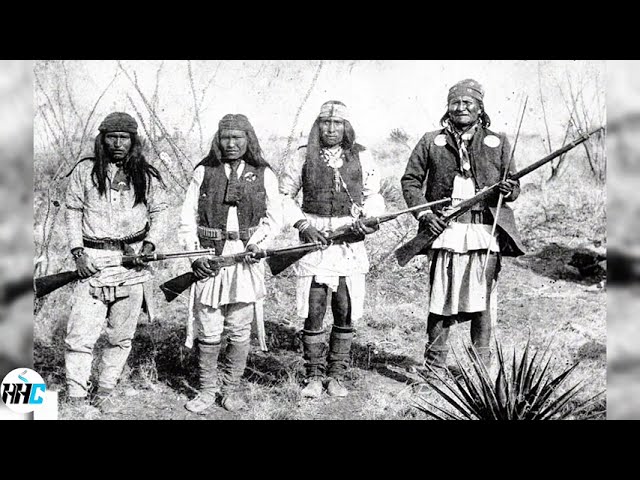
They waited for the opportunity to stampede livestock, murder a herder, or ambush a wagon train. To chase them was worse than pointless. It only added to the casualty list.
The Spanish crown was forced to maintain 4,000 dragoons in a desperate attempt to control these "naked savages," who disdained any shield against bullets. The Spanish writer Toramada lamented that Spain could not subjugate them. The difficulty was not a lack of tactical genius on the part of the Apache, but rather their minimal needs and ruthless efficiency.
They did not fight for glory or conquest. They fought for survival, and they were willing to do whatever that required.
This ruthlessness extended to their treatment of captives. Adult male captives were typically executed swiftly, their brains dashed out against rocks or trees, unless they were temporarily spared to provide intelligence. If a captive might delay pursuers or provide useful information, execution might be postponed.
Children, however, were treated differently. If they were too young to survive without their mothers, they were adopted into the band. If they were old enough to endure hardship, they were raised as Apache, receiving kind treatment as if they had been born into the tribe.
At least 20 such captive incidents were recorded near Prescott, Tucson, Camp Grant, Tres Alamos, Florence, and Williamson’s Valley.
The Apache warrior prepared for a raid with a minimal kit. He wore thigh-high buckskin moccasins secured by a waist string, a muslin loincloth trailing behind, and a buckskin hat adorned with raptor feathers. He carried his rifle or bow, with arrows that were sometimes reported to be poisoned, along with ammunition, a blanket over his shoulders, a wicker canteen, and some jerky or pinol.
He might carry protective metals or a rosary. He traveled light, relying utterly on nature’s provisions. If necessary, he would strip completely, abandoning even these few possessions to move faster.
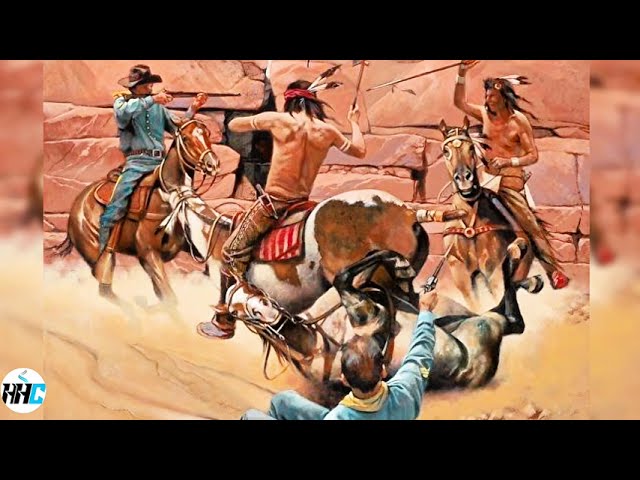
Their stamina inspired awe in the soldiers who opposed them. One observer, Captain John G. Bourke of the Third Cavalry, witnessed an incident at the Fort Bowie post hospital in 1886.
An Apache scout was being treated for a gunshot wound to the thigh. As the medical staff approached, the wounded man asked for tobacco. He received a cigarette, placed it in his mouth, and calmly struck a match against his own foot.
His skin was so calloused and horny that it resembled the shell of a mud tortoise.
The Apache also gambled obsessively, staking every possession they owned on games of chance. They carried painted sticks for set games or Mexican-style horsehide card packs. When large groups gathered, they were ready to wager all they had.
This passion for risk was another facet of a people who lived entirely in the present, unburdened by the future.
For settlers and soldiers alike, the Apache presence was an ever-present expectation, an inevitable feature of the landscape. They were viewed as embodying cruelty, brutality, and utter mercilessness. To the white observers and Mexican victims, they were a horror.
But to the Apache, this was simply the soundest military approach. The goal was to wear down the foe through annoying strategies and constant vigilance. They were far more dangerous when dispersed than when in tight formations, hovering near the flanks of their enemies like the crested quail of the mountains.
The Apache were never truly conquered, not by steel, not by gunpowder, not by the nations that rose and fell around them. Their resistance became a legend written in dust and blood. Their tactics of ambush, vanishing, and relentless endurance did not just terrify the armies of their time.
They changed the nature of warfare itself. From the jungles of Vietnam to the mountains of Afghanistan, the ghost of Apache strategy walks with every guerrilla who strikes from the shadows and disappears into the terrain.
They were a force of nature, weaponizing the earth itself. They did not fight like an army. They fought like the land they came from: harsh, unforgiving, and impossible to hold.
The wind still carries their ghosts, and their echo never fades.