The story of the Donner Party is often remembered as a grim tale of survival in the snow, but the full account is far stranger. Before the group ever reached the Sierra Nevada, a series of bizarre decisions and missed warnings sealed their fate. The journey was not simply a victim of bad weather; it was a disaster built on poor timing, unverified advice, and a stubborn refusal to turn back.
The journey west in 1846 was a race against the calendar. Experienced travelers knew that the optimal departure from the Missouri frontier was in mid-April. This timing allowed settlers to avoid the muddy spring trails, ensured enough grass for livestock, and guaranteed that the mountain passes would be clear of snow before winter.
The Donner Party, led by the wealthy Donner brothers and James Reed, departed on May 12th. This delay of nearly a month was a critical error that would ripple through every subsequent decision.
Almost immediately, the group faced trouble. By May 26th, they arrived at the Big Blue River in Nebraska to find it swollen by 20 feet due to heavy rains. They spent days building rafts to cross the river, a delay that proved fatal for Sarah Keyes, who died of tuberculosis on May 29th.
The crossing was eventually completed, but the lost time was never recovered.
The party’s preparation was also dangerously inadequate. They left Independence, Missouri, with only four months of supplies. While this was enough for a standard journey, it left no margin for error.
Each person was allotted just 150 pounds of flour and 75 pounds of meat, supplemented by rice, beans, and cornmeal. There was no room for the delays that were already accumulating.
By the end of June, the group reached Fort Laramie in Wyoming, over a week behind schedule. It was here that they received their first explicit warning about the route ahead. A man named James Clyman, who had just traveled the proposed Hastings Cutoff, told James Reed that the trail was nearly impossible to navigate on foot.
He insisted that taking covered wagons on the route was out of the question. Clyman advised the party to stick to the established California Trail. The warning was dismissed.
The source of this dangerous shortcut was Lansford Hastings, a promoter who had published a guidebook featuring his namesake route. The Hastings Cutoff promised to trim roughly 300 miles from the journey. There was one significant problem: Hastings had never actually traversed the trail himself until after his book was published.
He was one of only two men known to have attempted it, and neither had tested it with wagons.
Despite this, Hastings sent a letter to the Donner Party, offering to personally escort them along his shortcut. The group was eager to accept, but due to their two-week delay, they missed their rendezvous with him at Fort Bridger. Undeterred, they decided to proceed along the unverified trail without their promised guide.
Another traveler, a reporter named Edward Bryant, knew the Hastings Cutoff was rugged and dangerous. He was particularly concerned for the women and children in the party and wrote letters begging them to take the established trail. Those letters were never delivered.
Both Reed and Bryant later accused Jim Bridger, the owner of the trading post at Fort Bridger, of deliberately intercepting the correspondence. Bridger stood to profit significantly if immigrants used the cutoff and stopped at his post to buy supplies. He was a major proponent of the route, and the warning letters were suppressed.
The party’s troubles multiplied when they reached the Wasatch Mountains near the Great Salt Lake. There, they found a message from Hastings nailed to a wooden post. He warned that the way forward was treacherous and suggested they wait for him to lead them to a better path.
The group waited for eight days, but Hastings never appeared. James Reed and two others went to find him. Reed eventually located Hastings, but his companions became lost and nearly starved before eating their own horses.
Hastings directed Reed toward an alternate route through the mountains, which he guaranteed would be superior. It was not. The path was so clogged with trees and obstructions that the group had to physically clear the way.
At their slowest, they advanced just a mile and a half per day, compared to the typical pioneer average of 15 miles. The shortcut was costing them precious time.

Despite the growing chaos, the party continued to attract new members. They took on additional families at Fort Bridger in July, and in August, the Graves party joined them while they were still hacking their way through the Wasatch Mountains. This brought the total number of travelers to 87 people, placing a severe strain on their already diminished supplies.
The desert surrounding the Great Salt Lake proved to be another nightmare. The wagons became mired in the sandy terrain, and the heat caused the travelers to consume their water reserves at an alarming rate. Several oxen became so feeble they were abandoned in the desert to die, while others bolted and fled.
The group pressed on, losing valuable livestock and time.
At the Humboldt Sink in Nevada, the party paused to rest. The livestock desperately needed food and water. During this stopover, a local Native American tribe made off with 21 of their cattle.
This became a recurring pattern. Over the following weeks, Native Americans repeatedly shot or stole their herds until nearly 100 head of cattle were lost. Without oxen, the wagons could not be pulled.
The travelers were forced to abandon some of their vehicles and carry their belongings on their backs. They also lost their contingency plan of eating the cows.
The group was never harmonious. Factions formed early in the journey, and in July 1846, the wagon train split. The larger contingent chose the conventional, safer path, while the smaller group, which included the Donners and Reeds, fatefully chose the Hastings Cutoff.
As conditions worsened in the Wasatch Mountains, the mood turned hostile. Many blamed James Reed for championing the disastrous route.
On October 5th, the tension boiled over. Two wagons became entangled, and a man named John Snyder began savagely beating his oxen. James Reed objected to the cruelty, and an argument escalated.

Reed stabbed Snyder in the abdomen, and Snyder died from the wound. With no legal system on the trail, the group had to administer their own justice. Some called for Reed to be hanged, but others argued for banishment.
The latter faction prevailed, and Reed was cast out of the party, sent away alone for killing a man over an ox.
Two days later, the group lost another member. A 70-year-old man became too feeble to continue, and the desperate travelers abandoned him to his fate. The party was disintegrating.
By October 1846, the Donner Party had technically arrived in California. They reached Alder Creek in the Sierra Nevada mountain range, just beyond the state boundary. They had been assured that snowfall would not arrive until November, but this expedition seemed cursed.
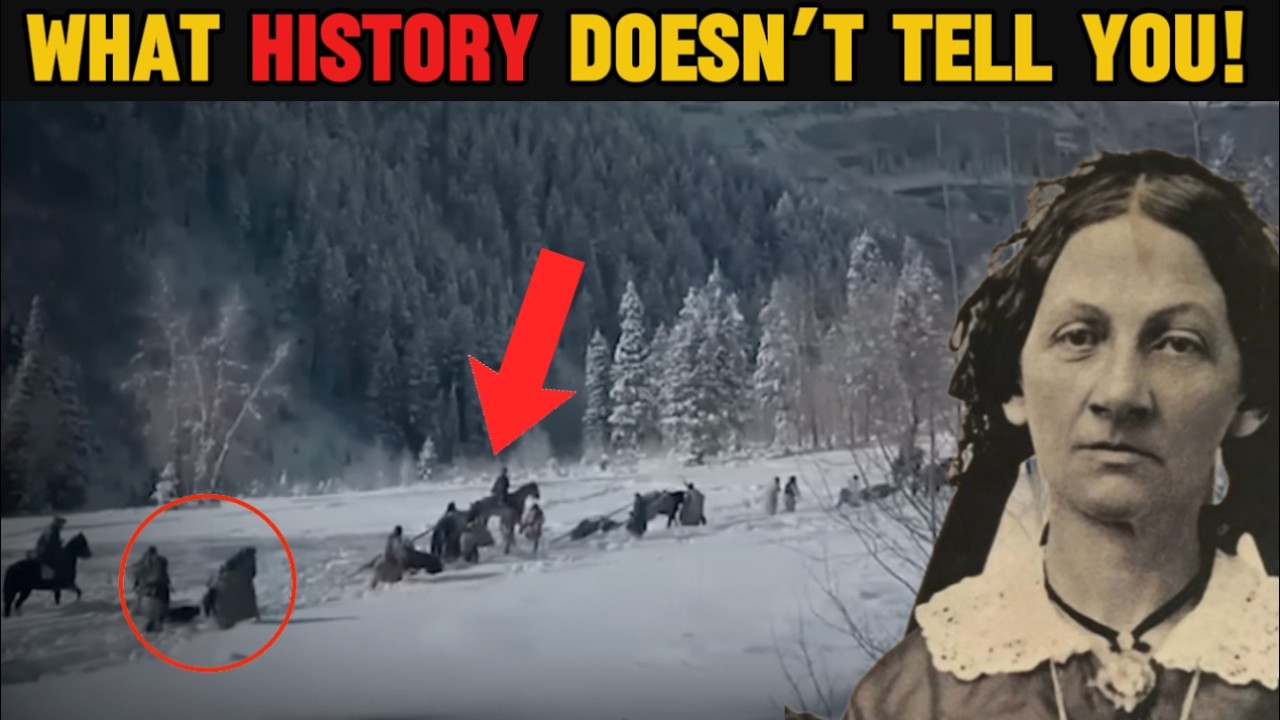
It was already snowing in October. As they attempted to force a passage across the mountains, they were struck by an early blizzard. The group was trapped.
The decision to consume human flesh was not their first resort. After their food was exhausted, they boiled bones and animal hides. They ate leather, tree bark, and oxhide.
The hides were serving as roofing material for their shelters, and they consumed those too. Only in the final act of desperation did they turn to their deceased companions. Not everyone partook.
Some chose to starve to death instead.
Of the 87 people who entered the Wasatch Mountains, only 48 individuals and three mules reached California alive. The survivors emerged from the snow forever carrying the weight of the mountains and the choices that brought them there.
The tragedy of the Donner Party was not a single moment of crisis. It was a long chain of avoidable errors. A late start, ignored warnings, an unverified shortcut, a vanished guide, and a murder all contributed to the disaster.
The question remains whether this was a perfect storm of misfortune or a blueprint for disaster drawn by human hands from the very beginning.