The Confederate defeat at Gettysburg in July 1863 is often framed as a triumph of Union arms and defensive brilliance. But one Confederate officer, General Edward Porter Alexander, saw it differently. In his postwar writings, Alexander dissected the battle with unsparing honesty, arguing that the South’s defeat was not inevitable.
Instead, he identified a series of preventable mistakes—flawed strategy, poor coordination, and reckless gambles—that shattered Confederate ambitions.
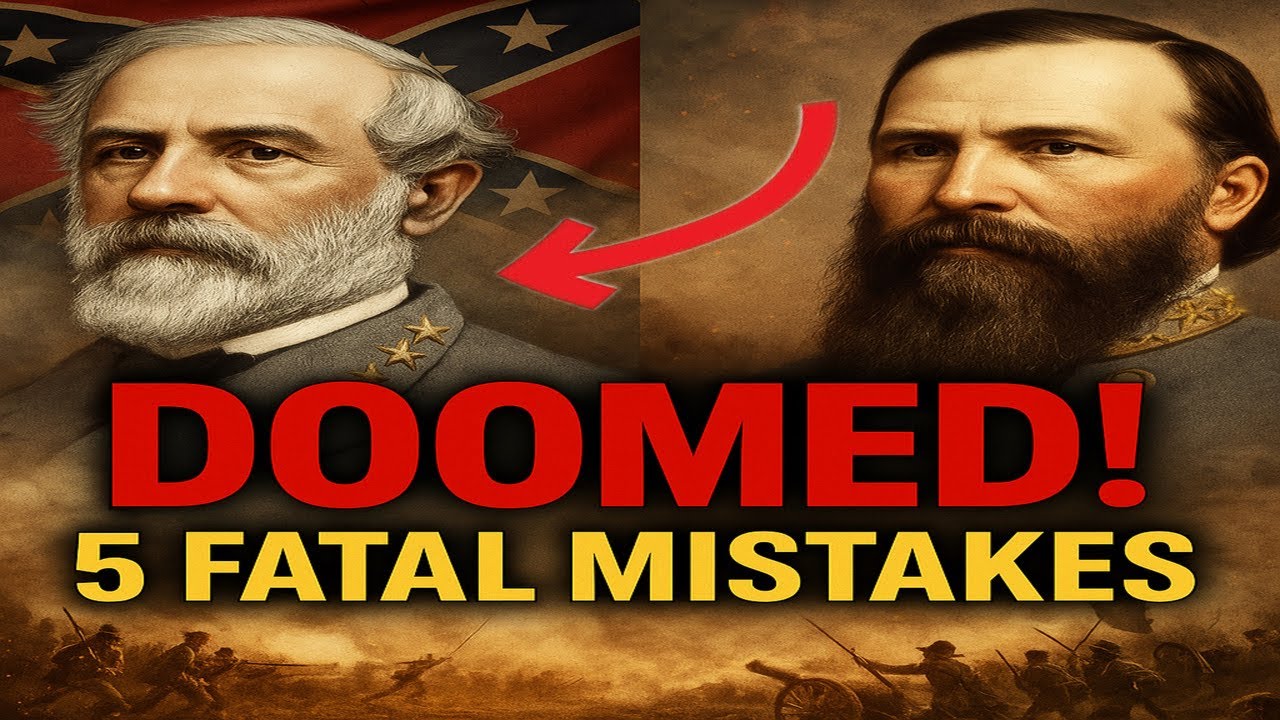
Alexander’s firsthand account offers a critical perspective on five decisive failures that doomed the Confederate cause during the campaign.
The Vanishing Cavalry
On June 22, 1863, as Confederate forces marched north into Pennsylvania, General Robert E. Lee issued directives to his cavalry commander, J. E.
B. Stuart, detailing his expected movements. The exact wording of those orders remains disputed, but most historians agree Lee instructed Stuart to split his forces—some guarding mountain passes while the rest shielded the right flank of General Richard Ewell’s Second Corps.
Stuart, however, pushed farther east than Lee likely intended. He aimed to seize supplies and harass Union operations. That diversion allowed federal troops to wedge themselves between Stuart’s cavalry and the main Confederate army, forcing Stuart into a lengthy detour.
He would not rejoin Lee until late on July 2, midway through the Battle of Gettysburg.
Stuart’s absence crippled Lee during the battle’s opening days. Without his cavalry to scout, Lee operated blind, lacking crucial intelligence on Union positions. Alexander later condemned Stuart’s actions as a grave tactical error, arguing that dividing the cavalry violated fundamental military principles.
Concentrated strength, he insisted, should have outweighed risky side missions.
Had Stuart been present from the start, Alexander believed the battle might have unfolded differently. Historians largely concur. Stuart’s detachment, whether due to his own choices or unclear orders, deprived Lee of a vital tool—one that could have provided the situational awareness needed to secure victory.
The Shoe Brigade’s Fateful Misstep
On June 30, 1863, a brigade under General Henry Heth entered Gettysburg on a seemingly minor errand: securing shoes for Confederate troops. With Union forces believed to be miles away, resistance seemed unlikely. But upon arrival, Heth found federal cavalry already entrenched.
Rather than pressing the attack, Heth withdrew. He returned the next morning with his full division and Dorsey Pender’s in reserve—12,000 men in total. Yet they faced a prepared enemy.
General John Buford’s 3,000 cavalrymen held their ground just long enough for Union reinforcements to flood in. Soon, 23,000 federal troops overwhelmed Heth and Pender.
Alexander later pinpointed this as another critical blunder. Without Stuart’s cavalry to scout ahead, Confederate leadership misjudged Union positions, stumbling into a fight they were not ready to win. The consequences were irreversible.
Stuart’s cavalry had always served as Lee’s eyes, gathering essential intelligence on Union positions and strength. Without them, Lee marched blind, unaware that he was sending two divisions straight into the path of two Union corps and a cavalry division. Alexander argued that with proper reconnaissance, Lee would never have allowed such a disastrous engagement to occur.
Alexander also questioned the recklessness of Heth’s advance on Gettysburg. He contrasted it with the caution Lee showed elsewhere, such as his orders to Ewell regarding Cemetery Hill, where Ewell was explicitly told to avoid a full engagement unless conditions favored it. That same prudence, Alexander insisted, should have applied to Heth’s mission.
Military strategy often demanded restraint, preserving strength for decisive moments rather than squandering it on secondary objectives. The consequences were devastating. Heth’s leading brigades were mauled in the opening clash, suffering crippling losses that left his division weakened for the rest of the battle.
Pender’s division also absorbed heavy casualties.
Alexander saw it as a senseless waste. Men lost not for strategic gain but for an errand of little consequence. Though reinforcements later stabilized the Confederate line, the damage was done.
The episode stood as a stark lesson in the dangers of poor planning and inadequate intelligence.
Lee’s Controversial Offensive Decision
By the end of Gettysburg’s first day, Union forces had secured Cemetery Hill, a near-impregnable defensive position. Ewell’s corps faced a choice: press the attack on July 2 or withdraw to Seminary Ridge, forcing the Union commander, General George Meade, to make the next move.

Alexander analyzed the situation carefully. While the Confederate position was strong, it paled in comparison to the Union’s fortified heights. He believed the Confederates could have held defensively, forcing Meade to attack under unfavorable conditions.
But Lee, concerned about dwindling supplies, ordered another assault. Alexander disputed this reasoning. After all, the army had foraged successfully later at the Potomac, proving they could sustain themselves.
In his view, there was no urgent need to attack.
“Let us be frank,” Alexander wrote. “There was no real difficulty in assuming a defensive stance the next day.”
He estimated that Lee’s insistence on attacking cost the Confederates 60 percent of their chance for victory. That decision, he argued, marked the turning point not just of the battle but of the entire campaign. Lee’s aggressiveness, though born of confidence in his troops, may have doomed their cause.
Alexander acknowledged that while Seminary Ridge provided a solid Confederate position, it was no match for the Union’s dominance of Cemetery Hill. He called the federal defenses the strongest he had ever seen, enhancing their numerical advantage by 50 percent. With 94,000 troops against the Confederates’ 72,000, plus superior artillery, the Union held every advantage.
Yet, Alexander noted with frustration, the Confederate command seemed to ignore these realities. No thorough reconnaissance was conducted. No adjustments were made to account for the Union’s formidable position.
Meade’s forces, unchallenged, spent the night reinforcing their lines.
The failure to adapt, Alexander concluded, was as disastrous as the decision to attack at all. “Verily, that night was pie for Meade,” he declared, emphasizing how Confederate blunders handed the Union commander an effortless advantage.
The Culps Hill Debacle
Alexander’s analysis extended to Ewell’s corps and its disastrous positioning. After being ordered to shift from northeast of Gettysburg toward the town, Ewell requested permission to seize nearby high ground, likely Culps Hill, believing it could be taken.
Though Lee approved, Alexander noted Ewell’s failure to secure the position. In retrospect, Culps Hill was virtually unconquerable, its natural defenses too formidable. Yet no orders were given to withdraw Ewell’s corps from its untenable position near Cemetery Hill, leaving troops and artillery stranded in a useless configuration.
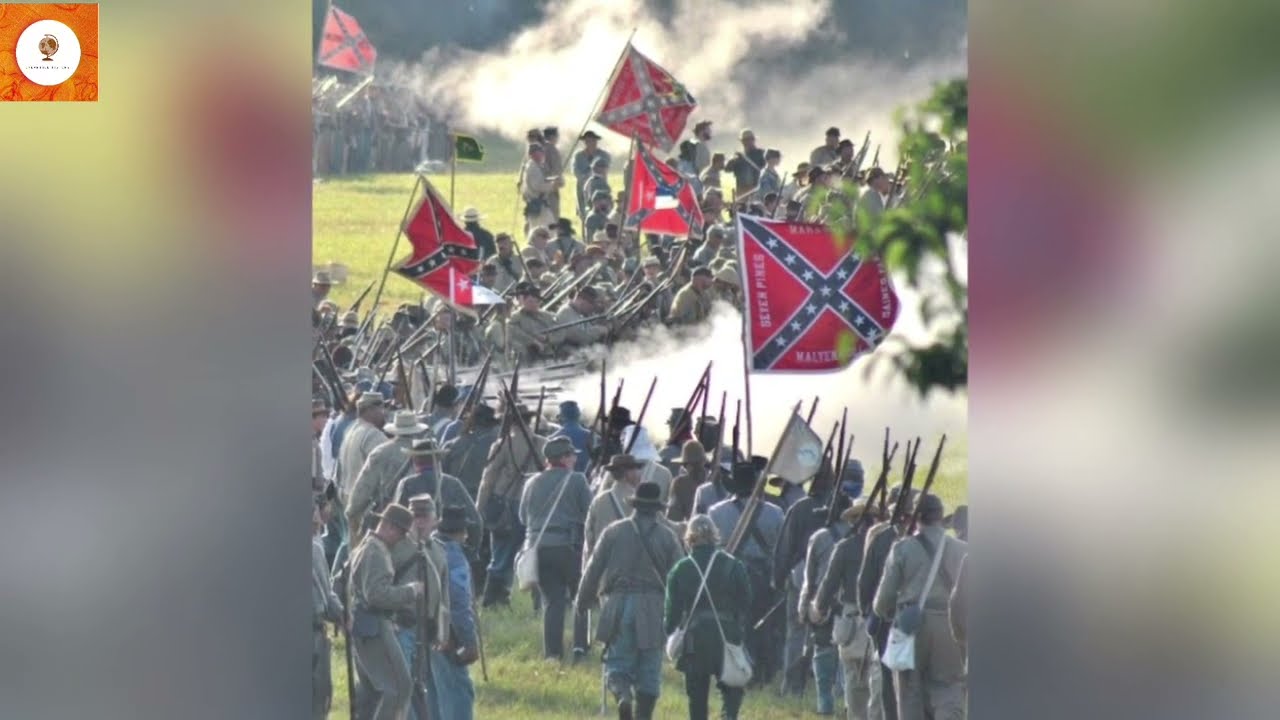
“There was no reasonable chance of Ewell accomplishing anything from that location,” Alexander wrote, condemning how an entire corps was effectively paralyzed during the battle’s climax.
This misstep, he argued, exemplified the Confederacy’s broader failures: poor reconnaissance, disjointed planning, and a refusal to adapt. These errors allowed Meade to cement his unassailable position.
Artillery Disintegration
When Longstreet placed Alexander in command of the artillery for Pickett’s Charge, the mission was clear: unleash a crushing bombardment to tear the enemy’s lines and soften their defenses for the infantry advance. But what followed was a debacle of mismanagement.
Alexander faced systemic disarray. While he directed the main barrage, other artillery units under different corps commanders operated independently. Each corps’ chief of artillery acted on his own, Alexander observed, as if no other batteries existed.
This lack of coordination proved catastrophic.
Worse still, General Pendleton, Lee’s artillery chief, assigned Alexander nine howitzers to support the charge—only for Alexander to discover mid-battle that Pendleton had quietly diverted four or five elsewhere. “Those guns might have tipped the scales,” Alexander later fumed.
Equally damning was A. P. Hill’s inaction.
Sixty-five cannons sat idle on Seminary Ridge, never advancing to aid Pickett’s men despite their proximity to the assault. Ewell’s corps compounded the failure. Though the Confederate line encircled the Union’s fishhook formation—a prime opportunity to rake the enemy with flanking fire—only one of Ewell’s five artillery battalions engaged.
“A single unified command could have concentrated our firepower,” Alexander argued. Instead, Pendleton’s passive leadership left the army’s artillery fractured and impotent.
The Sum of All Errors
Alexander’s verdict was unequivocal. The Confederacy’s defeat at Gettysburg was not inevitable but the result of cascading failures. From Stuart’s absence to Ewell’s inertia, from Lee’s aggressive gambles to the artillery’s disarray, each misstep eroded their chances.
The Union’s defensive brilliance alone did not secure victory. Confederate leadership handed it to them.
Could the South have triumphed at Gettysburg? Alexander’s analysis suggests the opportunity existed—but it was squandered through a series of avoidable errors that ultimately sealed the Confederacy’s fate.