On May 6, 2023, an 83-year-old man sat inside Westminster Abbey and watched his ex-wife be crowned queen. His name was Andrew Parker Bowles. He had been in that building before, in 1953, as a page boy at the coronation of the queen this new one was replacing.
The public knew him as the cuckold, the husband Camilla left for a prince. That version is wrong. He was unfaithful first, for years, and his regiment knew it.
So why did neither of them leave for 22 years?
The answer begins with a notice in The Times in March 1973, but the strangest fact is the seat in the Abbey. Andrew Parker Bowles was not smuggled in. He was an invited guest at the crowning of the woman he had married in 1973 and divorced in 1995.
He was photographed and looked perfectly comfortable. The British establishment had decided he was not an embarrassment. That tells you something about what the marriage actually was.
The documented ending came on January 3, 1995, when Andrew and Camilla Parker Bowles were granted a decree nisi at Somerset House. It took roughly 90 seconds. The petition was uncontested.
Their joint statement said they had been living apart for some years and that the decision to divorce had been reached with mutual sadness.
Put that beside the public timeline. The affair between Camilla and the Prince of Wales had been front-page material since June 1992, when Andrew Morton's book landed. It had been an audio recording played across three continents since January 1993.
By any normal reading, the marriage was finished long before that.
Yet the Parker Bowleses stayed legally married for two full years after the tape, and close to a decade after they had stopped living as a couple in any meaningful sense. That gap is the story. A married Camilla was gossip.
An unmarried Camilla was a constitutional question with a queue of bishops behind it.
Somewhere in the '80s, Private Eye began referring to Andrew Parker Bowles as the man who laid down his wife for his country. It was not affectionate. It was a joke about a serving officer of the Household Cavalry whose wife's arrangement with the heir to the throne was an open secret, and whose career did not appear to suffer for it.
Camilla Rosemary Shand was born in July 1947 into the layer of British society that has the accent and the invitations but not the title. Her father, Bruce Shand, was a wine merchant who had won two Military Crosses. Her mother was the daughter of the third Baron Ashcombe, which is where the money was.
She was presented as a debutante in 1965. That placed her permanently one rung below the people she socialized with. She had access to that world but did not own a piece of it.
Her great-grandmother was Alice Keppel, the last and most successful mistress of Edward VII. Keppel was not hidden. She was received, consulted, and tolerated by a husband who continued to appear at dinners alongside the man sleeping with his wife.
Camilla grew up inside a family story in which a woman's influence arrived sideways through a powerful man's attachment, and the fee for that influence was discretion, cheerfulness, and never making a scene.
Andrew Parker Bowles was born in December 1939 and was considerably better placed than she was. He was a Catholic from a family with old money and older connections. His father was a close friend of the Queen Mother.
Andrew served in the Blues and Royals and had walked in the coronation procession of Elizabeth II as a page of honor to the Queen Mother. He was closer to the royal family than Camilla was.
They met around 1965 when she was 17 or 18 and he was in his mid-20s. The courtship lasted roughly seven years and was entirely one-sided in its offness. He was a serial and unapologetic pursuer of other women throughout it.
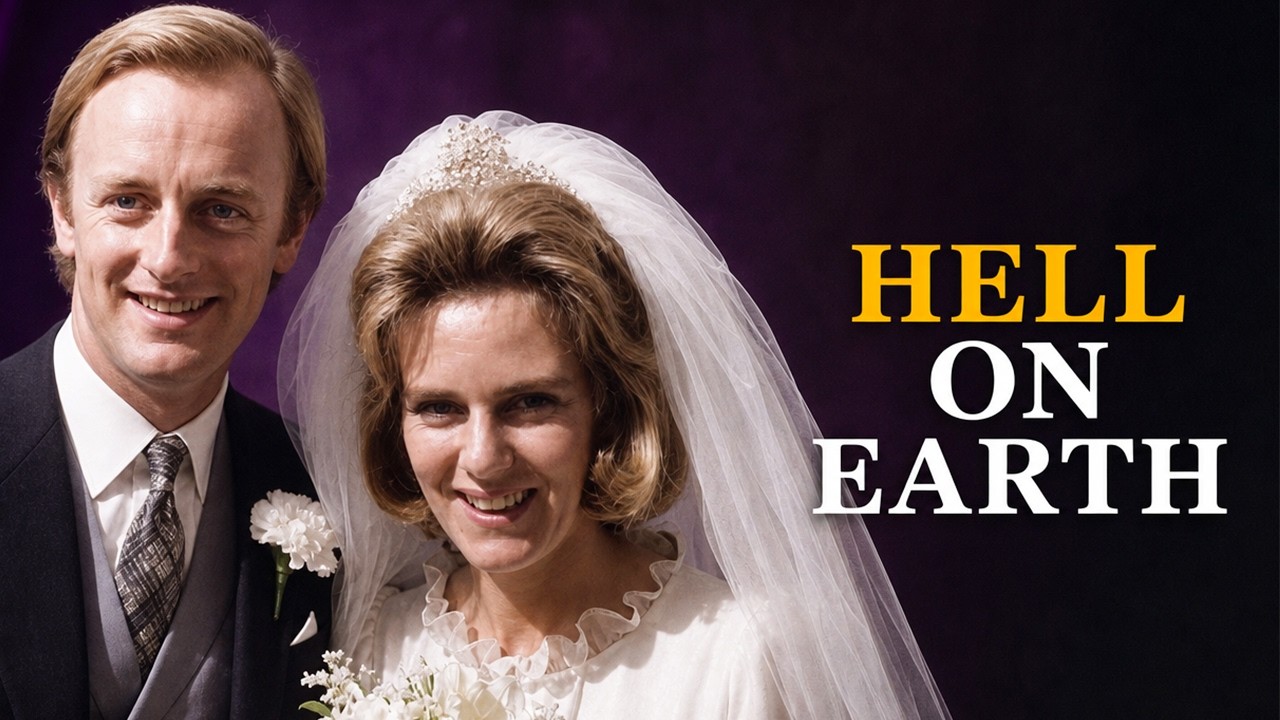
Friends of hers described her waiting.
Then in 1970, Andrew Parker Bowles began appearing with Princess Anne. They were photographed together and treated by the press as a genuine possibility. It went nowhere, partly because he was Catholic.
But the message was unmistakable. The man Camilla had been waiting on for five years had, when a better option appeared, taken it as far as it would go.
In 1972, through a friend, Camilla Shand was introduced to the Prince of Wales. According to Jonathan Dimbleby's authorized 1994 biography, the attachment was immediate and, for Charles, serious. Then the navy took him.
Charles joined HMS Minerva and sailed for the Caribbean at the start of 1973.
While he was at sea, on March 15, 1973, the engagement of Andrew Parker Bowles to Camilla Shand was announced in The Times. Charles learned of it thousands of miles away and unable to do anything about it.
They married on July 4, 1973, at the Guards Chapel at Wellington Barracks. The Queen Mother came, Princess Anne came, Princess Margaret came. The reception was held at St.
James's Palace. Every one of those guests was there because of the bridegroom's family. The Prince of Wales was not there.
He was at sea.
Andrew Parker Bowles was a practicing Catholic marrying an Anglican. A mixed marriage of that kind in 1973 required a dispensation, and dispensations came with undertakings about the religious upbringing of any children. The structural consequence is not in dispute.
For him, divorce carried a religious cost it did not carry for her.
From the wedding day forward, the spouse with all the advantages was also the spouse for whom leaving was most expensive.
Their first home was Bolehyde Manor in Wiltshire. Then, in 1986, Middlewick House near Corsham. Both were pretty, and neither was hers.
Camilla Parker Bowles had no income of her own, no career, no title, and no independent property.
The children came fast. Thomas Henry Charles Parker Bowles was born on December 18, 1974. The Prince of Wales stood as his godfather.
Eighteen months after the wedding he had missed, Charles was standing at a font in a formal, publicly recorded relationship with the child of the woman he had wanted to marry. Laura followed on January 1, 1978.
The godparenthood is one of the most revealing documented facts in this relationship. Charles was not exiled from the Parker Bowles household. He was formally installed inside it with the husband's full knowledge and, by every account, his active welcome.
Andrew's career kept going up. He commanded the Household Cavalry Regiment. He served as Silver Stick in Waiting, the officer who rides immediately behind the sovereign on ceremonial occasions.
He ended as a brigadier. In late 1979 and into 1980, he was in Rhodesia during the transition to Zimbabwe.

Andrew Parker Bowles was persistently unfaithful. This is not tabloid inference. It is the settled account of every serious biographer who has worked the subject.
Several describe a long attachment to Charlotte Soames, daughter of the same Lord Soames whose staff he joined in Rhodesia.
The public version has Camilla as the woman who broke up a royal marriage and Andrew as the wronged husband who tolerated it. The documented version has the infidelity running the other direction first, for years, before the wedding and after it. She did not begin as the betrayer.
She began as the one being cheated on in a house she did not own, with two small children and no independent means of leaving.
This was not a faithful wife and a faithless husband. It was two people who had arrived fairly early at an arrangement in which neither policed the other, and in which the only genuine rule was the one Alice Keppel would have recognized. Whatever you do, do not make it public, and do not make it a problem.
In 1980, the Prince of Wales bought Highgrove in Gloucestershire. Bolehyde Manor was roughly a dozen miles away. He got engaged to Lady Diana Spencer in February 1981 and married her on July 29.
In 1992, Andrew Morton published Diana: Her True Story. It was only confirmed after Diana's death in 1997 that she had supplied the material herself on tape. That does not make it false.
It does mean the most famous private evidence about this marriage came secretly from the person with the most at stake.
Dimbleby's biography states that Charles resumed the relationship with Camilla in 1986 after concluding that his own marriage had irretrievably broken down. Charles said the same thing on television in June 1994. Andrew Parker Bowles was still married to her when that broadcast went out.
Why did she not leave? Money, first. She had none of her own and two children in expensive schools.
Religion, second. His, not hers. Convention, third.
Army wives did not divorce commanding officers in the middle of a career.
But the biggest reason is not romantic at all. As long as Camilla was legally Mrs. Andrew Parker Bowles, she was a scandal.
The instant she became a free woman, she became a constitutional problem. A divorced woman available to marry a future king and supreme governor of the Church of England.
Her marriage was useful to everyone. It was useful to Andrew, who kept his position and his freedom. It was useful to Charles, who had deniability.
It was useful to the palace. The only person it was not useful to was her.
On December 18, 1989, a telephone conversation between Camilla Parker Bowles and the Prince of Wales was recorded by someone with a radio scanner. Nothing happened for three years. In January 1993, the transcript ran in an Australian magazine and then in the British press.
The Parker Bowles marriage had survived everything because none of it was undeniable. Documentation is what killed it, not adultery. The person the tape did most immediate damage to was Andrew.
A serving brigadier could no longer walk into a mess without every person present having read the words.

He retired from the army that year. The divorce came two years later. By 1993, the marriage had no private function left.
It had one remaining public function. It kept Camilla legally unavailable.
The Parker Bowles divorce was granted on January 3, 1995. Charles and Diana's divorce was not finalized until August 1996. Camilla went first, at the point when her marriage had stopped protecting anybody.
In 1996, Andrew Parker Bowles married Rosemary Pitman. Tom and Laura were at the wedding. Rosemary died in 2010.
Camilla was, at the start of 1995, a 47-year-old divorced woman with no title, no income, and the worst press of any private individual in Britain. In November 1995, Diana gave the Panorama interview and delivered the line about there being three of them in the marriage. Camilla said nothing.
Not that week, not that year, not since.
That is not passivity. That is a strategy. In 1996, Charles hired Mark Bolland, whose job in practice was the public rehabilitation of Camilla Parker Bowles.
On January 28, 1999, Charles and Camilla walked out of the Ritz Hotel in London together into a bank of around 200 photographers. They did not touch. They walked about 20 feet to a car.
It was on the front of every newspaper in the world the next morning.
She never gave an interview about any of it. No memoir, no authorized biography, no tell-all, no answer to Panorama. Camilla outlasted all of them by publishing nothing.
They married on April 9, 2005, in a civil ceremony at the Windsor Guildhall, followed by a service of prayer and dedication at St. George's Chapel. The Queen did not attend the civil ceremony but did attend the blessing.
In February 2022, Elizabeth II issued a written statement saying it was her sincere wish that Camilla be known as Queen Consort. The woman who had been a national embarrassment in 1993 had her title upgraded by the Queen herself.
Around 2003 and 2004, Andrew Parker Bowles sat for Lucian Freud for something over a hundred sessions. The painting is called The Brigadier. He is in the full dress uniform of the Blues and Royals, and the tunic is unbuttoned.
The gold and the braid are immaculate, and the man inside them is undone at the front. It sold at Christie's in 2015 for $56. 2 million.
Which brings us back to the seat in the Abbey. Andrew Parker Bowles took his place among the invited guests and watched Camilla crowned queen. He was there because there was no rupture to acknowledge.
The marriage had not been broken by Charles. It had been an arrangement from close to the start.
One in which he cheated first and freely. In which neither of them could afford to leave. And which survived 22 years precisely because it was useful to everyone except the woman inside it.
The tape ended it. The divorce statement said nothing. The only person who never told the story was the only person the story was ever really about.
She was crowned. He watched. And the last version of the marriage belongs to the one who kept her mouth shut for 50 years.