Ulysses S. Grant never saw war as a glorious adventure. To him, it was a hard, dirty job that somebody had to finish, and he believed the fastest way to finish it was to live it every single day alongside the men doing the fighting. While other generals dressed like parade-ground heroes and kept their headquarters miles behind the lines, Grant wore the same plain blue blouse a private might have worn, slapped lieutenant general straps on his shoulders, pulled a slouch hat low over his eyes, and planted his tent so close to the action that the smell of gunpowder and the thunder of cannon fire were part of the morning air.
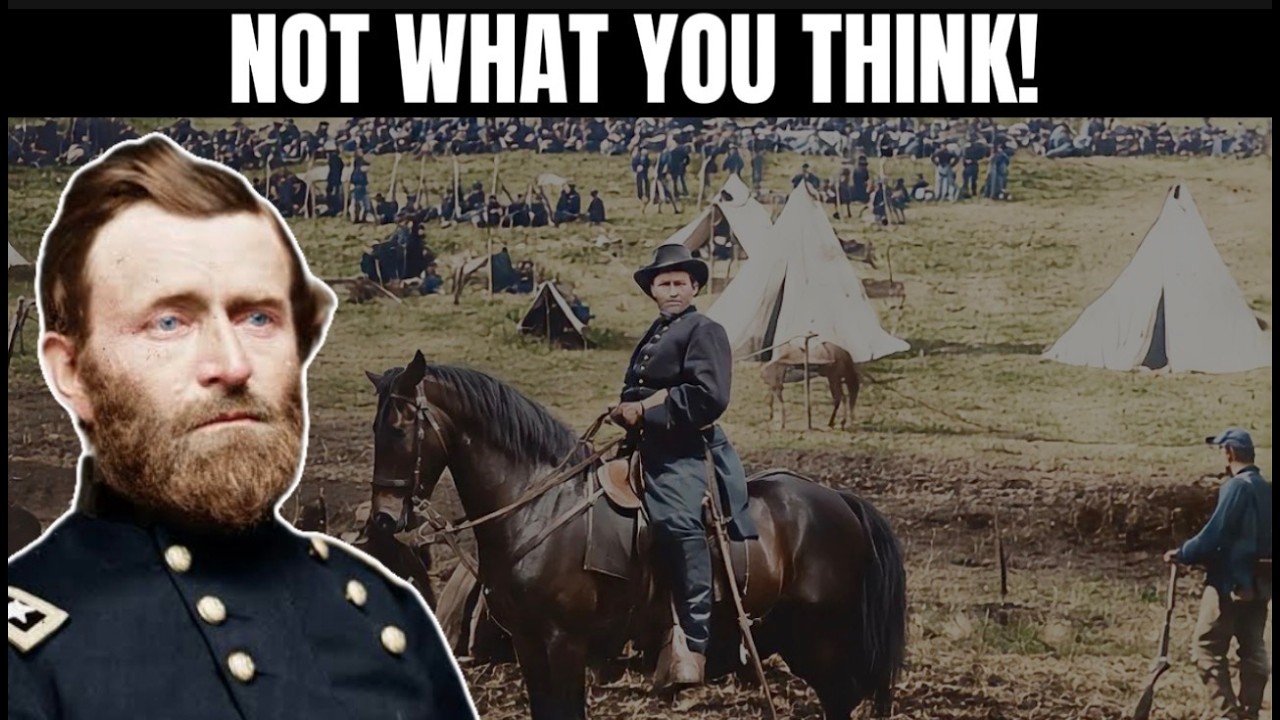
That rhythm defined his life through the bold thrust at Vicksburg in 1863, the grinding Overland Campaign in the spring of 1864, and the long siege at Petersburg that finally broke the Confederacy. Every one of those days followed the same basic pattern; only the scenery changed. Mud instead of dust, pine thickets instead of Mississippi bluffs, but the same man at the center of it all, cigar in mouth, eyes steady, orders coming out clear and calm. Dawn came early, usually well before the bugle sounded.
Grant slept on a narrow camp cot inside a plain wall tent, or later in the log cabin at City Point on the James River. No silk sheets, no fancy furnishings, just a folding table, a couple of camp chairs, and a bucket for washing. He would rise while the sky was still gray, splash cold water on his face, run a comb through his beard, and pull on the same mud-stained uniform. Appearance mattered to him, but not in the showy way it mattered to some.
He wanted his men to see a commander who looked like he belonged among them, not above them. A slouch hat, a plain coat, boots caked in Virginia clay or Mississippi gumbo. That was Grant’s uniform of the day, every day. First came the coffee, strong, black, and plenty of it.
Sometimes that was all he took for breakfast, but when the supply wagons could manage it, he added his peculiar favorite, a cucumber sliced thin and soaked in vinegar. He ate it slowly while the first dispatches arrived. Aides like Horace Porter or John Rawlins handed him the overnight reports, telegrams from Sherman out west, casualty lists from the night skirmishes, updates on ammunition and hardtack. Grant read them without a word, puffing steadily on the first cigar of the day.
He went through ten, fifteen, sometimes twenty cigars before sunset, lighting one from the butt of the last. By the time the sun cleared the treetops, he was already at the folding table with maps spread out. No grand staff conference with shouting and drama. Grant preferred quiet conversation.
He would listen to his officers, Rawlins with his fiery temper keeping everyone honest, Porter taking notes. Then he would pick up a pencil and write orders himself in clear, short sentences. No flowery language. Move at first light toward Spotsylvania Courthouse.
Hold the bridge at all costs until the wagons cross. He believed the art of war was simple enough: find the enemy, hit him hard, keep moving on. And those orders went out fast because he wrote them right there on the spot. Once the morning’s business was set, Grant swung into the saddle of his favorite horse, first Old Jack, later the big black Cincinnati, and rode out to see the ground for himself.
No safe headquarters tent for him. He wanted to smell the smoke, hear the pickets talking, watch the way the men carried their rifles. During the Vicksburg Campaign, he rode along the new trenches his soldiers were digging closer and closer to the Confederate lines, the air thick with the smell of fresh-turned earth and rotting supplies. In Virginia, during the terrible weeks of the Overland Campaign, he trotted along the Brock Road while the wilderness still smoldered from the day before, embers glowing in the underbrush, wounded men still being carried back on stretchers.
The soldiers loved seeing him. They cheered when that plain little man on the big horse came riding up, hat pulled low, cigar glowing. He did not make speeches. He would just nod, ask a sergeant how the rations were holding out, maybe swing down and share a cup of coffee.
But they knew he was there with them. One private remembered watching Grant sit on a log during the Battle of the Wilderness, bullets snapping through the trees overhead, calmly smoking while staff officers ducked. The men saw that and straightened their backs a little. If the old man could sit there like it was just another day, they could keep fighting.
Mid-morning was when the real decisions happened. Grant never stayed in one place long. He rode from division to division, talking to corps commanders, looking at maps spread on a cracker box or a fallen tree. At Spotsylvania in May 1864, after the bloody fight at the Bloody Angle, he sat on his horse in the pouring rain while shells burst around him and calmly told General Hancock to press the attack again.
The ground was a sea of mud and blood, the air so thick with powder smoke you could hardly breathe, but Grant’s voice stayed steady. “We’ll fight it out on this line if it takes all summer,” he wrote later that night. That same quiet steel ran through every order he gave that day. Lunch, if you could call it that, was usually on the move.
A piece of hardtack, maybe some salt pork if the wagons had caught up, washed down with more coffee. He ate the same food the men ate. No silver service, no fancy mess. During the Vicksburg Campaign, when he cut loose from his supply lines and lived off the land, there were days when breakfast was nothing but cornmeal confiscated from a plantation and coffee boiled over an open fire.
Grant figured if his soldiers could march twenty miles on that, he could too. By early afternoon, the pace picked up again. Supply trains had to be protected, pontoon bridges thrown across rivers, fresh ammunition rushed forward. Grant kept the whole machine moving.
At City Point during the Petersburg siege, he turned a little wharf into the busiest supply base in America. Steamboats unloaded day and night, railroad cars clanged, thousands of horses and mules stamped in the mud. But even there, with the big log cabin serving as headquarters, he rode out every afternoon to the trenches just a few miles away. The men in the rifle pits would see that familiar slouch hat coming and know the boss was checking on them personally.
He would stop, talk to a wounded boy being carried back, pat a horse on the neck, ask an officer how the new sharpshooters were doing. Then he would light another cigar and ride on. The remarkable part was how ordinary it all felt to him. Shells might burst fifty yards away.
A courier might gallop up with news that a whole division was running low on cartridges. Grant never raised his voice. He would just nod, give the order, and keep going. One of his staff officers remembered a day during the Wilderness when panicked aides came running up shouting that Lee was about to cut them off.
Grant took the cigar out of his mouth, looked at them calmly, and said, “I am heartily tired of hearing about what Lee is going to do. Go back to your command and try to think what we are going to do ourselves. ” That was the man. No drama, just forward motion.
As the light started to fade, Grant headed back toward headquarters. Evening was when the bigger picture came together. More dispatches arrived, Sherman reporting from Georgia, Lincoln asking for news from Washington. Grant sat at the table again, writing replies in that same clear hand.
He kept up a steady stream of letters to Julia, too, telling her he was well and that the boys were behaving. But the war always came first. Supplies for tomorrow, plans for the next flank march, reports on how many men could still shoulder a rifle after another day of fighting. Dinner was simple, whatever the cook could scrape together, sometimes just beans and hard bread.
He ate quickly, then went back to the maps by lantern light. The staff gathered around, voices low, while Grant listened more than he spoke. Rawlins might explode about some delay in the wagons, but Grant would just puff his cigar and wait for the storm to pass. Then he gave the final orders for the night and sent everyone to bed.
Even then, the day was not really over. Grant often stayed up late, sometimes until after midnight, reading the last reports or walking the lines himself if things felt unsettled. He could sleep anywhere, on the ground wrapped in a blanket, in a wagon, even sitting up in the saddle during a long night march. But sleep was never long.
The war did not stop just because the sun went down. Some days stood out even in that relentless routine. Take the night before the final push across the Mississippi during the Vicksburg campaign. Grant had made the risky decision to cut loose from his supply base, march south, and come at the city from the rear.
His men were living on whatever they could forage, sweet potatoes dug from fields, corn ground by hand. That evening he sat by a campfire eating the same meal as the privates, listening to the men sing around the flames. The next morning he was up before light, riding with the advance guard as they crossed the river at Bruinsburg. No fanfare, just quiet determination.
Within weeks Vicksburg had fallen and the Mississippi was open again. Or consider those terrible days in the Wilderness in May 1864. The woods caught fire from the fighting, wounded men screamed as flames reached them. The smoke was so thick you could not see ten feet.
Grant’s own headquarters came under fire. Shells tore through the trees while he sat on a stump writing orders, cigar glowing, face calm as if he were reading the newspaper back home in Galena. When the fighting died down that first night, he rode among the exhausted troops telling them they were not going back. They were going south toward Richmond no matter what.
The men who saw him that night never forgot it. They had been beaten before by other generals who retreated after a bloody day. Grant did not retreat. He just kept moving.
Then there were the quieter, harder days during the long siege at Petersburg. Nine months of trenches, mud, and waiting. Grant lived in that little cabin at City Point, but every day he rode the lines. He watched the new railroads being built to keep the army fed.
He met with President Lincoln when he came to visit, sitting on the porch talking strategy while the guns boomed in the distance. He visited the field hospitals, walking among the cots, speaking quietly to boys missing arms or legs. The suffering never left him, but he never let it stop the work. The hardest days of all came at the very end.
When Lee’s army finally broke out of Petersburg in April 1865, Grant was in the saddle again, pushing his men through rain and exhaustion to cut the Confederates off. At Appomattox he rode up to the little village, still in that plain uniform, and met Lee in a parlor. Lee in his finest gray, Grant in the mud-stained blouse. They talked like old acquaintances.
Grant offered generous terms, no marching the men off to prison, officers could keep their sidearms, soldiers could take their horses home for spring plowing. When the papers were signed, he stepped outside and quietly told his staff not to cheer. The war was over, no need to rub it in. That was Grant’s daily life, four years of it.
Wake before dawn, coffee and a cigar, clear orders written by his own hand, long rides to the front where the real war lived, simple meals, late nights over maps, and always the same quiet message to his army: we’re going forward. No grand speeches, no ivory-handled pistols, just a man who understood that victory came from doing the hard things every single day. He paid for it, of course. The casualties were heartbreaking.
The criticism in the northern papers was vicious. Butcher Grant, they called him. But the men who fought under him knew better. They saw the commander who slept in the mud with them, who ate their rations, who never asked them to go anywhere he would not go himself.
And in the end, they followed him all the way to Appomattox. When the war finally ended, Grant went on to become president, but he always said the years on the front lines were the ones that defined him. He lived the war the way he fought it, straight ahead, no frills, no retreat.
And because he did, the Union held together.