In the summer of 1863, almost every commander in the Army of Northern Virginia believed that victory belonged to the boldest charge. One of them did not. James Longstreet looked at the same open fields his peers saw as stages for glory and saw instead a slaughterhouse. While Robert E.
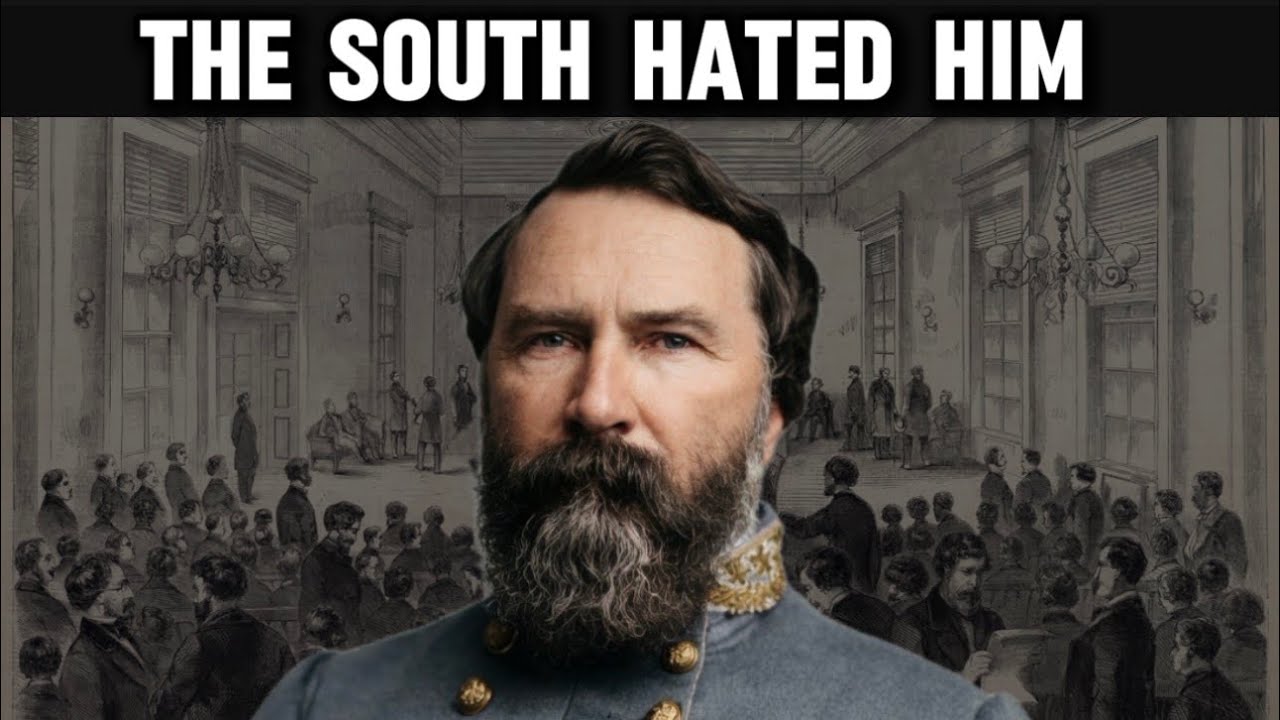
Lee and Stonewall Jackson carried the Napoleonic tradition into battle, Longstreet had concluded that the era of the heroic frontal assault was dead, replaced by an age of industrial killing where defensive cover and rapid rifle fire ruled. He was virtually the only high-ranking Confederate officer to grasp this, and the price of that clarity would follow him for the rest of his life. The revolution in warfare had happened quietly, inside the barrel of the standard infantry rifle. For centuries, smoothbore muskets were so inaccurate that soldiers were ordered to hold fire until they could see the whites of their enemy’s eyes, which made close-quarters bayonet charges a workable tactic.
The development of the Minié ball and rifled barrels changed all of that almost overnight, extending a single soldier’s lethal range from roughly 50 yards to more than 300. Defensive positions that once could be overrun in a quick sprint were now guarded by a deadly zone of lead. While other commanders viewed earthworks as a sign of cowardice, Longstreet understood that a log and a mound of dirt could multiply the effective strength of an army three-fold. He made it his mission to force his enemies to attack him on ground of his choosing.
Longstreet was an anomaly in the Confederate officer corps. While commanders like J. E. B.
Stuart rode into battle adorned with peacock feathers and silk sashes, Longstreet wore a battered plain wool coat and moved through camp without theatrical gestures. He gave no impassioned speeches and did not court the southern press, which preferred the flashy heroics of Stonewall Jackson. Lee called him his old warhorse, a nickname that honored both his dependability and his lack of vanity. Longstreet measured success not in ground gained or dramatic cavalry sweeps, but in the ratio of casualties inflicted versus casualties sustained.
A personal catastrophe in the winter of 1862 stripped away whatever romanticism he had left. In a single agonizing week in January, scarlet fever swept through Richmond and took the lives of three of his children: Mary, James, and Augustus. He returned to command a changed man, withdrawn into a quiet, icy demeanor that rarely cracked again. Friends noted that the jovial card-playing officer they had known was gone, replaced by an unyielding figure immune to emotional panic.
The trauma fused with his pragmatic view of combat, leaving him with an absolute intolerance for wasteful death. His tactical philosophy was demonstrated at the Battle of Fredericksburg in December 1862. Positioned behind a stone wall at the base of Marye’s Heights, Longstreet constructed a multi-layered defensive system using artillery and overlapping fields of infantry fire with devastating efficiency. When his artillery chief, Edward Porter Alexander, voiced concern about the vast Union army assembling across the plain, Longstreet calmly assured him the position was impregnable.
Alexander replied that a chicken could not live on that field once his guns opened up. The prediction proved horrifyingly accurate. Wave after wave of Union infantry charged across the open ground and were systematically cut down before getting within 50 yards of the wall. Longstreet sat on his horse and watched the destruction with terrifying calm, proving that a well-entrenched force using modern rifles could annihilate a numerically superior enemy without taking a single step forward.
Fredericksburg produced the highest casualty imbalance of the war. Yet others drew precisely the wrong lesson. Union commanders blamed the disaster on bad weather and poor leadership rather than accepting that frontal assaults against entrenched positions were obsolete. Even Lee, mesmerized by the victory, walked the field and remarked that it was well that war was so terrible, lest they should grow too fond of it.
Where Lee saw a magnificent triumph of southern will, Longstreet saw scientific validation of defensive firepower. He understood that Fredericksburg was not a fluke but the future of conflict, and he began formulating a strategy based on forcing the enemy to repeat that mistake. When the Army of Northern Virginia launched its second invasion of the North in the summer of 1863, the divide between Lee and Longstreet reached a breaking point. Longstreet agreed to the campaign only on the understanding that while the overall strategy would be offensive, the tactical execution must be defensive.
His plan was to maneuver deep into Union territory, find a strong position between the enemy and Washington, and force the Union army to launch a suicidal assault. But when the two armies collided at Gettysburg, Lee’s aggressive instincts took control. Finding the enemy on the high ground of Cemetery Ridge, he refused to maneuver, insisting that his army could smash through the Union line with enough courage. Longstreet looked at those same hills, saw modern rifles pointing down from strong positions, and knew the attack would end in catastrophe.
On July 2, Longstreet spent the morning begging Lee to swing the army around the Union left flank, cut their supply lines, and force them to abandon the high ground. Lee refused, pointing toward the center of the Union position and declaring that the enemy was there, and there he intended to strike. Longstreet carried out his orders to attack the flank at the Peach Orchard and Little Round Top with his usual skill, but the devastating casualties his corps suffered confirmed his worst fears. By nightfall, with thousands of his men dead or wounded, he knew the army teetered on the edge of an abyss.
Lee remained convinced that one more massive push would break the Union army forever. The climax came on July 3. Longstreet was assigned to oversee the grand frontal assault that would carry George Pickett’s name. He was so overcome with dread that he could not speak the words to authorize the charge.
When Pickett rode up and asked whether he should advance, Longstreet bowed his head in silence, unable to issue an order he knew meant death for thousands. As 15,000 Confederate soldiers stepped out of the treeline and began their long march across a mile of open fields, Longstreet sat on a fence, watching through his binoculars with tears in his eyes. Modern artillery and rifled muskets tore massive gaps in the lines, executing the precise slaughter he had spent three days trying to prevent. Pickett’s Charge was not just a military failure; it was proof that Lee’s doctrine of romantic assault was helpless against Longstreet’s modern reality.
The destruction at Gettysburg shattered the myth of Confederate invincibility. Longstreet, recognizing that Lee remained tied to an outdated tactical mindset, proposed a bold strategic move decades ahead of its time. Using the South’s interior railway network to shift troops across vast distances, he convinced the War Department to send his corps west by train to reinforce the Army of Tennessee under Braxton Bragg. It was one of the earliest examples of strategic rail deployment in military history, moving thousands of battle-hardened troops over 800 miles of primitive track in less than two weeks.
When Longstreet arrived at the Battle of Chickamauga in September 1863, his fresh troops transformed a chaotic forest fight into a decisive Confederate triumph. Spotting a gap that had accidentally opened in the Union line, Longstreet rammed a massive column of eight brigades directly into the opening. The impact shattered the Union center, sending half the northern army fleeing in a panicked retreat. It was the most effective offensive strike executed by any commander on either side during the war, achieved through precise timing and ruthless exploitation of an enemy’s structural weakness.
Longstreet was disgusted by Bragg’s failure to pursue the retreating enemy, realizing that the southern high command suffered from an incompetence no battlefield brilliance could fix. The brutal reality he had envisioned came to define the entire conflict when Ulysses S. Grant took command of all Union armies in early 1864. Grant understood industrial attrition and launched a relentless campaign that pinned the Army of Northern Virginia in a suffocating grip.
When Lee’s officers expressed confidence they would drive Grant back as they had McClellan, Pope, and Hooker, Longstreet sharply corrected them. He warned that Grant was a commander who would fight every day and night until his objective was secured. Longstreet had known Grant before the war and had served as best man at his wedding. He understood that Grant possessed the same cold, unyielding realism he himself held.
The collision unfolded in the dense wilderness of Virginia in May 1864. With Lee’s army collapsing under Grant’s pressure, Longstreet’s corps arrived just in time to stabilize the line and launch a devastating flank attack along an unfinished railroad bed. The strike rolled up the Union left flank, sending Grant’s soldiers tumbling back in confusion. But just as Longstreet rode forward to direct the final push, tragedy struck.
Confederate soldiers from a nearby brigade mistook his party for Union cavalry in the thick smoke and opened fire, striking him in the neck and shoulder. The wound knocked him out of action for six months, permanently disabling his right arm and robbing the Confederacy of its most effective field commander at the moment the war descended into trench warfare. When Longstreet returned in late 1864, he found the war locked into the grim reality of the siege of Petersburg, a brutal preview of the Western Front of World War I. For nine months, soldiers lived in mud and endured continuous artillery bombardment from miles of trenches.
This was the exact type of war Longstreet had predicted two years earlier, but now the Confederacy was trapped in it without the manpower or industrial capacity to survive a war of attrition. While other generals wrote poetic letters home about dying for the glorious cause, Longstreet quietly reorganized defensive lines and tried to keep his starving men alive. He saw with absolute clarity that no amount of spirit could overcome the overwhelming industrial weight pressing down upon them. The final act came at Appomattox Court House in April 1865.
As Union forces surrounded Lee’s exhausted remnants, several younger officers proposed scattering into the woods for a long guerrilla war. Lee asked Longstreet’s opinion. Longstreet rejected the idea forcefully, recognizing that guerrilla warfare would turn the South into a lawless wasteland without changing the outcome. He argued that when a soldier has lost the ability to win, his duty shifts to saving his men from meaningless slaughter.
When Lee rode off to surrender, Longstreet did not weep. He prepared his men for the reality of a shattered nation that needed rebuilding. The moment the surrender was signed, Longstreet made a radical choice. While generals like Jubal Early fled the country or spent their years cultivating hatred, Longstreet concluded that the South’s only path forward was full integration back into the United States.
He stated publicly that since the South had submitted the questions of slavery and secession to the arbitrament of the sword and the sword had decided against them, it was the moral obligation of every southern citizen to accept that judgment without reserve. He knew his neighbors would consider it betrayal. In 1868, he formally joined the Republican Party and endorsed his friend Grant for the presidency. To the political elite of the defeated South, this was worse than losing the war.
Longstreet was labeled a traitor and ostracized by former friends and the southern press. The consequences were paid in blood on the streets of New Orleans in September 1874. As commander of the Louisiana State Militia and the city’s integrated police force, Longstreet was tasked with maintaining order when a white supremacist paramilitary organization known as the White League assembled over 8,000 men to overthrow the elected Reconstruction governor. While other former Confederate officers secretly cheered the insurrection, Longstreet strapped on his sword, mounted his horse, and led a force of black policemen and state militia into the streets to hold the line for federal authority.
At the Battle of Liberty Place, he rode into the direct fire of men who had once served under his command. He was struck in the leg by a spent bullet and knocked from his horse. His integrated force was overrun by the sheer numerical weight of the insurgents, and he was dragged from the field and held as a political prisoner until federal troops dispatched by Grant arrived to crush the rebellion. The response from the former leaders of the Confederacy was a campaign of historical assassination that lasted over a century.
Jubal Early and the Southern Historical Society systematically manufactured the myth of the Lost Cause, portraying the southern war effort as a flawless crusade defeated only by overwhelming northern numbers. To make the myth work, they needed a scapegoat for Gettysburg. They fabricated a false timeline, claiming Longstreet had deliberately disobeyed Lee’s orders on July 2 out of personal jealousy. Memoirs were altered, wartime dispatches were selectively edited, and false testimonies were recorded.
With Lee dead and elevated to god-like status in 1870, any battlefield failure had to be assigned to someone else. Longstreet, with his Republican politics and his command of black troops, was the perfect target. For decades, his name was left off monuments and erased from textbooks. He spent his final years writing articles and a massive memoir, From Manassas to Appomattox, using official records and casualty lists to defend his reputation against the lies.
But the emotional tide of southern romanticism was too powerful for cold facts. When he attended military reunions, he was greeted with cold silence or open jeers. When he died in January 1904 at the age of 82, the last surviving member of the Confederacy’s high command, his passing was treated with indifference. He was buried in Gainesville, Georgia, with a modest ceremony largely ignored by the southern political establishment.
It was not until 1998, more than 90 years after his death, that a small statue of Longstreet was finally placed at Gettysburg, hidden in the woods rather than standing on the main boulevard beside the grand monuments of his peers. The distance between James Longstreet and every other Civil War general is defined by his refusal to worship dangerous illusions. On the battlefield, he was a modern soldier stranded in a nineteenth-century war. Off the battlefield, he understood that the true test of a soldier is not how grandly he fights for a lost cause, but how honestly he accepts reality and works to rebuild his country when the fighting is done.
His legacy was destroyed not because he failed his country, but because he was right when everyone around him desperately wanted to be wrong.