On a windswept November afternoon in 1975, inside a luxurious apartment overlooking Central Park, Babe Paley was leafing through the latest issue of Esquire magazine. She was the uncrowned queen of New York society, the most magnificent of Truman Capote’s “swans,” and the confidant the writer had always revered. Her delicate finger paused on a peculiar title: “La Côte Basque, 1965.”
Little did she know those pages were the death warrant for a great friendship.
Every word was a cruel cut, laying bare secrets she had only dared to whisper to a single soul. Her eyes froze on a line describing an unfaithful husband and a bed sheet stained with his mistress’s blood. The blade had been forged from her own confessions, and the one wielding it was the only person she had ever trusted to listen.
From that afternoon, a permanent wall of silence was erected. Babe Paley never spoke to Capote again. The shock of betrayal hastened her death in solitude and plunged her once-adored friend into an irreversible downfall of ruin and humiliation.
To grasp the betrayal’s impact, picture their world: the exclusive high society of mid-century New York. It was a realm of immense wealth governed by a single unspoken rule. Perfection was everything.
Public image was paramount. Private scandals were buried. Life was a flawless performance.
In this gilded cage, elegant women like Babe Paley were treated like royalty. It was a glittering world built on secrets, and Truman Capote was about to publish them all.
Born Barbara Cushing in Boston in 1915, Babe was the youngest of three daughters whose futures were the singular project of their mother, Katherine “Betsy” Cushing. Her father was the world-renowned neurosurgeon Dr. Harvey Cushing.
But in the rigidly patriarchal high society of early 20th-century America, a father’s professional success was merely the foundation. The true architect of a family’s social legacy was the mother.
Betsy Cushing was a formidable strategist who viewed her daughters as masterpieces. She understood that a woman’s power was derived almost exclusively from her husband. A good marriage was the single most important transaction of a woman’s life.
With this belief as her guiding principle, she groomed the girls for one purpose: to marry brilliantly.
The training was rigorous. The Cushing girls were taught that their own needs and emotions were secondary to the comfort of powerful men. Negative emotions were suppressed entirely.
Their posture, diction, and wardrobes were scrutinized and perfected. Betsy was forging not just wives, but assets.
Her efforts yielded spectacular results. The three daughters became known as the “fabulous Cushing Sisters.” Minnie married the fantastically wealthy Vincent Astor.
Betsy married James Roosevelt, son of the president, and later John Hay Whitney. But it was Babe, the youngest, who was considered the jewel in the crown. She possessed a captivating beauty, with a long graceful neck, high cheekbones, and large soulful eyes.
She looked less like a photograph and more like a Modigliani portrait brought to life.
Her beauty, however, was not her only asset. The discipline instilled by her mother set her apart. She internalized the relentless pursuit of flawlessness, a pursuit that would bring immense social power while quietly exacting a devastating personal toll.
After graduating from Westover School and making her debut, Babe briefly rebelled. She moved to New York and in 1938 secured a position as a fashion editor at Vogue. She was a natural.
In an era before stylists, women like Babe Paley were the original influencers. She did not follow trends; she was the source from which they flowed. She paired priceless designer gowns with inexpensive costume jewelry.
She started a global trend by tying a silk scarf to her handbag. Her style was intensely studied, yet its defining quality was the appearance of utter effortlessness.
In 1940, she married Stanley Grafton Mortimer Jr. , a handsome heir to a Standard Oil fortune. They had two children, but Babe was unfulfilled.
Stanley lacked the ferocious ambition she had been promised as the ultimate prize. In 1946, she made the scandalous decision to divorce him.
She found her greater throne in William S. Paley. Bill was everything her first husband was not.
He was a self-made titan who had built CBS into a media colossus. He was brilliant, charismatic, and possessed of a fortune that dwarfed the old-money aristocrats who looked down on him. In Babe, Bill saw his ultimate acquisition, his golden ticket into the exclusive WASP elite.
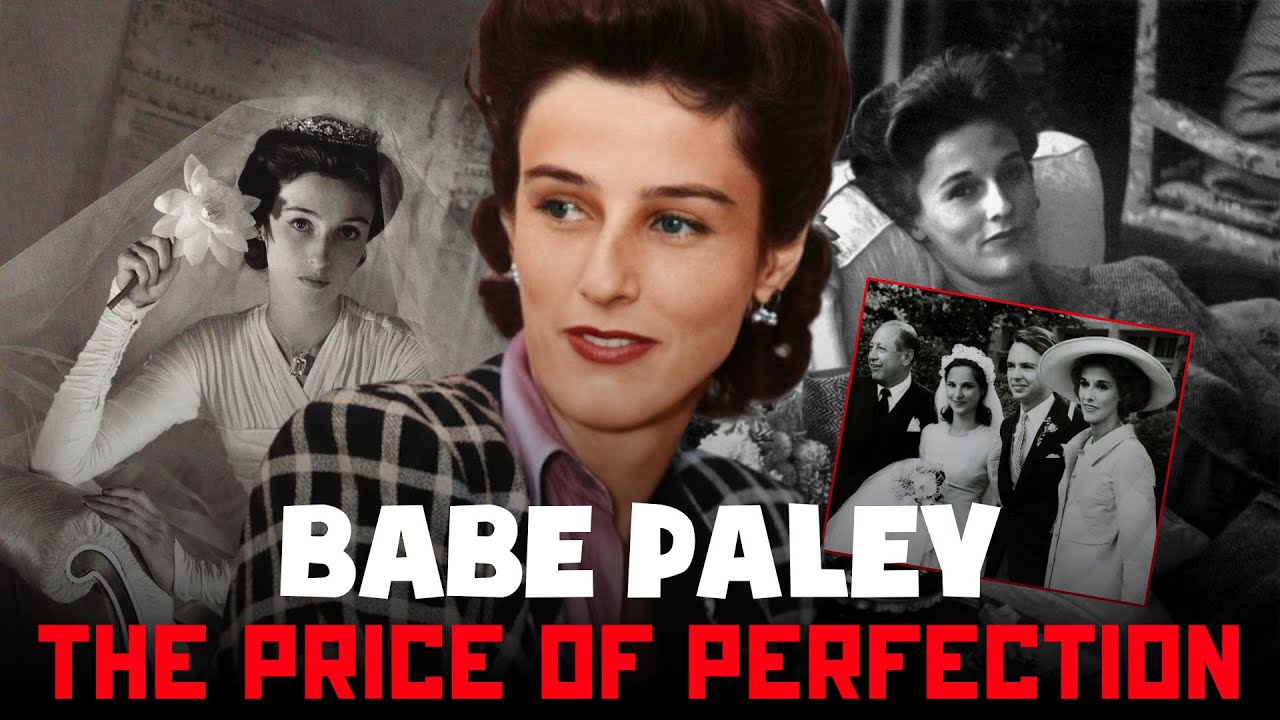
For Babe, Bill offered a stage grand enough for her ambitions.
Their marriage in 1947 was less a romance than a strategic merger. He provided the empire; she provided the class to legitimize it. As Mrs.
William S. Paley, Babe ascended to her final form. She retired from Vogue and dedicated herself to being the perfect wife.
Her homes became legendary showcases of taste. Her perfectionism was absolute. She inspected the placement of individual peas in a serving dish.
Ashtrays were emptied the moment a cigarette was extinguished.
But this relentless pursuit of perfection was a defense mechanism, a beautiful fortress built to conceal deep cracks in her marriage. Bill Paley was a compulsive womanizer. His infidelities were an open secret and a source of profound private humiliation.
Divorce was unthinkable; it would be a public admission of failure. Babe was trapped, forced to maintain appearances at all costs.
The chasm between her public facade and private pain manifested in one visible vice: she was a constant, desperate chain smoker. Beneath the placid surface was a woman consumed by anxiety and suffocating loneliness. Surrounded by acquaintances, she had no one to truly confide in.
Truman Capote arrived in 1955 like a weather system. He was the antithesis of the society she inhabited. He was short, with a cherubic face and a high-pitched lisping voice.
He was openly gay in an era when it was still a social taboo. For Babe, he was a breath of the freshest air she had ever known.
Their connection was instantaneous. Truman was outrageously funny, a master conversationalist who made her laugh with deep, genuine schoolgirl giggles. Crucially, his homosexuality made him a safe companion.
He wanted nothing from her sexually. He wanted her friendship, her attention, her very essence.
For Truman, meeting Babe was the realization of a lifelong obsession. He saw in her the very embodiment of a feminine ideal. He later wrote the famous line: “Mrs.
P. had only one fault. She was perfect.
Otherwise, she was perfect.”
Their friendship developed intimate rituals. He called her every morning with gossip. They held court for hours at La Côte Basque or the Colony.
He became her official escort to parties when Bill was otherwise engaged. He advised her on clothes and jewelry. He was her court jester, her platonic husband, her walking diary.
The bond extended to Babe’s entire circle. Truman gave them nicknames, casting them as characters in his glamorous narrative. There was Diana Vreeland, Gloria Guinness, Marella Agnelli, Slim Keith, and C.
Z. Guest. He christened them his “swans,” and Babe was their queen.
They adored him and fed him the currency he craved above all else: secrets.
For Babe, Truman filled a profound emotional void. Her husband was emotionally distant. Truman listened.
He remembered small details. He saw past the flawless facade and connected with the anxieties of Barbara Cushing. Their friendship was cemented in shared vulnerability, specifically Babe’s.
As her trust grew, she began to see him as her only safe harbor. When Bill’s philandering became too painful, she called Truman in tears. He became the sole repository of her marital grievances.
This dynamic reached its apex in one moment of supreme vulnerability.
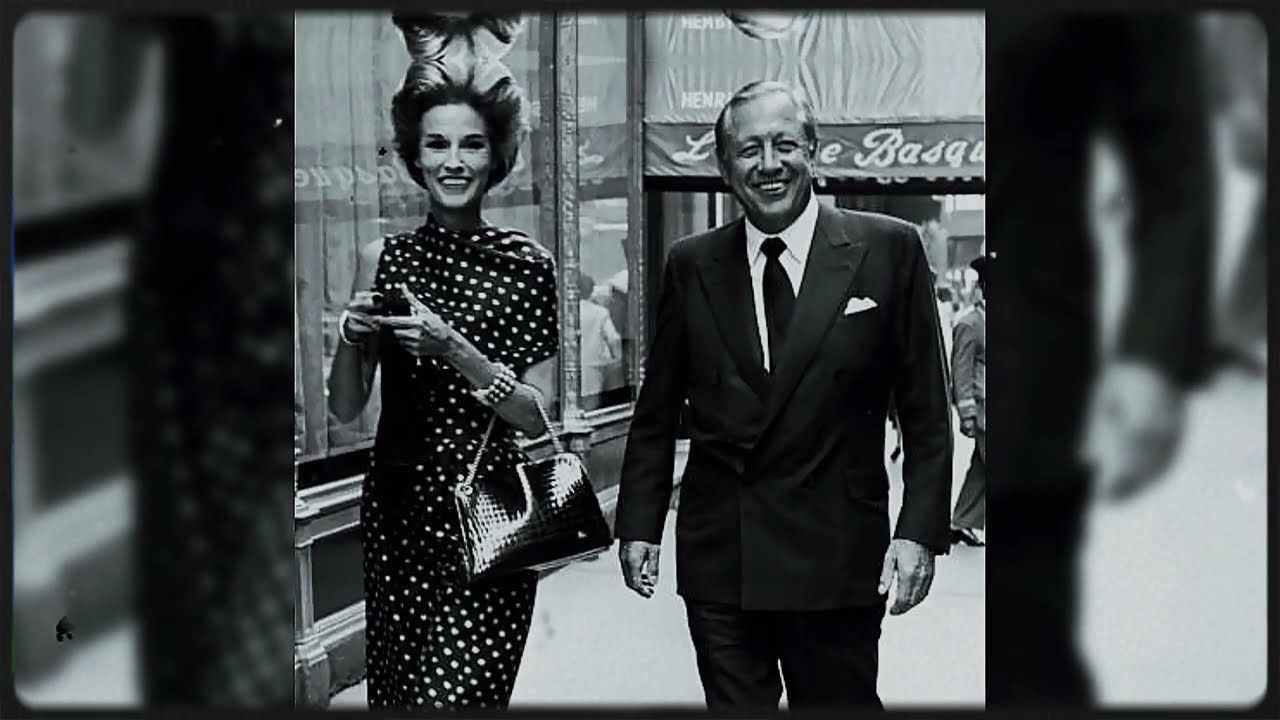
Babe confessed to Truman that she had once returned home unexpectedly to find the bed sheets in a state that could only mean one thing: her husband had just entertained another woman in their marital bed. To make the degradation absolute, the woman had been menstruating, leaving a damning stain on the priceless sheets. For a woman whose entire life was dedicated to avoiding any hint of the imperfect, this discovery was a psychic wound.
She told Truman in a torrent of pain. He listened. He comforted her.
He promised his absolute loyalty.
The years that followed were the golden era of their friendship. Truman spent weekends at Kiluna Farm and joined them on their yacht. He was the glittering center of every dinner party.
But the relationship was a toxic codependency. Babe needed Truman for emotional validation. Truman needed Babe for access, lifestyle, and material.
He was an anthropologist who had infiltrated a lost tribe. He observed their rituals and took meticulous notes on their sorrows and hypocrisies. The swans believed their confessions were safe.
They never suspected the charming confidant was also a cold-eyed artist filing away their pain for future use.
For nearly a decade after the monumental success of In Cold Blood in 1966, Truman Capote was a literary deity. He had thrown the legendary Black and White Ball. But with success came pressure.
The world asked a terrifying question: What could he do for an encore?
His answer was a project of breathtaking ambition: a sprawling novel that would dissect the secret lives of the super rich. He called it Answered Prayers, taken from a quote attributed to St. Teresa of Ávila: “More tears are shed over answered prayers than unanswered ones.”
The years ticked by and the manuscript remained elusive. The pressure plunged him into writer’s block. His days dissolved into boozy lunches and cocaine-fueled nights.
By 1975, his publishers were impatient. Desperate for cash and to prove his doubters wrong, he decided to publish a few chapters in Esquire.
He chose a chapter titled “La Côte Basque, 1965,” a direct reference to the restaurant where his swans held court. It was a declaration of war. The chapter was structured as a fictionalized lunch between a writer narrator and a drunken gossip named Lady Ina Coolbirth, a thinly veiled portrait of Slim Keith.
Over the meal, she unloads a torrent of scandalous stories about their friends. The disguises were transparent.
He saved his most potent poison for Babe Paley. The central anecdote was a brutal transcription of her most humiliating secret. In the story, a character named Cleo Dylan, the stand-in for Babe, discovers the evidence of her husband’s infidelity.
Instead of crying, she calmly changes the sheets herself, her primary concern being the preservation of appearances. He portrayed her as an emotionless automaton, a beautiful creature of winter incapable of genuine feeling.
He took her deepest private pain and refashioned it into a public indictment of her character. But Babe was not his only victim. He took aim at Ann Woodward, a former showgirl who had shot and killed her husband in 1955.
The shooting was ruled an accident, but rumors of murder had swirled. In Capote’s story, she appears as a vulgar social climber who murders her husband in cold blood. Just before the issue was published, Ann Woodward committed suicide by taking a cyanide pill.
The publication was a detonation. Shockwaves of horror ripped through New York society. The swans’ initial shock curdled into a cold unified rage.
They would not argue. They would perform a social execution.
The first blow came from William Paley. He was on a flight when he first read the story. His anger was volcanic.
What infuriated him was the public airing of his wife’s deepest humiliation. The moment his plane landed, he called Capote. “What do you think you’re doing?”
he demanded. He informed Capote he was no longer welcome in their lives.
But it was Babe’s reaction that proved truly fatal. There were no angry confrontations, no tearful phone calls. There was only profound silence.
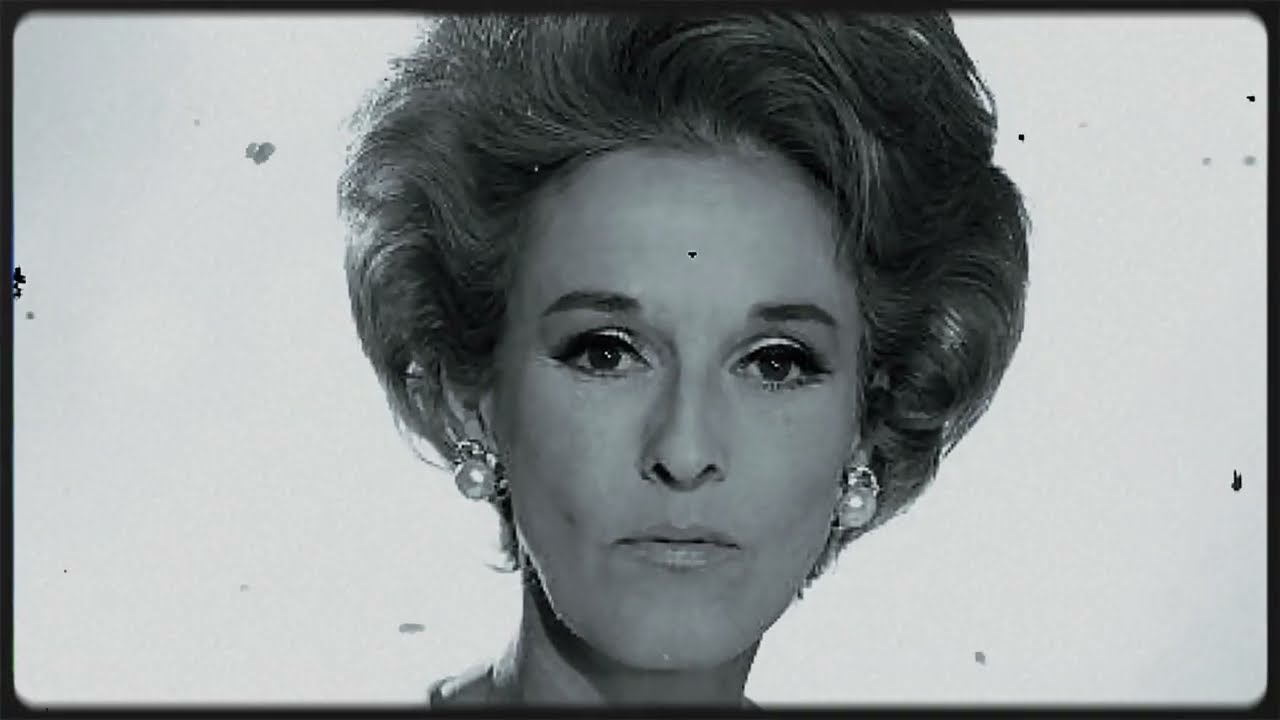
From the day she read the article, Truman Capote ceased to exist. She never spoke his name again. If they were at the same event, she would look directly at him, her gaze passing through him as if he were a pane of glass.
For a man like Capote, who thrived on attention, this silence was a more exquisite torture than any screaming match. Her refusal to engage denied him the opportunity to apologize or explain. She erased him from her reality.
The other swans followed their queen’s lead. Slim Keith cut him off completely. Gloria Guinness and Marella Agnelli did the same.
The doors that had once flown open were now bolted. Overnight, he became a pariah.
The most bewildering part was Capote’s own reaction. He seemed genuinely shocked by the fallout. “I’m a writer.
I use everything,” he complained. “Did they think I was just there to entertain them?” He failed to grasp the distinction between artistic observation and personal betrayal.
He had violated the most sacred unspoken rule: you do not betray your own.
His friend Wyatt Cooper tried to explain: “They’re not angry that you wrote about them. They’re angry about what you wrote about them.” But Capote could not hear it.
Publicly defiant, privately gutted, he had believed his talent would grant him immunity. He was wrong.
For Babe Paley, the publication was more than social embarrassment. At the time, she was already fighting lung cancer, almost certainly a result of her lifelong two-pack-a-day habit. The betrayal stripped her of her most trusted confidant at the very moment she needed him most.
There was no one left to call.
She retreated further into herself. Her serenity became a brittle shield. She continued to perform her social duties, but those who knew her noted a new sadness in her eyes.
In a final poignant act of control, she planned her own funeral with meticulous care. From her hospital bed, she compiled a book of instructions. She selected the wine and the menu.
She allocated pieces from her jewelry collection to her closest friends, wrapping them herself.
Babe Paley died on July 6, 1978, at the age of 63. The official cause was lung cancer, but many whispered she had also died of a broken heart. Capote’s name was not on the guest list.
For Capote, losing Babe was a wound from which he never recovered. He had lost his muse and his anchor. His life spiraled into alcohol and drug abuse.
The witty conversationalist was replaced by a pathetic drunk who showed up to talk shows visibly intoxicated. The great novel Answered Prayers was never finished.
He spent his final years chasing ghosts, making drunken late-night calls begging for forgiveness that never came. He died on August 25, 1984, from liver disease complicated by drug intoxication, one month shy of his 60th birthday. The unfinished manuscript was published posthumously, a hollow monument to squandered talent.
Why does this story still hold such power? It is a timeless tragedy about friendship, loyalty, and betrayal. It explores the dangerous line between art and life.
What responsibility does a writer have to the people whose lives they mine for material?
Babe Paley dedicated her existence to a flawless facade, only to have it shattered by the one person she allowed to see the cracks. Truman Capote, the brilliant outsider who achieved insider status, felt a desperate need to destroy the temple he had been allowed to enter. He used the weapon that had won him entry: his words.
In the end, we are left with two profoundly lonely people who found temporary solace in each other, only to become instruments of mutual destruction. Babe Paley was the ultimate work of art, trapped within the beautiful prison she had built. Truman Capote was a genius cursed with a desperate need for acceptance, a man who longed to be loved but proved incapable of loyalty.
She was the swan with the broken wing. He was the brilliant, tragic boy who, with one cruel stone, brought her down, only to find he could no longer fly himself. Their story is a dark fairy tale, a glittering reminder that even in the most beautiful of worlds, human frailty and the capacity for betrayal are never far from the surface.
Some prayers, especially those for fame and access to the secrets of others, are indeed better left unanswered.