Pearl Bailey was one of the most beloved entertainers of the 20th century, a singer, actress, and humorist who charmed audiences for decades. But her final days were marked by tragedy. In August 1990, she traveled to Philadelphia for what was supposed to be a routine knee surgery.
After the procedure, she returned to her hotel room to recover, unaware that something had gone terribly wrong. She passed away suddenly, leaving her family, friends, and millions of fans in shock.
Her life, however, was far more complex than her cheerful public persona suggested. Behind the laughter and the music lay a story of struggle, resilience, and personal heartbreak.
Pearl May Bailey was born in 1918 in Newport News, Virginia, to a Pentecostal preacher father and a homemaker mother. Her parents had been so convinced she would be a boy that they planned to name her Dick. That certainty followed her through childhood, where she was affectionately nicknamed Dicky.
When Pearl was four, the family moved to Washington, D. C. , where her father led one of the largest congregations in the city.
In church, Pearl discovered the joy of gospel singing and dancing. She also noticed that the lively atmosphere often led people to donate generously. This early exposure taught her that music could be both joyful and profitable.
But home life was far from harmonious. Her parents quarreled frequently, and eventually her mother packed up the children and moved to Philadelphia. Life did not become easier.
The family faced financial struggles, and every child was expected to contribute. By age 15, Pearl was working as a cleaner for wealthy white families.
Her brother Willie had found a better path by performing as a tap dancer. Pearl, with her natural rhythm honed in church, decided to try performing herself. She entered an amateur competition, sang "Poor Butterfly," and stunned the audience.
She won the contest and secured a two-week contract with a club. But the club went bankrupt, leaving her jobless and unpaid.
Determined not to return to cleaning houses, Pearl won another amateur competition at the Apollo Theater. Her career began to gain momentum as she joined the vaudeville circuit, which eventually took her to New York. Finances remained tight, and she took on less-than-ideal gigs, including a long-term contract in Pennsylvania's coal circuit, where she performed in mining towns populated mainly by Black miners.
These settings were rough. Performances often ended in violent brawls, with bottles flying dangerously close. Pearl adapted and grew resilient, but her personal life left her vulnerable.
During her travels, she met a drummer who captivated her. They married quickly, but the honeymoon phase did not last. After only 18 months, they went their separate ways.
Seeking a fresh start, Pearl returned to Washington, D. C. But World War II broke out, stripping her of her audience almost overnight.
She joined the USO to entertain troops, traveling across the country. Yet even while serving, she faced harsh racial prejudice. She was forced to stay in separate hotels and eat in different restaurants from her white colleagues.
At one point, she went to see Frank Sinatra perform in a New Jersey nightclub. Instead of enjoying the music, she became the victim of a brutal racist attack by two men. The incident left her shaken.
During the war, she met a soldier and married him. Like her first marriage, it ended quickly. He struggled to adapt to civilian life, and their union dissolved within months.
Pearl refused to be held back. In 1944, she arrived in New York and quickly established herself at two of the city's most renowned jazz clubs. Executives from Columbia Records noticed her talent and offered her a recording contract, her first ever.
She collaborated with jazz greats like Cab Calloway and Duke Ellington. She even met Frank Sinatra, the very artist she had once been attacked trying to see. Their professional meeting turned into a strong friendship.
She also ventured into acting. Her Broadway debut in "St. Louis Woman" was so strong that it was hard to believe she was new to the stage.
She landed roles in other Broadway hits, including "Arms and the Girl" and "House of Flowers." Her acting career took a significant turn when she joined the cast of the groundbreaking all-Black film "Porgy and Bess." She voiced concerns about the script's stereotypical dialect, insisting the characters should speak naturally.
Her feedback proved valuable, and the film achieved great success.
Despite her professional triumphs, her personal life remained complicated. Pearl remained hopeful about love. In 1948, at age 30, she married John Randolph Pinkett.
But she soon discovered a dark side to him. He grew resentful of her singing career and became physically abusive. Once, he struck her with a telephone.

For four years, she endured his violence. Her breaking point came in 1952, when Pinkett attacked her so severely with a firearm that her skull was split. She sought a divorce shortly afterward.
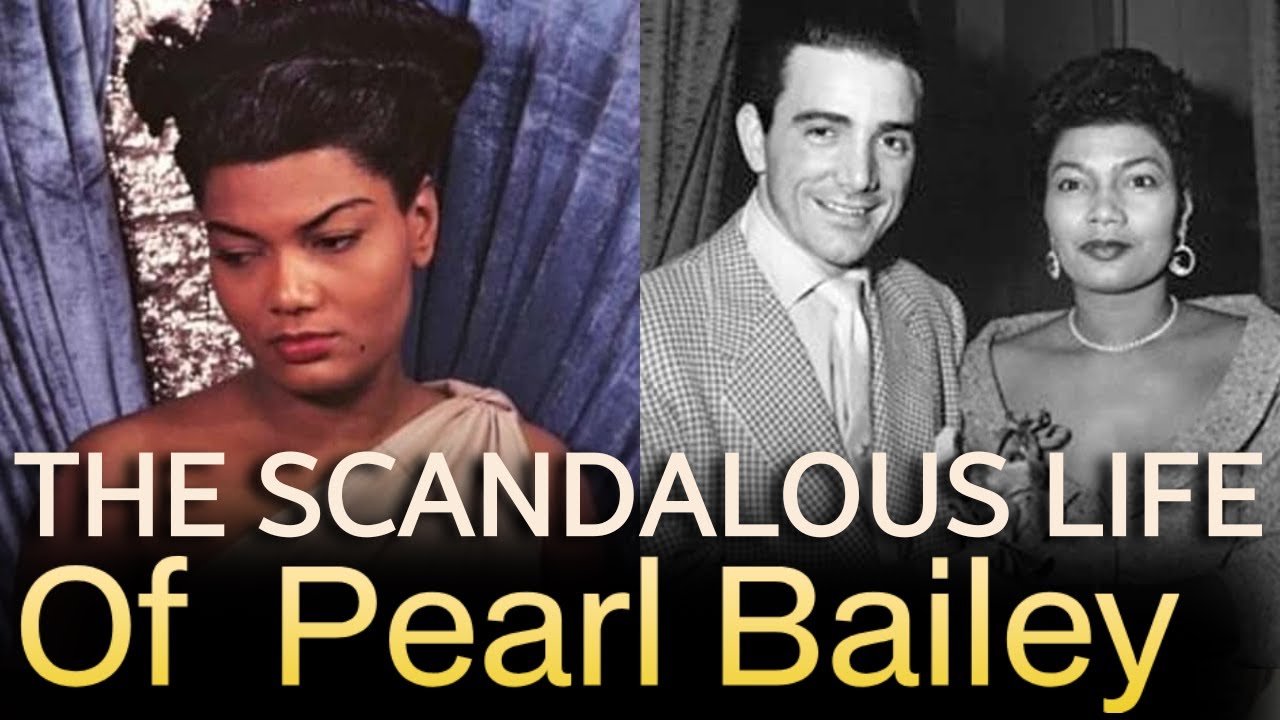
Her resilience was about to be rewarded. In 1952, she met Louis Bellson Jr. , a talented jazz drummer and composer.
Their connection went beyond romance. It was built on deep mutual respect for each other's artistry. Bellson supported her music wholeheartedly, often collaborating as her drummer and later her musical director.
Their marriage was marked by a shared commitment to equality. Bellson himself faced prejudice for being married to a Black woman in a still-segregated America. He publicly defended their marriage and advocated for racial unity within the jazz community.
Bellson's father was staunchly opposed to the union, even sending Bailey a hurtful letter urging her to cancel the wedding because he did not want a colored granddaughter. Despite this, the couple moved forward with determination, supported by their mothers.
Bellson left Duke Ellington's band to become Bailey's music director, strengthening their partnership both personally and professionally. They settled in California, purchasing a home they named Apple Valley Ranch.
Bailey was warmly embraced by Washington, D. C.' s social elite.
She sang at prestigious events and was even invited to perform at President Eisenhower's second inauguration. Yet racial discrimination continued to follow her. As a prominent Black entertainer in predominantly white spaces, she navigated pressure to align with the Civil Rights Movement's more direct activism.
Some critics questioned her lack of overt involvement. True to form, Bailey had a ready response: she said she walked with love and hoped it would inspire others.
She chose roles in films like "The Landlord" and "All the Fine Young Cannibals," which addressed race relations. Through her art, she voiced issues of discrimination. Her success in breaking barriers in spaces traditionally closed to Black artists became part of her legacy.
In 1965, after a trip abroad, Bailey returned feeling unwell, struggling with exhaustion and foggy mental clarity. These were early signs of serious health issues. She refused to slow down.
One night, she collapsed backstage at a Manhattan club. Against medical advice, she pushed herself to finish her set. She was hospitalized repeatedly that year, including twice for heart seizures.

Ordered to rest, she took a three-week break, which gave her time to work on her autobiography, "The Raw Pearl," published in 1968.
Her return to the stage proved monumental. She starred as Dolly Gallagher Levi in "Hello, Dolly!" on Broadway.
Her captivating performance attracted full audiences night after night. One critic claimed she could have won a gubernatorial election if she had just named a state. Her portrayal won her a Tony Award.
She transitioned to television, hosting "The Pearl Bailey Show" on ABC, where she interviewed icons like Bing Crosby and Louis Armstrong. In 1970, President Richard Nixon appointed her the American Ambassador of Love, a title she embraced wholeheartedly.
Her health remained a concern. In 1974, while in Denver, she collapsed again due to altitude complications and exhaustion. She was quietly struggling with severe heart problems, including a near-fatal episode in which she briefly lost consciousness.
Throughout it all, her relationship with Bellson remained strong. They adopted a son, Tony, and later welcomed a daughter, Dee, in 1960.
In her 60s, Bailey enrolled at Georgetown University, earning a degree in theology in 1985 and making the dean's list at age 67. She received numerous awards, including the Screen Actors Guild Lifetime Achievement Award and USO's Woman of the Year in 1969. Working with Barbara Bush, she promoted literacy and inspired youth to commit to causes.
Bailey's philosophy was simple: "I have a go-forward attitude about education, about life, about everything. My religion is action. You can't spend your life waiting around.
You go for it."
Time eventually caught up with her. Despite bouncing back from multiple health scares throughout the 1970s, her body began to wear down in the 1980s. Knee problems became a significant issue.
In August 1990, she underwent routine knee surgery in Philadelphia, confident in a full recovery. Shortly after being released, she passed away suddenly in her hotel room, likely due to complications related to her heart condition.
Her family and friends were devastated. Her husband of 38 years, Lou Bellson, described the loss as losing his best friend. The tragedy deepened over time.
Bellson would later endure the passing of their son Tony in 2004, followed by their daughter Dee just five months after her father's passing.
Pearl Bailey left an indelible mark on those who knew her and on audiences worldwide. She is remembered for her kindness, resilience, humor, and wisdom. After her death, her hometown of Newport News honored her legacy, solidifying her place as a beloved and timeless icon.