Caroline Lee Bouvier was born on March 3, 1933, into a world that demanded perfection but was built on lies. The Bouvier family presented itself as the pinnacle of American high society, claiming direct descent from French nobility, complete with a published family tree and a royal coat of arms. None of it was true.
The Bouviers were actually descendants of working-class French immigrants who ran hardware stores. Her mother, Janet Norton Lee, similarly fabricated a connection to the prestigious Lee political dynasty of Maryland to hide her own Irish Catholic working-class roots.
Lee’s father, John Vernou “Black Jack” Bouvier III, was a charismatic Wall Street broker and an alcoholic who viewed his children as mirrors of his own ego. He saw himself in his eldest daughter, Jacqueline, and favored her openly and ruthlessly. Lee, with her softer features inherited from her mother, was largely ignored.
When her father did pay attention to her, it was to remind her that she did not measure up to her sister. This blatant favoritism left a deep narcissistic wound in Lee, who was immediately cast as the invisible child, always second in a two-person race.
Her mother was cold and obsessed with public image, constantly criticizing Lee’s appearance and imposing strict diets on her from a young age. Lee learned early that she was inherently flawed. To survive, she developed an intense obsession with beauty.
If she could not be the favorite daughter, she would be the most perfect one.
In 1940, the toxic Bouvier marriage collapsed under the weight of Black Jack’s drinking and infidelity. Two years later, Janet remarried Hugh D. Auchincloss, a wealthy heir to the Standard Oil fortune.
Lee, then nine, was uprooted from New York and thrust into a life of cold, spectacular luxury, moving between a 46-acre Virginia estate and a 28-room mansion in Rhode Island. But this new wealth came with a heavy psychological price. Lee found herself in a blended family of half-siblings and step-siblings, feeling more isolated than ever.
In this emotional vacuum, the rivalry between Lee and Jackie hardened into a permanent, bitter war.
Jackie dominated the academic and equestrian fields, so Lee chose fashion as her weapon. She developed an avant-garde artistic taste that far surpassed her older sister’s. This silent rebellion exploded publicly in August 1947 at Jackie’s debutante ball.
The rules of high society dictated that the debutante wear white while younger sisters wore quiet pastels. Lee, then 14, refused her role. She descended the stairs in a strapless, shocking pink dress heavily encrusted with rhinestones.
Every time a camera flashed, attention shifted from Jackie to the neon pink dress. Lee was visually declaring she would no longer be a supporting character.
Her desperate need for attention often backfired. In 1951, during a high-profile European tour with Jackie, 18-year-old Lee attended a formal dinner in Venice. Determined to impress a prominent international ambassador, she wore an overly ornate dress designed for an older woman.
When she moved suddenly, the bodice of her dress broke, and her slip fell completely in the middle of the elegant dining room. The ambassador looked away in embarrassment while Lee fled the table in tears.
By 1952, Lee felt trapped. She was well-educated and elegant but suffocating. She realized she could not win in the Auchincloss household, could not outshine Jackie, and could not win her father’s love.
In the 1950s, there was only one acceptable path for a woman to achieve immediate independence and a new identity: marriage. Lee decided it was time to get married.
In April 1953, she married Michael Temple Canfield, a handsome Harvard-educated publishing executive based in London. He was rumored to be the illegitimate son of Prince George, Duke of Kent, which gave him an aristocratic mystique. Lee was frank about her motives: she wanted her own apartment, the status of a married woman, and the psychological victory of beating Jackie to the altar.
The marriage was doomed financially. Lee was accustomed to oil wealth, designer clothes, and servants. Michael had a comfortable executive salary, but not enough to support Lee’s expectations.
The couple moved to London, where Lee spent recklessly while Michael turned to alcohol. They also suffered a series of miscarriages.
Five months after Lee’s wedding, her brief triumph evaporated. In September 1953, Jacqueline Bouvier married Senator John F. Kennedy of Massachusetts.
It was the social event of the decade, attended by over 800 guests. Lee watched from her modest London home as her sister became the jewel of America’s most powerful political dynasty. In a moment of desperation, Michael Canfield asked Jackie for advice on saving his marriage.
Jackie’s cold response stripped away any pretense of romance: “Earn more money, Michael. Real money.”
Lee’s attention had already shifted to Prince Stanislas “Stas” Radziwill, a Polish nobleman 19 years her senior. He had fled Poland during World War II, losing his family’s historic wealth, but had rebuilt himself as a highly successful London real estate investor. He was rich, experienced, and held a title.
Lee began a secret affair with him while both were still married. For Lee, Stas represented everything she lacked: fatherly stability, wealth, and a European title that could rival Jackie’s American political power.
The Kennedy political machine quietly intervened to secure Lee a Catholic annulment from her first marriage, demonstrating the immense, even frightening, power Jackie now wielded. In March 1959, Lee married Stas Radziwill. They moved into a grand Georgian home near Buckingham Palace and a sprawling country estate.
Lee gave birth to two children, Anthony and Tina. She insisted everyone address her exclusively as Her Serene Highness, Princess Caroline, printing the Radziwill coat of arms on her stationery, linens, and car doors. But the title was not legally recognized.
The Polish Republic had abolished all noble titles in 1921. The British royal family acknowledged the title socially out of courtesy, but it carried no legal weight. More dangerously, Stas was wealthy, but not infinitely so.
They were living a billionaire lifestyle on a millionaire’s budget, borrowing heavily and living on credit.
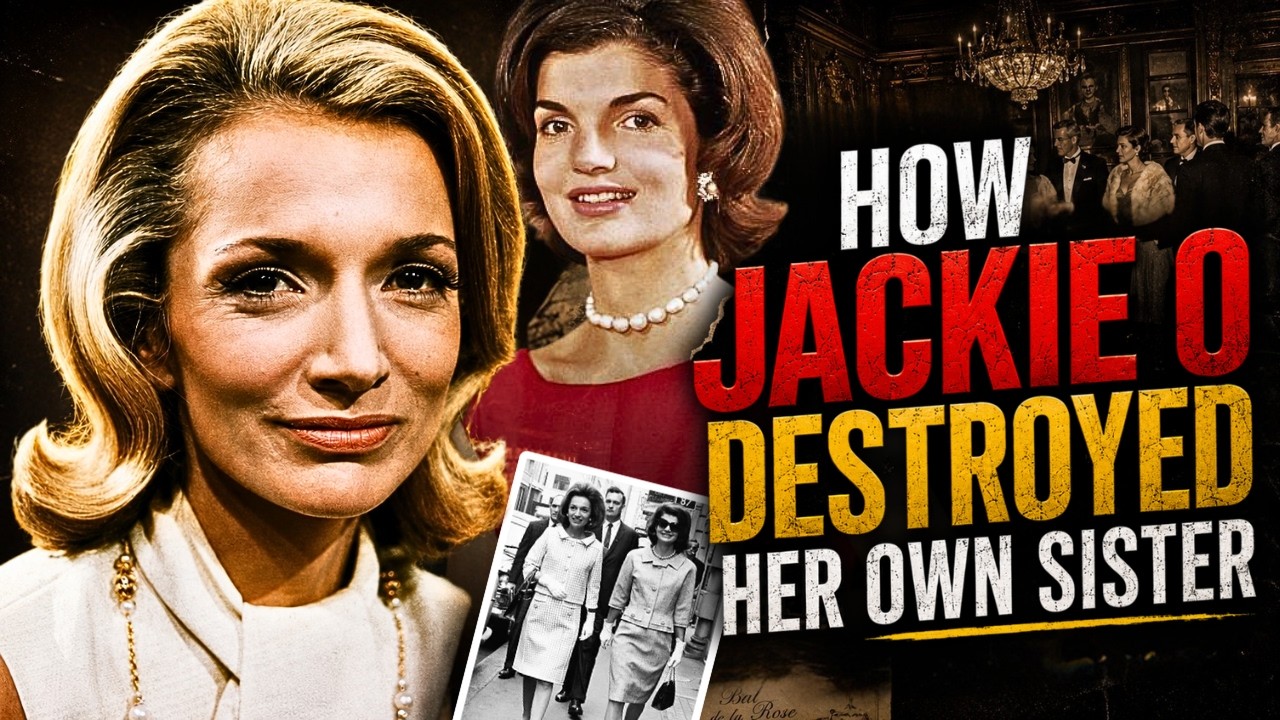
On November 8, 1960, John F. Kennedy was elected President of the United States. For Lee, watching from London, the victory was personal and devastating.
At 31, her older sister had become First Lady of the United States. The world’s attention shifted entirely to the Kennedys. Lee’s carefully constructed European illusion simply dissolved.
The Polish title, especially an unrecognized one, was worthless compared to the power of the White House.
Lee was conspicuously absent from the presidential inauguration on January 20, 1961. The official excuse was medical: she had recently given birth prematurely to her daughter, Anna Christina. But those close to the family understood the deeper truth.
Lee could not bear to stand in the cold and watch her sister be crowned queen of the modern world.
The cruelest irony was that the world praised Jackie for a skill that actually belonged to Lee: fashion. Behind closed doors, family and fashion experts knew Lee was the true visionary. Jackie was practical by nature, preferring comfortable riding clothes.
Lee understood the power of design and the hidden messages of haute couture. When Kennedy entered the White House, he insisted the First Lady wear American designs for political reasons. Jackie wanted Balenciaga.
She needed a smuggler. She turned to her sister.
Lee became the hidden architect of the Camelot image. From London and Paris, she acted as Jackie’s private fashion buyer, visiting exclusive Givenchy showrooms, selecting the most striking pieces, and secretly shipping them across the Atlantic to the White House. In May 1961, during Kennedy’s historic visit to Paris, Jackie wore a stunning ivory silk Givenchy gown to a formal dinner at Versailles.
The image became iconic. Lee was there too, having helped orchestrate the success, but she remained in the shadows, unnamed.
Photographer Cecil Beaton, a close friend of Lee’s, observed the dynamic with deep sympathy for the younger sister. He noted that Lee was objectively more beautiful and elegant than Jackie. But the camera was fascinated with Jackie, who possessed a magnetic, almost cinematic aura that Lee could never replicate on film.
This dynamic pushed Lee to the breaking point during a heavily publicized goodwill tour of India and Pakistan in spring 1962. Millions lined the streets, throwing flowers and cheering. But they were cheering for the First Lady, not the Princess.
Lee was marginalized, often placed steps behind Jackie in official photos. American magazine editors frequently cropped Lee out of images entirely. The public humiliation of being erased from the picture gnawed at her.
In her desperate quest for recognition and power, Lee looked outside her marriage. She found Aristotle Onassis, a Greek shipping magnate and one of the richest, most ruthless men on the planet. He was already in a highly publicized relationship with opera legend Maria Callas.
None of this stopped Lee. She engaged in a serious, quiet affair with the billionaire. For Lee, Onassis was an emotional lifeline.
When she was with him, she was the center of a powerful world. He lavished her with attention and dominance.
In August 1963, Jackie gave birth prematurely to a son, Patrick, who died after two days. Jackie fell into a severe depression. Wanting to help, Lee contacted Onassis and suggested he allow Jackie to use his legendary luxury yacht, the Christina, for a private recovery cruise in the Mediterranean.
Onassis agreed enthusiastically. In October 1963, Jackie, Lee, and a small entourage boarded the yacht.
As the days passed, a sinister shift occurred. Onassis was a man who collected rare and powerful things. He had never possessed an American First Lady.
He became fascinated with Jackie, focusing entirely on her. Lee, who had arranged the entire trip, was suddenly ignored on the very yacht she had secured. The ultimate insult came on the last night.
Onassis presented Jackie with a massive, intricate gold necklace studded with diamonds and rubies, a museum-quality piece fit for an empress. Then he turned to Lee, the woman he had been having an affair with, and handed her a small box containing a set of simple, relatively cheap bracelets, the kind one might buy at a tourist market. The disparity was a calculated, cruel message: Jackie was the prize.
Lee was expendable.
A darker secret further poisoned the sisters’ relationship. According to Michael Canfield, Lee’s first husband, Lee had a brief, highly secret affair with John F. Kennedy before he became president.
Whether true or exaggerated, the suspicion of this ultimate betrayal, sleeping with her sister’s husband, the most powerful man in the world, haunted the sisters’ dynamic.
On November 22, 1963, John F. Kennedy was assassinated in Dallas. Lee immediately flew to Washington and played the role of the grieving sister perfectly.
She stood by Jackie throughout the funeral. But behind closed doors, the atmosphere was toxic. Jackie was suffering from acute post-traumatic stress, unable to sleep, wandering the halls, relying on medication and alcohol.
Lee privately complained bitterly to her inner circle about her sister’s behavior, showing a shocking lack of empathy. The tension finally exploded in a physical fight. During one of their many arguments, Jackie, in a fit of rage and frustration, slapped Lee hard across the face.
Years later, Lee made a shocking confession: despite the tragedy, Kennedy’s death gave her a profound sense of liberation. The assassination destroyed the Kennedy machine that had kept her in the shadows. Freed from Washington’s political constraints, Lee convinced Stas to spend more time in America.

They bought an apartment on Fifth Avenue in New York City, where Lee immersed herself in the cultural elite.
She caught the attention of Truman Capote, America’s most famous and controversial writer. Capote was known for collecting beautiful, wealthy, insecure women he called his “swans.” He became obsessed with Lee, recognizing her desperate desire for fame separate from Jackie.
He flattered her relentlessly, telling her she was more beautiful and smarter than Jackie. Capote convinced her that her true calling was to be a serious actress.
In summer 1967, Lee made her heavily publicized acting debut in a stage production of “The Philadelphia Story” in Chicago. Jackie refused to attend, a silent, devastating boycott. The performance was a disaster.
Lee was paralyzed by stage fright, trembling so badly she could barely hold her props. The critics were brutal. Capote refused to let her quit, securing her a television contract.
In early 1968, she starred in a TV adaptation of “Laura” under the name Lee Bouvier. It was a catastrophic failure. Her acting career was over before it began.
Stas was humiliated and threatened to seek full custody of their children if she continued. Fashion designer Ralph Rucci later revealed the horrifying truth: Capote was not a supportive friend but a deceptive one. He knew exactly what he was doing when he pushed an untrained, insecure socialite onto the national stage.
He did not want Lee to succeed. He wanted to watch her fail.
By spring 1968, Lee was exhausted. Her marriage was hanging by a thread, and her dream of becoming an independent star was shattered. Then came June 5, 1968.
Robert F. Kennedy was assassinated in Los Angeles. The trauma of Dallas returned to haunt Jackie, but this time it was coupled with absolute terror.
Convinced there was a conspiracy targeting the Kennedy family, Jackie looked at her two young children and made a cold, calculated decision. She needed a fortress, independent security, and unlimited financial resources. There was only one man on earth who could provide that level of protection: Aristotle Onassis.
What followed was one of the most secretive and ruthless negotiations in modern social history. Jackie and Onassis began coordinating quietly. Throughout this dangerous affair, one person was deliberately kept in the dark: Lee.
Jackie knew exactly what Onassis meant to her sister. Lee had brought him into their circle. Yet Jackie made no phone call to warn her, offered no explanation, no apology.
In October 1968, the trap was sprung. Onassis coldly informed Lee that he would be marrying Jackie in a few days on his private Greek island, Skorpios.
The psychological impact on Lee cannot be overstated. It was a suffocating blow to her sense of self, a confirmation of her deepest childhood fears. Nothing she owned was safe if Jackie wanted it.
Lee was forced to put on a brave face, issuing polite congratulations and even flying to Greece to attend the wedding on October 20, 1968. She stood in the rain on Skorpios, watching her sister marry the man who used to shower her with attention. Behind closed doors, she collapsed emotionally.
In the middle of the night, she called Truman Capote, sobbing and screaming, “How could she do this to me?”
The wedding severed the sisters’ fragile bond permanently. Stripped of her dignity, her lover, and her family loyalty, Lee underwent a radical psychological transformation. She decided that if aristocratic rules offered no protection, she would abandon them entirely.
She plunged into the American counterculture, becoming a bohemian icon. She spent time at Andy Warhol’s Factory, began a public affair with wildlife photographer Peter Beard, and toured with the Rolling Stones in 1972. She rented a house in Montauk, throwing raucous parties for Mick Jagger and Warhol.
She wore loose pants, let her hair grow, and walked barefoot on the beach.
Stas Radziwill, an old-world European aristocrat, could not tolerate being publicly cuckolded by a bohemian photographer. The marriage, already strained by financial and emotional distress, collapsed. In 1974, Lee divorced Stas.
She lost her title, her English properties, and her European royal protection. At 41, Lee Radziwill found herself stripped bare.
In July 1976, Stas Radziwill died suddenly of a heart attack. When the accountants opened his books, the truth was devastating. He had been heavily leveraged, borrowing millions against properties to fund new developments.
He died owing nearly $30 million. He was completely bankrupt. The estates were liquidated.
The London homes were sold to pay bank debts. There was nothing left for the children. Lee, then 43, had no skills, no income, and extravagant expenses.
She was facing total ruin.
With no other choice, Lee had to swallow her pride and beg her sister for money. Jackie, now a widow for the second time after Onassis’s death in 1975, had inherited a vast fortune. She could have easily eliminated Lee’s financial worries.
Instead, she intervened shrewdly, establishing carefully structured trusts to cover the education and living expenses of Lee’s children. Jackie controlled the lawyers, the trusts, and the purse strings. Lee was no longer just the less famous sister; she was financially dependent.
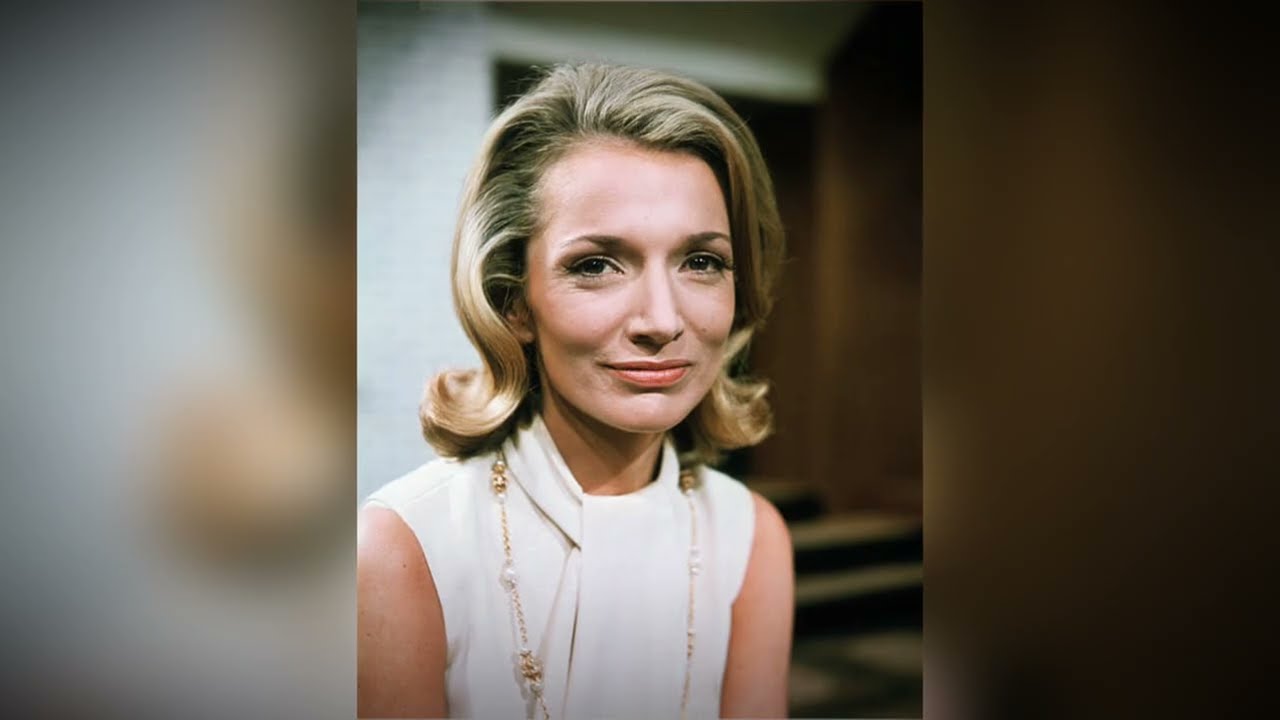
Every dollar spent on her children’s education was a silent reminder of Jackie’s supremacy.
Desperate to escape Jackie’s control, Lee sought a wealthy husband. In 1977, she became engaged to Newton Cope, a highly successful West Coast hotel magnate. The wedding was set for San Francisco.
One hour before the ceremony, it was abruptly canceled. The real story, which leaked years later, was a chilling display of family manipulation. Hours before the wedding, Jackie’s powerful legal team contacted Cope with a harsh, non-negotiable prenuptial agreement demanding he guarantee Lee $20,000 per month for life, regardless of the marriage’s duration.
Cope, a seasoned businessman, was disgusted by the aggressive, last-minute demand. He realized Lee was not negotiating for herself; she was a puppet controlled by her older sister. He refused to sign and canceled the wedding.
The accumulated weight of these failures finally broke Lee’s psychological resilience. She turned to alcohol. By the early 1980s, her drinking had escalated into severe addiction.
She became unreliable, slurring her speech at dinner parties. Her appearance, once a standard of global elegance, showed signs of chronic alcoholism. Jackie, ever protective of the Bouvier-Kennedy reputation, intervened in 1981 with the precision of a military commander.
She personally arranged for Lee to attend Alcoholics Anonymous meetings in the Hamptons. Jackie drove Lee to the church but did not enter to support her. She sat outside in a chauffeured limousine, parked directly in front of the exit, watching the doors to ensure her sister would not try to escape.
Lee’s humiliation was profound.
Lee eventually recovered from her addiction. In September 1988, she made one final desperate attempt at security, marrying Herbert Ross, a wealthy and successful Hollywood film director. It was a purely transactional arrangement.
Ross wanted an elegant wife with pedigree; Lee wanted access to his bank accounts. The marriage was flawed from the start. Lee lived in a fantasy that she was still a crowned European princess, demanding a lifestyle that strained even a successful director’s budget.
Ross complained she was systematically draining his assets. Lee, in turn, looked down on his Hollywood friends as nouveau riche. The marriage reached a humiliating peak when Lee caused a scene at a royal event in London, stealing the seat of a young actress named Julia Roberts to sit next to Prince Charles.
The marriage was effectively dead.
As the 1980s ended, the final chapter of the Bouvier women’s saga began. Their mother, Janet Auchincloss, developed Alzheimer’s disease. In a rare moment of clarity, she secretly transferred $750,000 directly to Lee.
It was a tangible admission that the favoritism had been real all along. Janet died in 1989, taking her apologies to the grave.
In early 1994, Jackie was diagnosed with non-Hodgkin’s lymphoma. The cancer was aggressive. By May 1994, the end was near.
When Lee received the news, decades of fierce rivalry temporarily dissolved. She went to Jackie’s apartment and stood by her sister’s bedside, weeping. On May 19, 1994, Jacqueline Bouvier Kennedy Onassis died at age 64.
But Jackie was a woman who understood the power of narrative. When her will was entered into public probate, it became a global news event. She left her vast fortune, worth hundreds of millions, to her children and close associates.
But regarding her only sister, the will was starkly clear. Lee Radziwill was deliberately excluded. The will stated: “I have not made any provision in this Will for my sister, Lee B.
Radziwill, for whom I have already made provisions during my lifetime.” It was a masterpiece of posthumous public relations. In one sentence, Jackie cemented her legacy and destroyed Lee’s dignity.
She used her final legal act to publicly humiliate her sister one last time.
Lee was stunned. She issued no statement, simply retreating in silence. Two years later, in 1996, John F.
Kennedy Jr. married Carolyn Bessette in a highly secret ceremony on a remote island off the coast of Georgia. Lee, his aunt, was not invited.
She had been officially cast out of the Kennedy-Bouvier machine.
The true tragedy of Lee’s life came in the summer of 1999. Her son, Anthony Radziwill, was battling a rare and aggressive cancer. Anthony was also the closest friend of his cousin, John F.
Kennedy Jr. On July 16, 1999, John Jr.’ s plane crashed into the Atlantic Ocean, killing him, his wife, and her sister.
The sudden, violent death of his best friend destroyed Anthony’s remaining will to fight. Three and a half weeks later, on August 10, 1999, Anthony died of cancer at age 40. Lee had lost her sister to cancer, her nephew to the ocean, and now her son.
All the wealth, titles, and frantic social climbing meant nothing as she stood over her son’s grave.
The woman who emerged from the tragedy of 1999 was a ghost. She formally separated from Herbert Ross in 2001. She withdrew completely from the spotlight, spending her final two decades in quiet seclusion between Paris and a beautifully decorated apartment on Manhattan’s Upper East Side.
She gave very few interviews, and journalists were strictly forbidden from asking about Jacqueline Kennedy. If anyone raised the subject, Lee would stare at them in cold, terrifying silence until they changed the topic.
Caroline Lee Bouvier Canfield Radziwill Ross died in New York City on February 15, 2019, at age 85. Her tragedy was not being forgotten, but being remembered in the way she always feared. She was a woman of undeniable intelligence, sharp wit, and a keen eye for elegance that quietly shaped the aesthetics of an entire American era.
But she spent her entire life running a race that was rigged from the start. She spent decades trying to carve her name into history, only to realize that the race was always in her sister’s hands. In the end, Lee Radziwill fought a lifelong war to escape the shadow of the crown, never realizing that the shadow was the one thing she could never escape.