Warren Earp spent most of his life in the shadow of his older brothers, the famous lawmen of Tombstone, Arizona. While Wyatt, Virgil, and Morgan became legends of the American frontier, Warren struggled to build a life of his own and ultimately died in a saloon shooting that historians still debate more than a century later. Born on March 9, 1855, in Pella, Iowa, Warren was the youngest of the six Earp brothers. He was nearly two decades younger than Newton, his half-brother from his father Nicholas’s first marriage.
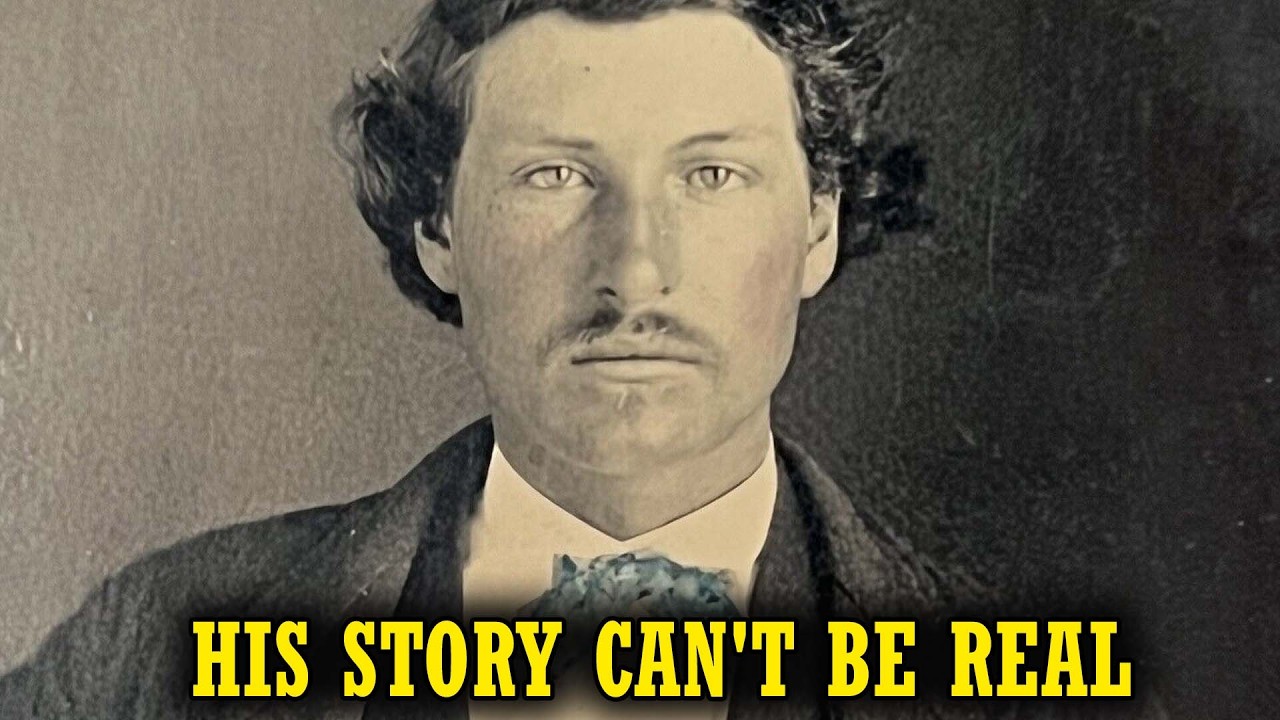
His early years were marked by loss. A half-sister died shortly after birth, another sister passed away while he was still young, and a third sister died in 1861 when Warren was a child. Of his brothers, Morgan was closest to him in age, but even Morgan was four years older. James was born in 1841, Virgil in 1843, and Wyatt in 1848.
By the time Warren reached his teenage years, most of his brothers had already left home to build their own lives. Warren remained in Colton, California, as the only son still living with his parents. He worked the land, helped at his father’s saloon, and supported the family. Colton was a modest settlement between Los Angeles and San Bernardino, surrounded by desert and sparse vegetation.
It was far removed from the excitement and opportunity of frontier boomtowns. From this quiet place, Warren watched his brothers gain fame across the West. According to his sister Allie’s later descriptions, he grew up knowing that his brothers were making names for themselves in law enforcement and commerce. The opportunity he had been waiting for arrived in 1880, when word reached him that James, Wyatt, Virgil, and Morgan had settled in Tombstone, Arizona, one of the fastest-growing silver mining communities in the West.
Warren moved there, drawn by adventure and opportunity. He moved in with Virgil and his wife Allie. Virgil was serving as a deputy U. S.
marshal and Tombstone’s chief of police, and he allowed Warren to help with simple tasks like guarding prisoners, delivering official documents, and accompanying investigation parties. In July 1881, authorities received reports that cattle believed to have been stolen from Mexico were connected to a ranch owned by Newman Haynes Clanton, a figure well known for cattle disputes in the region. A posse was formed, and Warren joined it. What happened during the trip remains disputed among historians.
Some researchers point to a confrontation between suspects and posse members, but the surviving records are incomplete. Even Wyatt later questioned parts of the story. Evidence suggests Warren may have been injured during this period. Years later, his sister Adelia wrote that he returned to Colton to recover from a wound suffered during a clash near the Mexican border.
While Warren was recovering, events in Tombstone continued to escalate. On October 26, 1881, Wyatt, Virgil, and Morgan, along with Doc Holliday, took part in the famous gunfight near the O. K. Corral.
Two months later, on December 28, Virgil was seriously wounded in an ambush while crossing Allen Street. The injuries permanently limited the use of his left arm. Several suspects were identified and arrested, but the legal proceedings that followed ended without convictions. When Warren learned of Virgil’s condition, he returned to Tombstone to support his family.
He moved back in with Virgil and Allie, helping with household duties and caring for his wounded brother. On March 18, 1882, tensions around the Earp family escalated once more. Wyatt and Morgan were at Hatch’s Saloon on Allen Street when gunfire erupted from the back entrance. Morgan was struck and gravely wounded.
A bullet narrowly missed others inside the building. Warren rushed to the scene, but Morgan’s condition deteriorated, and he died from his wounds. The family arranged to move Morgan’s body to Colton, California. Virgil accompanied the body by train, while other family members followed from Contention, Arizona.
Because of ongoing threats, close friends, including Doc Holliday, joined the journey for protection. A coroner’s jury later identified several suspects in Morgan’s death, including Pete Spence, Frank Stilwell, Joe Friske, and a man known as Indian Charlie. During the westward journey, the party received reports that Ike Clanton and Frank Stilwell might be waiting for them in Tucson, a scheduled stop on the rail line. When the train arrived, Wyatt, Warren, Doc Holliday, and others got off, ready for a possible confrontation.
Shortly afterward, Frank Stilwell was found dead near the railroad tracks. Accounts of what happened vary widely, and most witnesses gave imprecise descriptions. Ike Clanton claimed he saw Wyatt, Warren, Doc Holliday, Sherman McMasters, and Turkey Creek Jack Johnson following Stilwell shortly before his death. Based largely on this testimony, Sheriff Bob Paul issued arrest warrants for the men Clanton named.
Warren had traveled a remarkable path in a short time. Once assisting lawmen on their rounds, he was now wanted in connection with a criminal investigation. Rather than submit to arrest, Warren, Wyatt, Doc Holliday, and their companions briefly returned to Tombstone to gather supplies before leaving town again. Johnny Behan, the sheriff of Cochise County, attempted to arrest the group, but they refused to surrender and left the area.
Behan then organized a posse that included Ike and Finn Clanton. According to reports in the Tombstone newspaper, Bob Paul refused to join the pursuit because he believed the chosen men were hostile to the Earps, and any confrontation would likely lead to more bloodshed rather than peaceful arrest. During what became known as the Earp vendetta ride, three men lost their lives in confrontations involving members of the Earp group. Florentino Cruz, who reportedly admitted to playing a supporting role in Morgan’s death, was found at Pete Spence’s wood camp in the Dragoon Mountains on March 22, 1882.
Days later, Curly Bill Brocius and Johnny Barnes were involved in another confrontation with the group near Iron Springs. Historical accounts differ on the details, and it remains unclear whether Warren directly participated in the deaths of any of these men. With word spreading that a large group was hunting them, the Earp party concluded that remaining in Arizona was too dangerous. They split up and left the territory entirely.
Warren, Wyatt, and Doc Holliday traveled to Denver, Colorado. Arizona officials failed to secure their return through extradition. The brothers then returned to Colton, while Holliday stayed in Colorado, where he died of tuberculosis on November 8, 1887. Wyatt and his wife Josie did not stay in Colton long.
In the following decades, Wyatt pursued mining and gambling across the West, traveling as far north as Alaska during the Nome gold rush. He lived until 1929, becoming one of the last surviving figures closely associated with the Tombstone era. Warren’s return to Colton was different. The violence of previous years left a deep mark on him.
Friends and observers often described him as discouraged, anxious, and unsure of his future. Without a clear direction, he spent increasing time in local saloons and became involved in a series of disputes. Newspapers occasionally reported these incidents, often noting his connection to the well-known Earp family. Since his father Nicholas was a respected local judge, some reports initially treated the affairs as minor disturbances rather than serious crimes.
One newspaper described a verbal altercation between Warren and a man named Juan Bamannte in a Colton saloon. Both men were held and released on bail. In June 1883, the Silver City Enterprise reported that Warren was involved in a confrontation with a man named Pollard, with legal action to follow. Another report claimed Warren was involved in a dispute at a restaurant that resulted in a waiter being injured.
He was arrested and fined twenty-five dollars. In February 1885, the Enterprise reported that Warren had been arrested following another serious quarrel with a business partner. The article gave few details, and the final outcome remains unclear. For several years after that, Warren stayed out of the headlines, likely encouraged by his father and brother Virgil to avoid further trouble.
He worked as a bartender in his father’s saloon and as a driver for a stagecoach line. Then, in August 1893, the Weekly Chronicle reported that Warren was charged with injuring a man named Steele during a brawl that occurred while Virgil was away from town. Steele survived, and Warren was ultimately acquitted. The Steele incident may have been the breaking point for Nicholas Earp.
According to later accounts, he decided Warren could no longer remain at home and encouraged him to leave and start a new life elsewhere. Warren left California with a woman whose name has not been preserved in the surviving records. By late 1893, the pair reached Yuma, Arizona Territory. The move was somewhat surprising, given that Warren still faced legal issues and lingering hostility toward the Earp family existed in parts of Arizona.
Shortly after arriving in Yuma, the relationship ended when the woman left Warren. He blamed a local man known as Professor Burns for the separation. On November 9, 1893, Warren confronted Burns. Contemporary reports say Warren initially made serious threats.
The situation eventually turned into a financial dispute, with Warren reportedly agreeing to leave town in exchange for compensation. Burns paid him, and the confrontation ended without further incidents. But authorities soon intervened, and Warren was arrested on charges including attempted murder, extortion, and disturbing the peace. Unable to post bail, he remained in custody until trial.
When the case came before the court on November 25, one of the most serious charges was dismissed on procedural grounds. Warren was fined for the remaining offenses and ordered to leave Yuma. For a time, he drifted from place to place. Eventually, on August 3, 1894, Warren arrived in Willcox, Arizona.
There he met Colonel Henry Clay Hooker, an old friend of the Earp family and one of Arizona’s most prominent cattlemen. Hooker headed the Cattlemen’s Association and owned the vast Sierra Bonita Ranch in Sulphur Spring Valley, as well as another property known as Hooker’s Hot Springs. Recognizing Warren’s need for stability, Hooker offered him a job as an investigator for the association and provided housing. The position gave Warren one of the most stable periods of his life.
He largely avoided public controversy during these years. The only significant legal case recorded came in 1896, when he was charged with taking money from a gambling table. He served eighteen days in jail after being convicted of petty larceny. Despite the setback, Warren continued working for Hooker until 1900, the final year of his life.
The circumstances of Warren’s death remain murky and have sparked debate among historians for over a century. Most of what is known comes from conflicting eyewitness accounts recorded years after the event. One account was preserved by journalist E. F.
Chaff in 1971, when he interviewed Bill Whelan, then ninety-four years old, who claimed to have worked as a cowboy on Hooker’s ranch and known Warren personally. According to Whelan, Warren and several ranch hands traveled to Willcox on July 4, 1900, to celebrate Independence Day. Workers from Hooker’s Hot Springs joined them, including Johnny Boyett and a woman named Mary Swain. During the celebrations, Warren reportedly showed interest in Mary and asked her to leave Boyett and spend time with him.
She refused. The refusal led to an argument between the two men. Whelan later recalled that Warren suggested settling the dispute through a formal duel. Boyett showed little interest in continuing the conflict and attributed the whole incident to alcohol and holiday enthusiasm.
According to Whelan’s later account, events turned tragic on July 6, 1900. Whelan claimed he met with Warren and several ranch hands for drinks before returning to work. At some point, Boyett entered the establishment. Whelan remembered that Warren immediately confronted him and suggested they settle their ongoing dispute once and for all.
Boyett was reportedly unarmed at the time. According to Whelan’s account, Boyett left the saloon, went to the nearby Wilcox House, borrowed a firearm from its owner, and returned. When Boyett came back, Warren was not inside. Boyett reportedly waited near the bar with the weapon.
Shortly afterward, Warren returned, and a scuffle broke out. The confrontation ended with Warren dead. Authorities later concluded Boyett acted in self-defense. Whelan also claimed Warren was buried the same day and that Boyett left the area shortly afterward.
Many historians have questioned Whelan’s credibility, noting that his account was recorded more than seventy years after the event and that memory errors may have affected details. A second account comes from testimony gathered immediately after Warren’s death, and while closer in time to the incident, it leaves historians with questions about the actions and motives of those involved. An official inquest was held on the day Warren died by W. F.
Nichols, a justice of the peace and acting coroner for Cochise County. Several witnesses testified, including O. W. Hayes and saloon owner Henry Brown.
Hayes stated that Warren and John Boyett entered the Headquarters Saloon together around one in the morning on July 6. According to his testimony, he heard Warren accuse Boyett of having taken money earlier to harm him. Warren then asked Boyett to get a firearm, adding that he already had one. Hayes claimed Boyett left the saloon, saying he did not want any trouble.
Warren apparently thought the dispute was over and went into a nearby restaurant connected to the saloon. The situation changed when Boyett returned carrying two firearms. Witnesses testified that he entered the saloon shouting, demanding to know where Warren was. When Warren appeared at the doorway between the restaurant and the saloon, Boyett fired.
Warren immediately retreated through the restaurant and went out of the building through another entrance. Witnesses stated that Boyett then moved toward the center of the saloon. For reasons that remain unclear, additional shots were fired into the floor before the confrontation continued outside. According to saloon owner Henry Brown’s testimony, the confrontation did not end when Warren briefly left the building.
Brown stated that Warren soon returned through a side entrance and approached John Boyett. Brown remembered that Warren opened his coat and vest in what appeared to be an attempt to prove he was unarmed. As he advanced toward Boyett, Warren declared he was unarmed and acknowledged Boyett had the upper hand. Witnesses stated that Boyett warned Warren repeatedly not to come closer.
Warren continued advancing. As he closed the distance significantly, another shot was fired, ending the confrontation tragically. Dr. M.
J. Nicholson, a local physician and surgeon, later testified that he examined Warren’s body and confirmed that a single wound from the confrontation was the cause of death. After the investigation, Justice of the Peace W. F.
Nichols declined to bring charges against Boyett. Nichols reportedly concluded that the available evidence supported a claim of self-defense. He also expressed his opinion that a jury would be unlikely to convict even if the case went to trial. Although the exact words exchanged that day can never be known for certain, the testimony suggests that tensions between Warren and Boyett had escalated significantly before the final confrontation.
The historical evidence also raises questions about whether Warren was armed. Earlier testimony suggested he claimed to have a weapon, while other witnesses, including Henry Brown, believed he was unarmed when he approached Boyett. Given the conflicting accounts, historians have reached no definitive conclusion. Some researchers have suggested that Warren’s actions reflected a desire to emulate the confidence and reputation of his older brothers, particularly Wyatt and Virgil.
Throughout his life, Warren struggled to break free from their influence, and in moments of confrontation, he may have been trying to show the same courage that made the Earp name famous across the West. In the years that followed, rumors spread that Wyatt or Virgil Earp later sought revenge against Boyett. These accounts circulated partly because Wyatt’s wife Josie later remembered that Wyatt and Virgil traveled to Willcox after Warren’s death. However, most modern historians view these claims with skepticism.
The available evidence suggests Wyatt was in Nome, Alaska, when he learned of Warren’s death and remained there for most of that summer. No reliable documents connect Wyatt or Virgil to any action against Boyett. Warren Earp lies today in a small, largely abandoned cemetery overlooking the area near Willcox, Arizona. For many years, his grave remained relatively unmarked, bearing only a simple wooden monument with his name, a cross, and his date of death.
Interest in Warren’s life has grown among historians and Old West enthusiasts in recent decades. On July 8, 2000, a memorial to Warren Earp was officially dedicated in Willcox as part of the centennial commemoration of his death. Warren’s life was as full of dramatic events as any story from the Old West, yet his name is often forgotten beside those of Wyatt and Virgil.
He spent his life trying to find his place in a family whose legend overshadowed him, and he died in a confrontation whose details remain clouded by conflicting accounts and faded memories.