In the late summer of 1864, Major General Philip Sheridan took command of Union forces at Harpers Ferry with a mission that went far beyond defeating the Confederate army in front of him. He was ordered to neutralize the Shenandoah Valley itself, the fertile region that had long served as the granary of the Confederacy. Nearly nine thousand soldiers would fall in a single day before the campaign was decided, and the outcome would reshape the economic map of Virginia while influencing the course of the war and the presidential election that autumn. The Valley had been a strategic and symbolic axis for the Confederacy since the war began.
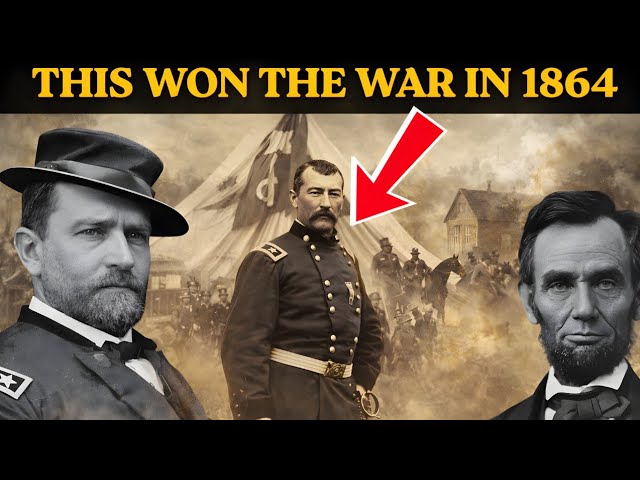
Its farmland supplied Robert E. Lee’s Army of Northern Virginia with essential provisions, and its geography provided a corridor for movement and supply that allowed Confederate forces to threaten the North. Union leadership understood that controlling the region was critical not just for military reasons, but for political stability. By 1864, with President Abraham Lincoln facing re-election, the need to secure the Valley had become urgent.
General Ulysses S. Grant assigned Sheridan to the task, directing him to defeat Lieutenant General Jubal Early’s army and systematically destroy the Valley’s capacity to support Confederate operations. Sheridan led a force of approximately fifty thousand men. Early, anticipating the Union advance, established defensive positions around Winchester, covering the critical junctions along the Valley Turnpike.
Sheridan’s initial maneuvers, conducted through Berryville, aimed to cut off those approaches and isolate Early. On August 11th, Confederate cavalry and infantry resisted the Union attempt at Double Toll Gate, foiling the advance and delaying Sheridan’s movement south. The engagement was inconclusive, but it revealed the difficulty of maneuver warfare in a region of limited roads, uneven terrain, and scattered settlements. Confederate reinforcements under General Richard Anderson soon arrived from Lee’s command, forcing Sheridan to adopt a more cautious posture.
On August 16th, Union cavalry under General A. Custer achieved a localized success at Guard Hill, capturing more than three hundred Confederate soldiers. Despite that gain, Sheridan withdrew to defensive positions near Charlestown, prioritizing the security of Potomac crossings and supply lines. Early interpreted Sheridan’s caution as timidity, an assessment that would shape his decisions in the weeks that followed.
From August 21st through the 26th, the campaign entered a phase historians later called the Mimic War, a series of probing engagements and positional maneuvers marked by uncertainty and calculated risk. Early and Anderson launched converging attacks at Cameron’s Depot and Summit Point, but the results were inconclusive, with neither side willing to commit fully to a decisive battle. Sheridan’s entrenchments at Halltown denied Early the opportunity to exploit what he saw as Union hesitation. Meanwhile, Confederate attempts to penetrate Maryland revealed weaknesses in Early’s coordination and the limitations imposed by his fragmented supply lines.
Union forces seized the opportunity, overrunning Confederate positions at Halltown on August 26th and forcing a retreat to Stevenson’s Depot. The engagements along Opequon Creek at the end of August illustrated the operational complexity of the campaign. Union cavalry briefly crossed at Smithfield, only to be driven back by infantry counterattacks. The 6th Corps then restored control of the creek line, underscoring the iterative nature of the fighting.
Progress often required repeated thrusts against a well-defended but fluid enemy. A lesser-known factor in these encounters was the logistical innovation of Sheridan’s quartermasters, who coordinated supply convoys despite the threat of Confederate raiding. Those measures kept the Union army sustained during a period when terrain and distance could easily have stalled the campaign. The early days of September saw a consolidation of forces.
Averell’s cavalry briefly engaged and routed Confederate cavalry near Bunker Hill before infantry counteraction compelled a Union withdrawal. Sheridan concentrated his infantry near Berryville, creating a defensive posture that repelled Confederate attacks on September 3rd and forced Early to withdraw to the Opequon line. By mid-September, intelligence of Anderson’s return to Lee’s army prompted Sheridan to seize the initiative. Recognizing that Confederate forces were scattered, he planned a decisive advance along the Berryville Turnpike, culminating in the Battle of Third Winchester on September 19th.
Third Winchester was a high-stakes confrontation. Sheridan’s forces met Early’s veterans in a prolonged engagement east and north of Winchester, resulting in nearly nine thousand casualties. The fighting was intensely localized, with Union and Confederate division commanders David A. Russell and Robert E.
Rhodes falling within a few hundred yards of each other. A coordinated flanking maneuver by Crook’s corps, supported by Union cavalry, finally broke the Confederate line. The battle demonstrated Sheridan’s ability to integrate infantry and cavalry in a combined arms operation while using the terrain to his advantage. Three days later, at Fisher’s Hill on September 22nd, Sheridan employed a different method.
Rather than launching a frontal assault, he executed a concealed flanking maneuver along Little North Mountain, striking Early’s left flank and rear with Crook’s divisions. The Confederate retreat opened the Valley to systematic Union operations, including the targeted destruction of agricultural infrastructure. The campaign, contemporarily termed the Burning, saw Union forces destroy mills, barns, and stored grain, undermining the Confederacy’s ability to sustain military operations. The approach was controversial because of its impact on civilians, but it reflected an emerging doctrine of total war, emphasizing the destruction of economic foundations as a complement to battlefield victory.
Confederate cavalry under Generals John S. Mosby and Harry Gilmore intensified harassment of Union supply lines during this phase. Sheridan responded with aggressive counter-cavalry operations, most notably at Tom’s Brook on October 9th, where Union cavalry, including brigades under Merritt and Custer, defeated Confederate forces in an engagement remembered as the Woodstock Races. The action severely degraded Confederate cavalry morale and operational capacity.
The campaign’s final phase came in mid-October, when Early temporarily reoccupied Fisher’s Hill and advanced to Hupp’s Hill. Sheridan’s 6th Corps, which had been dispatched to reinforce Grant, moved rapidly to counter the Confederate advance. On October 19th, Confederate forces achieved a morning surprise at Cedar Creek, catching portions of Crook’s and the 19th Corps off guard. But Sheridan’s arrival on the field and his immediate counterattack in the afternoon reversed the Confederate gains, driving Early into retreat and securing Union dominance in the Valley.
The political and military consequences were profound. Sheridan’s victories stabilized the Shenandoah front, bolstered Northern morale, and contributed materially to Lincoln’s re-election. The destruction of Valley infrastructure also forced Lee to redirect logistical support from other theaters, constraining his operational options in the Eastern Theater. The campaign accelerated the professionalization of Union cavalry, integrating reconnaissance, rapid movement, and direct engagement into a coherent doctrine that would influence post-war military practice.
Had Sheridan failed at Third Winchester or Fisher’s Hill, Early might have maintained control of the Valley, prolonging Confederate resistance, threatening Union lines of communication, and potentially influencing the political outcome in the North. The 1864 Shenandoah Valley Campaign represented an intersection of strategic vision, tactical innovation, and political consequence. Sheridan’s combination of measured caution, rapid mobility, and systematic disruption redefined the Union operational approach in Virginia, reshaping Confederate logistics, undermining morale, and influencing the trajectory of the war itself.