At dawn on July 2, 1863, Robert E. Lee stood over a map on Seminary Ridge with James Longstreet, his most trusted corps commander. The two men were about to clash in a disagreement that would define the rest of their reputations. Lee wanted to attack.
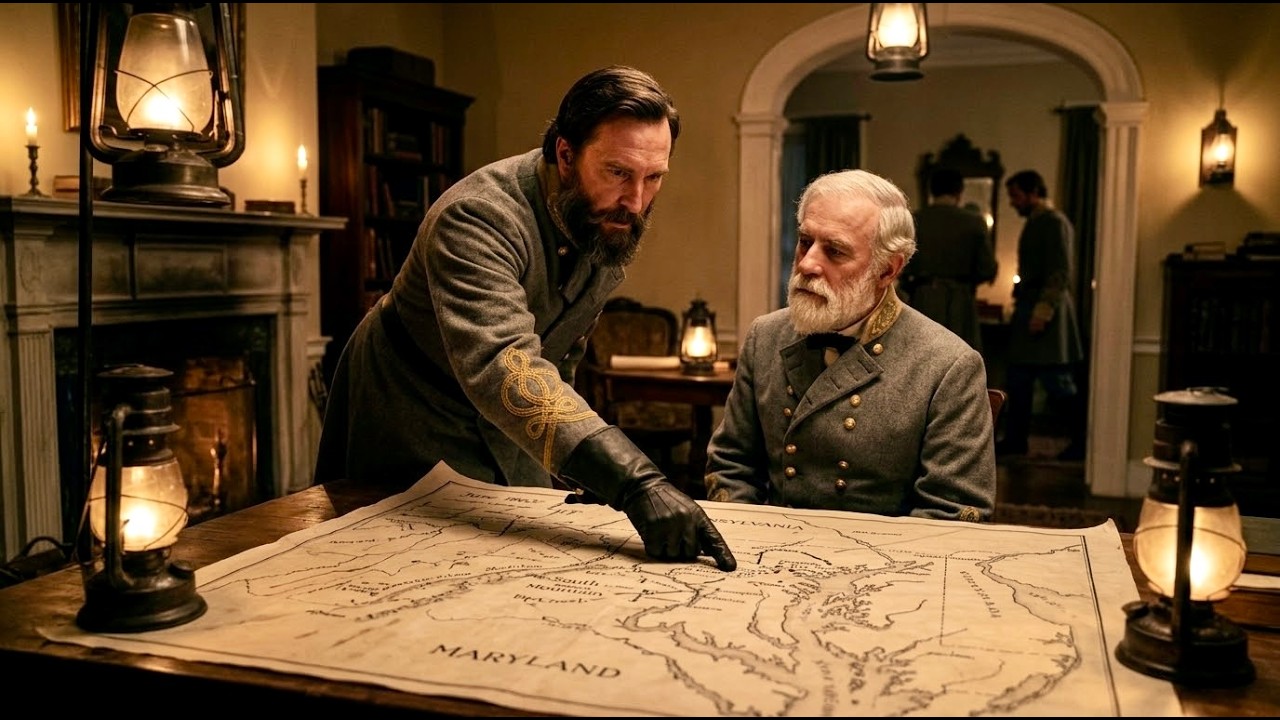
The Union Army, bloodied but still intact from the previous day, was entrenched along Cemetery Ridge and the high ground to the south. Longstreet wanted something else altogether: march the army around the Union left, slide between the Federals and Washington, find defensible ground, and wait. Force Meade to do the attacking. Lee said no.
Longstreet obeyed, then asked him to reconsider. Lee refused a second time. This was not a story invented after the fact to make Longstreet look good. His own staff officer, Moxley Sorrel, recorded the argument that morning.
Lee’s chief of artillery, Porter Alexander, later confirmed that Longstreet dragged his feet on the attack precisely because he still believed it was the wrong call. Longstreet’s reasoning was not a hunch. It was a doctrine he had been developing since early in the war: fight on the tactical defensive, but move on the strategic offensive. He had argued for this approach before the army ever reached Gettysburg, insisting that the point of invading Pennsylvania should be to pick strong ground and let the Union Army wear itself out attacking it, not to seek a decisive battle on unfamiliar terrain.
Lee had listened politely and given no firm commitment. On July 2, the week-old argument finally came to a head. Pick your ground, let the enemy exhaust himself, and win with the counterpunch. It was the same logic that would define wars half a century later, when armies learned the hard way what happened to men who charged fixed positions.
Longstreet had seen it work firsthand. At Fredericksburg, Confederate defenders behind a stone wall at Marye’s Heights tore apart wave after wave of Union infantry without advancing a step. He wanted Gettysburg to be Fredericksburg in reverse, with Lee’s army dug in and the Army of the Potomac forced to break itself against a position it could not take. Lee saw it differently, and not without reason.
His army had momentum. Twice in the past year, at Second Manassas and Chancellorsville, aggression had won him battles against larger Union forces. He believed his men could do it again, and he believed the Union army reeling from day one was there for the taking. There was also context that did not excuse his choice but helped explain it: for most of the campaign, Lee had operated without reliable reports from Jeb Stuart’s cavalry, his eyes on enemy movement and strength.
Writing partly blind into Pennsylvania made him more willing to gamble on aggression rather than wait for certainty he did not have. So instead of maneuver, Lee ordered an attack on the Union left, the same flank Longstreet wanted to march around, not assault. Even the execution of Lee’s own plan went wrong before it started. Longstreet’s men had to countermarch for miles to avoid a Union signal station, turning what was meant to be a morning assault into one that did not open until four in the afternoon.
Those stolen hours gave Meade time to shift reinforcements onto exactly the ground Lee intended to hit. The delayed, costly assault ground through the Peach Orchard, the Wheat Field, and Devil’s Den, culminating in the desperate defense of Little Round Top. The next day, against Longstreet’s continued objections, Lee doubled down with a frontal assault on the Union center. History remembers it as Pickett’s Charge.
Longstreet said plainly beforehand that no force sent across that open ground could carry the position. He was overruled. Nearly three of every four men in the assault did not return. So here is the fork.
What if Lee had listened on the morning of July 2? Longstreet’s plan meant disengaging from the ground in front of the Union left and swinging the army south and east, aiming to slide between Meade’s army and the road network back to Washington. If it worked, the political pressure alone would have been immense. An Army of Northern Virginia sitting on defensible ground between the Army of the Potomac and the capital was a nightmare for Lincoln’s government.
Meade would have faced enormous pressure to attack rather than let Lee threaten Washington unchallenged. That was the entire premise of Longstreet’s doctrine: make the enemy come to you. Image Confederate divisions disengaging under cover of darkness or fog, screened by cavalry that in the real battle had not yet rejoined the army. Stuart was still days away from linking back up, which was itself one of the reasons the maneuver would have been difficult to execute cleanly.
Lee’s infantry finds high ground somewhere southeast of the original battlefield, digs in, and waits. Historians who take this scenario seriously often point to the Pipe Creek line, a defensive position in Maryland that Meade’s own engineers had scouted as a fallback before the battle began. That detail matters. Longstreet was not imagining fantasy terrain.
He was aiming the army toward ground the Union’s own commander independently considered strong enough to anchor a defense. Meade, cautious by nature and newly appointed to command only days earlier, would have to decide whether to attack a prepared Confederate position or let Lee sit astride his supply and communication lines to Washington. Given the political stakes, waiting was barely an option. Meade attacks.
For the first time in the campaign, it is Union soldiers crossing open ground into Confederate rifles and artillery, not the other way around. There is a real historical hint that this reversal was not pure fantasy. On the night of July 2 in the actual battle, Meade held a council of war with his core commanders and asked whether the army should stay and fight or withdraw. The vote was to stay, but the fact that the question was even on the table shows how fragile Meade’s confidence was after two days of fighting.
A Confederate army suddenly gone from his front, reappearing on defensible ground athwart his line back to Washington, would have pushed that uncertain commander toward the one option his political superiors could never forgive: retreat without a fight. If that assault fails the way Pickett’s Charge failed in the actual battle, the strategic picture flips entirely. Lee’s army, instead of retreating bloodied and broken toward the Potomac with a wagon train of wounded stretching for miles, remains largely intact. Confederate casualties at Gettysburg, historically over twenty-eight thousand men, could have been dramatically lower.
No Pickett’s Charge means no annihilation of divisions under Pickett, Pettigrew, and Trimble. The Army of Northern Virginia limps out of Pennsylvania as a battered but functional fighting force, rather than an army that would spend the next year and a half recovering from a wound it never fully closed. But before this gets too neat, it is worth being honest about where the counterfactual runs into real trouble. Longstreet’s plan was not a guaranteed war winner, and serious historians who have studied the logistics are right to push back on the more dramatic versions of this story.
The Army of Northern Virginia was deep in enemy territory, living off requisition supplies with no secure rail line back to Virginia. A wide flanking maneuver in unfamiliar country without reliable cavalry screening risked getting the army caught in the open or strung out and vulnerable, the exact opposite of what Longstreet wanted. Meade, whatever his caution, was not reckless, and there is no guarantee he would have attacked a Confederate defensive position immediately rather than maneuvering carefully himself, which could have turned the campaign into a drawn-out standoff instead of a decisive battle at all. And even a Confederate tactical victory at Gettysburg does not erase the Union’s deeper advantages: manpower, industry, and a navy strangling southern ports.
The war does not end in the summer of 1863 just because Lee wins one more battle in Pennsylvania. What changes, most likely, is narrower and more contained. Fewer Confederate casualties, an intact army, a Union defeat that shakes northern political will heading into the following year. Not the war-ending collapse some retellings imagine.
That narrower outcome is still enormous. An Army of the Potomac defeated on Confederate terms in the summer before a presidential election year changes the pressure on Lincoln’s administration in ways that ripple forward. It is speculative, and it should be treated that way. This is an argument historians still debate, not a settled alternate timeline.
But it is speculation grounded in something real: two of the most capable commanders in American history looking at the same map and reaching opposite conclusions, with only one of them getting to make the call. Which brings the story to its actual irony. Longstreet’s plan for Gettysburg did not disappear from history. It came back to define him.
After the war, Longstreet did something almost no other prominent Confederate general did. He supported Reconstruction, worked with the Grant administration, and became a Republican in the deep South. To the men building the Lost Cause narrative in the decades that followed, writers and former officers who needed an explanation for Confederate defeat that did not implicate Lee, elevated by then to something close to a secular saint, Longstreet was the perfect target. Jubal Early led the charge, using speeches at Confederate memorial gatherings and articles in the Southern Historical Society papers to fix the blame for Gettysburg on Longstreet’s supposed slowness on July 2, building a version of events that took root in Southern memory for generations, regardless of what the battlefield record showed.
His slowness on July 2, real or exaggerated, became the official story. Lee did not lose Gettysburg. Longstreet lost it for him. It did not matter that Longstreet had argued against the very attacks that failed, or that his own account of the battle was dismissed as the bitter revisionism of a traitor to the cause.
The myth needed a villain, and it found one in the general who had been right. So the man who proposed the plan that might have kept the Army of Northern Virginia intact spent the rest of his life being blamed for its destruction. That is the real ending to this story.
Not just a battle that might have gone differently, but a reputation that was rewritten by people who needed someone else to carry the weight of a defeat that was never really his to own.