In July 1576, two Medici women were strangled to death. The first was Eleonora di Garzia di Toledo, a 23-year-old in good health. The official story claimed a heart attack, but in truth her husband Pietro had killed her with a dog leash. Six days later, Isabella de’ Medici, Pietro’s own sister, was strangled at a Medici hunting lodge outside Florence, this time by her husband Paolo Giordano Orsini.
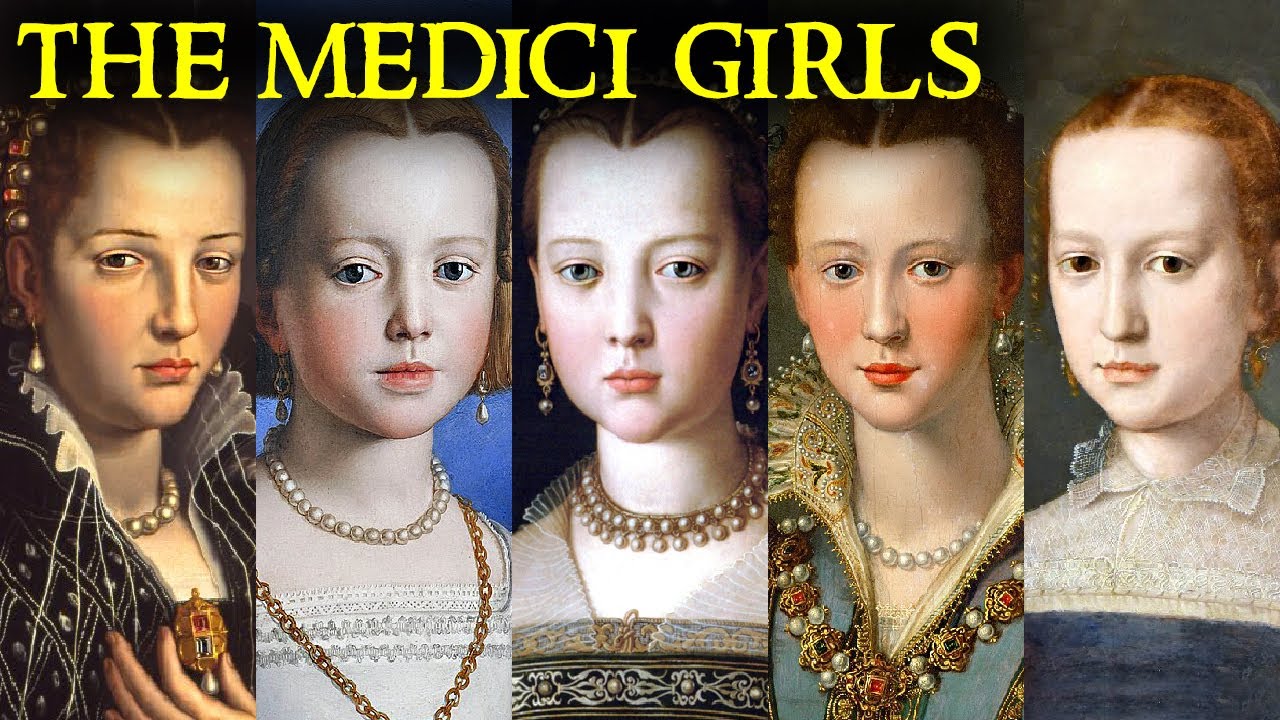
The last surviving daughters of the House of Medici had been eliminated, one by a husband whose violence was well known, the other by a husband who had finally tired of a twelve-year affair she had carried on with his cousin. The Grand Duke Francesco, Isabella’s brother, had tacitly supported the reprisals. It was a brutal end, yet it was the logical conclusion of a dynasty that had always treated its women as instruments first and people second. Cosimo de’ Medici, the first Grand Duke of Tuscany, was born in June 1519 in Florence but raised largely in the rural Mugello Valley.
His family had clawed its way back to power after being expelled from the city in 1494. For decades the Medici had ruled the Florentine republic behind the scenes through banking and patronage, and in the early 1510s the shifting politics of the Italian Wars allowed them to return. In 1530, Cosimo’s cousin Alessandro was installed as the first official Duke of Florence, transforming the republic into a hereditary state. Expected to live a quiet country life, Cosimo was instead thrust onto the throne in 1537 when Alessandro was assassinated.
He was only seventeen. He proved a formidable ruler, and in 1569 he was granted the more prestigious title of Grand Duke of Tuscany, marking the family’s rise from wealthy citizens to European sovereigns. His wife was Eleonora of Toledo. Born in 1522 in Salamanca, she was the daughter of Pedro Álvarez de Toledo, the Spanish viceroy of Naples.
Her marriage to Cosimo in 1539, at age seventeen, cemented the diplomatic and military alliance between Spain and Florence. The union was exceptionally productive. Together they had eleven children, seven boys and four girls. For a ruling dynasty, heirs were everything.
Alessandro had left no legitimate successors, which had nearly ended the family line, so Cosimo and Eleonora understood what was at stake. The daughters faced what the sons did not. Of the four legitimate daughters, one died as an infant. Anna de’ Medici was born on 19 March 1553 and died less than five months later, on 6 August, with virtually no details surviving about her short life.
Infant mortality was brutal in the sixteenth century, with as many as thirty to thirty-five percent of children dying before their early teens, and she was a victim of that reality. The eldest daughter, Maria, born on 3 April 1540, grew up in the warm surroundings of the Medici nursery in Florence, where Cosimo and Eleonora genuinely loved their children and took a close interest in their upbringing. Yet the children also served political purposes. In an Italy divided between Spanish and French influence, marriages were weapons.
Maria was regarded as one of the most intelligent of the Medici children, tutoring her younger siblings in mathematics, and her portrait had been sent to Paris as early as age five, signaling interest in a prestigious French match. Instead, a marriage alliance was arranged with the Este family of Ferrara, and she was betrothed to Alfonso of Ferrara. Before the wedding could take place, Maria fell suddenly ill, likely with malaria, and died on 19 November 1557 at age seventeen. Scandalous whispers swept Florence, claiming Cosimo had murdered her in a rage after discovering a secret love affair.
But given his known affection for his children, it was almost certainly court gossip. The marriage alliance did not collapse. It simply found a new bride. Maria’s sister Lucrezia, born on 14 February 1545, stepped into her place.
She had already seen one match collapse when the death of Pope Julius III in 1555 wrecked the planned alliance with his nephew, but now she was betrothed to Alfonso d’Este instead. On 3 July 1558, at only thirteen, she married Alfonso, who was twenty-four. The married life that followed was strange. Alfonso returned to his father’s court in Ferrara without her, then left for France to help negotiate the Treaty of Cateau-Cambrésis, which brought an end to the long struggle between France and Spain for dominance in Italy.
Lucrezia remained in Florence, married in name but abandoned in practice. Cosimo wrote repeated letters, many unanswered, as events in Ferrara spiraled. When Duke Ercole died in October 1559, Alfonso ascended as Duke, and only then was Lucrezia finally summoned to her new home. In late autumn of 1559, at just fourteen, she arrived in Ferrara as the new duchess.
Bronzino’s portrait of her shows the pale complexion then fashionable among noblewomen, but also perhaps a hint of fragility. She was already unwell by 1560. She tried to perform her public duties, but recurring fevers, nosebleeds, a harsh cough, and dramatic weight loss confined her to her rooms. Cosimo sent his own physicians, but nothing helped.
Whispers of poison circulated, but modern historians dismiss these rumors. The evidence points to pulmonary tuberculosis. On 21 April 1561, at the age of sixteen, Lucrezia died in Ferrara and was buried in the Este family mausoleum. That left Isabella.
Born on 31 August 1542, she was the third eldest daughter and would live the longest and most infamous life. Her marriage to Paolo Giordano Orsini, the future Duke of Bracciano, was arranged in 1553 when she was only eleven. The Orsini family traced its heritage back to the Roman Empire and had produced multiple popes, making them one of Rome’s most influential families. Politically, it was another excellent match.
The marriage itself, however, was unusual from the beginning. Paolo was a spendthrift, and Cosimo kept Isabella in Florence with a generous dowry until he saw evidence that her husband would not squander it. After she eventually moved to Rome, she suffered a series of miscarriages before finally giving birth to two healthy children, a daughter Francesca in 1571 and a son Virginio the following year. They would live long lives and produce many grandchildren, though Isabella would not live to see them.
By then, Cosimo had endured years of heartbreaking losses. His wife Eleonora died of malaria in 1562, aged forty, along with two of their sons, Giovanni and Garzia. Cosimo’s female ward, Eleonora di Garzia di Toledo, was his niece by marriage, raised at the Medici court after her mother’s death. She continued to be treated warmly even after her aunt died.
In 1571 Cosimo arranged her marriage to his son Pietro, expecting that their shared upbringing would create a harmonious match. He was gravely mistaken. Pietro was psychologically unstable, violent, and an embarrassment to the family. He had also become the second husband of the young Eleonora.
The marriage was troubled, and Eleonora was said to be physically mistreated. Cosimo had other children as well. With his mistress Eleonora degli Albizzi, he had a son Giovanni, later legitimized, who became a respected military commander. With Camilla Martelli, he had a daughter Virginia, born in 1568, who married Cesare d’Este in 1586 and bore ten children.
But she began to show signs of severe mental illness, and her confessor claimed she was possessed by demons. The exorcisms that followed deepened her suffering, leaving her incapacitated in later years. She died in Modena in 1615 at forty-six, the only one of Cosimo’s daughters to live beyond forty. Cosimo himself died in April 1574, succeeded by his son Francesco.
The succession brought disaster for both Isabella and Eleonora di Garzia. Francesco gave tacit support to brutal reprisals against perceived infidelity among the Medici women. Eleonora was found dead on 10 July 1576, strangled by her husband Pietro with a dog leash. Six days later, Isabella was strangled by her own husband.
Her affair with Troilo Orsini, one of Paolo’s cousins, had begun in 1564, after the loss of another child, and had lasted twelve years. By 1576 it had become far too public to be tolerated. Paolo murdered her with the likely support of Grand Duke Francesco, and the last of the Medici girls was killed by her own husband at thirty-three, in revenge for the disgrace of adultery.
The daughters of the Medici had been treated first as pawns and then violently discarded, a stark reminder of how brutal life could be for aristocratic women in early modern Europe.