Amy Winehouse entered the world in 1983 in London, and from the start, her energy was impossible to contain. Family nicknamed her Nudge, a Yiddish term for pest, and called her Hurricane Amy. Her grandmother Cynthia, who had once performed in a band and dated the jazz musician Ronnie Scott, nurtured Amy’s love for the genre. Recognized early for her talent, Cynthia encouraged her to attend a performing arts school.
Amy adored her father Mitch, but his long-term affair and eventual remarriage left her with deep feelings of abandonment. Her mother Janice, meanwhile, was present but often dismissed the early signs of her daughter’s darker behavior. Music, not school, provided the outlet Amy craved. As a student, Amy was intelligent but restless in the conventional structure of the classroom.
Her friendship with Juliet Ashby became an anchor, giving her a world of inside jokes and shared musical experiments. The two performed together in a tribute group during their school years, and those early performances planted seeds of her future identity as an artist. At thirteen, Amy applied to the Sylvia Young Theatre School, a pivotal step she took on her own. The school recognized her exceptional talent, comparing her to Judy Garland and Ella Fitzgerald, but her rebellious streak clashed with the academic demands.
She eventually left, yet the foundation had already been laid. Amy was not merely chasing fame; she wanted to use her voice to give people relief from their troubles, a maturity rare in someone so young. After leaving school, Amy’s path was unconventional. She took odd jobs while continuing to sing and refine her craft.
In 2002, she signed with Simon Fuller’s 19 Management, earning a modest weekly salary of 250 pounds, and performed standards at the Cobden Club. Her talent, however, did not remain hidden for long. Darcus Beese, her future A&R representative at Island Records, first heard her voice by chance on a project where she was the lead vocalist without being named. Intrigued, he spent months investigating before discovering who she was.
By then, Amy had recorded several tracks, signed a publishing deal with EMI, and was working with producer Salaam Remi. Beese introduced her to Nick Gatfield, the head of Island Records, who immediately saw her potential, and soon other labels, including EMI and Virgin, were competing for her attention. Beese later noted that Amy’s emergence came during an era dominated by reality TV music acts, when audiences craved authenticity they could trust. Her debut album, Frank, arrived in 2003 and introduced a distinctive voice blending jazz with sharp, heartfelt storytelling.
It resonated with listeners, bringing Amy recognition, but it also brought frustration. She felt the album was too poppy and did not fully match the jazz-driven authenticity she wanted to convey. It was a bittersweet triumph. As her career gained momentum, personal struggles took root.
Alcohol and an eating disorder began creeping into her life. Her mother initially brushed off Amy’s remarks about a new diet as dark humor, but the warning signs were there in her dropping weight and increasing reliance on alcohol. Those early struggles were overshadowed by her growing fame, but they hinted at the storm beneath the surface. After Frank, Amy pursued a new musical direction inspired by the girl groups of the 1950s and 1960s.
To bring that vision to life, she enlisted the Dap Kings, the backing band of soul singer Sharon Jones. In May 2006, demos of songs like Rehab and You Know I’m No Good premiered on Mark Ronson’s radio show in New York, building anticipation for her next release. The resulting album, Back to Black, was completed in under five months, with eleven tracks produced by Salaam Remi and Mark Ronson. Working with Amy was as challenging as it was inspiring, Ronson later admitted, noting she never held back her opinions about work she disliked.
Amy herself joked that when she first met Ronson, she mistook him for an older bearded engineer. The album established her as a serious musical innovator, not merely a vocalist. Her creativity extended well beyond music. By 2008, her net worth was estimated at ten million pounds, placing her in the top ten of the Sunday Times list of Britain’s richest musicians under thirty, though the figure reportedly fell to around five million the following year.
In 2009, she announced the launch of her own record label, Lioness Records, whose first signing was her thirteen-year-old goddaughter, Dionne Bromfield. Amy contributed backing vocals to Dionne’s debut album of soul classics and performed alongside her on BBC’s Strictly Come Dancing. That same year, she collaborated with the fashion brand Fred Perry on a seventeen-piece collection of vintage-inspired pieces, from Capri pants to argyle sweaters, personally involved in fabrics, colors, and cuts. After her death, Fred Perry honored her legacy by releasing her remaining collections and donating twenty percent of the proceeds to the Amy Winehouse Foundation.
She also appeared in the 2009 documentary Saving Amy, which examined her life and family relationships, and partnered with EMI on greetings cards featuring lyrics from Back to Black. Amy’s relationship with Blake Fielder-Civil was both defining and destructive. It burned with passion but pulled her into a darker world far from the creative brilliance of her early career. Friends and family watched helplessly as she seemed transformed under his influence.
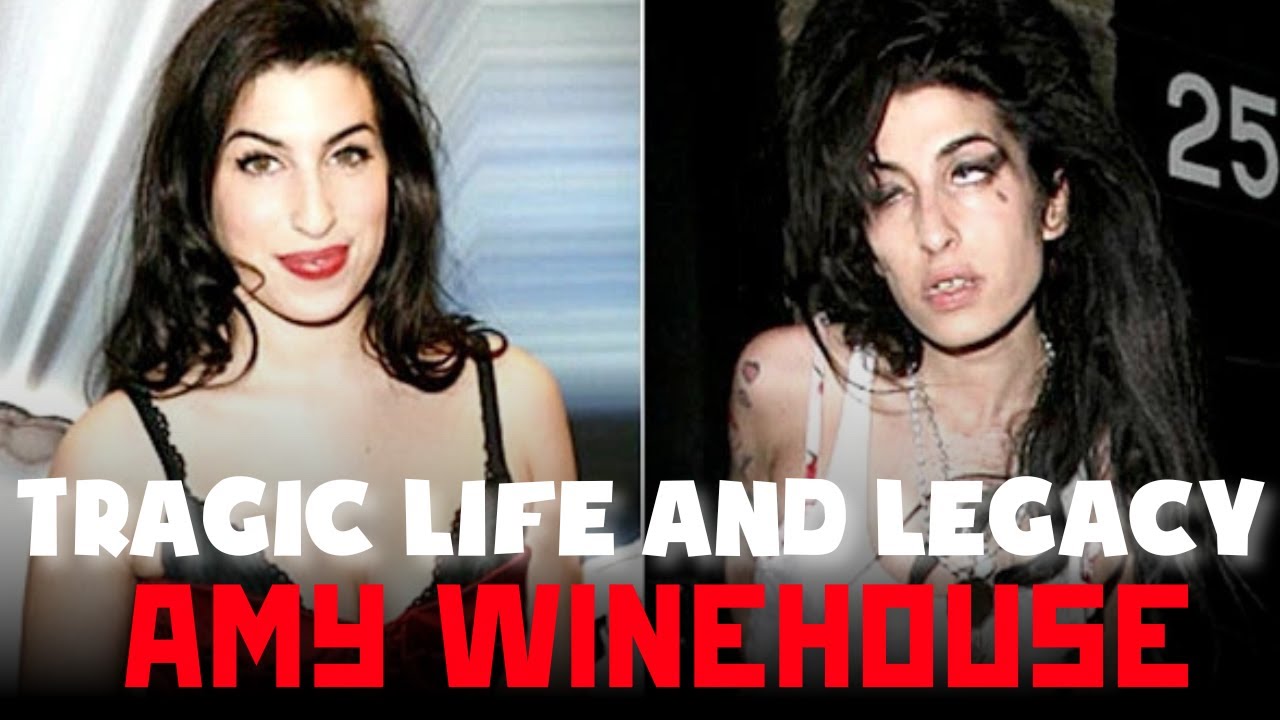
Despite the warning signs, they married in 2007, and Amy’s health took a sharp downturn. Her escalating drug and alcohol use led to repeated hospitalizations, and her erratic behavior began to overshadow her musical genius. Public appearances, once showcases of her voice, turned into painful displays of slurred lyrics and disorientation. Fans who came to witness her talent left heartbroken.
Yet even amid the chaos, Amy’s artistry remained undeniable. In 2008, she won five Grammy Awards, including album of the year and record of the year, moments that solidified her status as a global icon. For Amy, however, those accolades seemed to offer little comfort, as her inner demons dimmed the joy of her achievements. Her relationship with Blake ultimately unraveled, and their 2009 divorce marked a turning point.
It was emotionally devastating but also presented a fleeting chance to reclaim control. Instead, the scars of that turbulent marriage left her more vulnerable than ever. Even in her struggles, Amy’s generosity surfaced. She joined efforts to protect the George Tavern, an East London music venue threatened by new apartment construction, and participated in a charity CD featuring artists like the Rolling Stones and the Killers to raise climate change awareness.
She posed for a breast cancer awareness spread, donated items to the British Music Experience, and gave over twenty thousand pounds worth of clothing to a London charity shop in March 2011. During a stay in St. Lucia in 2009, a local man named Julian Jean-Baptiste revealed that Amy paid four thousand pounds for his emergency surgery. When he tried to thank her, she simply hugged him and said, Don’t mention it.
Amy’s final years mixed brief hope with ongoing struggle. She sought stability in her relationship with filmmaker Reg Traviss, and those close to her hoped it would help her find a new path. But the demons she had fought for so long remained. A disastrous tour in Eastern Europe exposed her fragile state.
In Serbia, she appeared disoriented on stage, struggling to remember lyrics and barely performing. She had wanted to cancel the tour, expressing exhaustion and confusion, but external pressures kept her on the road. In the days before her death, she spent time with family, looking through old photographs and reminiscing about happier times, glimpses of the vibrant soul loved ones remembered. Beneath the surface, her struggles remained unresolved.
On the morning of July 23, 2011, a quiet stillness fell over Amy Winehouse’s London home. Her bodyguard, performing what seemed a routine check, found her unresponsive. She was twenty-seven years old. Her death placed her among the figures of the so-called 27 Club, extraordinary artists whose lives were cut short at the same age.
A life filled with talent, passion, and pain was extinguished far too soon. Amy Winehouse’s legacy remains as complex as the artist herself. She blended the raw authenticity of jazz and soul with confessional, deeply personal lyrics, capturing the highs and lows of human experience. Songs like Back to Black and Rehab remain timeless, continuing to resonate with listeners who find connection in her words.
Her struggles, while a defining part of her story, do not overshadow her contributions to music and culture; they add depth, highlighting the courage it took to channel pain into art. Her willingness to lay her soul bare left an indelible mark on the industry, inspiring countless artists and shaping modern soul and jazz. Even in her absence, her voice continues to echo in the hearts of fans worldwide, a reminder of the brilliance she shared and the tragedy of her loss.