Yakov Dzhugashvili, the eldest son of Joseph Stalin, completed his training at the Red Army’s Artillery Academy in May 1941, only weeks before Nazi Germany launched Operation Barbarossa and plunged the Soviet Union into the most devastating war it had ever faced. When the invasion began, Stalin made certain that both Yakov and his adopted brother, Artem Sergeyev, went to the front lines. Yakov joined an artillery regiment as a lieutenant, and within weeks, the war caught up with him. On July 16, 1941, during the Battle of Smolensk, Yakov was either captured by or surrendered to the Germans.
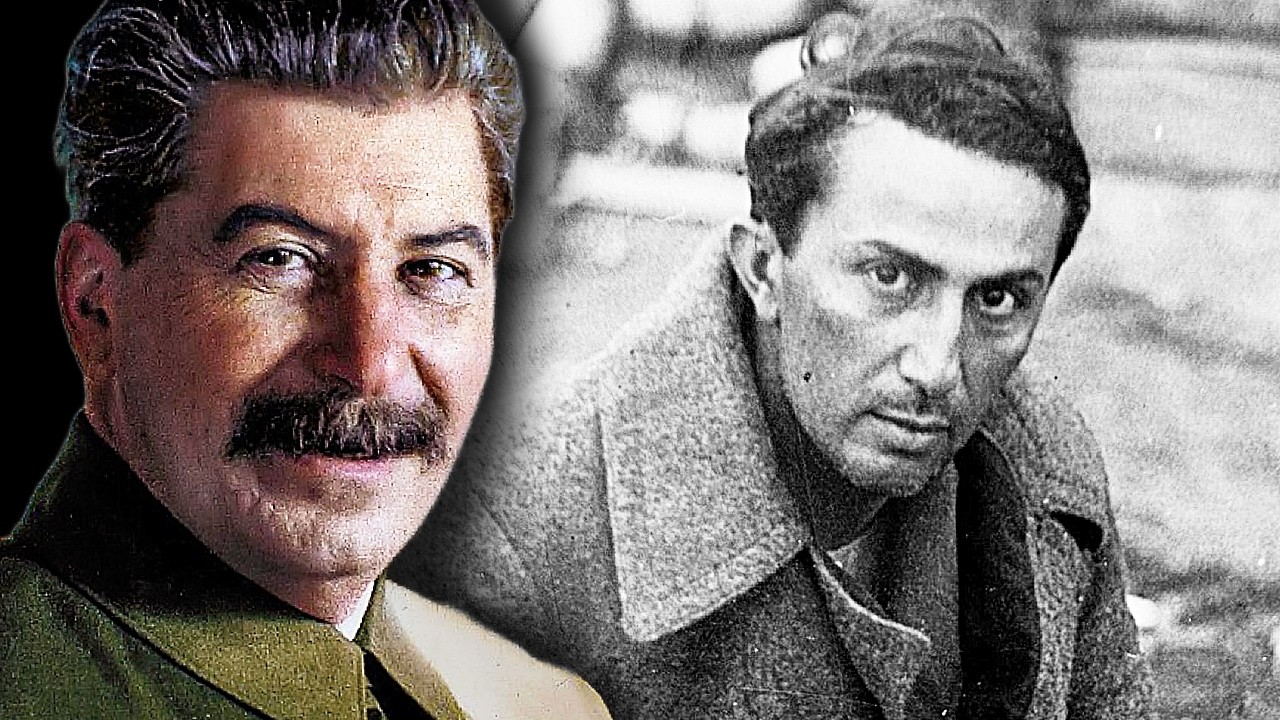
The exact circumstances remain disputed. His adopted brother, Artem, who served alongside him, recalled that the Germans surrounded Yakov’s battery and that the order came to retreat. According to Artem, Yakov refused to obey. When Artem tried to persuade him, Yakov answered that he was the son of Stalin and did not permit the battery to retreat.
Other accounts claim that his position was betrayed and that disloyal Soviet soldiers hostile to Stalin’s regime turned him over to the enemy. Russian archives, however, contradict these versions and state that Yakov surrendered of his own accord. What is not disputed is that the Nazis exploited his capture ruthlessly. German propaganda printed thousands of leaflets and dropped them over Soviet trenches.
Each leaflet carried a photograph of Yakov in good spirits, surrounded by German officers, followed by a message addressed to the soldiers of the Red Army: this was Yakov Dzhugashvili, Stalin’s son and an artillery officer who had surrendered on July 16 together with thousands of other soldiers and officers. The leaflet urged Soviet troops to follow his example, pointing out that the son of their own leader was alive, well, and feeling great. Why, it asked, should ordinary soldiers fight to the death when even Stalin’s son had given up? Stalin was furious.
At the start of the war, he had commanded his soldiers never to surrender and to fight to the death. His own son’s capture, and the suggestion that it came through surrender, was a personal disgrace so severe that Stalin reportedly wished Yakov had taken his own life rather than fall into German hands. For Stalin, a son who allowed himself to be taken alive was worse than a dead son. Yakov was held in several camps for captured officers before being transferred to Sachsenhausen concentration camp, where he would spend the rest of his life.
The Germans were endlessly curious about him, and he was regularly visited by those who wanted to meet and photograph the son of the Soviet leader. Life inside the camp was tense and brutal in its own way. Yakov frequently argued with British prisoners and sometimes got into fistfights with them. In early 1943, the strategic situation changed.
The Soviets had turned the war around, and their victory at Stalingrad had produced a glittering high-value prisoner: the German Field Marshal Friedrich Paulus, who had surrendered with the remnants of his Sixth Army. With the war moving against Germany, the Germans made an offer to trade Yakov back to the Soviets in exchange for Paulus. Stalin refused. He called the proposition ridiculous, arguing that it was absurd to trade a field marshal for an ordinary soldier.
Whatever private feelings he may have had toward his son, the decision was made in public terms of rank and state interest. Yakov Dzhugashvili, in his father’s calculation, was not worth the price of a German field marshal. In refusing the exchange, Stalin sealed his son’s fate. Yakov died on April 14, 1943, at Sachsenhausen.
For a time, the details of his death were disputed. One version held that he killed himself by running into the electric fence surrounding the camp. Another said that the Germans shot him after he was deemed useless, once Stalin had refused to trade him for Paulus. After the war, British investigators found records in Sachsenhausen that suggested both theories contained some truth.
According to those records, Yakov had been arguing with British prisoners. In order to get away from them, he ran toward the fence, entering the electrified wire either accidentally or deliberately. The record does not make his intent clear. After he fell, a German officer approached his body and shot him four times to make certain he was dead.
An autopsy later determined that Yakov had died from the electrocution before the shots were fired. Stalin was reportedly upset when he learned of his son’s death. He sat and stared at Yakov’s photograph for hours. Eventually, he forgave the son he had once wished had died rather than surrender.
Stalin concluded that Yakov had been a real man whom fate had treated unjustly. The photograph that remained on Stalin’s desk showed a young man who had spent the last months of his life as a propaganda tool, a bargaining chip, and a prisoner in one of Nazi Germany’s most notorious camps. He had been condemned by the war itself, by the Germans who captured him, and ultimately by his own father, who measured his value against the rank of a captured field marshal and found it wanting.