In January 2026, a man was arrested in San Bernardino, California, on a marijuana possession charge. It was the kind of routine arrest that happens every day and usually disappears into the system. But when officers ran his information through federal databases, alarms went off. The man in front of them was listed as one of the most dangerous criminal immigrants the United States had ever detained.
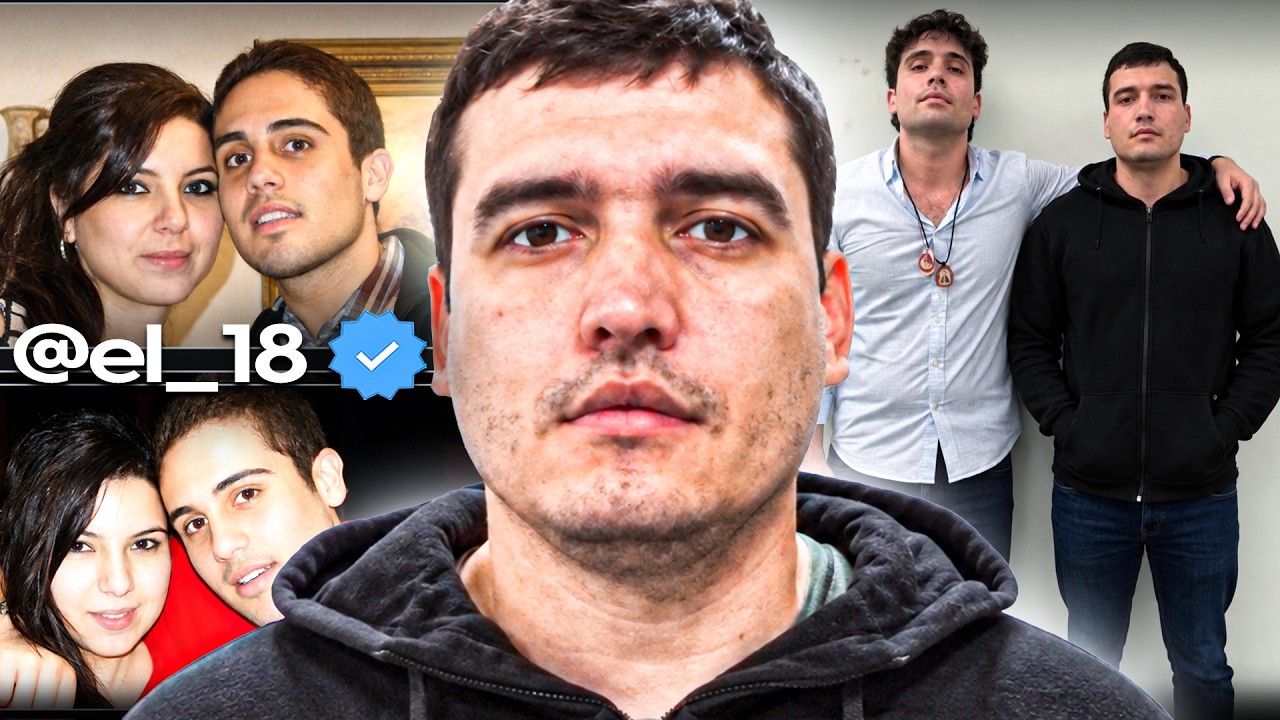
His name was Irving Froylan Leona Alvarado, known in the narcocorridos of Sinaloa as El 18. Nine years earlier, Alvarado had been arrested in the United States over a small marijuana case. He served a short sentence and was deported back to Mexico in 2018. At that moment, he was a nobody, a deportee with a minor drug record returning to Sinaloa with nothing.
According to the case later built against him, he returned and joined the Sinaloa Cartel, starting at the lowest rung of the organization as a halcón, a lookout. Halcones are the disposable eyes of the cartel, watching from rooftops and street corners for military patrols and police movements. Most never rise above that role. According to the government’s case, Alvarado did.
He climbed step by step until he reached a position of extreme trust: personal security for Ovidio Guzman Lopez, son of Joaquin El Chapo Guzman. After El Chapo was extradited to the United States in 2017, Ovidio and his brothers Ivan Archivaldo, Jesus Alfredo, and Joaquin took control of their father’s faction of the cartel. The world came to call them Los Chapitos. Unlike the old-school, low-profile narcos like El Mayo Zambada, Los Chapitos were loud and flashy, known for luxury trucks, exotic animals, and a reputation for brutality that frightened even those inside their own organization.
American prosecutors would later accuse them of being the driving force behind the fentanyl flooding into American cities. To protect themselves, Los Chapitos built an army. The top of that security apparatus was run by Nestor Isidro Perez Salas, known as El Nini, a man American authorities accused of some of the most gruesome violence attributed to the Chapitos. According to the corridos written about Alvarado, it was El Nini who personally assigned him to guard Ovidio.
Guarding Ovidio Guzman was not a matter of standing outside a nightclub. It meant living inside a war. Ovidio moved in convoys of armored trucks filled with men in tactical vests carrying heavy weapons, belt-fed machine guns, and rifles powerful enough to bring down helicopters. In July 2024, a photograph was taken of Alvarado posing in full military gear with a Barrett rifle, a weapon designed to punch through engine blocks and armored vehicles from over a mile away.
It was saved on his girlfriend’s phone. In 2023, a corrido called Clave 18 was released, performed by Panchito Arredondo with the group Los Novillos de la Sierra. The song functioned as a public resume. It described armored convoys rolling through Culiacan with heavy weapons, grenades, and a rocket launcher ready, explaining that when you saw such a convoy, it meant El Raton, Ovidio, was nearby.
The narrator identified himself as being from Agua Caliente and said he had been assigned by El Nini to watch over the boss day and night. The song directly referenced an ordinary Thursday in Culiacan, a clear reference to October 17th, 2019, the day known as the Culiacanazo. On that day, Mexican security forces tracked Ovidio Guzman to a house in Culiacan and arrested him. Then the city exploded.
Cartel gunmen flooded the streets, set up burning roadblocks, fired on soldiers, and surrounded military housing. Gunfights broke out in broad daylight across the city. Faced with the possibility of a massacre, the Mexican government let Ovidio go. It became one of the most humiliating moments in the history of the Mexican state.
The cartel had forced the government to release a prisoner by taking a city hostage. The government later returned. On January 5th, 2023, Mexican military forces came for Ovidio again in Jesus Maria, just outside Culiacan. This time they arrived in force with air support.
Ovidio’s security fought back like it was a war because it was. Gunmen opened fire on soldiers, aircraft were hit, and across Culiacan the cartel launched burning blockades and attacked the airport. Around thirty people were killed, including ten soldiers. This time, the government did not let him go.
Ovidio was flown out of Sinaloa to a maximum security prison, and in September 2023 he was extradited to the United States. When a boss falls in the cartel world, the people around him usually fall with him. Alvarado did not. According to the case, he was reassigned to protect Ovidio’s immediate family.
Out of everyone in the security structure, they chose El 18. His position became even more dangerous as the Sinaloa Cartel began to tear itself apart. On July 25th, 2024, six days after the photo of Alvarado with the Barrett was taken, Ismael El Mayo Zambada, the co-founder of the Sinaloa Cartel, was flown into the United States on a small plane and arrested in Texas. Joaquin Guzman Lopez, one of Ovidio’s brothers, was on the same plane.
El Mayo later claimed he had been lured to a meeting and kidnapped, and he blamed Los Chapitos. On September 9th, 2024, open war broke out in Culiacan between Los Chapitos and La Meiza, the faction loyal to El Mayo. Bodies were left on roadsides, shootouts erupted in neighborhoods, and schools and businesses shut down. The city became one of the most violent places in the country.
Despite the war, Alvarado stayed where he was. In 2025, another corrido was released about him, performed by a group called Decision Efectiva. The tone was different from the first song. El Raton was gone.
The narrator spoke of watching over sectors, of having a team behind him, of loading up with weapons. He declared his line was a thousand percent Guzman and said the lessons guiding him were left behind by El Nini, who by then had also been captured and extradited. The timeline of Alvarado’s career, however, went back further than the official story suggested. The FBI found an older record.
On March 10th, 2015, customs officers at the border crossing between Mexicali and Calexico stopped a vehicle and found fifteen packages of methamphetamine, about seven kilograms in total, stamped with letters. Both the driver and the intended receiver in Phoenix, Arizona, were caught and cooperated with the government. The receiver told investigators his connection in Mexico, the man running the shipment from Culiacan, used an alias: Al-Qaeda. The FBI then obtained a warrant to search Facebook accounts and found a profile registered under the name Jose Angel Lopez.
Inside that account was a conversation from December 2014 in which the user known as Al-Qaeda identified himself to another person simply as your friend, Irving Alvarado. The government’s case alleged that the man who supposedly started at the bottom in 2018 had actually been coordinating meth shipments into the United States years earlier, and continued to do so even while working inside Ovidio’s security circle. The FBI had the witness, the phone, the Facebook messages, and the old drug seizure, but they still had to find him. They never needed a raid in Sinaloa.
In January 2026, Alvarado was arrested in San Bernardino by ICE for marijuana possession. The Department of Justice moved immediately to take custody. On January 16th, 2026, he was brought before a federal judge in Washington, D. C.
, on charges of production and trafficking of methamphetamine and possession of firearms. He faced the possibility of life in prison. The judge sealed the case. The woman who brought him down was the real twist.
In September 2025, a woman from Sinaloa walked into an FBI office in Washington, D. C. According to the reporting on the case, she was a confidential source who said she had been in a romantic relationship with Irving Alvarado beginning in June 2024. She told agents he had openly said he worked for the Sinaloa Cartel, that he had been Ovidio Guzman’s personal bodyguard, and that after Ovidio fell, he was reassigned to protect the family.
She brought her phone. On it was the photo from July 19th, 2024, El 18 in tactical gear holding a Barrett rifle. In May 2026, the Department of Homeland Security posted Alvarado’s mugshot on its website in a section ICE uses to highlight the worst of the worst, the most dangerous criminal immigrants it has arrested. That is when his story exploded across Mexican media.
News outlets connected the man in the mugshot to L18 of the corridos. A report surfaced claiming he had a tattoo tied to Ovidio Guzman on his right leg as a sign of loyalty. The man who spent years guarding El Chapo’s son and then protecting his family now sat in an American cell facing life in prison. His old boss had pleaded guilty in Chicago and was cooperating with American prosecutors.
The cartel war in Sinaloa continued. El 18 knows who came and went, which houses were used, which convoys moved when, and who gave the orders. For now, the answer to what he will do remains sealed inside a federal courtroom in Washington.