Jefferson City had a problem in 1831. It had been named the capital of Missouri nine years earlier, but the title was never secure. Other towns wanted it, and the city’s claim rested on politics rather than practical necessity. Governor John Miller understood that the capital needed institutions that made its status permanent.
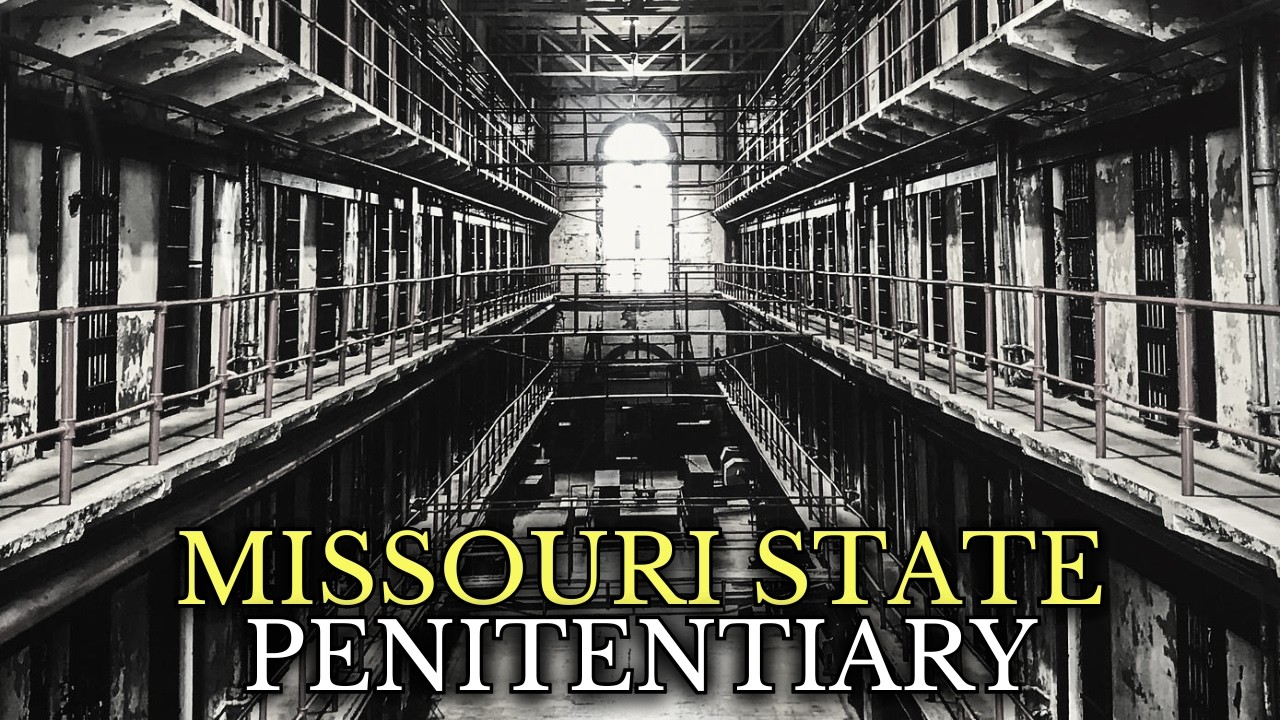
His solution was not a courthouse or a university. It was a prison. The logic was cold but effective: a maximum-security penitentiary required massive infrastructure, generated employment, and was not the kind of thing a legislature would relocate once built. A bill signed into law in January 1833 appropriated twenty-five thousand dollars for the project.
James Dunnica, the master stonemason who had built Jefferson City’s first capitol, oversaw construction. The design was attributed to John Haviland, a Philadelphia architect known for severe, functional penitentiaries built around containment. Workers quarried limestone directly on the site, cutting and laying the stone by hand. The first man through the gate was a watch thief from St.
Louis. Eleven of the fifteen original inmates were held for larceny. The prison operated under the Auburn system, the dominant American model of discipline. During the day inmates worked together in silence.
At night they returned to individual cells. Any infraction, a glance held too long or a word spoken out of turn, drew swift corporal punishment. When the Civil War came, the penitentiary became a military detention facility. Confederate soldiers and Southern sympathizers were packed inside with the existing population, and disease tore through the overcrowded cell blocks.
After the war, the prison expanded. A Hall, completed in 1868, was a four-story block of individual cells built entirely through convict labor. Inmates quarried the stone beneath their own feet and laid the walls that would hold them. A standard cell measured roughly six by nine feet.
Beneath A Hall lay dungeon rooms carved into the basement, windowless chambers of complete darkness where up to six men could be confined at once, fed only a single plate of cornbread slid through a narrow slit in the door. The prison’s industrial complex grew through the 1870s and 1880s. Seven new factories rose inside the walls, and at its peak the compound housed the largest saddle tree factory in the world and six shoe manufacturers producing approximately seven thousand pairs of shoes a day. The economics were brutal.
The state leased inmates to private contractors and collected a fee per man per day. Inmates cost the state roughly eleven cents a day to maintain, a figure officials cited proudly as evidence of efficiency. The men worked under enforced silence in the factories, required to meet daily quotas under threat of punishment. Then in 1935 the Ashurst-Sumners Act outlawed the interstate sale of convict-made goods.
The factories emptied and the contractors left. The population remained, idle and crowded. By 1932 the prison held roughly 5,300 inmates, the largest single prison population in the United States. The pressure building inside had already surfaced in 1930, when about 1,250 inmates refused to work and occupied the dining hall over a demand recorded simply as being tired of Irish stew.
Investigators later discovered an organized plot to burn the factories and break out entirely. The stew was never really about the stew. The walls held an extraordinary cross-section of American life. Charles Arthur Floyd arrived in 1925, convicted of robbery at age twenty-one.
He was assigned to the factory floor like everyone else and was released in 1927. He later became Pretty Boy Floyd, one of the most wanted men in America, shot dead by law enforcement in Ohio in October 1934. Emma Goldman, labeled by the government the most dangerous woman in America, arrived in 1917 for conspiracy to obstruct the draft. She was required to work fifty hours a week in the clothing factory and was forbidden from corresponding with her associates.
She organized the women around her anyway, and prison administrators eventually concluded that releasing her early was preferable to containing her. Kate Richards O’Hare followed her through the gates that same year. Her published accounts of life inside the prison reached Congress, and President Woodrow Wilson commuted her sentence in 1920. Charles Liston arrived in 1950 illiterate, one of seventeen children.
The prison gave him boxing, and in 1962 he became world heavyweight champion, knocking out Floyd Patterson in the first round. James Earl Ray occupied cell 45 in housing unit three. On April 23, 1967, he folded himself into a bread box loaded onto a delivery truck and rode out through the gates. Nearly a year later he shot and killed Martin Luther King Jr.
in Memphis. For most of its history, Missouri killed its condemned men in public before crowds of hundreds. In 1937, the last state in the country still allowing public hangings brought the process indoors, and the method it chose was gas. The execution chamber was built from stone quarried on the prison grounds, a sealed room with two metal chairs bolted to the floor facing a witness window.
Between 1938 and 1965, thirty-nine people died there. On January 6, 1989, George Mercer became the fortieth and final person executed at the penitentiary, not by gas but by lethal injection. On the chamber wall hang forty photographs, one for each execution. Among them is Bonnie Heady, the only woman.
She and her companion Carl Austin Hall had kidnapped six-year-old Bobby Greenlease from a Kansas City school, told the nuns the boy’s mother was ill, and murdered him before the six-hundred-thousand-dollar ransom was paid. They were executed side by side on December 18, 1953, the only double execution in the chamber’s history. The riot of September 22, 1954, did not come from nowhere. The factories that had organized the inmates’ days were gone, the population had not shrunk to match the emptied buildings, and men were crowded into cells designed for one.
The evening began with deception. Two inmates in housing unit three faked illness to draw two guards into the block, then overpowered them and took their keys. The cascade became unstoppable. Cell doors opened, men poured into the corridors and opened more doors, until approximately 2,500 inmates were loose inside the walls by midnight.
Rioters tore through the factory buildings, smashing equipment and setting fires. The sky above Jefferson City turned orange. The Missouri Highway Patrol and National Guard were called, police departments from St. Louis and Kansas City sent officers, and more than five hundred law enforcement personnel surrounded the walls.
Troopers on the roof opened fire with Thompson submachine guns, breaking the surge. Roughly three hundred men barricaded themselves inside B and C halls. In the early hours of September 23, eighteen troopers entered the building to take it back. Highway Patrolman Walter Wilson later described wading through four inches of water covering the hallway floor, screaming inmates on the tiers above hurling anything they could lift, a fifty-pound block of ice missing his head by inches, and the water outside one cell running red.
An inmate had been stabbed earlier in the night. The last holdout, cornered, refused to surrender and was shot. When it was over, four inmates were dead, twenty-nine injured, and four guards seriously wounded. Damage was estimated at five million dollars.
A total shakedown of the facility revealed a private arsenal that had been assembled over years without detection: hundreds of homemade knives, sharpened files, lengths of pipe. The ruins of the burned factories remained visible for the next ten years. The prison went quiet after that, but it never fully resolved what had produced the riot. In the final decades a warden named Donald Wyric, who had risen from guard through every level of the institution, managed the population through negotiation rather than force and prevented a second 1954.
In 1974 Lillian Bonds became the first female correctional officer assigned inside a male facility in Missouri. The institution’s name changed to Jefferson City Correctional Center in 1991, then back to Missouri State Penitentiary in 2003 to prevent confusion with the new facility being built to replace it. On October 22, 2003, an inmate named Toby Viles was murdered in the prison’s ice plant by two inmates who then hid in a concealed space behind a pegboard wall, planning to walk out when the prison closed. They were discovered four days later when a staff member accidentally drove his hand through the wall.
On October 14, 2004, the Missouri State Penitentiary closed after 168 continuous years of operation, the oldest prison west of the Mississippi River. The new Jefferson City Correctional Center opened the same day. What was left behind was everything that could not be moved: the limestone walls, sections dating to 1833, the cell blocks, the dungeon cells, the gas chamber with its two chairs and forty photographs. Tours began not long after, and former correctional officers now guide civilians through the corridors they once policed.
The forty photographs still hang on the gas chamber wall. The chairs are still bolted to the floor. The witness window is still there. Nobody is watching through it now.
That is what remains.