For nearly seventeen years, Raine Spencer had been the most hated stepmother in England, resented by the four Spencer children she had inherited when she married their father in 1976. They gave her the nickname Acid Rain. They started a mocking rhyme about her but deliberately never finished it. The hostility ran so deep that it did not end with the death of John Spencer, the 8th Earl, which came suddenly on 29 March 1992, of a heart attack at a London hospital, at the age of 68.
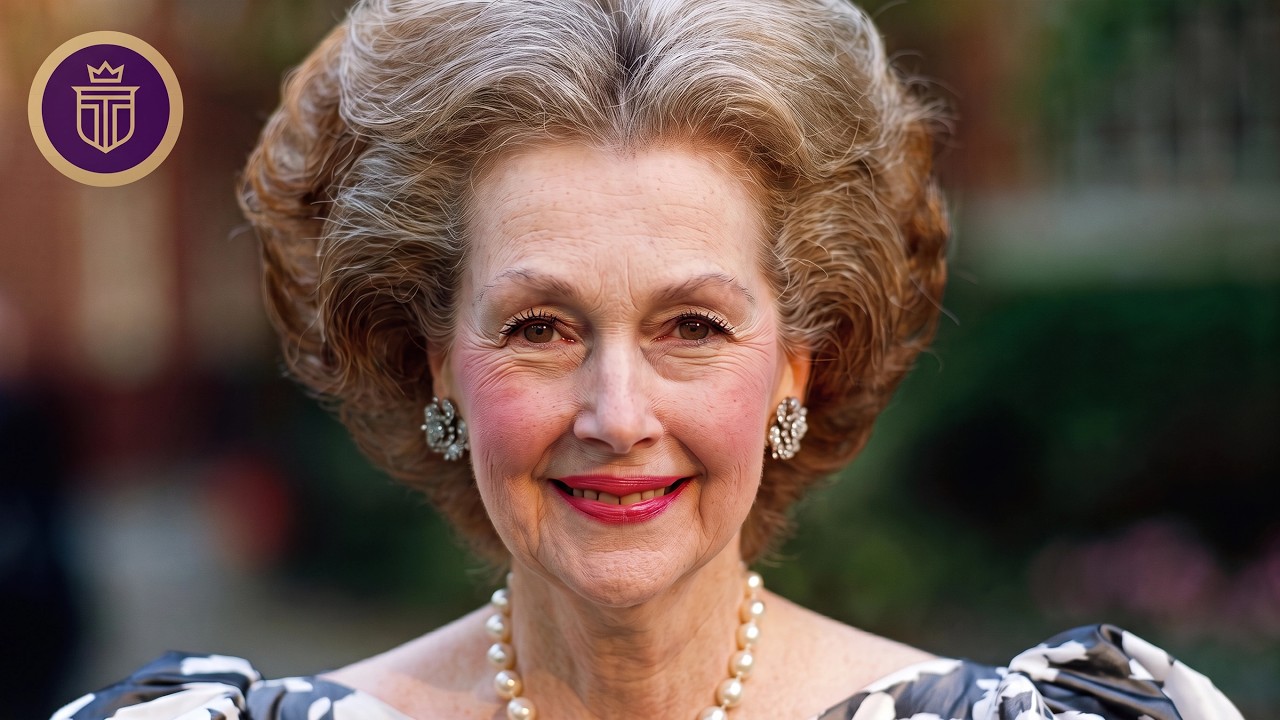
His will had requested that his children allow his widow six months to put her affairs in order and leave Althorp, the Spencer family estate in Northamptonshire. They gave her two days. On 31 March, the new Earl, Charles, and his sister Diana, Princess of Wales, personally oversaw the eviction. Raine was not permitted to remove anything unless she could prove she owned it personally.
Her staff were dismissed without notice. In the bedroom, while a maid packed the Countess’s wardrobe into Louis Vuitton cases for her departure, Diana noticed the letter S stamped on the locks, concluded this made the luggage Spencer property, and ordered the cases emptied. Furs, couture suits, and evening dresses were re-packed instead into black plastic bin bags. Charles Spencer then collected the bags and kicked them down the great staircase of the hall.
It was the same staircase down which Raine had been pushed by Diana three years earlier, at the 1989 wedding of Charles Spencer, when Diana became convinced Raine was not showing enough respect to her visiting mother, Frances Shand Kydd. Diana pushed her stepmother, who fell and was seriously hurt. The woman who left the house that March day was not, however, ruined or defeated. She had a house in Mayfair, roughly 4 million pounds from her late husband’s estate, and a life still to live.
She would outlive her stepdaughter by nineteen years. Born Raine McCorquodale in 1929, she was the only child of Barbara Cartland, the romance novelist who published 723 books, dictating them to secretaries at a pace that once reached twenty-three novels in a single year, and who moved through the world in pink silk and fake eyelashes. Cartland treated her daughter’s upbringing as another manuscript to be edited to perfection. She admitted she had been disappointed the child was a daughter and told the BBC that she would rather have had twelve sons, adding that she did not much like women because men were her heroes.
Cartland’s method was to bully her daughter into beauty. When the young Raine came home top of her class, her mother’s response was not praise but a remark about a gravy stain on her shirt. The training produced exactly what the mother intended: a polished, striking debutante, named Deb of the Year in 1947. In 1948, Raine married Gerald Legge, later the 9th Earl of Dartmouth, and was publicly the devoted wife for twenty years while privately, in her mother’s telling, being shaped into a glamorous figure with sharper ambitions.
In 1954, at twenty-three, she became the youngest woman elected to Westminster City Council, campaigning in her furs and jewelry because, she said, everyone knew she owned them anyway. She spent nearly seventeen years in local government, most notably leading the fight to save the Covent Garden area from demolition in the early 1970s. It was substantial, unglamorous civic work. Her first husband did not allow her to attend political events in the evenings or on weekends, a restriction that says much about the marriage.
In 1973, while serving on an architectural heritage committee, she met John Spencer, then Viscount Althorp, known in London as one of the unhappiest men in it. His first marriage had ended in one of the ugliest aristocratic divorces of the era. His wife Frances had fallen in love with Peter Shand Kydd, and after the separation the children were denied return to London; Frances lost custody in 1968 in part because her own mother testified against her. The children of that divorce were the ones Raine would later inherit, and they had been permanently marked by it.
Diana, the youngest, later called her mother’s departure the biggest disruption of her childhood and said she remembered seeing her father slap her mother while she hid behind a door. They were not children prepared to welcome a stylish replacement. Raine and John married in July 1976. The wedding was held in such secrecy that John’s four children learned of it from newspapers the next day; they had not been invited.
Diana, fifteen at the time, said she slapped her father across the face in protest and told him it was for all of them because he had hurt them. The children hated Raine from day one, as a later royal biographer put it plainly, never concealing their contempt for the woman who had, in their view, stolen their father’s affection and a great deal of his spending money. Raine set about transforming Althorp, which she reportedly nicknamed the City of Gloom. She recovered the worn furniture in bright fabrics, replaced old Victorian lamps with pink ones, and spent an estimated two million pounds on redecoration.
She defended herself simply, saying the results were excellent and that one could still admire the Rubens paintings on the walls. The family saw vandalism. Sarah Spencer joked she would rather hug Lenin’s corpse for warmth than accept Raine as stepmother. Charles Spencer later wrote that the south drawing room, once a model of elegant English restraint, had become a riot of clashing pinks.
A newspaper called her choices the vulgarity of a five-star wedding cake. She was also accused, with lasting effect, of selling the house’s treasures. Between 1976 and 1992, it later emerged, roughly a fifth of the contents of Althorp were sold, more than two hundred pieces, including eleven Van Dycks and four of his portraits of the Apostles. Charles Spencer claimed that works went to London dealers in laundry baskets out the back door to avoid publicity, allowing the dealers to buy them at far below market value and resell at enormous profit, and that his father and stepmother had been defrauded.
He called the sale of the Van Dyck Apostle portraits the most painful loss. Later, he acknowledged the sales may have been partly his father’s own quiet revenge on his inheritance. But his father was dead by then, and the blame settled on Raine. She insisted in 1991 that she had taken no decisions herself, that John gave the orders, and that his property was his to use as he wished.
It was probably true and did her no good, because the family needed a villain with a face. In 1978, two years into the marriage, John Spencer collapsed from a massive cerebral hemorrhage. He fell into a coma, and doctors gave him, by some accounts, no better than one chance in ten of surviving. Raine camped beside his bed day and night.
She kept the children away from him, telling a biographer she believed he needed peace and quiet without disturbance. That decision was written into the family’s charges against her, but even unfriendly relatives admitted her devotion played a decisive role in his recovery. She obtained an experimental drug from Germany not yet licensed in the United Kingdom and pressed the hospital to administer it. John survived and lived for another fourteen years, though never fully recovered, still needing support when he walked Diana down the aisle in 1981.
For a brief time, the family’s gratitude toward Raine was real. It did not last. Diana later cast the exclusion from the hospital as an accusation, claiming Raine had essentially prevented them from seeing their father. The pattern of Raine’s entire life at Althorp was compressed into that single episode: she did the effective thing, the competent thing, the thing that worked, and she was resented for how she did it more than thanked for the result.
In July 1981, at Diana’s wedding to the Prince of Wales, Raine attended the ceremony but was not seated with her husband. The Earl, Frances Shand Kydd, and the Spencer children sat facing the royal family; Raine was placed among the general congregation and did not appear on the Buckingham Palace balcony with the rest of the family. The most photographed moment in Spencer family history was staged with the Countess deliberately absent from the frame. Raine’s own mother, Barbara Cartland, was also given a seat behind a pillar, and chose to watch on television at home instead.
The vicious nickname Acid Rain settled into the language. The children also sang a rhyme to her, purposely never completing it with the traditional line inviting rain to return another day. In 1989, at Althorp, at Charles Spencer’s wedding to Victoria Lockwood, Diana pushed Raine down the stairs, as her personal assistant Sue Hough later recounted without embellishment. Raine was badly hurt and distressed.
Diana never expressed regret. In a recorded conversation with her voice coach, she said the push gave her enormous satisfaction and that she had wanted to choke the stepmother who had brought her so much grief. In Morton’s tapes, Diana described telling Raine that she hated her, that if she had known how much they all hated her she would never have gone near the place, that she had destroyed the house and spent their father’s money. When Raine replied that Diana had no idea how much pain her mother had caused their father, Diana said she attacked her throat.
Three years later, John Spencer was dead and the family expelled Raine within forty-eight hours. Diana’s verdict on her stepmother at that moment was absolute: Raine was no longer her stepmother, only the ex. Furs and haute couture went out the back door in plastic bags, and a sixteen-year marriage ended with rubbish sacks rolling down the stairs. The will had asked for six months and a measure of dignity.
The sons and daughter ignored it two days after his last breath. The war had never truly been about the paintings or the pink sofas. It was about who owned the memory of the house, and they were determined to own it completely. The fastest way was to erase the outsider before the funeral flowers wilted.
The strangest thing about the end of the story is that the hatred did not last. After an intervening marriage that ended in 1995, Raine remained Raine, Countess Spencer. Around 1993, while Diana’s own marriage was collapsing, she initiated a reconciliation, telling Raine she knew she had loved her father deeply and was grateful for the years of happiness she had given him. They wept and embraced, then began meeting regularly for lunch at the Connaught Grill and speaking almost daily.
Diana’s butler, Paul Burrell, explained the logic simply: in the end Diana was an outcast, and Raine was an outcast, and so they became close friends. Diana, by then estranged from her own mother, said she would rather talk to Raine than to her mother, and that Raine had been the mother she never had. The girl who invented the nickname Acid Rain had made the most complete turn possible. Diana was killed in Paris in August 1997.
In 2016, Raine died of cancer at eighty-seven, having arranged a farewell dinner for thirty friends a few weeks earlier without telling any of them it was a farewell. She left an estate of roughly 5. 88 million pounds, a quiet answer to the legend that portrayed her as draining the Spencer fortune. She left nothing, in the end, to any Spencer.
None of them attended her funeral. The girl who had learned to call her mother was already gone, and the others never did.