Stephen Weed was a twenty-nine-year-old artillery officer when the Civil War broke out in 1861. In May of that year he received a promotion to captain and took command of a newly formed battery in the Fifth U. S. Artillery.
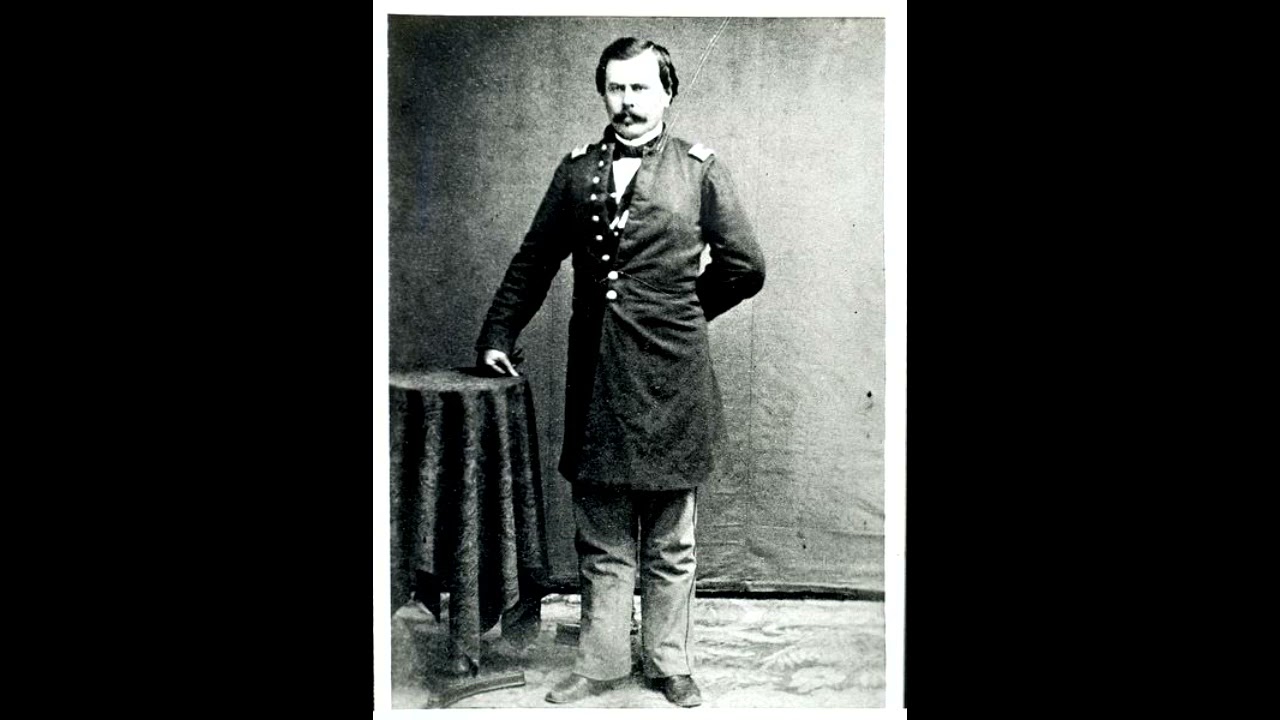
For nearly a year he trained his crews at Camp Curtin in Harrisburg, Pennsylvania, preparing men and guns for the war that was escalating around them. In the spring of 1862 his battery was ordered into the field, and Weed found himself in the thick of the Peninsula Campaign, then at Second Bull Run, where his guns traded fire in a vicious artillery duel. At Antietam, his battery again saw heavy action. His competence did not go unnoticed, and he was soon promoted to command all of the artillery in the Fifth Corps, a position that placed him at the center of some of the army’s most important operations.
At Fredericksburg, his guns were in action across the Rappahannock, and through the winter of 1862 into early 1863 he remained on duty in Virginia, the war grinding on through mud and cold. In January 1863, Weed left the regular army artillery to accept a commission as a brigadier general in the volunteer army. It was a significant step for a young officer who had made his reputation with cannon rather than infantry. He took command of the Third Brigade in the Second Division of the Fifth Corps, and in that role he participated in the Chancellorsville campaign that spring, commanding the artillery of the Second Division during the confusing and brutal fighting in the Wilderness.
By the summer of 1863, the war had shifted to Pennsylvania. Robert E. Lee’s Army of Northern Virginia had crossed the Potomac and was moving north, and the Army of the Potomac under George Meade was marching to meet it. On July 1, the two armies collided at Gettysburg.
The fighting on the first day drove the Federal forces back through the town to the high ground south of it, where they formed a defensive line that would prove decisive. Among the key positions was Little Round Top, a rocky hill at the southern end of Cemetery Ridge. Its left flank anchored the entire Union line, and the Confederates understood exactly what it meant. On July 2, the second day of the battle, the situation on Little Round Top became critical.
Confederate forces under General James Longstreet launched a powerful assault on the Union left, and the fight for the hill turned desperate. Colonel Strong Vincent’s brigade had been rushed to the summit to hold the position, and his men were clinging to it against repeated Confederate attacks. The fighting was savage and close, and Vincent’s right flank was in danger of being turned. It was at this moment that Stephen Weed’s brigade was ordered to the hill to reinforce the beleaguered defenders.
Weed’s men moved up the slopes of Little Round Top as the firing intensified. They arrived just as Vincent’s line was stretched to its breaking point. The Confederate assault had managed to outflank Vincent’s right, and it fell to Weed’s vanguard to stop the penetration. His troops met the Confederate attack and repelled it, pushing the enemy back and restoring the integrity of the Federal line on that critical flank.
It was during this counterattack that Colonel Patrick O’Rorke of the 140th New York Infantry was killed, struck down while leading his men forward against the Confederate assault. His death was one of many that afternoon on the rocky hillside, but the line held. As the infantry fight raged below, another struggle was unfolding on the summit itself. Guns of Battery D of the Fifth U.
S. Artillery, commanded by Lieutenant Charles E. Hazlett, had been brought up to the top of Little Round Top. The work was grueling, hauling cannon up the steep, boulder-strewn slope under fire, but the guns were positioned and began to play their part in the defense.
Elements of Weed’s brigade helped move those guns into place, muscle and determination doing the work that horses could not manage on such ground. From their elevated position, the Union artillery could fire down into the Confederate formations pressing the hill, adding their weight to the infantry’s desperate resistance. Weed himself was among the officers who made their way to the summit to direct the defense. As he stood near the guns of Hazlett’s battery, directing the fight, a Confederate bullet struck him in the chest.
The wound was mortal. Those around him rushed to his side, and as he lay dying, his reported last words were simple and resolute: he would rather die there than see the rebels gain an inch of ground. Lieutenant Hazlett, leaning close to hear what the dying general was trying to say, was himself struck and killed on the spot. The two officers fell together within feet of the guns they had worked so hard to place.
The line on Little Round Top held. The Confederate assault failed to take the hill, and the Union left flank remained anchored. The following day, Pickett’s Charge against the center of the Union line would fail as well, and Lee was forced to retreat from Gettysburg, ending his invasion of the North. The battle was a turning point in the war, and the stand on Little Round Top had been essential to that outcome.
Stephen Weed died on the hill he had helped hold. He was thirty-two years old. His last reported words—an expression of his willingness to die rather than yield ground—became part of the story of that July 2 defense, remembered as the final statement of an officer who had spent his entire war with the guns and gave his life within a few steps of them while the fight on the summit was still undecided.
He did not live to see the Confederate withdrawal, the end of the campaign, or the eventual Union victory, but the ground he fought for remained in Union hands that afternoon, and the line he helped hold would not break.