Tony Spilotro did not die in a cornfield. The famous closing scene of Martin Scorsese’s Casino, in which Joe Pesci’s character is beaten with baseball bats and buried alive under an Indiana moon, never happened. The real death of the man who inspired that character was quieter, faster, and far more treacherous. He died in a cramped basement in a suburban Illinois house, surrounded by men he had known for years.
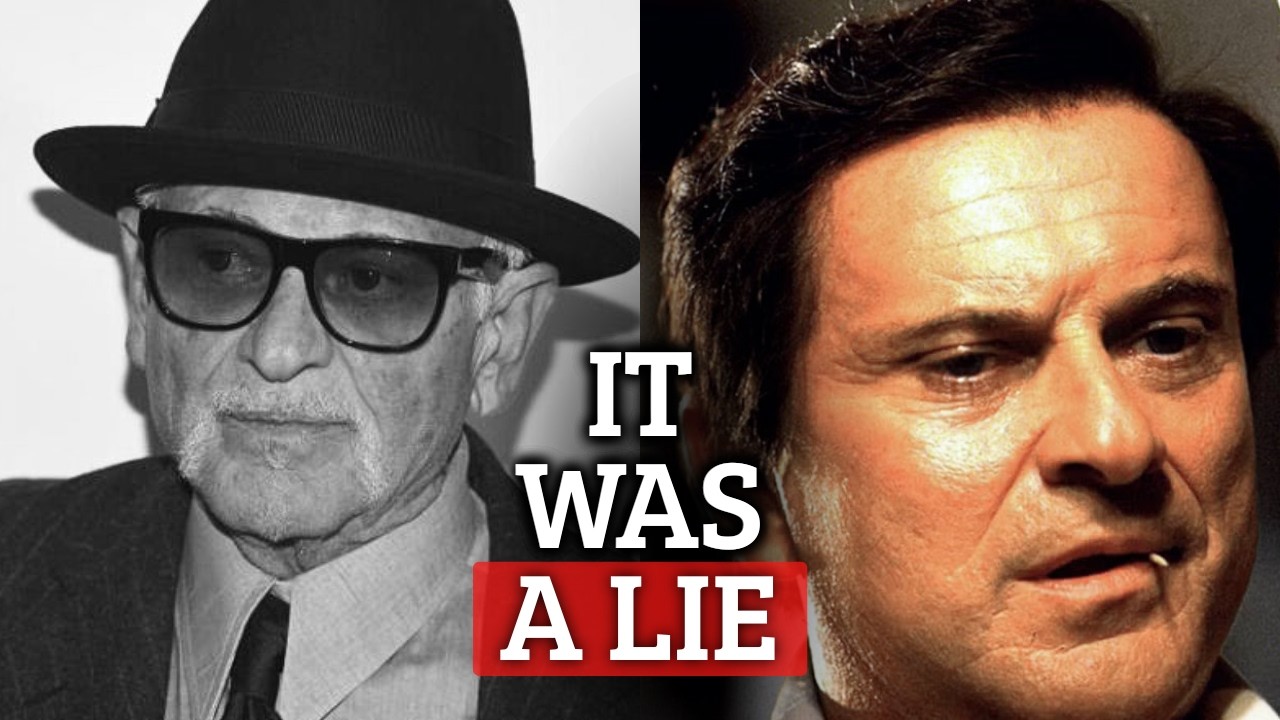
He was not killed in a fit of rage. He was eliminated by a cold corporate decision. Spilotro was known to the FBI as the Ant. The nickname came not just from his short stature but from his industry.
He was everywhere. He served as the Chicago Outfit’s man in Las Vegas, and his job was to protect the skim. That was the system by which millions of dollars were stolen from the counting rooms of casinos like the Stardust and the Fremont before the money was taxed. Cash was taken off the top, packed into suitcases, and flown back to the crime families of the Midwest.
Spilotro made sure the skim ran smoothly and that no one else tried to take a share of Chicago’s territory. For years, the system worked. Spilotro was an earner. He ran street rackets, burglary rings, and loan sharking operations.
He was a vital asset. But by the 1980s, the world around him had changed. The FBI launched sweeping investigations under the name Operation Strawman. Casinos were bugged, phones were tapped, and mobsters were watched at every turn.
The pressure on the organization was mounting. The bosses back in Chicago, old-school men like Joseph Aiuppa and Jackie Cerone, valued silence and discipline. Spilotro was becoming a problem. He had formed a crew known as the Hole in the Wall Gang, burglars who drilled through the roofs and walls of jewelry stores and luxury homes.
Their work was loud and messy, and it attracted intense law enforcement attention. Spilotro was also making personal mistakes. He was reportedly having an affair with the wife of Frank Rosenthal, the man who ran the casinos for the mob. In the strict code of the mafia, touching another member’s wife was a violation of trust that disrupted business.
And Spilotro was becoming a celebrity criminal. His face appeared in newspapers, and he was facing multiple indictments. To the cold, calculating men who ran the Outfit, Spilotro had stopped being an asset. He had become a liability.
And in organized crime, a liability that threatens the freedom of the entire leadership gets liquidated. In June 1986, the bosses were looking at long prison sentences because of evidence gathered in Las Vegas. They blamed Spilotro for letting things spiral out of control. But they could not simply shoot him in the street.
He was a high-ranking member, tough, paranoid, and always armed. If he suspected a hit was coming, he might have gone to war or, worse, run to the FBI and become a witness. So the Outfit devised a plan that relied on Spilotro’s own ambition. They used psychology instead of force.
The bosses told Spilotro’s brother, Michael, that he was going to be made. For an Italian American in that life, being inducted as a full member of the mafia was the ultimate goal. It meant status, protection, and belonging. Tony was summoned to Chicago to sponsor his brother at the ceremony.
It was perfect bait, appealing to family pride and ego. On June 14, 1986, Tony and Michael Spilotro left Michael’s home in Oak Park, Illinois. They left their jewelry, wallets, and IDs on the kitchen counter, following the protocol that required a man being made to arrive clean of personal effects. They likely believed they were driving toward the highlight of their careers.
In reality, they were driving to their own funerals. They did not go to Indiana. They drove to a quiet residential subdivision in Bensenville, Illinois. They pulled into the garage of a house belonging to a mob associate, and the garage door closed behind them.
They were led downstairs. Waiting in that small, wood-paneled basement were nearly a dozen men. They were not random thugs. They were the cream of the Outfit’s hit department, including James Marcello, Louis Marino, and Louis Iboli.
The instant Tony and Michael stepped off the last stair, the trap snapped shut. There was no ceremony, no oath, no baseball bats. According to the testimony of Nicholas Calabrese, a hitman in the room who later turned government witness, the attack was instantaneous. The killers swarmed the brothers.
Tony Spilotro, the man who had terrorized Las Vegas for a decade, never had a chance to reach for a weapon or throw a punch. He was overwhelmed by the sheer number of attackers. It was not a choreographed fight. It was a frantic scramble in a small room.
The killers used their fists, feet, and possibly a rope. The violence was up close, personal, and silent to the outside world. Just a few feet above, residents were mowing lawns and watching television, unaware that the men who once ruled the Las Vegas casinos were being extinguished in a basement next door. The autopsy conducted by Dr.
John Pless disproved the movie’s most horrific claim. In Casino, the brothers are buried while still breathing, gasping as dirt covers their faces. But the science tells a different story. Dr.
Pless found no soil in the trachea or lungs of either brother. They were not breathing when they went into the ground. They were already dead before they left that basement in Bensenville, killed by blunt force trauma to the head and chest. The beating was severe, but it was meant to end them, not to prolong their suffering.
After the noise stopped, the cleanup began. The bodies were wrapped in plastic and blankets, dragged upstairs, and thrown into the trunk of a car. They were driven about seventy miles southeast to Enos, Indiana, because the Outfit owned farmland there. It was supposed to be a safe place to make problems disappear.
But the burial was sloppy. The killers dug a grave only about five feet deep, dumped the brothers in one on top of the other, covered them with dirt, and drove away. They did not use enough chemical agents to destroy the remains, and the shallow grave was easily disturbed. A few days later, a local farmer noticed a patch of turned earth.
Thinking a poacher had buried a deer, he poked at the ground with a stick and hit something soft. It was not an animal. On June 22, 1986, just over a week after the brothers vanished, the bodies were unearthed. Because the soil had preserved them, they were identified almost immediately through dental records.
The news spread quickly. Headlines across the country announced that Spilotro was found dead. The message to the underworld and to law enforcement was clear. The era of the Las Vegas skim was over.
The Outfit had cleaned house. The difference between the movie and reality matters because the film romanticizes the violence. It frames the death of Nikki Santoro as a grand tragic finale, a twisted warrior’s death on a battlefield of corn. The reality reveals the cold, bureaucratic nature of the mafia.
Tony Spilotro was not killed in a duel. He was essentially laid off, an employee terminated because his management style was no longer profitable. The bosses did not hate him with the passion shown in the film. They wanted to balance the books.
He was a toxic asset. Michael Spilotro was the true tragedy. He was not the target. He had not disobeyed the bosses.
He died simply because he was Tony’s brother and because he walked into that basement. He was collateral damage in a corporate cleanup. The hit on the Spilotro brothers marked the end of the mob’s golden age in Las Vegas. Afterward, corporations took over the Strip.
The old hotels were imploded to make way for the megaresorts that stand today. The days of the skim and the backroom counting houses were buried in that Indiana grave alongside the brothers. For almost twenty years, no one was charged with the murders. The legend of the cornfield grew, and the 1995 release of Casino cemented the myth in the public consciousness.
The truth finally surfaced in 2007 during the massive Family Secrets trial. That trial broke the code of silence in a way never seen before. Nicholas Calabrese, one of the men who stood in that basement, testified against his former bosses to save himself. He described the room, the attack, and the last moments of the men he helped kill.
His testimony dismantled the Hollywood version piece by piece. Thanks to him, the men who ordered and orchestrated the hit, including James Marcello, the acting boss at the time, were sentenced to life in prison. Hollywood gives us legends. History gives us the truth.
The cornfield was not an execution chamber. It was a dumping ground, a sloppy afterthought. The real horror happened in a suburban house, under the lights of a basement, where a man was betrayed by his own family and lured to a celebration that became a slaughter.