In February 2026, police arrested an 81-year-old man at a care home in the Koblenz area of Germany. He was taken into custody on suspicion of ending the life of Amy Lopez, a 24-year-old Texan who had been murdered near Koblenz in September 1994. For more than three decades, the case had remained unsolved. The arrest came after investigators, using modern forensic technology, finally matched DNA evidence preserved from the original crime scene to the suspect, identified publicly only as Hans S.
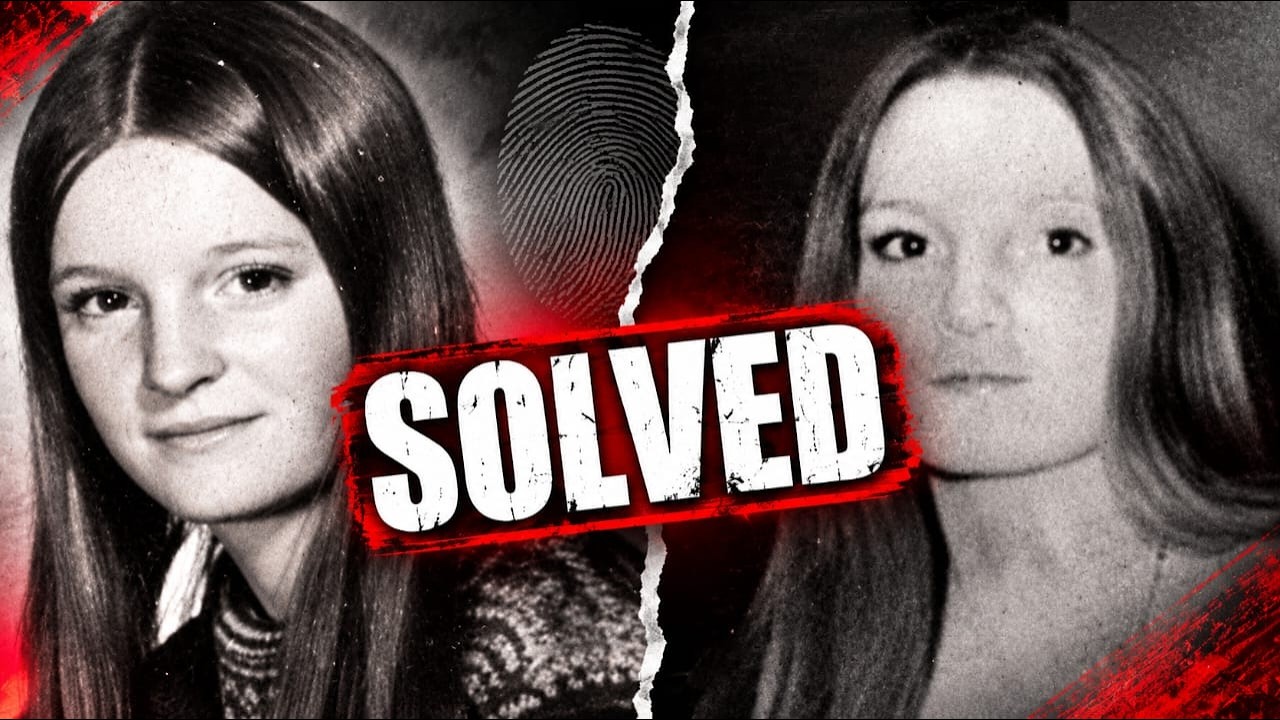
under German privacy laws. Amy Lopez had been traveling through Europe on a sightseeing tour. On the morning of September 26, 1994, she traveled to the German city of Koblenz, where she planned to visit the historic Ehrenbreitstein Fortress overlooking the Rhine. She crossed the river by bus and began walking toward the fortress.
She never returned. Shortly afterward, children playing in the area discovered her body near the fortress. An examination revealed severe head injuries, injuries consistent with strangulation, and multiple stab wounds. Prosecutors would later state she had received nine stab wounds to the chest.
According to the prosecution’s reconstruction, Amy met a German man who offered to show her the way to a youth hostel. Investigators believed he deliberately led her away from the main tourist areas to an isolated spot beneath the fortress. Prosecutors later alleged that the man had been looking for a woman to attack that morning, and that he was carrying a knife and handcuffs. Amy was taken to a secluded room known as the General von Aster room, named after a nineteenth-century Prussian general.
There, according to the prosecution, she was restrained and assaulted. When she resisted and screamed, the attacker allegedly struck her on the head with a rock and strangled her with a belt before stabbing her repeatedly and leaving her body in the fortress. Police conducted an extensive investigation, gathering evidence and pursuing numerous leads. More than 200 investigation files were eventually linked to the case.
Despite the effort, authorities could not identify the perpetrator, and the case remained open for decades. In 2024, thirty years after Amy’s death, investigators announced a new development. A male DNA trace linked to the case had been identified, and police offered a reward of 2,500 euros for information leading to an arrest. Forensic techniques had advanced significantly since 1994, so investigators returned to the evidence preserved from the original investigation.
They re-examined Amy’s clothing and other items connected to the crime and eventually identified minute biological traces containing skin cells. The technology available in 1994 could not extract useful information from such small traces, but modern forensic methods allowed investigators to develop a DNA profile from the preserved material. Nearly 1,600 samples were prepared and analyzed as part of the renewed investigation. The DNA evidence pointed to a male individual connected to the crime.
Investigators eventually focused on a man already known to German authorities. The suspect had previously been convicted of attempting to assault a 16-year-old girl in Koblenz in 1999 and had served a seven-year prison sentence. However, his DNA profile had since been deleted from the database. Investigators needed a fresh sample.
The man voluntarily provided a saliva sample. When his DNA was compared with the preserved biological evidence from Amy’s case, it matched. The suspect was identified publicly only as Hans S. , in line with German privacy laws.
When Hans S. ’s trial began in August 2026, the case took another unusual turn. The 81-year-old defendant entered the courtroom using a walker. During the proceedings, his defense attorney stated that Hans S.
had confessed to the crime. When the judge asked whether the confession was correct, Hans S. reportedly nodded and answered yes. His lawyer later told the German Press Agency that the case had weighed heavily on Hans S.
and that he wanted to close this chapter. His account reportedly aligned closely with the prosecution’s reconstruction of what happened to Amy. Prosecutors described Amy as essentially a random victim who encountered a man actively looking for someone to assault that morning. On August 28, the Koblenz Regional Court convicted Hans S.
and sentenced him to life imprisonment. The court also determined that the crime involved a particularly severe degree of guilt, making early release much more difficult. After more than three decades, Amy Lopez’s family finally received an answer to the question that had gone unanswered since September 1994. The case also became a prominent example of how advances in forensic science can breathe new life into investigations decades old.
Evidence that could not provide investigators with an answer in 1994 eventually became the key to identifying the perpetrator more than thirty years later. In a separate case, the final unidentified victim of a serial killer was identified after 34 years through DNA testing. On August 30, 1992, a body was found along Highway 95, about seven miles north of Blythe, California. She was a young woman, between 20 and 30 years old, about five feet six or five feet seven inches tall, of medium build, weighing roughly 140 to 150 pounds.
She had blond hair, described as disheveled, and wore a shirt with a motorcycle design. She had a small distinctive tattoo: two dots on the left side of her right thumb. None of those details identified her. For the next 34 years, she remained unidentified.
During the investigation, long-haul truck driver Keith Hunter Jesperson confessed to ending her life. Investigators gave her a name, not her real one, but the name the man who killed her claimed she had used: Claudia. Over time, investigators pieced together her final movements. At some point in August 1992, she was traveling through Southern California.
According to Jesperson, she was hitchhiking. He encountered her at a brake inspection area along Highway 15, south of Victorville. She wanted to go to Los Angeles. Jesperson said he was not heading that way, but because his truck route took him toward Arizona, he offered her a ride as far as Cabazon.
She accepted. At some point along that journey, the woman whose identity would remain a mystery for decades climbed into Jesperson’s truck. They stopped in Cabazon, but the woman apparently continued traveling with him. Eventually, they reached an Indio rest area.
There, according to Jesperson, the two argued over money. The argument escalated, and inside the truck, Jesperson ended her life and continued driving east. He eventually reached the Blythe area, where he looked for a place to dispose of the body. He chose a location along Highway 95, about seven miles north of Blythe.
Two days later, on August 30, authorities discovered her body. Jesperson became known as the Laughing Face Killer after sending taunting letters to authorities and the media about his crimes, signed with drawings of smiling faces. He killed women in several states during the 1990s and was eventually arrested in 1995. On January 8, 2010, he pleaded guilty in a Riverside County case and was sentenced to 25 years to life.
By then, he was already serving multiple life sentences in Oregon for other cases. The killer was behind bars, and the circumstances of the crime were largely known, but the victim remained unidentified. As forensic science advanced, investigators returned to the case. In 2024, Riverside County investigators appealed to the public for help identifying the woman.
They revealed that advances in DNA technology and genetic genealogy had already produced an important lead: they had found relatives on her father’s side, but that was not enough. They still needed to establish a connection on her mother’s side before they could confirm her identity. In 2026, the investigation received the information it needed. Investigators were directed toward a direct maternal relative, and a possible genetic link was identified.
After obtaining a DNA sample, they compared it with the genetic information extracted from the unidentified woman’s remains. The result confirmed the connection. The woman found beside Highway 95 finally had a name. She was not Claudia.
She was Lydia Jane Wade McQuarter, a 26-year-old from Texas. Lydia had disappeared from Texas sometime during the 1990s. Her sisters spent decades not knowing what had happened to her. On August 27, 2026, the Riverside County District Attorney’s Office publicly announced the identification.
Almost 34 years after her death, the last unidentified victim linked to Keith Hunter Jesperson had been identified. The district attorney’s office worked with Lydia’s family as they decided how to bury her, and the identification closed the final unresolved case connected to the crimes for which Jesperson was convicted. Another case saw a burned body identified after 13 years through advanced DNA technology. On March 14, 2013, Eureka police responded to a report of a deceased person found inside a homeless camp near Cooper Gulch in Eureka, Humboldt County, California.
The body had sustained extensive burns and was so badly damaged that investigators could not conclusively identify the person. At the time, investigators believed the remains might belong to a specific man. DNA was extracted from the remains and sent to the California Department of Justice for analysis. Investigators also obtained a DNA sample from the man’s sister and compared it with the unidentified remains.
The results were inconclusive. The severe fire damage made it very difficult to identify the remains with the DNA testing then available. As DNA technology advanced, the Humboldt County Sheriff’s Office obtained a grant to use forensic genetic genealogy in unidentified remains cases. Investigators sent evidence from the 2013 case to Astrea Laboratory for advanced DNA testing.
Astrea scientists successfully extracted viable DNA from the forensic evidence and, using high-resolution genome sequencing, developed a comprehensive DNA profile. The forensic genetic genealogy team at Othram used that profile to conduct a genetic genealogy search, producing new investigative leads that were provided to the Humboldt County Sheriff’s Office. Detectives followed those leads and identified possible relatives of the victim. Additional DNA samples were collected and compared with the unidentified remains.
The comparisons ultimately confirmed what investigators had suspected more than a decade earlier: the remains were those of William Cody Waldron, born September 23, 1942. In August 2026, more than 13 years after the burned remains were found near Cooper Gulch, William’s identity was finally confirmed. In another long unresolved case, human remains discovered by loggers near a California campsite more than 30 years ago were finally identified. On July 7, 1994, loggers found part of a human skull near a campsite at Butt Lake, close to Nyack, California.
Authorities were called, and investigators examined the area. At the time, investigators believed the campsite itself may have been there for about a year. Along with the human remains, several items were found in the area and collected as evidence. But despite the discovery, investigators could not identify the person, and there was not enough evidence to determine a cause of death.
The remains were eventually placed among evidence files, and the case became one of many unidentified person investigations. More than 30 years later, advances in forensic technology gave investigators a new opportunity. Evidence from the case underwent extensive testing by the California Department of Justice and the Othram forensic laboratory. During testing, investigators were able to develop a DNA sample from the evidence.
In January 2025, the information was submitted to the Investigative Genetic Genealogy Center at Ramapo College. Researchers began working through the available information to identify the man. The investigation was particularly difficult because of the man’s Croatian and Yugoslavian ancestry. Karen Binder, director of the Ramapo center, explained that people from some population groups are difficult to identify through genetic genealogy because they are underrepresented in available DNA databases and because genetic records are limited.
Despite these obstacles, investigators continued working to build a family link and eventually identified a possible descendant of the unidentified man. The Lordstown Police Department in Ohio helped the investigation by obtaining a DNA sample from that descendant. The sample was compared with the DNA profile developed from the remains, and it was a match. After more than three decades, investigators finally had a name.
The remains discovered near Butt Lake in 1994 belonged to George Crosley. Born in April 1929, George had previously pleaded guilty to a burglary charge in Plumas County. Records indicated he had last been seen in California in 1963, more than three decades before his remains were discovered. Investigators were never able to determine a cause of death due to the limited evidence available from the original discovery.
On August 27, 2026, the Placer County Sheriff’s Office and the Investigative Genetic Genealogy Center at Ramapo College publicly confirmed George’s identity. Placer County Sheriff Wayne Woo praised the investigators and forensic specialists who had finally put a name to the remains, saying, no matter how many years pass, everyone deserves answers. In the final case, a suspect was identified in a New Jersey cold case after more than five decades. Sisters Margaret Maggie Jenkins, 18, and Mary Jenkins, 16, traveled from New Jersey to Key West for a vacation in April 1973.
They were last seen hitchhiking in Stock Island in the Florida Keys on May 2. A resident discovered their bodies the next day in a wooded area near mile marker 99. 5 on Key Largo, Florida. The sisters had been severely beaten and had sustained apparent gunshot wounds.
The discovery launched an immediate investigation, but identifying the person responsible proved far more difficult. Maggie and Mary grew up in Gloucester City, living with their parents, Thomas and Sarah Jenkins, near Marcella’s Bar, which their father ran. Classmates at Gloucester City High School described the sisters as accustomed to hitchhiking and willing to travel a hundred miles at a time just for fun. No suspect was ever definitively linked to the killings, and no arrests were made.
As the years passed, the case slowly became one of the Florida Keys’ unsolved crimes. For the Jenkins family, the case never became part of the past. Sarah Jenkins Barlow, the sisters’ older sister, was only 19 when their lives ended. She later recalled that Maggie was strong, adventurous, and bold, loved horses, and dreamed of owning a farm one day.
Mary was very different, described by Sarah as a delicate and innocent girl with a wonderful singing voice. Sarah said the family had tried to conduct their own investigation, searching for answers while investigators worked on the case, but the answers never came. In 2018, forensic analysts with the Florida Department of Law Enforcement developed additional markers from a partial male DNA profile that had been extracted from a bloodstain on one of the victims’ clothing. The updated DNA profile was entered into the CODIS database, but there was no match.
Five years later, in 2023, another major step was taken. The Florida Department of Law Enforcement’s forensic genetic genealogy program accepted the case and began working with Astrea to develop a more comprehensive DNA profile. Instead of relying only on traditional DNA databases to find a direct match, investigators submitted the genetic information to forensic genetic genealogy databases and began the painstaking process of examining possible family links and building family trees. Slowly, the investigation pointed toward a man named David Allen Snyder.
Snyder had lived at several locations in Key West between 1972 and 1974, placing him in the area at the time of the sisters’ murders. But investigators still needed stronger evidence. The breakthrough finally came in 2026. Investigators obtained a DNA sample from one of Snyder’s relatives, and that sample was sent to the Florida Department of Law Enforcement crime laboratory for comparison with the DNA evidence recovered during the original investigation.
The results provided the vital link. The DNA comparison confirmed that David Allen Snyder was the suspect in the murders of Maggie and Mary Jenkins. On September 2, 2026, the Florida Department of Law Enforcement and the Monroe County Sheriff’s Office publicly announced the identification. After 53 years, the man who killed the sisters finally had a name.
But there would be no courtroom and no trial. Snyder had died in Idaho in October 2008, so he never faced charges for ending the lives of Maggie and Mary. For Sarah, the announcement was difficult to process. When investigators first contacted her, she was hesitant to believe the case had actually been solved.
She initially thought they might be calling about a podcast or some other development. She did not want to allow herself to hope for an answer after so many decades of disappointment. Then three investigators arrived at her home. They explained what they had discovered and presented her with the documents documenting the achievement.
Sarah said the investigators were respectful and kind, and that they handled the matter gently. The identification of Snyder as the suspect marked a significant development in an investigation that had remained unsolved for more than 50 years.