Fanny White had already built a remarkable life in the shadows of New York society, but she likely would have faded into obscurity had it not been for a politician named Daniel Sickles. He was an up-and-coming member of the New York State Assembly, elected in 1847, and deeply connected to the Tammany Hall machine that controlled the city’s politics. White met him around the time of his election, when he was about twenty-eight and she twenty-four. Their relationship developed gradually, and by 1850 Sickles was far more than just another customer.
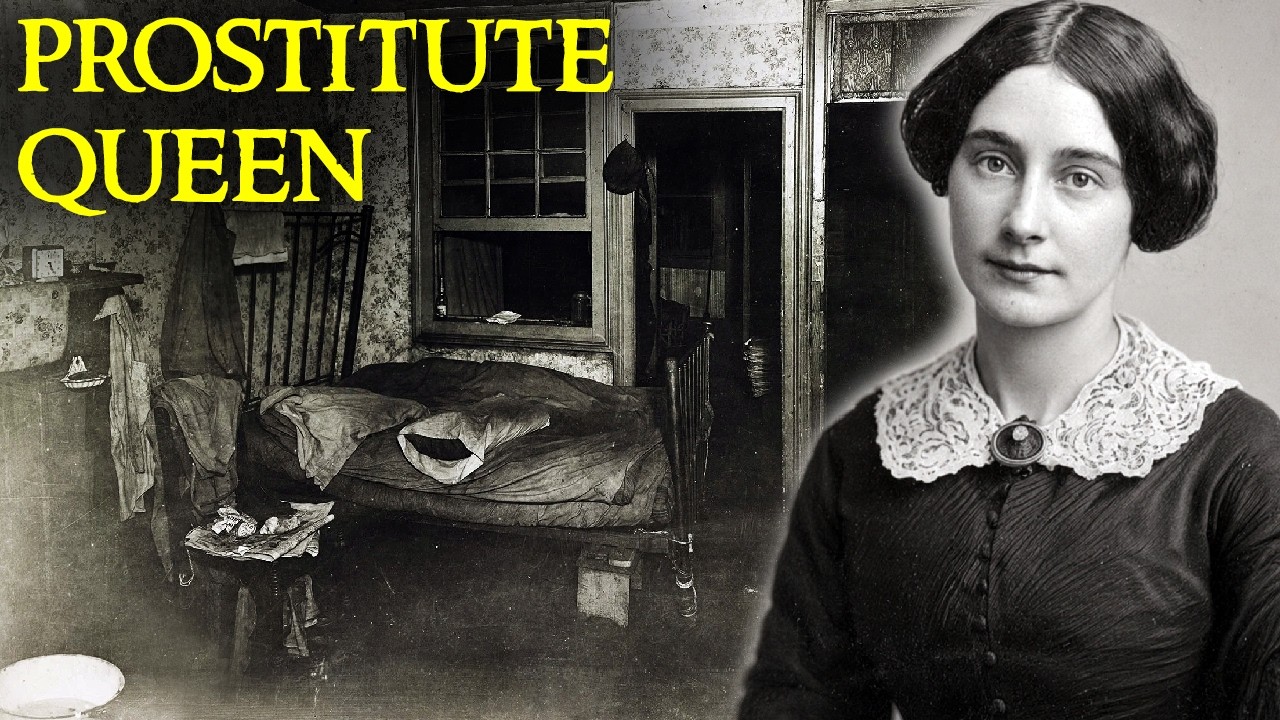
He and White had entered into a relationship of sorts, though she continued working as a courtesan and seeing other important clients. Sickles was flamboyant and showed absolutely no discretion when it came to White. On one occasion, he arrived at the state assembly in Albany accompanied by Fanny herself, provoking outrage among fellow assemblymen who recognized her as a lady of the night. He openly introduced her to people at the hotel where he stayed in the state capital.
According to later accounts, the pair even spent an evening out on the town with White disguised as a man, an adventure that allegedly ended with both of them spending the night in jail. It would not be entirely correct to suggest that Fanny White became a kept woman during her time with Sickles. She was already wealthy, and the relationship was reciprocal. There is a record of her contributing to his election campaign.
Their relationship became even more scandalous in 1852 after Sickles married Teresa Bagioli, the sixteen-year-old daughter of a well-known Italian composer and music teacher. Sickles treated his wife with contempt and continued openly seeing White. In fact, the tax records for White’s brothel in 1851 listed a Mr. Bagioli as the taxpayer.
This suggested one of two things: either Teresa’s father, Antonio, was a customer of Fanny’s, meaning both Dan and his future father-in-law were her lovers, or Sickles was using his future father-in-law’s name to establish credit lines to pay the tax bill for White’s brothel. The marriage the following year appears to have been less a romantic union than a desperate attempt to avoid scandal after it became clear that Teresa was pregnant. When Fanny learned of the marriage, rumors swept through New York that she was so enraged she confronted him personally, lashing out at him with a riding whip. Their relationship became even more notorious in 1853 after President Franklin Pierce appointed Sickles as secretary to James Buchanan, the American ambassador to Britain.
Instead of taking his new wife with him to London, Sickles was accompanied by Fanny White. He left Teresa at home to look after their infant daughter. When Fanny left for Europe, she turned over the management of her brothel to Kate Hastings, a fellow madam who operated an establishment across the street from her own. After she returned home, Hastings returned the establishment to White.
In Britain, Sickles caused further uproar when he not only set up his residence with White but also decided to bring her along and introduce her at the British court. One alleged event had him introducing her to Queen Victoria as a Mrs. Bennett. The name was apparently used as a sideways joke about the editor of the New York Herald, James Gordon Bennett, whom Sickles intensely disliked.
It was not long before tongues started wagging that the woman accompanying Sickles was not his wife. Fanny reportedly crossed the English Channel to France, embarking on a lavish and increasingly flamboyant tour through Paris and other European cities. Wherever she went, she attracted attention. In one notorious incident, she was allegedly ejected from a Paris opera house after becoming visibly intoxicated during a performance.
In 1854, Fanny returned home. Back in New York, she continued to count some of the city’s wealthiest and most influential men among her clients. One New York playboy, a semi-millionaire heir named Jake LeRoy, caused a stir by driving around Broadway in his flashy wagon, the nineteenth-century equivalent of a sports car, accompanied by Fanny. Sickles returned home from London in 1855 and won election to Congress the following year.
The relationship between himself and Fanny never really resumed afterwards, in large part because he went to live in Washington, D. C. There his infamy grew again at the end of the 1850s. His long-suffering wife entered into a relationship with Philip Barton Key II, the U.
S. State Attorney for the District of Columbia. In February 1859, Sickles shot and killed Key in cold blood after finding him loitering outside his and Teresa’s townhouse. He was acquitted at trial, becoming the first person in U.
S. history to successfully use the defense of temporary insanity. By 1856, with Sickles moving off to Washington and White entering her mid-thirties, there were signs that she was tiring of the day-to-day realities of her profession. That year she turned over the management of her brothel to Clara Gordon, a prostitute who had come up as a protégé of Kate Hastings.
White moved into a residence on 12th Street with two other women. This was seemingly a social rather than a financial decision. She certainly could have afforded to live alone by that time and probably chose to live with these women for companionship. She owned several houses in the city and had thousands of dollars in liquid assets.
Not long after retiring, Fanny began a relationship with a young criminal defense lawyer named Edmund Blankman, who was in his late twenties and unperturbed by the stories about Fanny going back to the 1840s. They were married two years later, when Fanny was thirty-six and Edmund twenty-nine. Unfortunately, the marriage proved almost as troubled as the one between her former lover and his wife. Edmund seemed interested in one of Fanny’s nieces, and he also began pressuring her to sign over to him the title of one of the properties she owned in Manhattan.
Jane Augusta Funk, the woman known to the world as Fanny White, died under mysterious circumstances on the 12th of October, 1860, at thirty-seven years of age. An official autopsy concluded that she had suffered a stroke, but she was quite young for that to have occurred. Her brother suspected that Edmund had actually poisoned her and requested an inquest into her death. Although the re-examination found signs of exposure to tuberculosis and syphilis, as well as symptoms of cardiovascular disease and extensive bleeding in the brain, it failed to change the official verdict.
A bitter struggle ensued between Fanny’s family and her former husband. As Fanny had no children but had amassed a fortune during her years at the center of New York’s underworld, her relatives accused Edmund of forging her will in a scheme to seize control of her vast estate for himself. In the end, however, the lawyer prevailed. Edmund walked away with the bulk of the wealth Fanny had built up over eighteen years as one of New York’s most infamous courtesans and madams.
At the time of her death in 1860, she owned what were described as three fine city mansions along with other properties. All of her real estate and property was estimated to be worth somewhere between $50,000 and $100,000, which made her a multimillionaire in modern terms. She had also been remarkably generous toward her extended family. She gave thousands of dollars to her brother and other relatives over the years.
She paid for her nieces to receive a proper education, helped family members lease homes, and even assisted one sibling in securing employment. Following her death, Fanny was buried in the Blankman family plot at Green-Wood Cemetery in Brooklyn, despite members of the Funk family allegedly wanting her laid to rest in their own family plot instead. Her story is a remarkable example of how, in the chaotic and fast-growing America of the 1840s and 1850s, a woman from humble beginnings could rise from the shadows of high society, amass enormous wealth, and become the center of endless scandal. Yet, despite everything she gained, Jane Augusta Funk did not live long enough to enjoy it.
Her sudden rise ended almost as suddenly as it had begun.