Barry Manaki died on the 5th of May 1987, six weeks after he had been quietly removed from Princess Diana’s protection detail. He was 39 years old. He left no memoir and gave no interviews. For roughly two years, from about 1985 to the spring of 1987, he had been Diana’s personal bodyguard, present in the private hours the official schedule never recorded, inside rooms the cameras never reached.
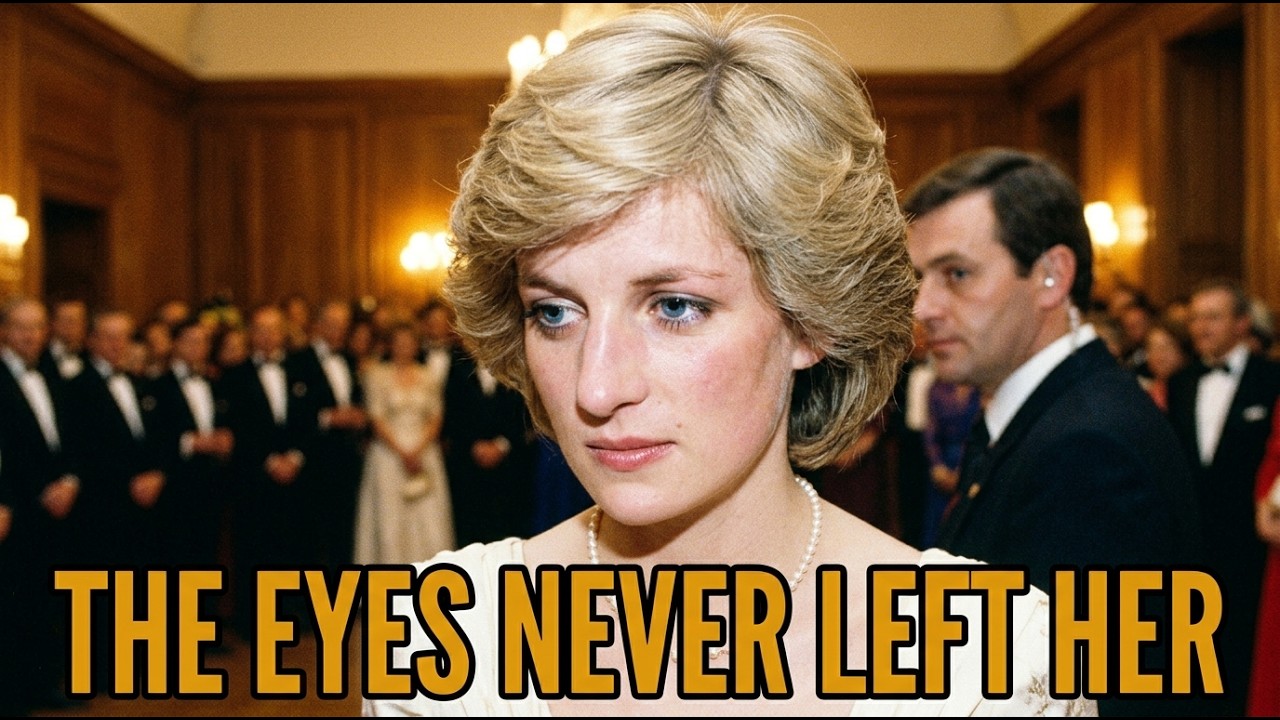
Diana believed he was killed because of what he knew. Four years after his death, alone in a room at Kensington Palace, she spoke those words into a tape recorder. She described a sequence she could not accept as coincidence: first the transfer, then the death. She believed someone had decided that the man who had stood beside her through the worst years of her marriage now knew too much to be allowed to keep knowing it.
The official investigation found no evidence that she was right. But it examined only one question, whether the death was deliberate. It did not examine what died with him, regardless of how the dying happened. The protection role creates a particular kind of knowledge.
A doctor examines a patient and leaves. A private secretary attends meetings from an office. A lady-in-waiting withdraws at the appropriate point. A protection officer does not leave.
The officer stays, because the threat being addressed does not confine itself to scheduled hours. The protection must be as continuous as the threat, and the officer must therefore be present across the full range of a person’s existence. For Diana, between her marriage in July 1981 and the formal separation in December 1992, this meant that the men protecting her were present in the corridors, cars, and residences where the official schedule did not reach. Diana understood what this meant for her privacy.
She could not remove the protection. What she could do, and did, was decide what to do with the knowledge the protection was inevitably producing. In the worst years of the marriage, she was lonely in a specific and acute way. The institution around her was organized around managing her public presentation, not around attending to her private needs.
She needed human contact that was not organized around institutional performance. She needed someone who would listen to what was actually happening to her. She found this, at least in specific periods, in some of the officers around her. Manaki was one of them.
Diana described their relationship on the tapes in terms of genuine emotional significance. She described falling in love with him. The relationship developed from the sustained proximity of the protection work combined with the emotional situation of her circumstances. Diana disclosed things to him that she disclosed to very few others, because the relationship’s emotional significance was the condition that permitted the disclosure.
What Manaki knew was the direct knowledge of a witness. The Morton tapes, recorded in sessions across 1991, are Diana’s retrospective account of what she had experienced. Manaki was there while the experiences were occurring. His was not the knowing of someone who received an account of an experience after it had passed.
He was present in the domestic environment where the distress was expressing itself. The self harm was occurring across the period of his assignment. Diana described cutting herself with a penknife, described throwing herself against a glass cabinet, described injuring herself in other ways. These were expressions of a distress that had no other available channel.
Manaki was present in the environment where this was happening. The bulimia was similarly present, a daily feature of Diana’s domestic existence across the years of the marriage, and he was in proximity to it. He also knew about the marriage itself. In 1985, 1986, and the early months of 1987, the public understanding of the marriage was the understanding produced by official management, a settled royal union whose difficulties were being handled with discretion.
Manaki was not operating inside the public understanding. He was inside the domestic environment, where the Charles and Camilla dimension of the marriage was a daily feature of private reality. The telephone calls between Charles and Camilla occurred in spaces that the protection officers covered. The officers knew who was calling and at what hours, not through deliberate eavesdropping, but because the operational environment placed them where the calls were made and received.
The relationship with James Hewitt also began within the period of Manaki’s assignment, in approximately 1986. The protection officers present in Diana’s domestic environment when a new significant relationship was developing alongside the marriage’s continuing deterioration possessed knowledge of a specific and sensitive kind. Manaki was present during the beginning of that relationship. All of this was the content of what he knew: the self harm, the bulimia, the nature of the failing marriage, the Camilla dimension, the beginning of the Hewitt relationship, and the daily psychological condition of a woman in acute distress.
The overseas tours of those years added another dimension. The compressed conditions of overseas travel removed Diana from the support structure of the home environment, placing her in hotel suites with fewer private resources, while the protection officers maintained an even more concentrated proximity. Manaki was on those tours. What Diana was experiencing in those years was more directly observable to the officer in the most immediate protective proximity than the more distributed conditions of the home environment allowed.
The transfer came in the spring of 1987. The specific date of the decision and the specific individuals involved are not matters of detailed public record. The institution manages sensitive personnel situations through informal channels that do not produce documentation. What the public record contains is the outcome: Manaki was removed from Diana’s detail with a speed that the accounts of the period consistently note.
Routine rotations are managed over weeks or months of planning. A transfer managed with this promptness was a transfer assessed as requiring immediate resolution. Diana knew the real basis of the transfer. Her reaction, preserved on the Morton tapes, was not the reaction of someone responding to the operational reassignment of a protection officer.
It was the reaction of someone who had lost a personal relationship through the institutional action of people who had identified that relationship as a problem requiring management. The six weeks between the transfer and the death were short enough for Manaki’s family to form observations, and long enough for those observations to be significant. His son Paul’s accounts describe a man whose emotional state in those weeks was shaped by the transfer in ways that went beyond ordinary professional disappointment. The family observed someone dealing with personal loss, not a routine career transition.
On the 5th of May 1987, Manaki was a passenger on a motorcycle ridden by police constable Steven Pecar. A Ford Fiesta driven by a 17-year-old named Nicola Taylor pulled out of a side road into the path of the motorcycle at a junction of the A118 in the Romford area of East London. Taylor’s failure to observe the approaching motorcycle led to a conviction for careless driving. The legal process concluded that a road collision caused by another driver’s fault had killed the passenger of the motorcycle.
Diana learned of his death in the car with Charles on the way to the Cannes Film Festival. She then proceeded to the official engagement and performed the public role the schedule required. Four years later, alone with the tape recorder, she described what his death had done to her. She told Morton about how the news reached her, how she had to absorb the loss and continue.
She also described her belief about why he had died when he did. Operation Paget, the formal Metropolitan Police investigation directed by Lord Stevens between 2004 and 2006, examined whether Diana’s death and surrounding circumstances were the product of deliberate action. It also examined the claim about Manaki’s death. The investigation produced its 832-page report in December 2006 and found no evidence of coordinated institutional action in the circumstances of the Manaki accident, no evidence of the mechanism that a deliberate arrangement would have required.
The findings were consistent with the official record of a road collision. The deliberate action question had the answer the investigation produced. But the knowledge removal question has a different answer. The death of the person who held the knowledge removed it from the potential public record in the most permanent and complete form that removal can take.
The permanence is the same whether the death was deliberate or accidental. The knowledge that died on the 5th of May 1987 was the same knowledge regardless of the cause of the death that produced its permanent absence from the record. What died with him was the most proximate and most personally engaged witness to the years between roughly 1985 and the spring of 1987. The public never knew the specific incidents of the self harm in the terms of direct observation by the person who was present when they occurred.
The public never knew the daily texture of Diana’s psychological condition as observed by someone whose role required continuous engagement with it. The public never knew what Diana told him directly in the private hours of a failing marriage inside an institution providing no other adequate outlet for the truth of her experience. The tapes tell what Diana experienced. They do not tell what she said to Manaki about what she was experiencing, because Manaki is not on the tapes.
The gaps in the public record produced by the protection officers’ knowledge are not uniform. The Manaki gap is the complete gap, produced by death, with nothing alongside it. The gaps produced by review processes and obligation structures are partial. But the Manaki gap has no publication, no account of what he remembered, no proceedings whose partial output the gap exists alongside.
The completeness is permanent. Diana placed on the Morton tapes everything she could place there about the period the gap covers. The tapes are the account of someone who experienced the period and described it four years after its most significant loss. Manaki is the absence at the center of the available account’s most significant incompleteness.
He was buried in May 1987 at 39 years old. What he knew when he was buried was what two years of continuous presence in Diana’s private environment had produced in him, combined with what the relationship she described on the tapes had made directly available through the trust that relationship permitted. None of it came out of the grave. The public account of Diana’s private life has been assembled without it.
The tape runs. The grave is silent. The gap between them is where the most primary form of the truth about those years has always lived, and where it will remain for as long as the grave keeps what it was given.
It has kept it for nearly four decades.