Mishawaka, Indiana, was the kind of town where homicide detectives could go years between murders. Situated a few hours north of Indianapolis, it was a quiet community, and its police department handled only one or two killings a year. So on January 11, 1988, when a 16-year-old girl was found shot to death in her own home, the case shook the city. Detective Craig Whitfield arrived to find neighbors standing outside, stunned.
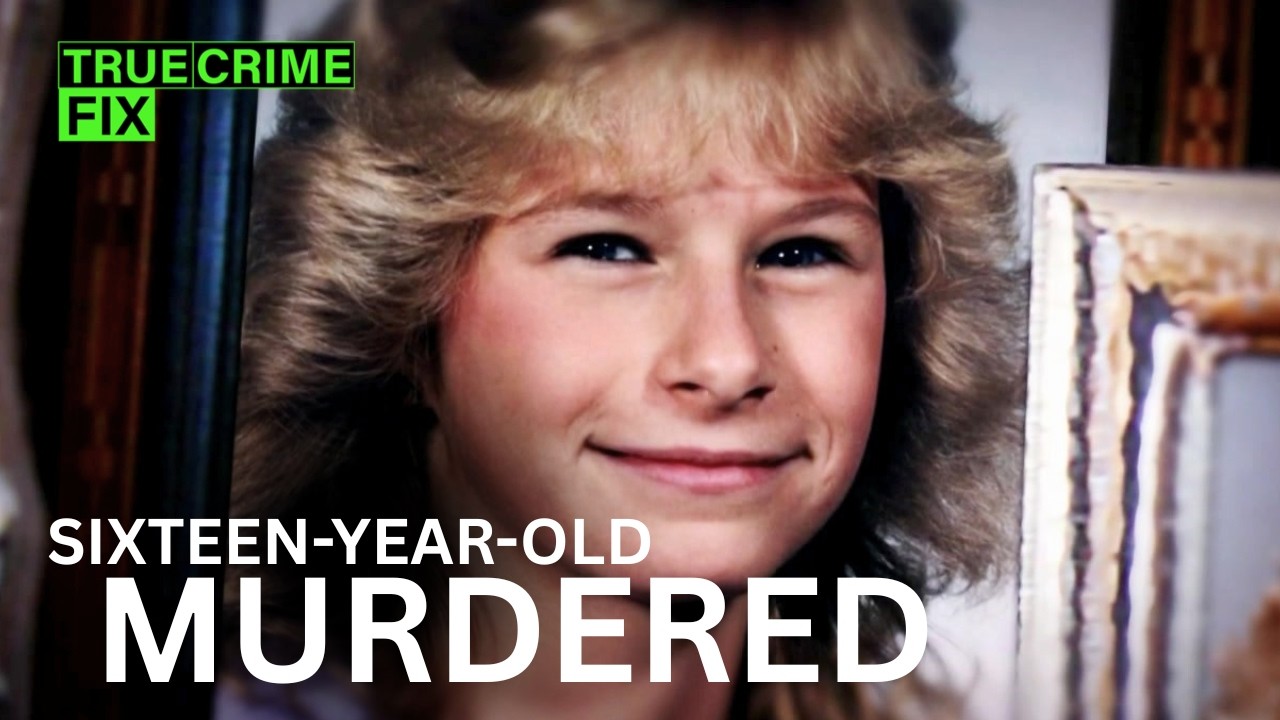
Inside, the victim lay face down on the floor, blood covering her face, killed by multiple gunshot wounds. She was Terresa Burns, a high school student who dreamed of becoming a teacher. Her older brother, Steve Burns, had come home from work at around 5:15 that afternoon, found her body, and called police. Paramedics arrived, but it was too late.
Terresa had been dead for hours. The scene told a troubling story. There was no sign of forced entry, meaning Terresa had either let her killer inside or the door had been left unlocked. She was partially undressed, her clothing disturbed, suggesting some kind of sexual assault that may have been interrupted.
And she had been shot four times in the face, a level of violence that felt personal. A single shot to the head would have been enough for a stranger. This was overkill, and Whitfield believed the killer knew her. The only hard physical evidence at the scene was an ejector rod from a small handgun, a part that had fallen off the weapon while it was being fired.
It was an unusual clue, and Whitfield kept it secret from the media. Whoever lost that part might panic and discard the gun, and he did not want to warn them. Because most murder victims are killed by someone they know, investigators started with the family. Steve Burns had answered the phone in the kitchen and had to step past his sister’s body to do so, a detail that sparked debate within the department.
He was given a polygraph test, and he failed it. Terrified and already mourning his sister, Steve insisted he had been at work and at lunch with his girlfriend that day. His alibi checked out, and detectives concluded that his failed polygraph was a result of the trauma he had just endured, not guilt. He was cleared.
Steve pointed police toward Terresa’s boyfriend, Shawn. The couple had quarreled days before the murder, and Shawn had used harsh words toward Terresa, drawing a protective rebuke from Steve. But Shawn had an alibi too. He had been suspended from school that day and was at home with his mother.
He told police that when Terresa called him around 11:00 that morning, someone rang her doorbell. He warned her not to let the person in, and Terresa returned to the phone, saying the visitor needed to use the phone. The two talked a few more minutes, and then they hung up as she prepared to return to school. As they were ending the call, the doorbell rang again.
It was the last time anyone ever spoke to Terresa Burns. Shawn’s story was credible, but a neighbor later confirmed seeing a young man approach the front door at around the same time. The description was frustratingly generic: medium build, dark hair, late teens or early twenties. A sketch was released to the public, but it could have matched almost anyone.
The family did not recognize the face, and the lead went nowhere. One month after the murder, a man named Les Snyder turned a firearm into the Mishawaka Police Department. He said he had found it in the bushes near his home. When Whitfield examined the weapon, an RG10 revolver, he noticed it was missing its ejector rod.
It was the same type of cheap, poorly made gun believed to have been used in the murder. Even more suspicious, the weapon showed no signs of rust or corrosion, which meant it had not been left outside for long. Snyder had not told the whole truth, and when pressed, he admitted that his wife had found the gun hidden under the mattress of his 17-year-old stepson, Phil Jeans. Phil Jeans was a known troublemaker, a fighter and a bully with a juvenile record.
He was also, investigators discovered, dating Terresa Burns’s best friend and had been to Terresa’s house before. When police first interviewed him, he came in with his parents, cocky and arrogant, and told a story that placed him in Fort Wayne, about 90 miles away, at the time of the murder. But his alibi collapsed. He had quit his job in Fort Wayne a week before the killing and had returned to Mishawaka.
His brother confirmed it. Pressed further, Jeans implicated his friend, James Lewis. The two were inseparable, sleeping over at each other’s houses and passing the gun back and forth. Lewis admitted knowing about the weapon and said he had fired it once for target practice at a gravel pit.
He had a new job at the time of the murder, but the dates of his alibi were off by a day or two, and when confronted, he grew upset, insisted he had not killed Terresa Burns, and walked out of the interview. A rumor emerged that Lewis had told his girlfriend he would kill her just like he had killed Terresa. That threat shifted suspicion toward him, but without a definite answer, both young men remained on the table. Police sent the RG10 to the FBI lab for ballistics testing.
The results came back inconclusive. The bullets recovered from Terresa’s body did not have enough individual markings to confirm they had been fired from that specific weapon. It was a crushing blow. The gun Whitfield believed he had was suddenly useless as evidence.
For years, the investigation stalled. Whitfield worked the case for 14 straight years before retiring, always telling the homicide unit that the case was close, that they just needed one break. But no break came. The public moved on, and the family was left without answers.
In 2010, the case was reopened and assigned to Commander Tim Corbett of the Mishawaka Police Department. Cold case work meant starting over, and Corbett knew that in a case two decades old, the truth was easier to remember than a lie. He re-interviewed James Lewis, now an adult living a quiet life. Lewis insisted his old threat had been nothing more than an angry comment made in the heat of an argument.
Corbett believed he was telling the truth. Phil Jeans was a different story. Over the years, he had compiled an extensive criminal record with convictions for theft, domestic violence, and battery. And he had a big mouth.
Over the decades, people who knew him came forward. One person said Jeans had been planning to sell the weapon within days of the murder and had hinted that the gun was tied to a crime. Several women who had known him reported that he had threatened them, telling at least one girlfriend that he would kill her just like he had killed Terresa. He did not say someone else had killed Terresa.
He said I will kill you like I did Teresa. It was always I. The evidence pointed clearly toward Phil Jeans. In 2012, the ejector rod, the firearm, and four bullet fragments were submitted for retesting with modern technology.
This time, the examiner concluded that the bullet fragments had been fired from the RG10. Mishawaka police obtained an arrest warrant. Tim Corbett called Steve Burns and asked if he wanted to be there when they took Jeans into custody. Steve watched as the man who had killed his sister was finally put in handcuffs.
It was a sight to behold, he said, but it had taken far too long. At trial, the prosecution laid out the final hours of Terresa Burns’s life. She had gone home from school to change clothes, caught the city bus, and arrived around 10:30 in the morning. She called her boyfriend Shawn, and while they talked, Phil Jeans came to the front door.
Once he was inside, the prosecution argued, his plan was assault. Terresa fought back, and Jeans pulled the trigger four times. After a five-day trial, Phil Jeans was convicted of murder and sentenced to the maximum penalty: 60 years in prison. For the Burns family, it was a bittersweet victory.
Both of Terresa’s parents had died before seeing justice done. Steve Burns took comfort in knowing his mother’s wish had been fulfilled: that her daughter would not be forgotten. Twenty-seven years after Terresa Burns was killed, her killer was finally held accountable, and the family could finally tell her story.