In 1976, a single grainy photograph triggered one of the monarchy's most damaging scandals of the decade. It wasn't a picture of a crime or a war, but of the queen's sister, Princess Margaret, sitting on a beach with a gardener 17 years her junior. That one image didn't just end a royal marriage.
It destroyed a man's life.
Branded the toy boy and blamed for the scandalous downfall of a princess, Roddy Llewellyn became the most hated man in Britain. But behind the headlines lay a heartbreaking truth. He wasn't the villain who broke her.
He was the only one trying to keep her alive.
He was not a predator or a seducer in the classic mold. He was the most unlikely revolutionary in royal history, a man of soft edges in a world of hard surfaces. A gardener who preferred the silence of plants to the noise of society, he was a drifter searching for purpose.
When he walked into the life of Princess Margaret, he found a woman slowly dying of loneliness in a room full of people.
By 1973, Britain was buckling under strikes and shortages. The country was gray, angry, and exhausted. Inside the gilded walls of Kensington Palace, the atmosphere was even more toxic.
Apartment 1A, the residence of Princess Margaret and her husband Anthony Armstrong-Jones, Lord Snowdon, had devolved into a domestic war zone.
Princess Margaret, once the most desirable woman in the world, was now 43 and staring into an abyss. The porcelain beauty that had captivated the world in the 1950s was ravaged by a relentless diet of whiskey and cigarettes. She was haunted by the ghost of Peter Townsend, the love she had been forced to give up for duty.
She felt sidelined by the monarchy, possessing no constitutional role other than to be the queen's sister.
The true source of her misery lay closer to home. Her marriage to Lord Snowdon, which began in 1960 as a glamorous rebellion, had become a prison. Snowdon was a genius photographer with immense charm, but he possessed a streak of cruelty breathtaking in its precision.
He knew exactly where Margaret was vulnerable and targeted those weak spots with the accuracy of a sniper.
He was openly contemptuous of her intellect and played mind games designed to humiliate her. He would arrive late for dinner parties, leaving her frantic with anxiety, or disappear for days without explanation. He openly flaunted his affairs.
His most devastating weapon was his written words. He would leave nasty, biting notes for her to find. The most infamous, found in her glove box, read simply, "You look like a Jewish manicurist and I hate you."
By 1973, Margaret was a woman flayed raw. She was drinking heavily to numb the pain, and her mood swings were violent. She was a princess in a tower, but the dragon guarding her was her own husband.
It was into this psychological minefield that Roddy Llewellyn wandered almost by accident. Born in 1947, he was 17 years Margaret's junior. He came from the fringes of the aristocracy.
His father was Sir Harry Llewellyn, an Olympic gold medalist in showjumping. But Roddy had inherited none of his father's competitive drive. He was the younger son, the sensitive one, the disappointment.
He had drifted through exclusive schools and dropped out of attempts at careers. By his mid-20s, he was living a hand-to-mouth existence in a commune in Wiltshire and later a squat in London. He was a child of the counterculture, a gentle hippie who believed in peace, love, and the healing power of nature.
He was undeniably handsome, with a slender frame, floppy hair, and large, soulful eyes. His passion was gardening, the intimate act of putting hands in the soil and making things grow.
The collision of these two worlds occurred in the autumn of 1973. Through their shared social circle, including friend Colin Tennant, Margaret and Roddy met. Tennant, who owned the island of Mustique, knew Margaret was miserable.
He invited Roddy for the weekend to balance the numbers.
When they met, something unexpected happened. It wasn't the lightning bolt of lust the tabloids would later invent. It was something quieter and far more dangerous.
It was recognition. Margaret saw a young man devoid of agenda. In a life filled with courtiers wanting favors and a husband wanting to hurt her, Roddy wanted nothing.
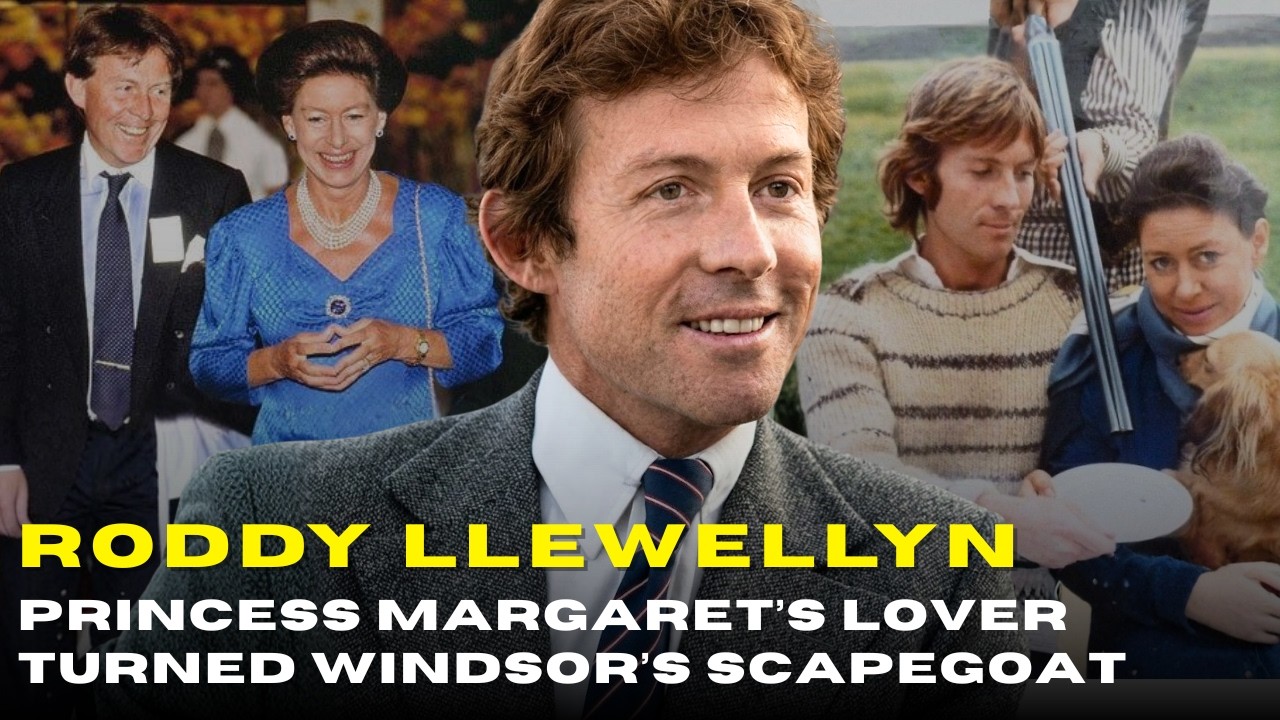
Roddy saw a woman trembling behind a mask of makeup and jewels, desperate to be treated with basic human kindness.
The defining moment came over a piano. Margaret, a talented pianist, sat down to play. Usually, her performances were endured out of politeness.
But Roddy, genuinely moved, sat beside her. He listened. He sang along.
He looked at her with adoring eyes. For the first time in years, Margaret felt seen.
They began to meet in London, a courtship conducted in the shadows. Roddy would visit Apartment 1A, slipping past police sentries. While Snowdon was out with mistresses, Roddy would listen to her pour out her grievances.
He was the anti-Snowdon. Where Tony was sharp, Roddy was soft. Where Tony was critical, Roddy was complimentary.
As the relationship deepened into 1974, it changed Roddy. He became the keeper of royal secrets. He witnessed the drinking, the tears, and the despair.
He felt a profound protective instinct. He wasn't using her for money. He stayed because he felt she needed him to survive.
Lord Snowdon noticed the change in his wife. He didn't intervene. He watched with cold, calculating satisfaction.
He knew that if Margaret fell in love with this boy, she would destroy her own reputation. He was handing her the rope, and Roddy Llewellyn was the knot.
They needed a sanctuary. Margaret had a piece of land in the Caribbean where the rules of the United Kingdom did not apply. It was time to go to Mustique.
In the mid-1970s, Mustique was wild and raw, governed by the eccentric whims of Colin Tennant. For Margaret, it was the only place on earth where she felt truly at home. For Roddy, it was about to become the crucible that would define the rest of his life.
They stayed at Les Jolies Eaux, the villa Margaret had built on a headland given to her by Tennant as a wedding present. The rhythm of life slowed to a languid crawl. Roddy did not treat the island as a holiday resort.
He treated it as a project. He took up his tools, working shirtless in the Caribbean sun, and began to cultivate a garden.
This act of gardening was profound for Margaret. Watching Roddy create something was deeply healing. He planted hibiscus, bougainvillea, and oleander.
He created a physical sanctuary around her, a wall of beauty to block out the ugly reality of her life in England.
The dynamic was complex. It was a relationship of mutual rescue that bordered on codependency. Roddy found purpose in being Margaret's necessary man.
He mixed her drinks, organized beach picnics, and was the buffer between Margaret and the world. He was trapped in a golden cage, dependent on her for his food and shelter. Yet he stayed because he loved her and saw the vulnerable, frightened woman beneath the imperious facade.
Back in London, the silence was ending. By 1975, Britain was in a foul mood. Inflation was rampant, and the civil list became a political target.
Rumors of Princess Margaret's decadence were poison. The press knew about the young man in the background, but they needed proof.
Lord Snowdon remained in London, portraying himself as the long-suffering husband. He knew exactly where Margaret was and who she was with. He did not file for divorce.
He waited. He needed her to make the mistake.
The mistake happened in February 1976. A tip-off was sold, and a freelance photographer was dispatched to the Caribbean. Roddy and Margaret were oblivious.

They spent their days at Basil's Bar, a bamboo shack on the sand. On a fateful afternoon, they sat together near the water. Margaret was wearing a swimsuit.
Roddy was in his Union Jack trunks. They were simply sitting, enjoying the comfort of each other's presence.
Out at sea, a photographer raised a camera with a powerful telephoto lens. He framed the shot. The image was grainy and unflattering, but it was proof.
It was the smoking gun Fleet Street had been hunting for three years.
On Sunday, February 1st, 1976, the News of the World hit the doormats of the nation with a front page that screamed scandal. There in grainy black and white was the queen's sister lounging in the Caribbean sun with a man who was clearly not her husband. In the gray, economically depressed Britain of the mid-70s, the image of a privileged royal cavorting in paradise with a hippie lover was incendiary.
For Roddy, the shock arrived a few days later. The sanctuary was breached. He realized his anonymity was gone forever.
He was no longer Roddy the gardener. He was Roddy the toy boy.
Snowden was reportedly devastated when he saw the paper, a performance of Oscar-worthy caliber. In reality, he was liberated. The photograph gave him the moral high ground.
He moved swiftly, and his lawyers were engaged.
On March 19th, 1976, Buckingham Palace issued a cold, historic statement: "Her Royal Highness, the Princess Margaret, Countess of Snowdon, and the Earl of Snowdon have agreed to live apart." Divorce was inevitable.
Roddy returned to London to find himself the most hunted man in Britain. Reporters camped outside his home. They painted him as a parasite and a gold digger.
The class snobbery of the British press was unleashed in full force.
Margaret, publicly humiliated, clung to Roddy like a drowning woman to a raft. He was now her only ally. He was living in a royal palace, but he was a prisoner.
He couldn't go out without being mobbed. He was financially dependent on a woman facing her own financial crisis.
In 1978, Roddy made a desperate, ill-advised attempt to carve out his own identity. He launched a pop music career, releasing an album simply titled Roddy. The music was unfortunate.
He wasn't a singer. The press reaction was savage. They didn't just critique the music.
They flayed the man.
Despite the mockery, they stayed together. Amidst the chaos, they offered each other the one thing nobody else did: kindness. Roddy was the only person who could handle Margaret's bad days.
The stress of the divorce, finalized in 1978, made Margaret the first senior royal to divorce since Henry VIII. She smoked more. She drank more.
Roddy became her nurse, sitting by her bedside for hours, tolerating her tantrums.
By the late 1970s, the cracks were becoming canyons. Roddy was in his early 30s. He wanted a wife, children, and a career that didn't involve being Mr.
Margaret. Margaret saw him looking at younger women. She knew she was holding him back.
In 1980, Roddy met Tanya Soskin. She was young, creative, and age-appropriate. Roddy fell in love.
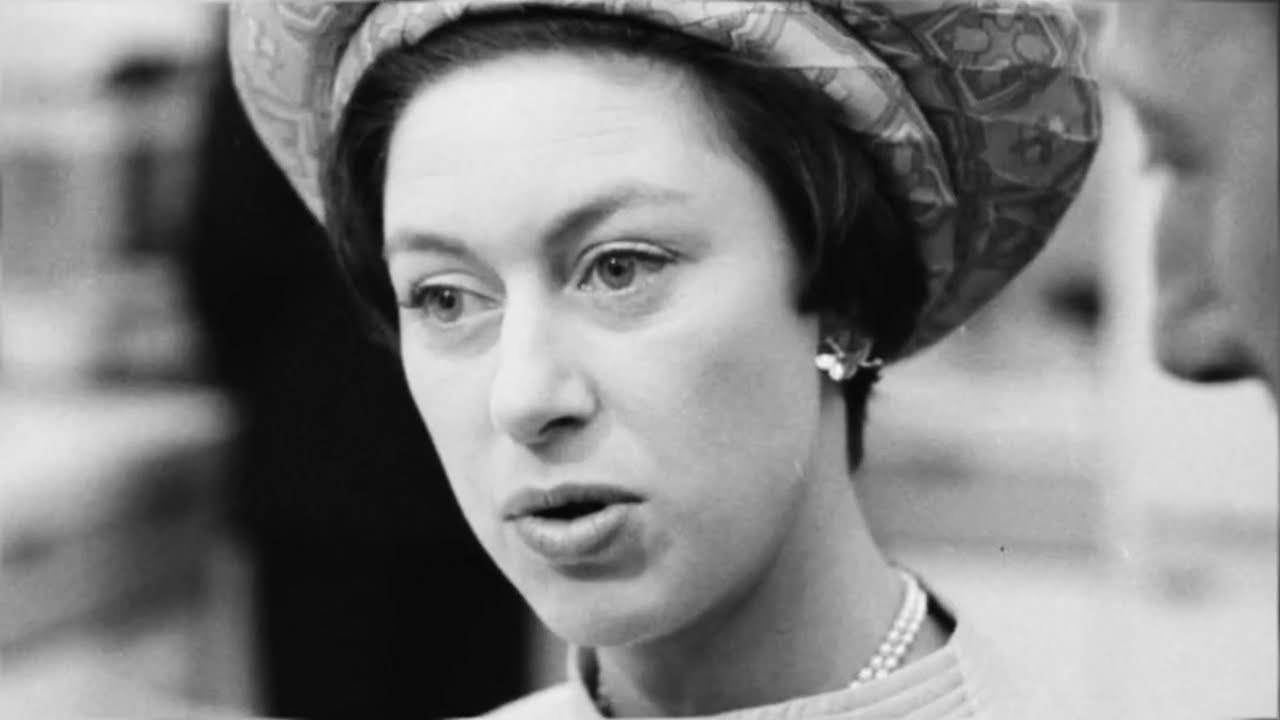
When he told Margaret he wanted to marry Tanya, her reaction defied every expectation. She did not scream. She looked at him and saw the truth.
"I am very happy for you, Roddy," she said, and she meant it. She released him from the tower.
On July 11th, 1981, just weeks before Charles and Diana's spectacle, Roddy and Tanya were married. They moved to the countryside and had three daughters. Roddy reclaimed his identity.
He launched a successful landscape gardening business, writing books and columns about plants.
Meanwhile, back in Kensington Palace, the lights were slowly dimming for Margaret. Without Roddy's stabilizing presence, her demons returned. She smoked 60 cigarettes a day.
In 1985, she underwent surgery to remove part of her left lung.
Roddy did not ghost her. He and Tanya became regular visitors to Kensington Palace. The ex-lover, his new wife, and the princess would have tea together.
Roddy was offered fortunes to tell his story. He never did. In an era where everyone sold their royal secrets, Roddy Llewellyn kept his mouth shut.
In 1998, Margaret suffered a mild stroke. Then, while holidaying in Mustique, she stepped into a scalding bath and severely burned her feet. The injury left her wheelchair-bound and in constant pain.
Roddy visited her. When he walked into the room, the staff noticed the princess would brighten.
In February 2002, the phone rang in Roddy Llewellyn's home. Princess Margaret was dead at the age of 71. For the world, it was the death of a historical figure.
For Roddy, it was the final severance of his youth.
On February 15th, 2002, Roddy attended her funeral at St. George's Chapel, Windsor Castle. He sat toward the back, away from the immediate royal circle.
He was 54 years old, his once wild hair silvered. He was mourning not a princess, but a person.
In the years that followed, publishers approached him with blank checks. They wanted the dirt. Roddy refused them all.
His silence forced the public to re-evaluate the story. If he wasn't a gold digger, then what was he? The answer was uncomfortable: he was exactly what he appeared to be, a decent man.
Roddy's legacy is woven into the fabric of the modern monarchy. By breaking Margaret's marriage, he broke the taboo of royal divorce. When Prince Charles divorced Diana, when Prince Andrew divorced Sarah Ferguson, they were all walking through the door that Roddy and Margaret had kicked open in 1976.
Most outsiders who enter the Windsor orbit end up broken or embittered. Peter Townsend died in exile. Diana died chased by paparazzi.
Roddy Llewellyn survived. He built a life of substance. He remained happily married to Tanya and watched his daughters grow up.
Shortly after Margaret's death, Roddy was asked if he had any regrets. He paused for a long time. "No," he said softly.
"I regret nothing. She was a wonderful woman and I loved her."
Today, that infamous photograph from 1976 looks different. It doesn't look scandalous anymore. It looks nostalgic.
You see a woman who is relaxed, a smile playing on her lips, and a young man looking at her with an expression of pure, uncomplicated adoration.
History will remember Roddy Llewellyn as the toy boy. But those who know the truth remember him as something far more important. He was the gardener.
He found a wilting, neglected rose in the hothouse of Kensington Palace and, for eight turbulent years, gave it enough light to bloom one last time. He didn't break the princess. He held her together for as long as he could.
And when he could no longer hold her, he let her go with grace and kept her secrets until the end.