The official record of Princess Margaret’s separation from Lord Snowdon is a collection of dry dates and financial details. It shows a villa completed in 1966, a lady-in-waiting appointed in 1971, and a treasury deal in 1991 worth £219,000 a year. The archive holds the scaffolding of a life, but none of the private turmoil that might explain it.
Princess Margaret Rose was born on August 21, 1930, the younger daughter of the Duke and Duchess of York. Thirty years later, in 1960, she married society photographer Anthony Armstrong-Jones. Their honeymoon took them to the Caribbean island of Mustique, where they were guests of Colin Tennant.
This visit planted the seed for a permanent retreat.
By 1966, her villa on the island, named Les Jolie Eaux and designed by stage designer Oliver Messel, was completed. Her private world was taking shape. In 1971, Anne Tennant, later Baroness Glenconner, began her long service as Princess Margaret’s lady-in-waiting.
These are the fixed points on the map. The marriage, the island home, the trusted companion. Yet the timeline holds only the public architecture while personal details remain private.
On March 20, 1976, newspapers reported a separation. Two years later, in May of 1978, she filed for divorce. The reasons remain outside the official record.
Even the financial scaffolding is documented. In 1991, her civil list annuity ended, replaced by a private treasury deal providing £219,000 a year from the Queen’s Privy Purse.
These are the bones of the story. Dates, places, names, and sums. They frame a life but do not explain it.
The private turmoil, the alleged arguments, the whispered indiscretions, all of that exists in the space between these verified facts.
Far from the pressures of London and the watchful eye of the press, Princess Margaret found a sanctuary on the private island of Mustique. It was here, on a plot of land, that a villa named Les Jolie Eaux was built for her. Completed in 1966, it was designed by the renowned British stage designer Oliver Messel.
This wasn’t a palace, but a personal retreat, a place of sun and sea away from royal protocol. The island itself was developed by Colin Tennant, Lord Glenconner, who with his wife Anne welcomed the princess from her very first visit. Anne Glenconner would later become Margaret’s devoted lady-in-waiting, serving from 1971 until the princess’s death.
The villa with its distinctive design became synonymous with Margaret’s private life. Today, that same privacy commands a steep price. As of recent years, Les Jolie Eaux can be rented for between $35,000 and $50,000 per week.
This was the backdrop for many chapters of her story, a luxurious escape that framed both her joyous moments and ultimately her personal struggles. The island offered freedom, but even in paradise, the complexities of her life would follow.
Amidst the island’s growing allure, a key figure entered Princess Margaret’s life in 1971. Anne Tennant, later Baroness Glenconner, began her service as an extra lady-in-waiting. She was the wife of Colin Tennant, Lord Glenconner, the very man who had developed Mustique and welcomed the princess years before.
This appointment wove the Glenconners even tighter into the fabric of Margaret’s world. Anne Glenconner would hold this intimate role for over three decades until the princess’s death in 2002, witnessing countless private moments on and off the island.
Decades later, in 2019, she would publish a memoir titled Lady in Waiting, offering a personal firsthand account from within the royal circle. Her perspective is considered a vital source, detailing the rhythms of Margaret’s life at Les Jolie Eaux.
While the island represented a luxurious escape, this deep connection also meant Margaret’s complexities were observed up close. The lady-in-waiting was present for both the joyous gatherings and the strains that would later become public.
By March of 1976, the carefully maintained facade of Princess Margaret’s marriage was gone. On March 20th, the New York Times reported the couple had formally agreed to separate.
A newspaper photograph from that time captured the princess appearing strained as she went to a film in London’s Mayfair section, accompanied by her lady-in-waiting and a middle-aged man. She made no comment to the press.
This public acknowledgement of a private rupture followed years of mounting strain. Biographical accounts would later describe Lord Snowdon as a relentless playboy who often humiliated his wife, though these are presented as claims, not verified facts.
The separation was a cold, official step, but the true unraveling had been a long and gradual process played out in private drawing rooms and against the deceptively tranquil backdrop of their lives.
A year after the separation made headlines, a different royal presence arrived on Mustique. In 1977, Queen Elizabeth II and Prince Philip sailed in aboard the royal yacht Britannia. They were met on the island by Princess Margaret and her friends, Lord and Lady Glenconner.
This was not a private holiday. It was a state visit, a deliberate and very public display of continued royal support for the princess in her new singular life. The Queen’s arrival on the island served as a powerful silent endorsement, a reminder that Margaret remained firmly within the family fold despite the personal turmoil.
The image of the two sisters together against the backdrop of the villa presented a united front. It subtly countered the narrative of a scandalous exile with one of enduring, if complicated, royal ties.
On May 11, 1978, Princess Margaret took the decisive legal step. She filed for divorce from Lord Snowdon. The formal separation announced two years prior was now moving toward its final conclusion.
This was not a quiet private matter. The news was reported in publications like the New York Times, confirming the breakdown of an 18-year marriage to the world.
Biographer Anne de Courcy would later compile a portrait of Lord Snowdon through extensive interviews, but the precise personal reasons for the split remained private. The divorce filing was a matter of public record, a stark administrative finality to a relationship that had once captivated the public.
Princess Margaret’s financial standing was also in transition. By 1991, her civil list annuity would end, replaced by a private annual allowance from the Queen’s Privy Purse, reported to be roughly £219,000.
But in May of 1978, the focus was on the dissolution of a royal marriage, a story that would fuel speculation and biography for decades to come.
A key source for that history would come decades later from biographer Anne de Courcy. Her work, a biography of Lord Snowdon, was built on a foundation of over 90 taped interviews with friends, family, and associates, a collection often referred to as the Snowdon tapes.
This extensive project promised a deep, intimate look into a fractured marriage from those who witnessed it. While the specific contents of those tapes are not public, their existence alone marks them as a primary resource for understanding the private tensions behind a very public separation.
The biography that resulted paints a complex portrait, with promotional material describing Snowdon as both a relentless playboy who humiliated Margaret and a man compassionate to the causes he cared about. These characterizations drawn from those interviews are presented as claims from those close to him, not as verified facts.

The stark contrast between the official royal facade and the messy human conflicts behind it extended into the realm of public finance. Princess Margaret’s personal life was not the only subject of intense public and political scrutiny. Her cost to the nation was a perennial topic of debate.
For decades, her primary public income was her annuity from the civil list, the state funding for the royal family. This changed in 1991 as part of wider reforms to the royal finances. Her civil list payments were terminated.
In their place, a new 10-year deal was struck between the Treasury and the Queen. From that point until her death, Princess Margaret received an annual allowance of roughly £219,000 directly from the Privy Purse, the monarch’s private funds.
This substantial sum, however, did little to silence her critics. She was famously labeled by the Labour MP Willie Hamilton as “that expensive kept woman.” A later analysis would estimate that the cost of her staff and household over her lifetime amounted to at least £8.
5 million of public money.
The debate over her finances became inseparable from the narrative of her life. A constant undercurrent to the personal dramas played out in the press and the palaces. It was a reminder that for a royal, even private turmoil exists within a framework of public accountability and expenditure.
But what the official records do not show is a clear single reason for the separation. The announcement on March 20, 1976 was a stark public fact. Yet the private catalyst remains absent from the documented timeline.
There is no mention in the evidence of a specific argument, a final betrayal, or a set of photographs from a beach. The archives confirm the legal steps. The separation, then the divorce filing by Princess Margaret in May of 1978, but not the emotional ones.
The gap is where speculation thrives. Biographers would later fill it with claims of a strained marriage, of a husband described as a relentless playboy, and of private humiliations. But the direct cause is not there in the memos or the headlines.
It exists instead in the space between the formal date and the personal despair, between the public statement and the private pain that must have preceded it.
And so we arrive at the central sensational claim: the 1976 beach photos that supposedly ended a marriage. Yet in many examined records, these photographs are nowhere to be found.
No newspaper archive, no biography, no memoir from her closest confidant describes them. The evidence confirms the separation was announced on March 20, 1976. It confirms the divorce filing came in May of 1978, but the catalyst remains shrouded in rumor.
The narrative of a young gardener, a specific affair, a damning snapshot. These are gaps the archive does not fill.
What exists are the hard dates, the financial figures, and the characterizations from others. She was called “that expensive kept woman” in Parliament. Her villa Les Jolie Eaux, designed by Oliver Messel, now rents for tens of thousands a week.
Her lady-in-waiting, Anne Glenconner, served from 1971 until the princess’s death, but her published memoirs do not mention these photos. Lord Snowdon’s biographer, Anne de Courcy, conducted over 90 taped interviews. Yet the resulting portrait describes a relentless playboy and a compassionate man, not a specific scandalous incident.
The story outran the facts, leaving history with a confirmed fracture, but an unconfirmed wound.

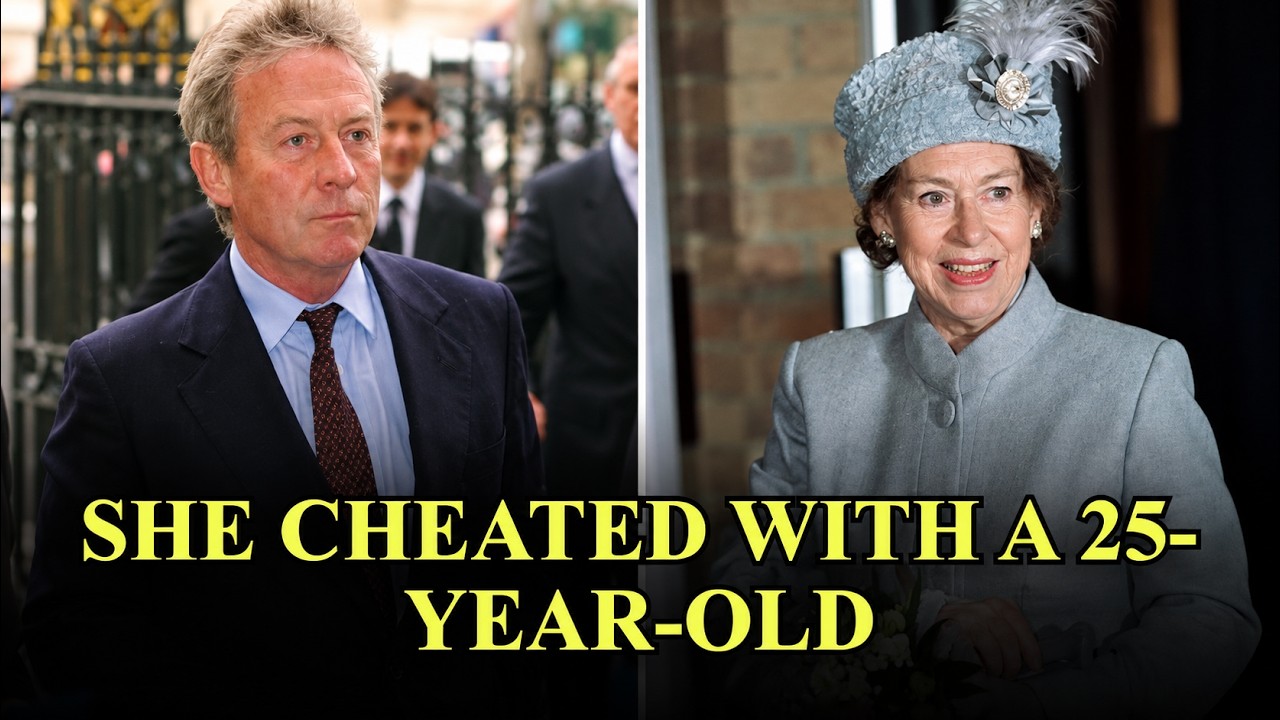
But the most persistent rumor of all is the one that has become the headline itself: the story of the gardener. It is a tale of a secret affair, whispered for decades as the true explosive reason for the split.
Yet in the exhaustive search through memoirs, biographies and newspaper archives, this figure is utterly absent. No named gardener, no age given as 25, no testimony from staff or friends corroborates the claim.
The lady-in-waiting who served for decades never mentions it. The biography based on over 90 taped interviews is silent on it. The story of the gardener exists solely in the realm of gossip, a phantom character conjured to fill the vacuum of a public explanation.
The separation is a matter of record. The cause is a matter of speculation, a ghost in the historical machine, absent from every verified document we have.
What remains are the hard dates: the separation announced in March of 1976, and the divorce filed by Princess Margaret in May of 1978. The why, however, is lost to time, obscured by legend, and overshadowed by a villa on a Caribbean island that still stands, where a life once unraveled away from the cameras.
So, we are left with a headline, a story that has circulated for decades: that 1976 beach photographs captured a betrayal, an affair with a young gardener, and that this single event shattered a royal marriage.
But the archives tell a different, more complicated, and ultimately incomplete story. The verified record contains no mention of these photos. No evidence item references a 25-year-old gardener.
The specific cause of the separation announced in March of 1976 is a gap in the historical record.
What we have are the hard facts of public life. The separation was reported by the New York Times that spring. Princess Margaret would file for divorce two years later in May of 1978.
Her world was one of Mustique and her villa Les Jolie Eaux, designed by Oliver Messel and completed in 1966. Her friend and lady-in-waiting Anne Glenconner was a constant presence from 1971 onward.
Biographer Anne de Courcy would later compile over 90 taped interviews, the so-called Snowden tapes, painting a portrait of Lord Snowden as both a relentless playboy and a compassionate man. Though these are biographical claims, the narrative of a single scandalous photograph acting as a detonator is compelling, but it is not proven.
It exists in the realm of rumor, overshadowed by the solid rentable reality of that Caribbean villa, which still stands today, a silent witness to a life that unraveled largely away from the cameras.
The why remains obscured, a private matter lost between the lines of official dates and public speculation. The marriage ended not with a single photographed moment, but in a slow accumulation of unrecorded glances, unheard arguments, and unshared silences.
We have the dates, the properties, the financial arrangements. We have the public scorn. But the personal catalyst for the end of her marriage belongs only to the two people who were there.
In the end, history can only map the coastline of a life. The interior landscape remains largely unknowable. A marriage ended.
The rest is history and sensation. And the two are not the same.