In the winter of 1985, a woman died in Madrid at the age of 88. The document she left behind was designed to give her only son and only daughter nothing at all. There was no reduced provision, no symbolic bequest, no conditional trust.
Her name was Margaret Rockefeller Strong, and she was the last surviving granddaughter of John D. Rockefeller, the richest man America had ever produced.
Her grandfather had placed the bulk of his fortune, estimated at $25 million, into a trust for her and her two children. Fifty-one years after he signed that judgment in 1934, his granddaughter signed a will that gave her wealth to a Chilean ballet designer 38 years her junior. He had been her ballet teacher and was also the nephew of her first husband.
Her son and daughter did what disinherited children in great fortunes do. They entered Manhattan Surrogate’s Court and told the judge that their elderly, frail, wheelchair-bound mother had been deceived. What emerged under oath was worse than a simple family dispute over money.
Her former lawyer took the stand and testified about pressures inside that house, about a $2 million gift, and about who stood beside the old woman when she made decisions.
The matter ended late on a Wednesday with a settlement that split one of the greatest American inheritances exactly in half.
Margaret Rockefeller Strong was born in 1897, the only child of Bessie Rockefeller, John D. Rockefeller’s eldest daughter. The famous name reached her through her mother, and so did the fortune.
Her father, Charles Augustus Strong, was the son of a prominent Baptist minister, a serious philosopher and psychologist who would go on to teach at the University of Chicago, an institution his father-in-law’s money helped build.
Bessie and Charles married in 1889. Their only child arrived eight years later. Margaret was a solitary child in a generation of Rockefellers where relatives were numerous, but the daughters’ branches drifted far from the center, the usual fate of daughters in dynasties organized around a single family name.
Bessie Rockefeller Strong died in 1906 at age 40. Margaret was eight years old. For John D.
Rockefeller, it was the loss of his first child. For Charles Strong, the death led to a decision that would change his daughter’s life completely. He left America permanently, taking his eight-year-old daughter with him and settling in Italy near Florence.
The home he chose was Villa La Balze in Fiesole, on a slope overlooking Florence and the Arno valley. It became the Strong family home, the place where Margaret grew up. Her father was a widowed intellectual who spent hours at his desk, and the villa functioned as his private office.
Margaret grew up surrounded by serious adult conversation conducted in multiple languages, where argument was the currency, not gossip.
She did not grow up among her American cousins, American schools, or the Baptist congregation her grandfather funded. Her frame of reference was the Tuscan hills, which is why her adult life kept returning to European cities.
When she left the hills, she did not go to a girls’ finishing school or a New York social season. She went to Cambridge to study a subject almost no woman of her generation and class was studying. Margaret Rockefeller Strong studied chemistry at Cambridge University.
In the decade after World War I, a wealthy American woman of marriageable age was expected to follow a certain sequence of events, and none of them involved working in a laboratory. Chemistry in the 1920s was not decorative or safe. It required long hours, precise procedures, and physical risk.
In that laboratory, she was doing something her grandfather’s fortune made possible and her father’s environment made thinkable. The Cambridge years also placed her, for the first time, among a group of peers she had chosen herself. She was approaching 30 in 1927, unmarried, educated in a hard science, culturally fluent in two continents, and financially independent of any husband she might choose.
The arrangement she made in the summer of 1927 has puzzled everyone who has looked at her life since. In Paris that August, she married a Chilean nobleman with a borrowed title, a talent for ballet, and no obvious interest in women.
Georges de Cuevas was born in 1885, twelve years before the woman he would marry. He was Chilean, belonged to the ballet world as a patron and impresario, and called himself the Marquis de Piedra Blanca de Guana. Some titles were old and documented, some were claims maintained by confidence and repetition, and the international salons of Paris and London were largely content to accept whichever version arrived with good manners.
He also held a position of real institutional standing, working as a secretary at the Chilean embassy in London.
They married in Paris on August 3, 1927. She was 30, the granddaughter of the richest man in American history, a chemist by training. He was 42, a diplomatic secretary with a self-made marquisate, a man whose real profession lay in ballet.
American money married a European or Latin title. The wife gained a rank that opened doors in status-conscious societies, and the husband gained the means to live as that rank required.
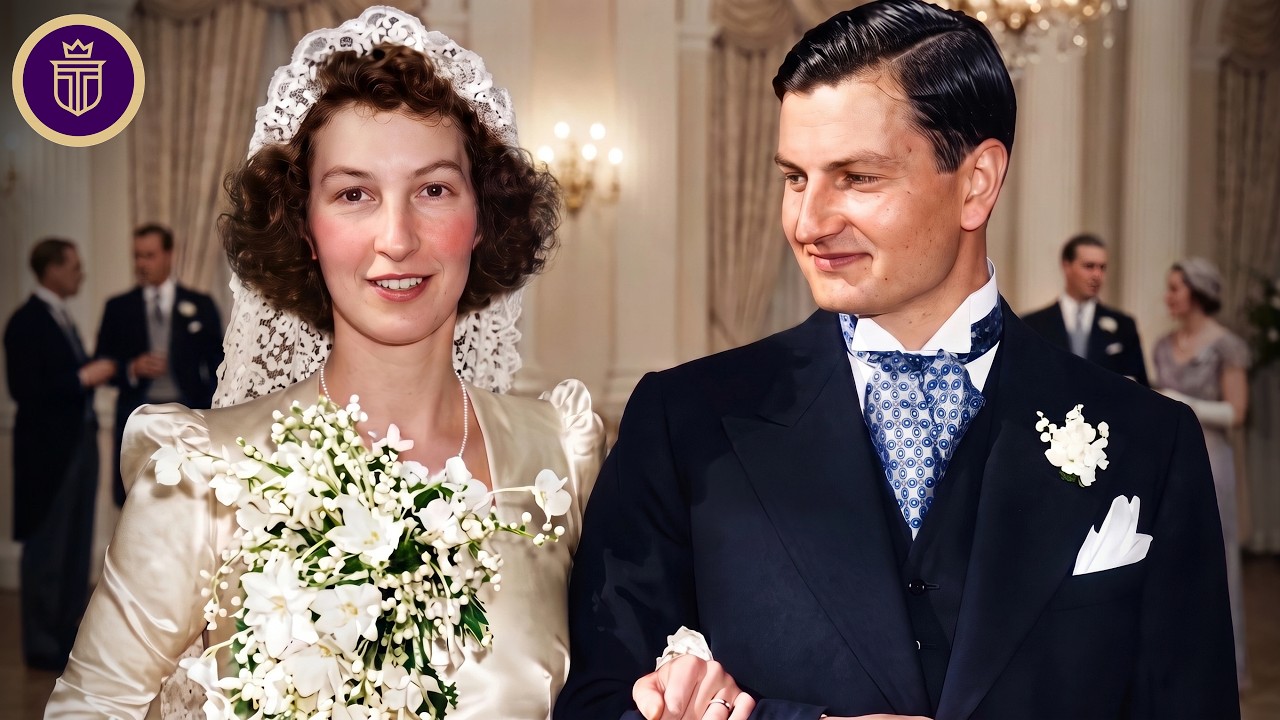
Sources about de Cuevas indicate he was apparently gay. In 1927, that fact could not be stated openly anywhere in Europe or the Americas without consequences. For many men of that generation, marriage was the arrangement that made public life possible, often undertaken with the knowledge and consent of the woman involved.
At 30, Margaret had lived her entire adult life in European cultural and artistic circles, and those circles were not unaware of the private lives of their men.
The marriage gave her a title respected in the societies she belonged to, a husband whose interests were cultural rather than commercial, and standing at the heart of the ballet world at the moment ballet was Europe’s most fashionable art. It also gave her something a woman in her position could not obtain alone: social legitimacy as a married woman rather than an obscure American spinster bearing a famous name. For him, the marriage provided the resources a serious ballet patron needed and a connection to a family known in every country on earth.
Two children were born from this marriage in quick succession at the end of the 1920s. Elizabeth de Cuevas was born in 1929, nicknamed “Bessie” after the grandmother she never met. John de Cuevas was born on October 6, 1930.
The children grew up inside a marriage that operated as a partnership of interests rather than a traditional household. Their father’s life revolved around ballet, and their mother’s fortune made that life possible on a scale few patrons could achieve.
The daughter became a sculptor, a demanding and unglamorous profession for a woman with access to $25 million in trust. She married writer Joel Carmichael in 1960 and had a daughter named Deborah. The son became an educator, spending his career teaching, also not the profession of a man primarily interested in his own money.
Long before her husband’s death, the couple had separated. Separations of this kind among Catholics and titled families in the mid-20th century rarely led to divorce. They often produced an arrangement that looked like a marriage from the outside and operated like a treaty within.
That long separation is the quiet pivot of Margaret’s life. A woman who married at 30 for mutual interests spent her middle years without a companion, keeping the name and status the marriage had given her.
Her children had grown up. Her father died in 1940. The Rockefellers who could have watched over her were thousands of miles away in New York.
The result was a woman of immense wealth, broad culture, and a shrinking circle of people with a claim on her attention. Anyone in the room with her in her final years would have an influence no relative in America could match.
But long before that, her grandfather sat with his lawyers to make sure the money itself could never be taken from her. John D. Rockefeller signed his will on June 2, 1925, in Pocantico Hills, New York.
That date matters more than anything else in the papers. That signature came two years before his granddaughter’s marriage to Georges de Cuevas in Paris. When the original will was written, there was no Chilean marquis in the family, no ballet company depending on Rockefeller money, no title attached to Margaret’s name.
Then on October 3, 1934, in Lakewood, the old man signed a codicil. This codicil directed the bulk of his fortune, estimated at $25 million, into a trust for his granddaughter Margaret and her two children, John and Elizabeth. By 1934, the situation had changed considerably from what his original will anticipated.
Margaret was married to a man who called himself a marquis and whose profession was financing ballet productions. Her children were small, about four and five years old, the only Rockefeller descendants in that branch of the family. Margaret herself lived in Europe, as she had since childhood, beyond the reach of the family’s American advisors.
The trust was the tool a rich man uses when he wants to benefit someone without handing them an unrestricted pile of money. The capital is managed by trustees, distributed on terms, protected from the beneficiary’s decisions and the ambitions of everyone around them. For a granddaughter living abroad, married into an artistic milieu with a hunger for money, with two small children representing the next link in the chain, the trust system was the obvious solution.
Her grandfather was protecting the capital from that marriage. He was also protecting the children by naming them in the same document as their mother, confirming to everyone that the money passed through the family’s bloodline, not into the husband’s projects.
That was the intention as written in 1934, the intention the New York courts were finally asked to consider in the 1980s. A structure can control capital, but it cannot control the emotions of a person, nor the will that person signs at age 80. Everything Margaret owned outright, everything she had accumulated over her life as an heir to Standard Oil wealth, was hers to leave to whomever she chose.
Nearly half a century later, the granddaughter he had named signed a document that undid the part he cared about most: that the money would reach the children.
Georges de Cuevas died in 1961 at age 76, ending a marriage that had lasted 34 years on paper. Margaret was 64, a widow, enormously wealthy, living in Europe rather than among her relatives in New York. Her father had been dead for 21 years.
Her mother died when Margaret was a child. Her grandfather, the architect of the trusts, had been dead for decades. As an only child, she had no siblings to call.
Her children were adults with their own lives in America, a sculptor and an educator, neither in a position to manage the household of an aging mother across the ocean.
She was, in the most literal sense, the last of her line in her generation. The social structure that surrounded her had been built entirely around her marriage and her husband’s ballet interests. When he died, that structure did not disappear so much as pass into other hands.
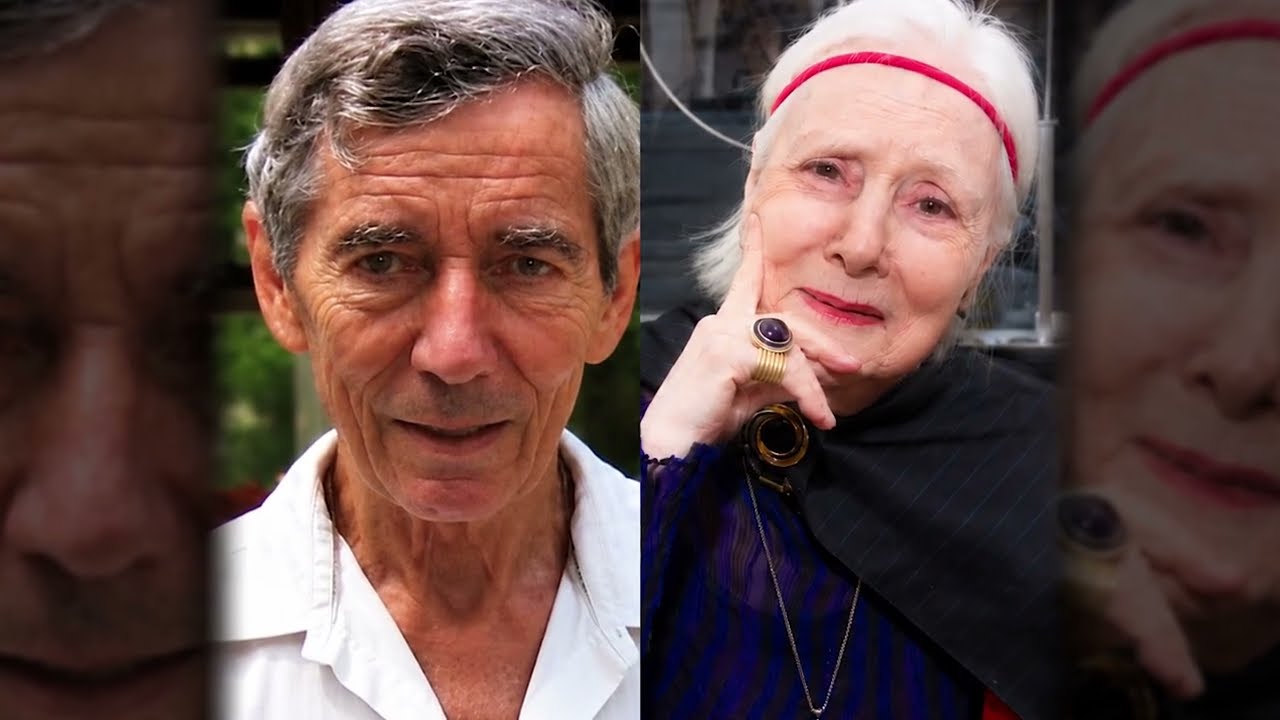
The people who had circulated through the de Cuevas household for 30 years were still there. The money that funded their world was now under the control of one aging widow.
This is the pattern that appears in almost every contested will of a wealthy woman’s final years. It has nothing to do with foolishness. An elderly person’s world shrinks to include only the people who are physically present.
Distant relatives write letters and make phone calls, while the person who brings the medicine, arranges the car, manages the staff, and sits in the room every evening becomes the whole world.
By the mid-1960s, her household was full of such people. Her husband’s family, the de Cuevas relatives from Chile, had been part of her extended household for decades. Among them was a nephew, a young man from the ballet world itself, who had entered her orbit through the husband she married in 1927.
He had a designer’s eye and standing within the companies her money had helped support. He was 38 years younger than she was.
His name was Raimundo de Larrain. He was Chilean, like Georges de Cuevas, and was the older man’s nephew. He belonged to the same ballet world, working as a designer and prominent figure in the companies his uncle’s marriage had helped finance.
Court and press records would later describe him as Margaret’s former ballet teacher. That phrase establishes the nature of the relationship before everything that followed. A ballet teacher is an instructor and mentor to dancers, meaning the two were connected by a working relationship where he taught and she attended.
When she was in her 70s, he was in his 30s. By the time she was dying at 88, he was a man in his 50s looking at a Rockefeller fortune. One source mentions that he had been one of Georges de Cuevas’s close companions before the marriage to Margaret.
Whether accurate or not, it indicates how people saw this story. It explains why Vanity Fair later covered the whole case under the title “Rockefeller and the Ballet Boys.”
Two of her most significant relationships over 88 years were with two men from the same Chilean family, both from the ballet world, one the uncle and one the nephew. The first marriage was a partnership entered into by an independent woman of 30 who knew what she was choosing. The second was undertaken by a woman approaching 80, and that difference is the essence of the legal dispute that followed.
By the early 1970s, de Larrain had access to the household that had lasted for decades, a family connection through his uncle, a professional relationship with Margaret through ballet, and the standing of a man who had been part of her life since he was young. He was considered family by any ordinary description, which is exactly what made it difficult for the Rockefellers to challenge his position.
In 1977, when Margaret Rockefeller Strong was 79, this arrangement ceased to be informal. On April 25, 1977, she married Raimundo de Larrain. She was 79, and her new husband was 41.
This made him the second Chilean from the same family to escort her to a wedding five decades after the first. It also made her, in the eyes of the law, a stepmother to no one, while he became stepfather to a sculptor and an educator, both older than he was.
For Elizabeth and John de Cuevas, the calculations of that day were clear. Their mother was in her 80th year and increasingly frail. The man she married was her former ballet teacher, the nephew of their late father, and 38 years her junior.
The fortune in question came from a trust established by their great-grandfather with the specific purpose of keeping the capital in the family. What they could do about it in 1977 was nothing, and that helplessness sits at the emotional center of this story. An adult son cannot prevent his competent mother from marrying, and a wealthy elderly woman abroad has the right to manage her own affairs until a court decides otherwise.
The marriage lasted from 1977 until her death in December 1985, eight and a half years during which the composition of her household never changed. During those years, her legal affairs were reviewed, and the review was thorough. The document she signed in those final years removed her son and daughter from her will entirely and left everything to the man she married at 79.
When the contents of that will became known, one detail in particular sent her former lawyer to the witness stand in Manhattan. The will disinherited her two children and left her fortune to Raimundo de Larrain. By its sheer audacity, it stands as one of the harshest documents in American inheritance history given the identity of the children.
Elizabeth and John de Cuevas represented the fourth generation of the family, named as beneficiaries in their great-grandfather’s 1934 codicil.
They filed their challenge in Manhattan Surrogate’s Court, where the estates of New York’s wealthy are settled and the public is sometimes allowed to watch. Their argument had a specific shape. They claimed that their mother’s husband, a former ballet manager, had unduly influenced their frail, elderly, wheelchair-bound mother into leaving him her millions.
Undue influence, in the language of the courts, is not the same as fraud. It is the claim that someone in a position of trust and proximity substituted his wishes for those of a person whose capacity to resist had been eroded by age, illness, and dependence.
The testimony that emerged during litigation went directly to this question, and it came from an unexpected direction. Margaret’s former lawyer took the witness stand. He testified that the family had pressured her to make a $2 million gift to her son and daughter.
The claim offered from the witness stand was that pressure had been exerted on the elderly woman by her children in this dispute, to extract money for themselves while she was still alive.
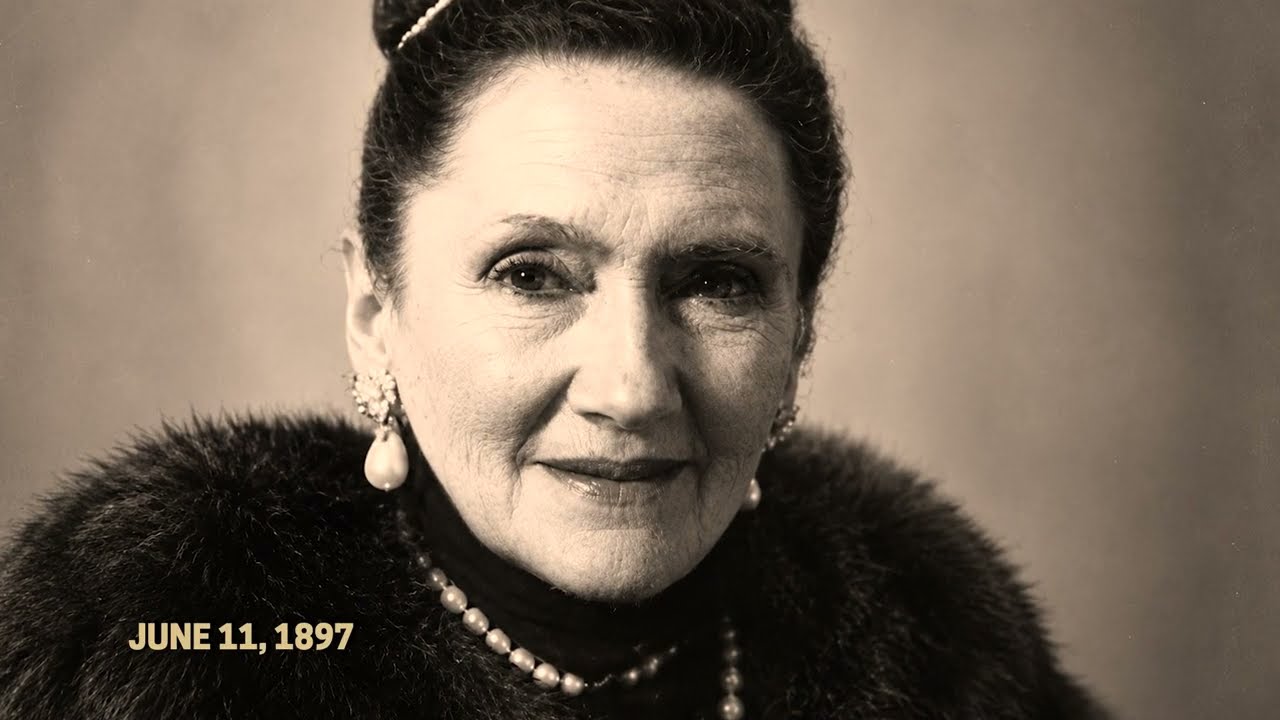
If the jury believed that, the entire construction of the children’s case became unstable, since a woman pressured by her family had an understandable reason to exclude that family from her will. If they did not believe it, or considered the $2 million an attempt by a besieged son and daughter to secure what little they could while their mother was still alive, the testimony pointed in the opposite direction. Every fact here has two faces, and both faces only appear in the years after the person in question is gone.
The $2 million gift is the last concrete thing in the records connecting Margaret to her children financially. Compared to a fortune originating from $25 million in trusts, it was a fraction. It went to a sculptor and an educator who had spent their careers outside the orbit of Rockefeller money.
By the time these arguments were being made in court, the woman at the center of the case had been dead for months. She died far from the Tuscan hills where she grew up, far from the Baptists of Cleveland who produced her mother, far from the two children who would spend the next years arguing over her signature. Her last address was in Madrid, and news of her death reached New York before her son and daughter knew anything about the contents of her will.
Margaret Rockefeller Strong died in Madrid in early December 1985 of a heart attack at age 88. The New York Times described her in her obituary as a prominent philanthropist and the last surviving granddaughter of John D. Rockefeller.
The villa in Fiesole, which her father chose for her as a motherless child in 1906, went to Georgetown University and still stands.
With her death in a Spanish apartment, an entire generation of the Rockefeller family closed, 88 years after she was born to a devout Baptist mother in America. She lived through both world wars, the complete transformation of Standard Oil wealth into trusts and charitable institutions, and the rise of modern celebrity journalism that would spend the following years dissecting her marriages.
Then the will was read, and the family’s private affairs became New York street talk. The press rushed to use the phrase “blue blood battle,” and the case contained everything that phrase promises. On one side stood two descendants of America’s first great industrial dynasty, one a sculptor and one an educator.
On the other side stood a Chilean designer, age 50, holding a will that gave him the Rockefeller fortune.
Consider what such proceedings require of the people who pursue them. For the children to win, they had to prove publicly that their mother was frail, dependent, and susceptible to the man she married, which meant documenting her decline in the records before journalists. Every detail of her weakness strengthened their legal position but diminished the woman they were describing.
The alternative was accepting the will and allowing her fortune to pass entirely to a man they believed had manipulated her.
From the other side, de Larrain had a straightforward story to tell, and the records provided him the material. He had been part of her world since his uncle’s days. He had married her in 1977 with no legal impediment.
He had been beside her in her final years while her children lived in another country. The testimony about the $2 million gift allowed his lawyers to claim that the pressure in this family had never flowed in only one direction.
Neither side could be certain what a New York judge would decide. The children risked a ruling that permanently affirmed their disinheritance. The husband risked losing everything he had been left, losing it in a case that would be published in every newspaper that had ever printed the Rockefeller name.
Both sides were spending money and years on a struggle whose primary witness had been buried in 1985.
So the lawyers did what lawyers do when a case becomes dangerous for everyone at the table: they stopped litigating and started dividing. The dispute over Margaret Rockefeller Strong’s estate was settled out of court. The settlement was reached late on a Wednesday in Manhattan Surrogate’s Court in the undramatic way such matters always end.
Half of the estate went to the children who had challenged the will. The other half went to her last husband. The settlement also included provisions covering real estate and other matters, the usual mechanics of an agreement designed to let both sides leave the building.
A will that disinherited a son and daughter was transformed, through negotiation, into a document that gave them 50 percent of the Rockefeller fortune. A man accused of deceiving a frail elderly woman kept the other half, without any finding of wrongdoing and without any court ruling that the will was invalid.
The most enduring part of her legacy went somewhere else entirely. Villa La Balze, the house in Fiesole where a widowed philosopher raised his eight-year-old daughter after her mother’s death in 1906, was bequeathed to Georgetown University. The house she was taken to as a grieving child became the only asset she placed beyond the reach of all parties in the dispute.
Her mother, Bessie Rockefeller, died in her 40s and is now remembered only as the eldest of Rockefeller’s four daughters. Her father is remembered for a philosophical work written in an Italian study. Her first husband is remembered for a title he invented and a ballet company funded with her money.
Her second husband is remembered for a will.
Margaret herself was described in her obituary as a prominent philanthropist. She was the last of John D. Rockefeller’s granddaughters.
She was a woman who studied chemistry at Cambridge when no woman of her class was doing such a thing. The records also show a daughter who spent her life making sculptures and a son who spent his life teaching. Neither lived as wasters of wealth.
Both were eventually forced to sue their mother’s estate to receive what their great-grandfather had intended for them.
The fortune amassed by the most methodical businessman of his century, protected by trusts and a codicil signed in Lakewood in 1934, ended up split evenly by lawyers in a Manhattan courtroom because an elderly woman in Madrid signed a piece of paper. The house on the hills above Florence still stands, and students walk through it. Half of the Rockefeller fortune went to a Chilean dancer who entered the family as someone else’s nephew, and the other half went to the two people for whom it was originally intended.