On October 6, 2008, federal agents digging in the dirt outside an industrial property in East Farmingdale, Long Island, found something wrapped in tarpaulin. A body. Still wearing Italian shoes. The remains were badly decomposed, but identification came quickly.
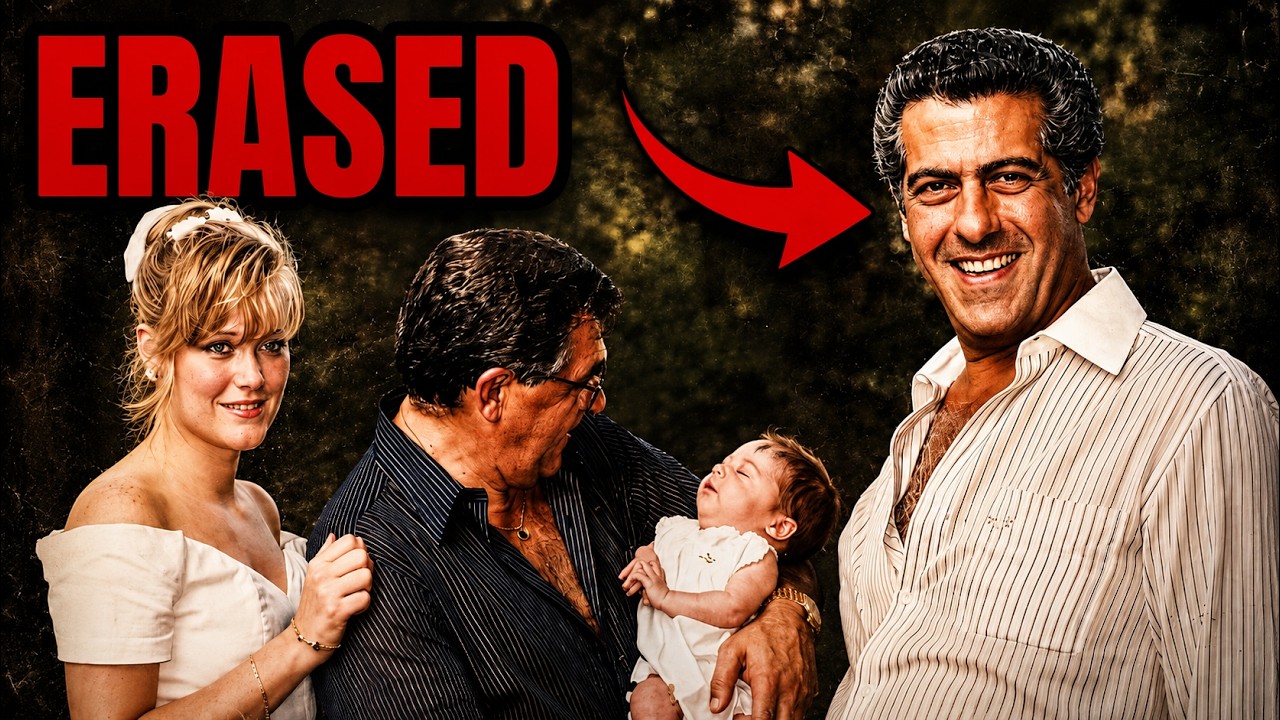
Dental records. A missing portion of the right middle finger. Nine years after the rumors, the lies, and the silence, the FBI had finally found William Cutolo Sr. , the underboss of the Colombo crime family, known as Wild Bill.
He had vanished on May 26, 1999, after a meeting with his acting boss. He never came home. Cutolo was no ordinary street soldier. He was a leading figure in the Colombo family, a successful businessman, and a veteran of the bloody civil war that tore the family apart in the early 1990s.
Rivals feared him. Some within his own crew respected him. Others, who suspected he wanted the top spot, watched him closely. In public, he seemed almost respectable, with his sharp suits, his seat in church, and his presence at charity events.
In the criminal world, he was a symbol of power and vitality. This is the story of one of the Colombo family’s most important men, who walked into a meeting he believed he was obligated to attend and then disappeared for nine years, betrayed by those who were supposed to protect him. It is also the story of what happened afterward, as the family kept asking questions. A son who decided that revenge might mean a wire instead of a gun.
And a body that turned a mob mystery into a grave. In the politics of the mob, the meeting is supposed to be the mechanism that prevents chaos. So what does it mean when the meeting becomes a trap? To understand that, you have to understand who Bill Cutolo was before he became a missing man and then a corpse.
By the late 1990s, he lived in Tottenville on Staten Island, raising his family with his wife Peggy and moving between two worlds. Law enforcement testimony and later court testimony confirmed his deep involvement in Colombo family influence. At the same time, those close to him noticed his quieter side. He attended Mass at the Church of Our Lady Help of Christians.
He dressed well. He was surrounded by his children and grandchildren. He knew how to appear as a man who belonged at a ceremonial table, not at a crime scene. In 1998, the Daily News described him wearing an elegant double-breasted gray suit and a large diamond ring, playing Santa Claus for about fifty children with leukemia at a holiday event he helped fund.
That contradiction is the essence of Bill Cutolo’s story. The man handing out gifts was also accused by authorities of using mob influence, union connections, and street power to collect money and win loyalty. He was not unique in that regard. He was a classic example of New York organized crime.
A respectable exterior, hidden pressure underneath. Cutolo also came of age in a blood-stained mob world. In the early 1990s, the Colombo family tore itself apart in a civil war between the faction loyal to acting boss Victor Orena and the faction loyal to Carmine Persico and his son Alphonse Persico. Court records later described about twelve murders during that war.
Cutolo supported Orena. That matters because gang wars do not end cleanly. They freeze. They leave memories.
They leave records in people’s minds. A man can go from enemy to accepted partner without ever becoming truly safe. By around 1998, according to later testimony summarized by the Second Circuit, the Mafia Commission sided with the Persico faction. Alphonse Persico became the acting boss.
Cutolo became the acting underboss. On the surface, that looked like a reconciliation. In reality, it created a machine with two powerful engines pulling in opposite directions. One was Persico, the boss’s son, sitting in the place that supposedly belonged to him by birthright.
The other was Cutolo, an established figure of influence, with his own crew, his own earning ability, and, according to many witnesses, his own momentum. Here psychology comes into play. Michael D. Leonardo, a Gambino family captain who served as a liaison with the Colombo family, later testified that Cutolo had what he called a boss mentality.
He said it was easy to see him coming like a freight train. That is not casual talk in that world. It means the man is not satisfied with his position. It means he acts as if he has authority before he officially receives it.
It means every conversation becomes a test. Every disagreement becomes a referendum on who is really in charge. And Cutolo was not a gentle manager. The court record portrays him as harsh, demanding, and tough in negotiations.
He pressed people. He wore them down. He embarrassed them. That is what made him effective.
But it also made him dangerous to deal with. Giovanni Foudia, a Colombo family associate, gave the jury a clear picture of how Cutolo treated those under him. Foudia had about 300,000 dollars circulating in the black market from extortion money, but he initially told Cutolo the amount was between 80,000 and 100,000 dollars. When Cutolo discovered the lie in the spring of 1999, he moved quickly.
He seized 50,000 dollars Foudia had expected from a robbery. Then he imposed another 25,000-dollar tax for the deception. When Foudia did not pay, Cutolo ordered him beaten. That story alone is enough.
Cutolo was not just powerful; he made people feel his power. He did not forget money, and he did not forgive embarrassment. If someone lied to him, he made sure the lesson was expensive. Another dispute showed the same pattern.
Court testimony reported that Joseph Campanella owed Cutolo about 300,000 dollars in extortion money. Cutolo had financed him years earlier. When Campanella bought a Mercedes in early 1999, D. Ross warned him that Cutolo was angry and threatening to smash the car windows.
Think about the message: do not show your comfort until your boss is paid. Do not show your success funded by his money. Do not forget who outranks you. For some men, Cutolo seemed like a symbol of discipline.
For others, he seemed like a problem waiting to be removed. By mid-April 1999, the talk took a more dangerous turn. Campanella testified that John D. Ross asked him how he felt about killing Wild Bill, not just arguing with him, not ignoring him, but killing him.
Campanella said Ross was serious. Later testimony described the logic clearly: if Persico went to prison on a weapons possession charge, Cutolo might take over the family and never give it back. That is the deadly equation of organized crime. Past loyalty matters less than future risk.
The question becomes not what you did for me yesterday, but what I think you might do to me tomorrow. The trap began to close. On May 25, 1999, Persico and Cutolo exchanged several text messages, then spoke later by phone. Betty Ann Fox, Cutolo’s longtime girlfriend, testified that he was upset that night because an appointment had been postponed to the next day.
On May 26, a Wednesday, Cutolo went to his office in Manhattan but stayed for less time than usual. Around noon, according to court testimony, he told Peggy he had to go to Brooklyn to meet the kid, a reference to Allie Boy Persico. Peggy said Bill had previously told her they met near 92nd Street and Shore Road in Bay Ridge, near an overpass where they could avoid surveillance. That detail matters.
Mobsters do not usually announce sensitive meetings at home unless the meeting is real, convincing, and important enough that skipping it is unthinkable. This was not a casual coffee date. It was an administrative meeting, formal, high-level, perhaps a reassurance session, perhaps a trap disguised as protocol. That day, Cutolo’s car broke down.
He went to a repair shop and asked a mechanic for help. The mechanic later testified that he drove Cutolo to the meeting area near 92nd Street and Shore Road and dropped him off around 3:15 p. m. Cutolo said he would return around 5:30 to pick up his car.
He never did. He never called, never gave notice, never made a move. Wednesday nights were his routine, when his friends gathered at the Friendly Social Club, a bocce club in Brooklyn, for dinner. If Bill could not attend, he usually told the others.
On May 26, he did not show up and did not call. His son, Bill Jr. , tried to reach him without success. His wife began to panic.
Then the aftermath began to reveal more than the disappearance itself. The Department of Justice later stated that Ross, who was watching the group at the social club that night, was visibly stunned when Cutolo did not appear and ordered Bill Jr. to call his father. That was just acting.
He was a man trying to control the situation before suspicion turned into certainty. Then came the moment that sums everything up. On the morning of May 27, around five or six in the morning, Ross arrived at Cutolo’s house, not to organize a search, not to demand answers from the street. He came to ask Peggy about Bill’s money, his books, and his records.
According to Peggy’s testimony, Ross did not shed a tear. She knew in that moment that her husband was dead. A mob wife heard the wrong question and understood the truth. The search for those records became a small ugly operation of its own.
Ross kept returning. He searched rooms, drawers, shelves, even the walls and the attic, trying to find hidden books and cash. Peggy later admitted that money and papers were hidden there, including 1. 65 million dollars stashed in places like a vent above the stove and pipes in the attic, revealing what the killers wanted after the body disappeared.
Not just the man, but the financial record, the flow of debts, the economic engine of his crew. In this life, murder only solves half the problem. You also need the money that came with the dead man. The pressure did not stop at money.
It moved to silence. In March 2000, according to the Department of Justice and the appellate record, Bill Jr. secretly recorded Ross’s threats against the family. The message was blunt in a coded way.
Mob threats are blunt. Help Persico’s private investigator. Give false information that exonerates them. Do not talk to law enforcement.
Peggy might get hurt. The little children, Barbara Jean’s daughters, might get hurt. Ross asked them to worry about their family. No cinematic hints, no dramatic speech, just fear carefully placed on the kitchen table.
What happened to Bill Cutolo after 3:15 p. m.? On May 26, the case was assembled fully later. A federal indictment in December 2008 alleged that Thomas Gioeli, Dino Calabro, and Dino Saracino were directly involved in the murder.
Prosecutors claimed Cutolo was taken to Saracino’s basement apartment, shot there, and buried in Farmingdale, Long Island. The government’s theory was clear. The meeting was not arranged for negotiation. It was an entrance to a murder.
For years, prosecutors themselves believed the body had been dumped in the Atlantic Ocean. That theory hung over the case while the family lived in uncertainty and fear. They held a private wake without a body, and a headstone was placed before any remains were found. In mob history, this kind of disappearance can become a burial of its own.
No grave, no certainty, no final scene, just a name hanging in rumor. But Bill Jr. refused to leave it that way. According to the Daily News, within weeks of his father’s disappearance, he agreed to cooperate with the FBI, calling the operation Revenge.
He recorded more than a hundred hours of conversations. He moved through mob hangouts, playing the roles of son, insiders, and wounded loyalist, while secretly helping to build an extortion case. Court records confirm at least one crucial tape: Ross’s threats in March 2000. Reports at the time said he also turned over his father’s records involving 115 servants and gang-related businesses.
Revenge in this case was not a random act. It was evidence. That cooperation mattered because such cases are rarely revealed by a single witness. They unfold gradually.
Family fear explains silence, the recordings explain the cover-up, the records explain the money, then the cooperators and later the informants explain where the grave was. In January 2001, Bill Jr. ‘s help was already feeding a major case against Colombo figures. Years later, after more investigation and more turncoats, the location of the body finally became clear.
Even then, justice came only in stages. A first trial ended with a hung jury. That shows how difficult mob murder cases are when there is no body and no eyewitnesses. But in late 2007, after a second trial lasting eight weeks, Persico and Ross were convicted of murder in aid of racketeering and witness tampering.
The government proved they ordered the killing because they believed Cutolo was about to take over the family, and because the old grudges of the Colombo war still remained. Then on October 6, 2008, further investigation led agents to a field in Farmingdale. Nine years after the crime, Cutolo’s remains were found. The discovery was gruesome in its details.
The New York Times reported the body was wrapped in tarpaulin. He was identified through dental records and the missing tip of his right middle finger.