On the night of January 16, 2019, a 21-year-old international student named Aya Maswarah was making her way home through the streets of Melbourne, Australia. She had never expected to be the center of a tragedy that would shock the nation, ignite conversations about women’s safety, and ultimately end with a courtroom in Victoria delivering a sentence a generation long. Aya was a Palestinian student with a passion for languages and cultures. She was fluent in Arabic, Hebrew, and Mandarin, and had previously studied in Shanghai before arriving in Melbourne in August 2018 as part of a one-year exchange program at La Trobe University in Bundoora.
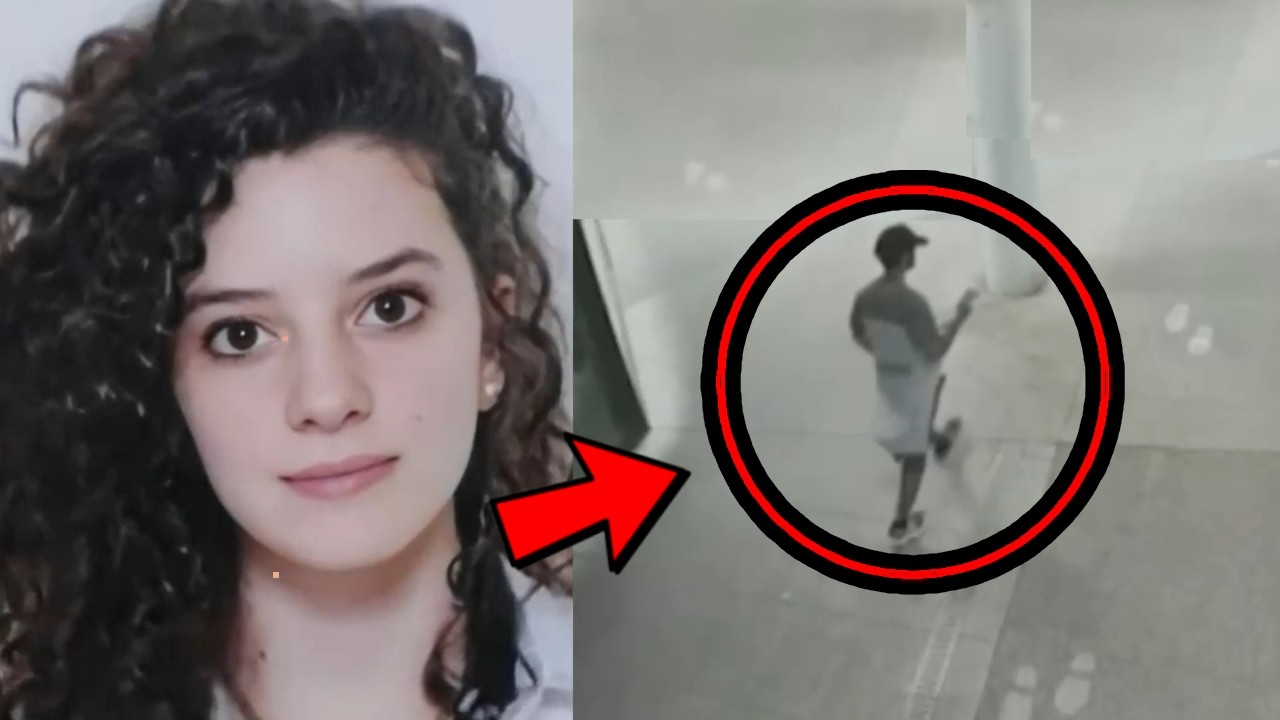
She had dreams of improving her English, gaining international experience, and returning home with broader horizons. In Melbourne, she quickly embraced the local life, making new friends, exploring unfamiliar places, and staying closely connected with her family through near-daily conversations. Her parents, Said and Khetam, and her sisters Noor, Rupa, and Lina, were planning a visit to Australia, eager to see the life she had built for herself so far from home. On the evening of January 16, Aya attended a social gathering organized under the theme “Let’s Talk English,” where international students met to practice their language skills and form friendships.
Later, she and her group headed to a comedy show in northern Melbourne. After the performance, a friend drove her to Bourke Street so she could catch a tram back to her student accommodation near La Trobe University. It was a familiar route, one she had taken countless times before: a tram ride to Bundoora, followed by a short walk to her residence. The evening seemed ordinary, routine, and safe.
Just after midnight, at 12:05 a. m. , Aya disembarked at her usual stop on Plenty Road and began walking along the main pathway beside the Polaris shopping centre. Knowing the hour was late, she did what she often did on nighttime walks: she called someone she loved to keep her company.
In the conversation that followed, Aya reached her sister Rupa, who was at home in Israel. Surprised that Rupa answered, Aya greeted her warmly, saying, “I didn’t expect you to answer. ” It was a brief, affectionate exchange between two sisters separated by thousands of miles. Moments later, Rupa heard her sister scream in distress, shouting in Arabic at someone nearby.
Then several sudden noises came through the receiver, and the call changed abruptly. The line went silent, leaving only the distant sound of traffic. Rupa stayed on the line, hoping to hear her sister’s voice again, but it never came. Growing desperate, she contacted another sister living in China, and together they called and messaged Aya’s phone repeatedly.
There was no response. Hours later, around six in the morning, the family contacted Australian authorities to report her missing. Around the same time in Bundoora, a man heading to work near the tram stop Aya had used discovered something horrifying behind a low fence beside a car park. It was Aya.
She was found barely 100 meters from the tram stop, less than a mile from the student accommodation she had been trying to reach. Detectives quickly determined that this was not an accident. Aya had suffered severe injuries, and investigators noticed signs that someone had attempted to damage or conceal evidence at the scene. Authorities immediately opened a murder investigation, and news of the incident spread across Australia and beyond, prompting grief and alarm over the fate of the young international student.
Detective Inspector Andrew Stamper described the attack as deeply disturbing, underscoring the seriousness of what investigators were confronting. Only a few meters from where Aya was found, police recovered several items believed to be connected to the incident, including a black cap and a bloodstained shirt. The items were sent for forensic analysis while investigators reviewed CCTV footage and spoke with potential witnesses. At first, detectives believed the attack appeared random rather than targeted at Aya personally.
The investigation nevertheless advanced with remarkable speed. Using surveillance footage and forensic evidence, police identified a suspect and arrested a 21-year-old man named Cody Herrmann less than 48 hours after Aya’s body was discovered. Herrmann was tracked through CCTV footage from the area around the Polaris shopping centre. When questioned, he initially denied any involvement, but evidence continued to accumulate against him.
Before the case could proceed to a full trial, he formally pleaded guilty to all charges. As a result, no jury trial was held. Instead, the prosecution presented the details of the case during court proceedings in Victoria. The court proceedings revealed unsettling details about Herrmann’s behavior in the weeks before the attack.
Although he and Aya had never met, he had attempted to gain access to her student accommodation on two separate occasions in the preceding six weeks. On one occasion, he falsely claimed he had lost his key even though he did not live there. Days later, he was seen outside the building again. Investigators also found that Herrmann had an online presence under the name “MC Cody,” where he shared music and personal writings.
Some of his social media posts contained references to personal struggles and vague messages published shortly before the incident. Despite these circumstances, police stated they found no evidence linking those earlier encounters or online posts directly to what happened to Aya. Their investigation concluded the attack was opportunistic rather than planned or targeted. The true nature of Aya’s final moments only emerged later in court, painting a harrowing picture of how an ordinary walk home became an unimaginable tragedy.
While Aya had been enjoying the comedy show earlier that evening, Herrmann had been nearby at the Polaris shopping centre at nearly the same time she got off the tram. Court records showed their paths crossed just after midnight. Without warning and without any interaction between them, Aya was violently attacked. Her phone slipped from her hand while she was still connected to her sister on the other end of the call.
The court heard that the attacker moved her away from the pedestrian pathway, assaulted her, and then attempted to destroy forensic evidence at the scene. Investigators determined that the signs of fire damage were consistent with that attempt. Medical experts testified that Aya suffered a severe head injury that ultimately caused her death, along with additional injuries during the assault, although some details could not be determined with complete certainty by forensic specialists. The moments following the attack produced some of the most important evidence in the case.
While fleeing the scene, the attacker unintentionally left a trail. CCTV cameras tracked his movements as he headed toward a nearby nature reserve. Along the way, he discarded personal belongings and items connected to the crime, including the black cap, the bloodstained shirt, and other key forensic evidence later recovered and analyzed by police. Herrmann claimed he could not remember where he had obtained the tools used in the attack, nor the two hours preceding it.
But what investigators could prove was significant: surveillance footage and forensic evidence showed the assault was not the result of an argument or a confrontation that escalated unexpectedly. The attack began almost as soon as their paths crossed, leaving Aya little chance to react or call for help. As sentencing proceedings began, the court learned more about the turbulent circumstances surrounding Herrmann’s life. Two days before the attack, a friend had found him sleeping on the floor of his mother’s bedroom.
During their conversation, Herrmann described troubling thoughts and episodes that caused serious concern among those close to him. At the time, he was living in an abandoned property, estranged from his family, struggling with substance abuse, and living an unstable life. His defense lawyer, Tim Marsh, did not attempt to downplay the severity of the crime. He acknowledged that Aya had every right to feel safe walking home that evening.
Instead, he asked the court to consider Herrmann’s difficult upbringing and long history of personal suffering when determining his sentence. The court heard that Herrmann had spent parts of his childhood moving between his mother’s care and residential facilities because of family difficulties. Years before the incident, he had sought professional help for mental health issues, but by 2019, he was living without ongoing support. A forensic psychologist testified that Herrmann suffered from severe personality disorder, describing the attack as an expression of intense, misplaced anger.
The defense argued that his traumatic childhood had significantly shaped his worldview and behavior, though it did not excuse his actions. Herrmann later wrote a handwritten letter expressing remorse to Aya’s family, stating he did not expect forgiveness and deeply regretted the pain he caused. He acknowledged there was no justification for what had happened and said he hoped hatred would not consume the hearts of her family members. Prosecutors, however, argued that none of these circumstances reduced the gravity of the crime.
They emphasized that Aya’s life had been taken in an act that showed complete disregard for her humanity and urged the court to impose the maximum possible penalty. The most powerful moments of the sentencing hearing came from the voices of the people who loved Aya most. Rupa, the sister who had spoken with her last, described her enduring admiration for Aya, calling her someone who always knew how to handle life’s challenges. The pain of hearing her sister’s final moments over the phone was something she still carried.
Aya’s mother, Khetam, spoke of the special bond they shared despite living in different countries. They spoke nearly every day, often telling each other how much they missed one another and looking forward to the day they could finally embrace. For Khetam, losing Aya meant not only losing a daughter but also one of her closest friends. Her sister Noor remembered Aya as a source of warmth, kindness, and joy, citing the words of Mother Teresa: “Some people come into our lives as blessings, and some come in as lessons.
” Aya was both. During the proceedings, Herrmann stated that there was nothing personal about the crime, claiming Aya was simply the person who crossed his path that night. But for her family, Aya was never a stranger in a court case. She was a beloved daughter, sister, and friend, whose memory continued to live in the hearts of those who knew and loved her.
When Judge Elizabeth Hollingworth delivered her sentence, she made one point unmistakably clear: every person has the right to feel safe walking home at night. Addressing the court, she stated that women should be able to walk the streets alone without fear of being attacked by a stranger. She described Aya as someone who was unsuspecting and vulnerable, given no real chance to protect herself during the sudden assault. The defense argued that Herrmann’s history of drug use should be considered, but the judge noted there was no evidence indicating he was intoxicated or suffering from a drug-induced psychotic episode at the time of the crime.
Instead, the psychological evidence pointed to a complex combination of factors, including long-term mental health struggles, unresolved personal issues, regular substance use, emotional instability, and severe personality dysfunction. The judge concluded that these circumstances may have contributed to his actions but did not justify them. Judge Hollingworth sentenced Cody Herrmann to 36 years in prison with a non-parole period of at least 30 years. He would not be eligible to apply for release until he reached his fifties.
The justice system had delivered its final judgment, serving as a reminder that Aya’s life and the immense loss suffered by those who loved her would not be forgotten. Aya’s story continued to resonate far beyond Australia’s borders. What began as an ordinary walk home became a tragedy that sparked international dialogue about women’s safety, violence in public spaces, and the collective responsibility of communities to protect one another. Her death united people from different cultures and backgrounds in grief, reminding the world that no one should fear for their safety while simply trying to get home.
In the years that followed, her memory lived on through public advocacy, scholarship initiatives, and ongoing efforts to create safer communities for women and vulnerable individuals. Her case forced difficult but necessary conversations about personal safety, public transport security, and the need for genuine social change. Though justice was ultimately achieved through the legal process, no sentence could restore the future that was taken from a bright and ambitious young woman who had dreams yet unrealized. Aya Maswarah’s legacy is defined not by the tragedy she suffered, but by the compassion, unity, and determination for change that her story inspired.
She is remembered not for how her life ended, but for the promise, kindness, and hope she carried through all of her twenty-one years.