Constantin Film had not summoned Paul W. S. Anderson to solve their zombie problem. They called him in 2000 about unrelated writing work, a conversation he had no interest in having.
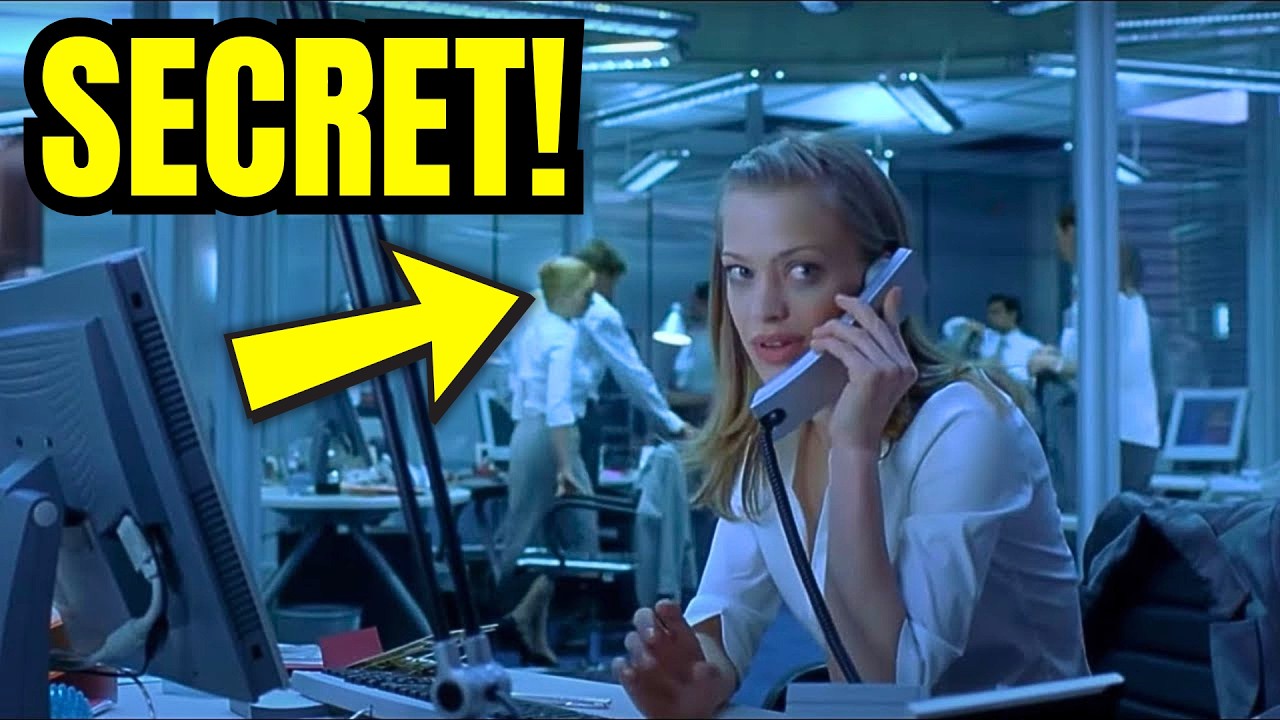
Months earlier, word had reached him that George A. Romero was attached to a Resident Evil adaptation, news that sent Anderson to his desk. Without a commission, without a meeting, he wrote a spec script called Undead, a story he would later describe without embarrassment as a lift from the source material. When Constantin finally called about a different job, he pitched his unsolicited script instead of taking the offer.
Studio head Bernd Eichinger was enthusiastic enough to convert the spec into the official adaptation, and that single decision explained much of the finished film. Umbrella, the T-virus, Raccoon City, the Hive itself, all were bolted onto a story that had originally contained none of them. The scaffolding came first; the license arrived afterwards and had to be fitted around what was already standing. The project had been in limbo long before Anderson arrived.
In early 1997, Constantin paid for the live-action rights to a game barely a year old. The writer they hired was Alan B. McElroy, brought in by producer Robert Kulzer on the strength of Halloween 4 and Spawn. McElroy delivered something violent and structurally close to the original game: a rescue team sent into a medical research facility where something had gone badly wrong, following an earlier unit that was killed immediately.
The men who went in second were a ragtag group pulled together from all over the country, unaware they were the specimens. He handed in that first draft in late May 1997, a copy of which now sits in a university archive. What killed it arrived from Capcom rather than the studio. Resident Evil 2 shipped in early 1998, a bigger, more confident game than the one the script was based on, and Kulzer concluded a film built on the original alone would already feel dated by the time it opened.
Nobody wanted to spend years catching up to a sequel. The rights stayed with Constantin. The project went back to nothing. Romero himself spent the better part of a year on a version almost nobody has read.
He arrived through an unusual door: in 1998, he directed a television commercial for Resident Evil 2 that only aired in Japan, an oddity that functioned as an audition. Series creator Shinji Mikami had long credited The Living Dead films as the foundation the games were built on. Romero’s version would have been the faithful one, which is the whole tragedy of it. Chris Redfield carried the story alongside Jill Valentine as romantic leads, with Barry Burton, Rebecca Chambers, Ada Wong, and Albert Wesker all present in recognizable form.
The ending sat close to the game’s own. Across five or six passes, the material kept its teeth, and that turned out to be the problem. Kulzer argued the film as written would land an NC-17, leaving it unshowable on television or in mainstream German cinemas. For a German studio, that was close to fatal.
Eichinger made the final call, with Capcom’s own Yoshiki Okamoto opposed to the drafts as well. The pages did not disappear; they sit in the University of Pittsburgh’s Romero archive, and in January 2025 a documentary arrived about a film that does not exist. By March 2001, Anderson had reshaped the project around Alice, a character of his own invention. Months of training went into a single kick, and that kick very nearly had no reason to exist.
Anderson’s original conception of Alice was a woman in danger who needed rescuing, a part written to be acted upon rather than to act. Rain was the only genuine action lead in that version of the script. Milla Jovovich found out what had been drawn up for her, went directly to the director instead of routing it through her representatives, and argued the character into something far more physical. That conversation is the single decision the entire six-film franchise rests on.
It happened before a frame was exposed. By the time cameras rolled, she was doing wire work, weapons drills, and choreography written for somebody who did none of those things on the page. Her stake was personal rather than professional; she had become a serious fan of the games through her younger brother, and part of the reason she auditioned was to hand him something he would find genuinely exciting. Principal photography began on March 5, 2001, on a continent the story never mentions.
About half the film was made at Studio Berlin Adlershof, with the rest scattered across the city and the countryside around it. A story set in small-town America was assembled almost entirely in Brandenburg, a trick the picture pulls off mostly through lighting. Schloss Lynar, a small palace in Potsdam, stands in for the looking glass house exterior. The subway sequences were filmed in the Bundestag U-Bahn station near the Reichstag, which had been structurally finished in 1994 but did not carry a single fare-paying passenger until 2009.
Krampnitz, a barracks complex near Potsdam of more than 50 buildings raised during the rearmament of the 1930s, taken over by Soviet troops after the war, then left empty in 1992, supplied the exteriors. What the production actually wanted was a genuine Cold War bunker, a plan that collapsed early. The accessible candidates in Britain, Latvia, and Ukraine all turned out to be Second World War construction, far too antiquated for a corporation running a supercomputer under a mansion. Berlin gave them modern concrete instead, which is part of why the Hive looks like nothing in the games.
The production solved problems in front of the lens rather than after it. The zombies were professional dancers, hired on the reasoning that a trained body has far better control and will not drift into inconsistent movement. When the dancers could not fill the frame, Capcom executives and the film’s own producers were pushed into makeup to make up the numbers. The skinned Dobermans were built as practical makeup on real animals, and between takes the animals kept licking the makeup straight off themselves, stopping the unit cold over and over for a sequence that runs about 90 seconds on screen.
The most remembered moment of the film, James One’s death in the laser corridor, was achieved practically: the effects team took a full body mold of Colin Salmon, cut the resulting model into small cubes, and reassembled it in front of a green screen held together by individual rods so that as the rods were pulled away, the model came apart into its own pieces on camera. No simulation, no render queue. The reason it still works is that the pieces fall with real weight. By the late summer of 2001, the production believed it was close to finished.
The paperwork still carried a subtitle, though, and within weeks that subtitle would be unusable. The project had been registered in March 2001 as Resident Evil: Ground Zero. In October, the subtitle was officially dropped because the phrase had come to mean something else entirely to everyone who heard it. The film went out under a bare title, which is why the first entry in a series famous for its subtitles is the only one without one.
There was a practical cost as well. Jovovich and a small crew still needed Toronto for the closing sequence, the one where Alice wakes into a ruined Raccoon City. By Anderson’s own account, he was in the air between New York and Toronto as the events of that morning unfolded. The shoot was cancelled outright, pushed back by about a month while the crew waited for flights to resume.
The critics were unimpressed. Roger Ebert gave the film a single star on release and later placed it on a list of films he most hated. His central complaint was oddly specific: the dialogue, he wrote, is a run of commands and explanations with no ordinary human small talk anywhere in it. The audience countered.
It opened second at the American box office with $17. 7 million, held off the top spot only by Ice Age, and finished on more than $103 million worldwide against a $33 million budget. James Cameron, asked years afterwards to name his biggest guilty pleasure, named this one without hesitation. The sharpest irony took three years to arrive: in Resident Evil 4, Capcom put Leon in a corridor of moving lasers, borrowing the single image everybody remembers from the adaptation it had refused to let be faithful.
Alice was never supposed to wake up alone. In the ground zero draft, rather than Matt being taken away for the Nemesis program while she comes round in a ruined Raccoon City, the two of them woke together in a hospital after the virus had spread across the United States, then drove out toward a devastated New York. The likely reason none of the alternative endings survived is commercial rather than creative: the released version is the only one that points squarely at a sequel, which is precisely what arrived in 2004. There is a version of this film that has never been released.
Anderson has said the picture was initially rated NC-17 and that he had to make trims to bring it down to an R, and for years he teased an uncut release that never materialized. The counter evidence is awkward. A test screening report from January 2002 described a film noticeably less extreme than the games it came from, with the Licker’s kill cutting away to the reactions of the survivors rather than showing anything at all. Eichinger went further, saying in a German interview that he disliked violent films in general and that the production had taken care that blood never really flows.
The studio that turned Romero away for being too extreme made a picture its own producer considered mild, only to come out of the edit with a version it would not put into cinemas. The picture was assembled entirely out of rejected drafts and salvage decisions. Made for $33 million, finishing on over $103 million, it was dismissed by critics and by a large share of the game’s own fan base. It still launched six films across 15 years worth more than $1.
2 billion between them, and for roughly two decades it stood as the most successful live-action video game series ever made. Capcom refused a faithful adaptation out of a fear it would eat into the games. Then the unfaithful one they approved ended up feeding its own imagery back into those games instead. It ends with Alice waking in a ruined Raccoon City, a final shot filmed on the wrong continent, a month behind schedule, in the shadow of something nobody had planned for.
A picture nobody asked for has outlasted almost everything it was compared to at the time.