At dawn on March 6, 1836, the sound of cannon fire and gunshots split the air over San Antonio. Davy Crockett and a small band of defenders crouched on the southwestern corner of the Alamo, shouldering their rifles and firing volley after volley into the ranks of Mexican soldiers scrambling up wooden ladders propped against the mission walls. As Crockett reloaded, men fell to his left and right. Below him, hordes of Mexican troops surged toward the mission.
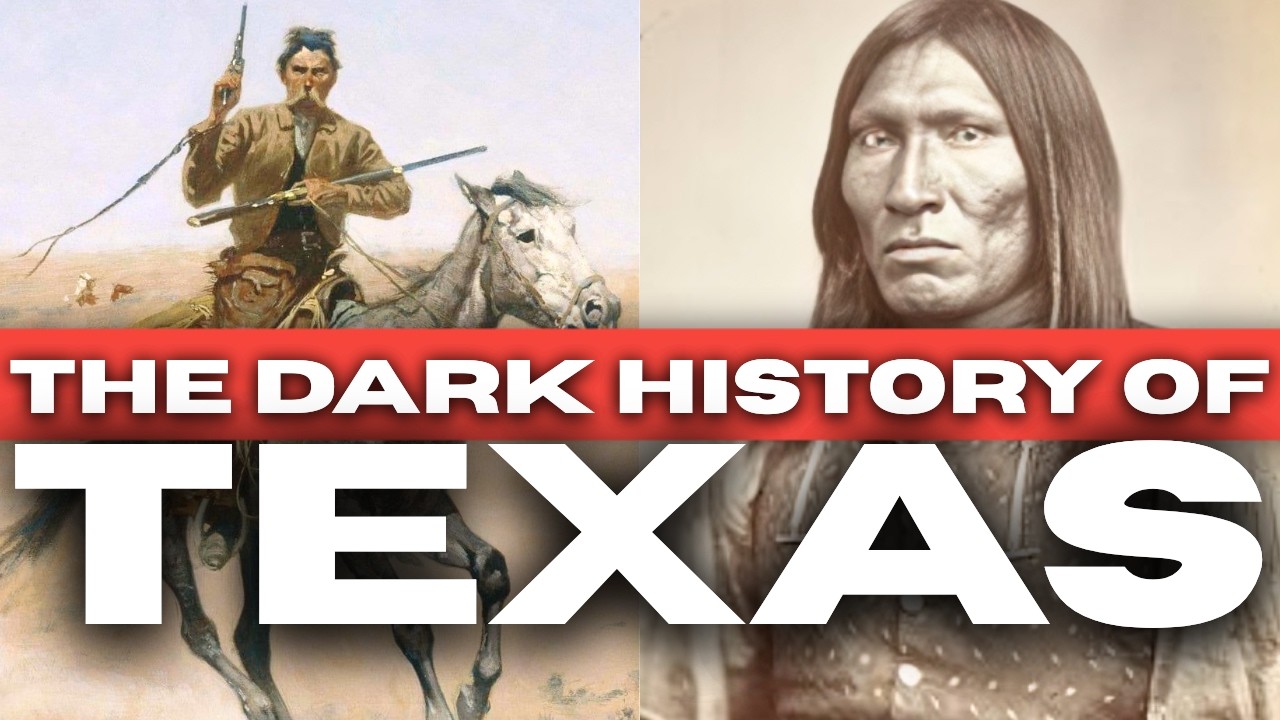
He and his men were vastly outnumbered, and they knew it was a fight to the death. Cannonballs crashed into the thick adobe walls, punching larger and larger holes. Crockett and the defenders had spent weeks fortifying the former Spanish mission, piling stones and soil, sleeping little. Many had spent the previous night restless under their blankets, knowing the battle was coming.
Now it was here. The shrieks of the wounded joined the din. Men fired and reloaded as fast as they could, and soon the first attackers poured over the walls, met by a ferocious close-quarters counterattack of knives, pistols, and anything else at hand. A life-or-death fight raged just inside the parapet.
Most of the defenders were American citizens who had moved to Texas seeking a better life and had decided to fight for Texas’s right to secede from Mexico. Many, however, were immigrants from Ireland, Scotland, Germany, and Denmark, along with native-born Mexicans who sided with the Texian cause, known as Tejanos. But no man at the Alamo was as well known as Crockett. By 1836 he was a national celebrity, a legendary hunter, frontiersman, master storyteller, and backwoods statesman.
He had met presidents and foreign dignitaries, attended high-society parties in New York and Washington, served in Congress, and been the subject of a Broadway play. Now his story seemed destined to end on the hard, dusty ground of Texas. His legend had begun in the hills of Greene County in what was then the state of Franklin, later Tennessee, in 1786. Born to John and Rebecca Crockett, the fourth of five boys and seventh of nine children, he grew up on the frontier, tracking, hunting, and fishing.
His father had turned him out as labor to pay off debts. He served in the War of 1812 under Andrew Jackson, working as a scout and hunter and gaining a reputation for skill and endurance. He married Polly Finley in 1806, and they had three children before she died in 1815. He remarried later that year to Elizabeth Patton, who brought three children of her own, and together they had three more.
Soon after remarrying, his ability to captivate audiences with simple, enthralling stories advanced his political career. In 1817 he was elected justice of the peace of Lawrence County, then lieutenant colonel of the local militia, and finally a state legislator in 1821. Moving his family westward with thousands of other Tennessee migrants, his popularity grew among frontier constituents who saw him as a trustworthy, plain-spoken representative. In 1827 he was elected to Congress, where he notoriously broke with his former commander, now President Andrew Jackson, fiercely opposing the Indian Removal Act of 1830.
Cherokee Chief John Ross sent him a letter of gratitude in January 1831, but the stance cost him his seat in the 1831 election, as opposing Jackson alienated many voters in Tennessee. He lost to Jacksonian politician William Fitzgerald. His career, however, was not finished. In 1831, The Lion of the West, a loosely biographical play featuring the character Nimrod Wildfire based on Crockett, became a smash hit among New York audiences.
Crockett attended a performance and received a standing ovation when he was pointed out. In 1833 he regained his seat, defeating Fitzgerald, and served until 1835, when he lost again to another Jacksonian, Adam Huntsman. Frustrated with his fickle constituents, Crockett, who had been exchanging letters with friends in Texas, declared, “They may all go to hell. I’m going to Texas.
”
Texas in 1835 was a tinderbox. The Mexican government had allowed relatively unfettered settlement rights for Americans, partly as a human buffer against the Comanche, the region’s true power. But the Law of April 6, 1830, severely restricted further Anglo immigration and levied special taxes and tariffs on Texas residents, stoking injustice. Tejanos had long borne the burden of ferocious native attacks while feeling ignored by Mexico City.
When General Santa Anna ordered Mexican troops to occupy towns including Anahuac, Velasco, and San Antonio, then known as Béxar, unrest grew and Anglo-American and Tejano interests became more aligned. One serious point of contention remained slavery, which many Anglo settlers saw as indispensable, though Mexico had abolished it in 1829. Most Tejanos, despite their disapproval, chose to overlook the disagreement in the interest of independence from a government that had failed them. On October 2, 1835, tensions erupted at the Battle of Gonzales, when Mexican officials demanded the surrender of two cannons loaned to the town for defense against the Comanche.
The Texans refused, hid the cannons, filled them with scrap metal, and met the Mexican army on the banks of the Guadalupe River under a flag reading “Come and take it. ” A brief skirmish ended in Mexican retreat and an unlikely victory for the Texans, effectively beginning the Texas Revolution. A week later, on October 9, the Texans seized the Presidio La Bahia at Goliad, cutting off Mexican supplies to San Antonio. They won another decisive victory at the Battle of La Concepción on October 28 and, in December, wrested control of San Antonio from Santa Anna’s army at the Siege of Béxar.
The Texans took over the old mission known as the Alamo and began fortifying it against the inevitable return of Santa Anna. Roughly two hundred Texans held San Antonio, many believing they would not only defeat the general but force his surrender. By the time Crockett and a band of his friends made their way to Texas, they believed they were heading for a great victory, concerned only that they might miss the fighting. Command at the Alamo had changed hands several times.
James Clinton Neill, forced to resign in January 1836 after learning his family was critically ill, left joint command to two men. One was Colonel William B. Travis, a 26-year-old Alabama lawyer who had fled debt, leaving his wife and children, to become a firebrand revolutionary in Texas. The other was Jim Bowie, a 42-year-old frontiersman and celebrity who had gained renown after a knife fight in 1827, in which he used a massive knife given by his brother to eviscerate an opponent.
In the preceding months Bowie had fallen gravely ill, most likely with typhoid pneumonia, and was visibly fading. When Crockett and roughly thirty volunteers arrived on February 8, 1836, he was warmly welcomed by Bowie and Travis. Victory seemed near, but within two weeks the situation collapsed. Santa Anna, fuming over the loss of San Antonio, was marching north from Mexico City with thousands of troops, believing his hold on power could not survive a defeat by Texas’s ragtag militias.
On February 23, sentries spotted Mexican cavalry in the hills. Roughly 1,500 to 1,800 Mexican troops surrounded the force of about 180 men. Travis and Bowie ordered every Texan into the Alamo, their only refuge. The rebels had been caught off guard.
The Mexican army took control of the city and trapped the defenders, several of whom had their wives and children with them. For thirteen torturous days, the Mexicans laid siege, pounding the walls with artillery and destroying the wooden palisades. Santa Anna sent envoys demanding surrender; all were refused. On February 24, Travis wrote a letter delivered by Captain Albert Martin, who volunteered to slip out of the city at night and carry it seventy-five miles east to Gonzales.
The letter read: “I am besieged by a thousand or more of the Mexicans under Santa Anna, and I shall never surrender or retreat. Then, I call on you, in the name of liberty, of patriotism, and of everything dear to the American character, to come to our aid. Victory or death. ” Martin and thirty-one men from Gonzales managed to reach the Alamo, but their number was a fraction of what Travis had hoped for.
That same day Santa Anna ordered the black flag of no quarter raised, signaling that none would be spared. While the story of Travis drawing a line in the sand may or may not be true, it was clear to every defender that those who did not surrender would die. Except for Louis Rose, who chose to escape, the men remained. On the final morning, Santa Anna ordered the attack.
Within minutes Travis, defending the north side, was shot dead by a musket ball through the forehead. Bowie, bedridden in a small room, unable even to stand, was killed by Mexican soldiers with bayonets. Crockett, one of the few remaining combatants, continued firing until he ran out of ammunition. Then he and his fellow defenders used their rifles as clubs and slashed with their hunting knives, fighting to the bitter end.
His exact death is uncertain. Some accounts say he was shot in the final stages; others say he and a small number of survivors were taken prisoner and executed under Santa Anna’s watch. Their bodies were stacked and burned. The Alamo ended in a resounding Texan defeat, but it produced the opposite of what Santa Anna intended.
Instead of breaking the rebels’ will, the sacrifice generated a renewed fury. Cries of “Remember the Alamo” resounded on battlefields, and Santa Anna suffered key defeats, culminating in his surrender after the Battle of San Jacinto in April 1836. Texas gained its independence. Without the sacrifice of the men at the Alamo, that victory may never have occurred.
The names of Bowie, Travis, and above all Crockett became lasting examples of devotion to a cause at the cost of one’s own life. The truth of the man, hidden behind the folk legend, was far more consequential than even the popular lore suggested, but the frontier exploits of his life remained stories for other times.