On the morning of March 12, 1938, German troops crossed the border into Austria and invaded the country without firing a single shot. Instead of armed resistance, they were met with cheers and flowers as thousands of Austrians turned out to greet Adolf Hitler on his journey to Linz and then on to Vienna. But for the Jews, leftists, and other opponents of the Nazi regime, the Anschluss was a catastrophe. Terrified, they raced toward the country’s borders, hoping to reach them before they were closed.
Most would not make it and became trapped in a rapidly Nazifying Austria. In the weeks that followed, pogrom-like violence swept the country. Austrian Nazis and others beat, attacked, and humiliated Jews, forcing them to scrub the streets, clean public toilets, and perform humiliating exercises. Many decided to leave, and long lines formed at consulates across Vienna.
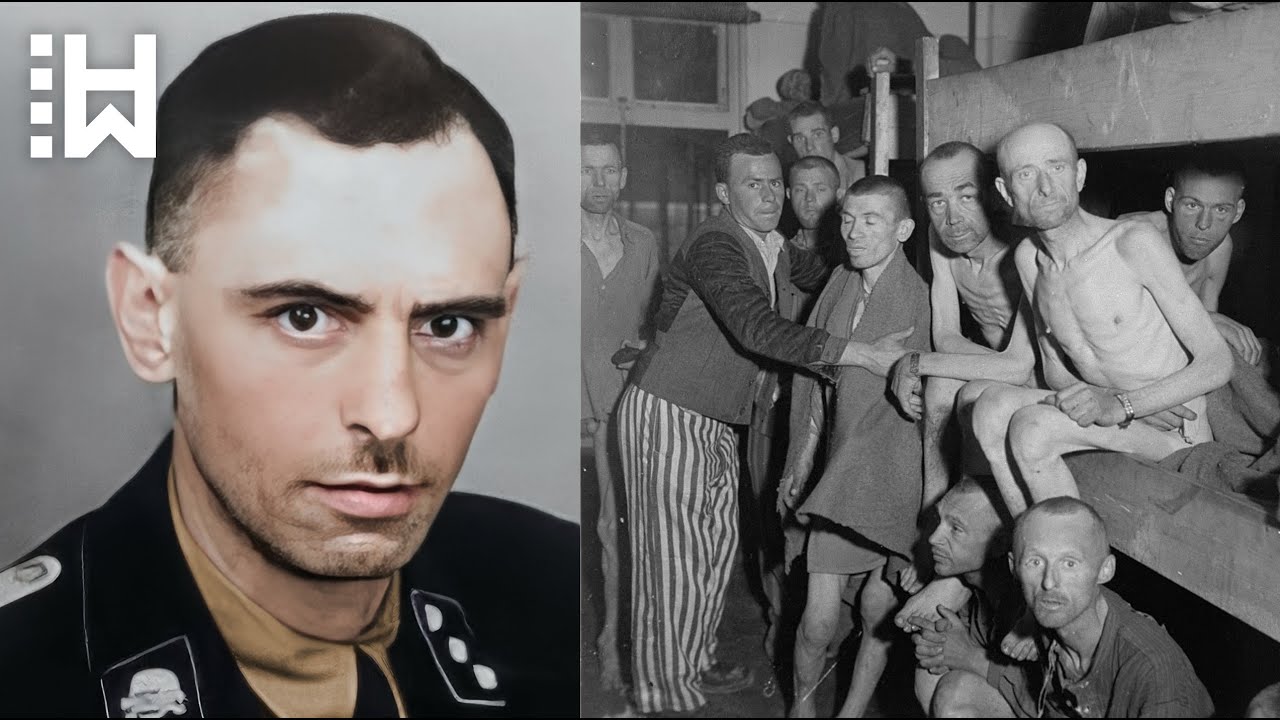
Several months later, the Nazis began operating the Mauthausen concentration camp near Linz. Then, in December 1939, the SS ordered the construction of a second concentration camp, Gusen, just a few kilometers away. Its first commandant would become one of the most notorious figures in the entire Nazi camp system. Karl Chmielewski was born on July 16, 1903, in Frankfurt am Main, then part of the German Empire.
He left school in 1918 without graduating and moved to Munich, where he trained as a wood sculptor. He opened his own business, but the economic crisis of the late 1920s forced him to close it. He married, had one son, and struggled financially, doing odd jobs to support his family. When Adolf Hitler was appointed chancellor of Germany on January 30, 1933, Chmielewski was already a member of the SS, which he had joined in 1932.
In March 1933, he also joined the Nazi Party. While in the SS, he served on the staff of Heinrich Himmler, the leader of the SS. His fanatical devotion to the Nazi cause paid off, and he climbed the ranks of the SS apparatus quickly. In 1935, he was transferred to the Columbia concentration camp in Berlin to serve on the commandant staff.
Columbia had been established by the Nazis in July 1933 and was filled primarily with political prisoners. It became notorious for the torture inflicted on its detainees, most of whom were Communists, Social Democrats, and Jews. The camp closed in 1936 to make way for the expansion of Berlin Tempelhof Airport, and its remaining prisoners were moved to the newly established facility at Sachsenhausen. Chmielewski was transferred there as well and worked from 1936 to 1939 as an administrative leader.
In the spring of 1940, he was transferred to the commandant’s office at Mauthausen and assigned the task of building a new camp from scratch at Gusen. When the Second World War broke out on September 1, 1939, people from across Europe were deported to Mauthausen, which gradually developed into a system of several interconnected camps. Gusen went into operation in May 1940, and SS Captain Karl Chmielewski became its commandant. As the war progressed, the SS established several sub-camps to accommodate the prisoners and the labor they performed.
Commandants of these sub-camps reported directly to Mauthausen commandant Franz Ziereis, and newly arrived prisoners were transferred to these camps from the main camp. During this phase, Mauthausen and Gusen were the concentration camps with the harshest imprisonment conditions and the highest mortality rates. Those who were ill or deemed useless by the SS lived in constant fear for their lives. In 1941, the SS began constructing a gas chamber and other installations at Mauthausen for the systematic murder of large groups of people.
Living and working conditions in Mauthausen and Gusen led to the deaths by murder, mistreatment, starvation, exposure, and disease of more than half of the prisoners. German doctors also subjected Mauthausen prisoners to pseudoscientific medical experiments, including testing levels of testosterone, experimenting with delousing chemicals, medicines for tuberculosis, and nutrition experiments. After his capture, Mauthausen commandant Franz Ziereis recalled the methods of killing: inmates had been killed by gassing, hard labor, or through benzene injections. At an outside temperature of minus 12 degrees, they made inmates bathe in water and then stand in the open stark naked until they died.
Some inmates had to haul stones until they collapsed, and then they were shot, with their records annotated as “trying to escape. ” Others were driven into the barbed wire fence or literally torn to pieces by a dog named Lord. At Mauthausen, inmates worked in the quarries, often in unbearable heat or in temperatures as low as minus 30 degrees Celsius, which led to exceptionally high mortality rates. The rock quarry was at the base of the so-called Stairs of Death.
Prisoners were forced to carry roughly hewn blocks of stone, often weighing as much as 50 kilograms or 110 pounds, up 186 stairs, one prisoner behind another. As a result, many exhausted prisoners collapsed in front of the others in the line, creating a domino effect as the first prisoner fell onto the necks of those below, and so on all the way down the stairs. In the quarry, prisoners were forced to carry boulders from morning until night while being whipped by the Nazi guards. At Gusen, Chmielewski became notorious for his alcoholism and developed a reputation for extreme brutality.
One of his alleged mottos as camp commandant was that a good prisoner in a concentration camp couldn’t last longer than three to four months. He not only ordered the killing and torture of prisoners but also personally participated in their murders and abuse. He killed inmates with clubs for no reason, beat them with heavy boots, and whipped them with up to 150 strokes until they died. He took pleasure in drowning inmates in a water tank or scalding them with boiling water.
Chmielewski was a sadist whose treatment of prisoners was unacceptable even to other SS officers. His superior, Mauthausen commandant Franz Ziereis, claimed after the war that Chmielewski had used the skin of prisoners to make items such as wallets and book bindings, something Ziereis claimed was strictly forbidden by the Nazi authorities. Because of his inhumane behavior toward prisoners, Chmielewski earned the nickname “the Devil of Gusen. ”
One of his specialties were the “death baths,” which were practiced especially during the winter.
This method of murder was the idea of SS Sergeant Heinrich Jentzsch, and Chmielewski decided to apply it. Inmates, mainly those unable to work or ill, were selected for a bath during the appeal. They were sent to the bathroom, where they were to stay naked under the showers. The drainage holes had first been plugged, and icy water began pouring over the prisoners under high pressure.
SS men and capos shouted at the inmates to swim in the water, and the whole exercise lasted up to thirty minutes. Whoever resisted staying in the icy water was beaten on the back or head with an iron shovel. One Holocaust survivor, a Yugoslav named Tiel Japona, described what he saw after 125 of his fellow inmates became victims of one of these death baths. The next morning, wanting to examine the effects of the horrible murderous bath, he went to block number 32 to ask if the block master had any things to return, since a car would be coming to pick up the dirty laundry.
The block master, “a real Satan in a human body,” replied that he would receive 125 sets of clothes from the dead. Pretending to know nothing about the bath, Japona peeked into the bathroom of block number 32. He opened the door and stepped back at a sight he would never forget. The victims of the bath were arranged in a tall pile like blocks of wood.
Some were coming back to life after they had warmed up, some were opening and closing their eyes, others were moving their arms or legs, and still others were making various moans. Fifteen minutes later, all the prisoners were thrown onto carts like blocks of wood and taken to the crematorium. It is estimated that up to 2,000 prisoners were killed by the Nazis through the death baths. In early 1942, due to catastrophic hygiene conditions at Mauthausen and Gusen, Chmielewski was infected with typhus and was unfit for duty for nearly half a year.
In September of the same year, he was transferred to the German-occupied Netherlands, where he was assigned the task of constructing Herzogenbusch concentration camp, also known as Camp Vught. Once it became operational in January 1943, Chmielewski became its commandant. In all, about 12,000 people—men, women, and children—were imprisoned in Vught, all of whom were eventually deported to Auschwitz. Usually the transports to Poland went through Westerbork.
By the beginning of October 1943, this had been the fate of more than 10,000 people. Two transports, one on November 15, 1943, and another on June 3, 1944, went straight to Auschwitz. During his reign at Vught, Chmielewski gained a reputation for corruption. He was eventually tried for personally enriching himself by stealing diamonds from prisoners.
He was also a sexual deviant who raped prisoners, and in 1944 an SS court sentenced him to fifteen years in prison for rape and embezzlement. He spent the rest of the war as an inmate at Dachau concentration camp. From there, Chmielewski managed to escape during the last days of the war. After visiting his family in St.
Georgen near Gusen, where his wife lived together with their son, he went into hiding with a farmer in Wimmer, Upper Austria, until the fall of 1946. With false papers, he managed to return to Germany, where he made a living breeding rabbits with farmers and trading eggs. However, he did not escape justice. In 1953, he was tried for perjury, fraud, and bigamy and sentenced to one year in prison.
In January 1959, after his real identity was discovered, he was arrested by West German police and accused of nearly 200 counts of murder. At his trial in 1961, he was found guilty of causing the deaths of prisoners through his brutality and was sentenced to life imprisonment with hard labor. During the trial, Chmielewski showed no pity for his actions in the concentration camps. He declared that the lives of ill inmates and Jews had absolutely no value for him.
The court pronounced him a sadist who took pleasure in killing prisoners whom he did not see as human. In March 1979, however, he was released from prison on mental health grounds and spent his last years in a care institution at Freilassing. When Karl Chmielewski died there on December 1, 1991, he was 88 years old.
There were no tears shed for him.