The story the world mourned in the summer of 1997 was not the spontaneous romance it appeared to be. The villa, the yacht, and the narrative itself were all assembled by one man: Mohamed Al-Fayed. The tragedy of that August in Paris was built on a stage he constructed, and the love story that followed was a monument he spent the rest of his life trying to build as well.
Mohamed Al-Fayed was born in Alexandria in 1929, the son of a school teacher. He started by selling Coca-Cola on the streets and sewing machines door-to-door. His life changed when he married Samira Khashoggi in 1954, entering one of the most powerful families in the Arab world.
The marriage ended in 1956, and he was expelled from the family in disgrace. That humiliation defined the rest of his life.
He spent the next decades accumulating immense wealth. He bought the Ritz in Paris and the Dorchester in London. In 1985, he acquired Harrods.
He added the prefix "Al-" to his name to suggest a noble bloodline that did not exist. He applied for British citizenship repeatedly and was refused every time.
In 1990, a British government report concluded that he and his brothers had dishonestly represented their origins and wealth. Despite this, he kept the store. He was never prosecuted.
He was simply never accepted by the establishment he so desperately wanted to join.
Dodi Fayed was the son of that first failed marriage. He was born in 1955 and was given a flat in Mayfair and a Rolls-Royce at fifteen. His father set up a film company for him, and Dodi’s name appeared as executive producer on Chariots of Fire, which won the Academy Award for Best Picture.
The real work was done by others.
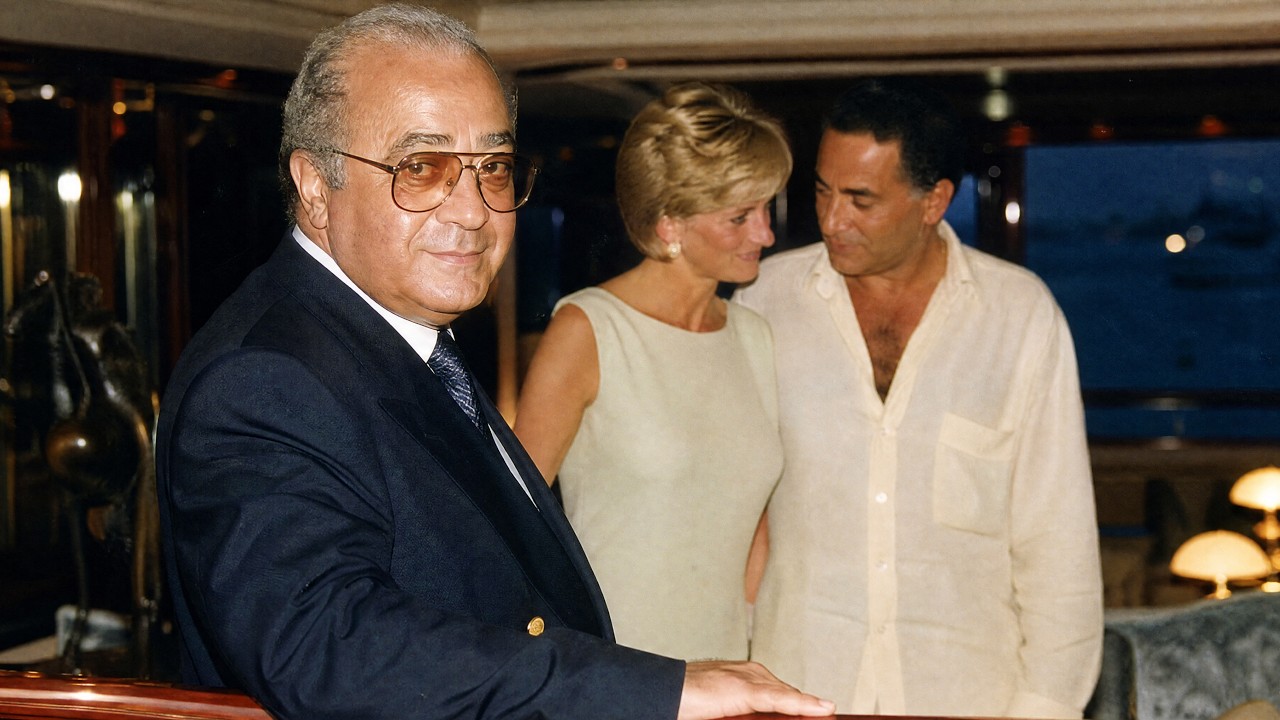
Dodi’s life was defined by an allowance of $100,000 a month and a father who could cut him off with a single phone call. He was sued for unpaid debts, wrote bad checks, and proposed to women impulsively. His producing partner described the relationship with his father as training a dog with a choke chain.
Dodi was kept permanently off balance, never required to face the consequences of his actions.
In the summer of 1997, Diana, Princess of Wales, was newly separated from the heart surgeon Hasnat Khan. She was raising two young sons under intense press scrutiny and needed a place where no camera could reach her. Mohamed Al-Fayed offered her his villa above Saint-Tropez, a fortress with a private jetty.
The holiday in mid-July was genuinely happy. Diana and her sons were safe and cared for. But the setting pushed every private moment out onto the open water, where photographers with long lenses could wait.
Mohamed summoned his son to join them. Dodi came, as he always did.
The Jonikal, the yacht that would become the most photographed vessel in the world, had been purchased by Mohamed only weeks before the summer began. There was also a second, smaller boat, the Cujo. On that boat sat Kelly Fisher, an American model who believed she was about to marry Dodi.
Fisher had met Dodi a year earlier. She said he proposed and gave her a sapphire and diamond ring. He bought a $7.
3 million house in Malibu on July 2, nine days before Diana arrived in Saint-Tropez. He flew Fisher to the south of France and left her on the smaller boat while he spent his days with Diana on the larger one.
On August 10, a photograph of Dodi kissing Diana appeared on the front page of a British newspaper. It was taken by an Italian photographer named Mario Brener, who has always maintained it was chance. The image earned millions of pounds and told every paparazzo in Europe that photographs of this couple were now worth a fortune.

The price came first. The chase followed the price.
Kelly Fisher learned of the romance from the newspaper like everyone else. On August 14, she announced she was suing Dodi for breach of contract. The wedding, she said, had been set for August 9.
Nobody had told her it was off. She withdrew the lawsuit days later, after Dodi was dead.
On August 30, Dodi visited the Repossi jeweler in Paris and came away with a ring from a line called Tell Me Yes. Whether it was an engagement ring has never been established. The jeweler and Mohamed Al-Fayed insisted it was.
A senior assistant at the Ritz testified under oath that the engagement story was built after the fact. Diana’s butler, Paul Burrell, said she would not have gotten engaged and found the ring gaudy.
That evening, Diana and Dodi dined at the Ritz, the hotel owned by Mohamed. Outside, photographers gathered. A plan was made to slip the couple out the back entrance while a decoy car drew the crowd away.
The driver was Henri Paul, the hotel’s acting head of security. He had been drinking.
Minutes after midnight, the black Mercedes entered the underpass beside the Pont de l’Alma at more than double the speed limit. It struck the 13th pillar. Dodi and Henri Paul were killed instantly.
Diana was taken to hospital and died at 4:00 in the morning. She was 36 years old.

The French investigation concluded that the driver was drunk and lost control. The blood test showed alcohol at three and a half times the legal limit. No one in the car was wearing a seatbelt.
Mohamed Al-Fayed buried his son quickly and then began rebuilding the story. He insisted the couple had been engaged and that Diana was pregnant. He claimed they were murdered by British intelligence on the orders of the royal family, who could not accept a Muslim marrying the Princess of Wales.
He built memorials inside Harrods, including a bronze statue of the couple dancing barefoot.
The British state examined every claim. A police inquiry reviewed 175 separate conspiracy allegations and found no evidence for any of them. The inquest in 2008 returned a verdict of unlawful killing caused by the grossly negligent driving of the Mercedes and the following vehicles.
The jury found no evidence of conspiracy, no evidence of pregnancy, and no evidence of an engagement.
Mohamed Al-Fayed sold Harrods in 2010. In 2018, the new owners removed the memorials to Diana and Dodi. The shop that he had bought to prove he belonged forgot him within a few years of his leaving it.
Kelly Fisher married a Russian pilot, had a daughter, and settled in the American South. She has stayed quiet for nearly thirty years.
Mohamed Al-Fayed died on August 30, 2023, one day before the 26th anniversary of the crash. He was buried near his son on the Surrey estate. A year after his death, allegations of sexual assault and rape from more than 400 women emerged, though he was never charged in his lifetime.
The deeper truth of that summer is stranger and sadder than either the love story or the conspiracy. Mohamed Al-Fayed could buy the villa, the yacht, the hotel, and the football club. He could buy every symbol of belonging he wanted.
He could not buy belonging itself.
He built the setting for the romance, and when it ended in tragedy, he built the story of it. But the one thing that was genuinely real, the affection between two lonely and hunted people, needed no construction at all. And it was the first thing lost.
He spent his fortune and his grief building a love story, and the only true thing in it was the part he never had to make.