It is one of the most troubling paradoxes of the Second World War. Many of Adolf Hitler’s most senior commanders were not true believers in the Nazi Party. In fact, a surprising number of them privately despised the National Socialist movement, viewing its members as a violent and uneducated mob. Yet this aristocratic contempt did not stop them from carrying out Hitler’s wars of expansion, nor did it prevent them from overseeing some of the darkest atrocities in human history.
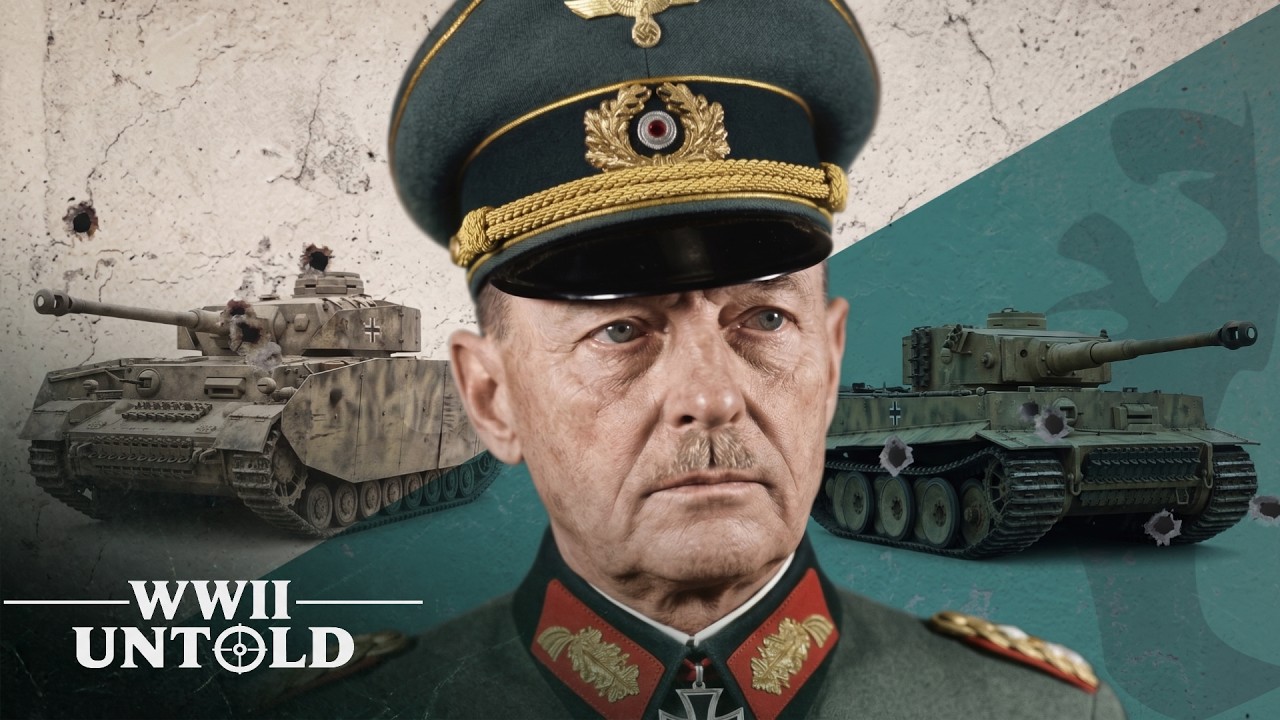
No figure better illustrates this contradiction than Gerd von Rundstedt, one of the most respected military minds of his era. Born Karl Rudolf Gerd von Rundstedt on December 12, 1875, in Prussian Saxony, he came from a family whose noble lineage stretched back to the twelfth century. Though not exceptionally wealthy, the Rundstedts possessed a different kind of currency: military prestige. His ancestors had bled for Prussia in conflicts ranging from the Thirty Years’ War to the Franco-Prussian War.
As the eldest of four sons, Gerd was raised according to classic Prussian principles: absolute discipline, strict obedience, modesty, and unyielding honor. At the age of twelve, in 1888, he entered a junior military academy near Koblenz. In 1903, his sharp tactical mind earned him a place at the Kriegsakademie, the primary training ground for the German General Staff. When the First World War erupted in 1914, he served as chief of operations for the 22nd Reserve Division of the First Army.
Though his wartime duties were largely administrative, his flawless service earned him the Iron Cross First Class. Germany’s crushing defeat in 1918 wounded Rundstedt’s pride, but his brilliant reputation allowed him to retain his position in the severely reduced postwar army, the Reichswehr. During the chaotic political turmoil of the Weimar Republic, he adhered strictly to an old Prussian principle: a soldier must never intervene in politics. Though likely a conservative monarchist at heart, he never joined the extremist factions attempting to overthrow the liberal government.
For Rundstedt, a soldier’s loyalty belonged absolutely to the state, regardless of who held the reins. By 1932, this unwavering dedication had earned him promotion to full general, commanding Germany’s eastern military districts. The political landscape shifted violently in 1933. The rise of the Nazis to power forced senior officers into a difficult balancing act between sworn military duty and personal conscience.
Rundstedt harbored deep reservations about Hitler. While he fully supported the Nazis’ aggressive military rearmament, the aristocratic general viewed the party leadership as vulgar thugs. Echoing President von Hindenburg, he repeatedly referred to Hitler with contempt as the “Bohemian corporal,” an insult to the Führer’s Austrian birth and his lack of traditional military background. Despite this disdain, Rundstedt maintained a facade of political neutrality.
During the Blomberg-Fritsch affair of 1938, when the Nazi elite successfully blackmailed two senior generals into submission to bring the army under political control, Rundstedt intervened to defend his colleagues. Yet he acted merely as a mediator, desperate to protect the army’s traditional honor rather than challenge the regime directly. Interestingly, Hitler held deep respect for the old general, even though the feeling was not mutual. Rundstedt had another opportunity to intervene during the Sudeten crisis, when a group of senior officers led by Ludwig Beck conspired to overthrow Hitler.
They approached Rundstedt to join the plot. He refused outright. However, true to his principles, he also did not report them to the Gestapo. After the occupation of the Sudetenland, Rundstedt quietly retired with the rank of colonel general.
His retirement did not last long. By May 1939, the drums of war were beating, and he was recalled to command Army Group South for the invasion of Poland. Striking from Silesia and Slovakia, his forces quickly captured Kraków. During this brutal campaign, the first major atrocities occurred under his watch.
Prisoners of war were executed, and civilians, especially Jews, were murdered with savagery. While no concrete evidence shows that Rundstedt explicitly ordered these war crimes, he did officially complain about them to the army’s chief of staff. Legally and morally, however, these troops operated under his direct command. Shifting to the Western Front in late 1939, he took command of Army Group A.
Rundstedt supported Erich von Manstein’s bold strategy of pushing armored divisions through the Ardennes forest, the very plan that would eventually break France. While the campaign was stunningly successful, Rundstedt secretly fumed at rebellious, fast-moving armor commanders like Heinz Guderian, who repeatedly ignored his cautious orders to halt. Regardless of these disputes, after the fall of France, Hitler rewarded Rundstedt with promotion to field marshal. His ultimate moral test came during Operation Barbarossa in 1941.
Tasked with invading Ukraine as head of Army Group South, Rundstedt attended a notorious meeting in Berlin. There, Hitler explicitly ordered his generals to abandon all conventional rules of war and execute captured Soviet political officers on the spot. This directive spawned the infamous “Commissar Order. ” After the war, Rundstedt claimed the generals collectively opposed and ignored this order.
But history proves otherwise. Although Hitler dismissed him in December 1941 for refusing to launch a suicidal attack at Rostov, a horrific trail of blood had already been left in his wake. In September, just days after his forces seized Kyiv, SS execution squads, actively assisted by army units under the command of Walter von Reichenau, one of Rundstedt’s direct subordinates, carried out a massacre of more than 33,000 Jews in the Babi Yar ravine. Shortly afterward, Reichenau issued his horrifying “Severity Order,” demanding cruel and merciless revenge against what he called the “subhuman types” of Jews.
Rundstedt did not merely know of this violently anti-Semitic directive; he formally endorsed it. He sent the order to his other commanders with a signed cover letter stating: “I agree completely with its contents. ”
Despite this documented and damning record, Gerd von Rundstedt miraculously escaped prosecution for war crimes at Nuremberg. He spent the remainder of the conflict serving as Commander-in-Chief in Western Europe, maintaining his illusion as an honorable, apolitical soldier.
But can a man truly claim political neutrality while knowingly leading the vanguard of an ideological war of extermination? At his core, Rundstedt was an old-fashioned aristocrat operating with an outdated moral compass from the nineteenth century, a compass that failed catastrophically when faced with the horrific industrial slaughter of the modern age. Whether his blind obedience was a tragic flaw or a convenient excuse for unforgivable complicity, history remains the final judge.