In the summer of 1863, the small Pennsylvania town of Gettysburg became the site of the bloodiest battle ever fought on American soil. For three days, Union and Confederate armies clashed in a desperate struggle that left thousands dead and thousands more wounded. When the guns fell silent, the town’s churches, barns, and homes were transformed into makeshift hospitals, and the scale of suffering overwhelmed whatever medical system existed. Soldiers themselves were the first caregivers for their dying comrades, as they had always been, but in the aftermath of Gettysburg, a different kind of caregiver arrived.
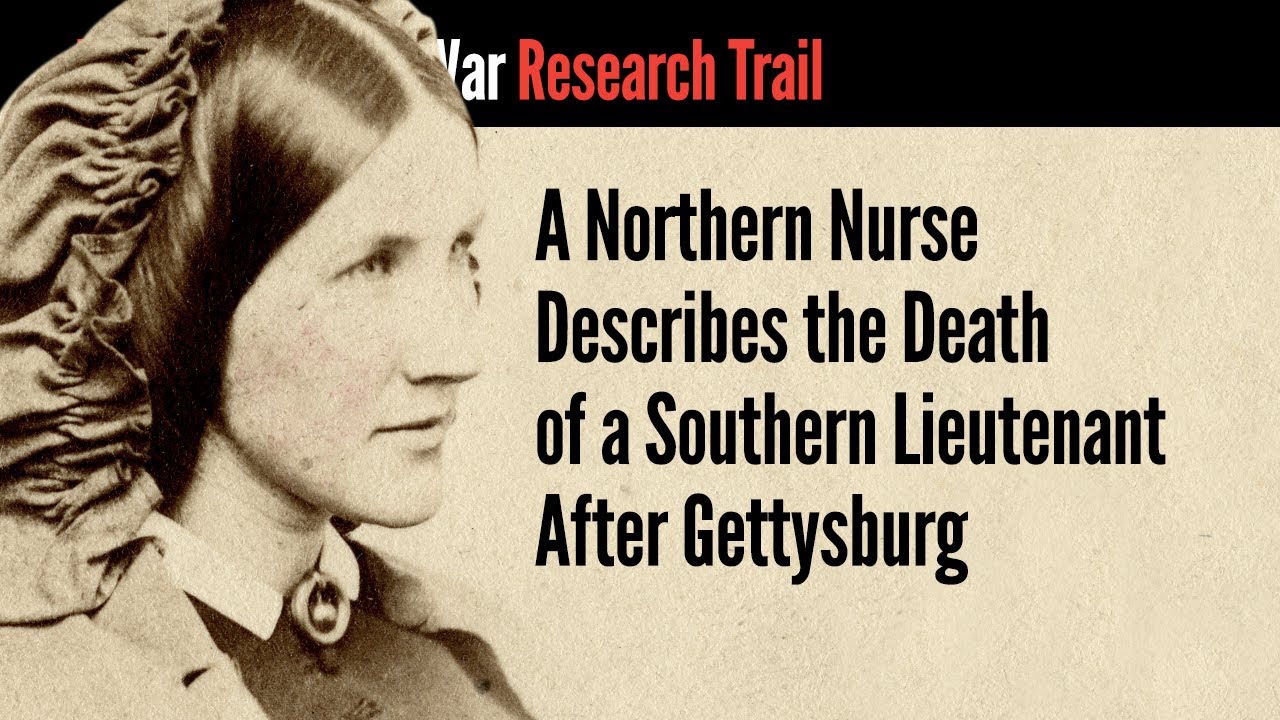
Thousands of women, nurses drawn from all walks of life, came to tend the wounded. Among them was a young New England woman named Georgiana Woolsey, who preferred to be called Georgie. She and her mother, Jane, reached Gettysburg not long after the battle ended, working under the authority of the United States Sanitary Commission. For three weeks in July 1863, they did what they could to ease the suffering of the men in their care, and for those beyond all help, they offered comfort in the final hours.
They treated Union soldiers and Confederate soldiers exactly the same. At the urging of friends, Georgie wrote down what she and her mother had experienced. The result was a small booklet of about twenty-four pages, titled Three Weeks in Gettysburg. The Sanitary Commission ordered ten thousand copies to distribute to women across the North, hoping the stories would encourage continued donations of supplies and money to support the soldiers still in the field.
The booklet contained some of the most poignant accounts ever recorded of nurses and the wounded men they cared for. One of those accounts concerns a Confederate lieutenant who did not survive. The afternoon had grown late when an ambulance train arrived at the lodge where Georgie and her mother were working. The train carried more than one hundred wounded Confederates.
They had missed the regular train leaving Gettysburg and had to be cared for until another train arrived the next morning. Of all the men brought in that night, only one seemed too weak and faint to take anything. He was badly hurt and fading. After his wound had been dressed, Georgie went to him.
She found him lying on a blanket spread over straw, a fair-haired, blue-eyed young lieutenant with a face innocent enough to be one of her own New England boys. She could not think of him as a rebel. He seemed too near heaven for that. He wanted nothing.
His comrades said he had not been willing to eat for days. But Georgie coaxed him to try a little milk gruel, made nicely with lemon and brandy. It was one of the satisfactions of her three weeks in Gettysburg to remember the empty cup she took away afterward and his perfect enjoyment of that supper. It was the best thing he had had since he was wounded.
He thanked her so much and talked about his good supper for hours, in a pleased, childlike way, until midnight. The attendant told her that he spoke of nothing else. Then the change came. From that time on, he only thought of the old days, before he was a soldier, when he sang hymns in his father’s church.
He sang them now, again, in a clear, sweet voice. Lord have mercy upon me. Then songs without words, a sort of low intoning. His father was a Lutheran clergyman in South Carolina.
The lieutenant’s name was Henry Josiah Rauck, of the Fourteenth South Carolina Infantry. He had been mortally wounded and would not recover. His brother, Corporal Samuel Noah Rauck, had been captured during the battle and was present with him when the time came. In the morning, when Georgie and the others went to the tent, they found Henry sliding out of their care.
All day they watched him, sometimes fighting his battles over again, more often singing his Lutheran chants. Then, at the tent door close to where he lay, a rebel soldier just arrived with other prisoners looked in. He started when he saw the lieutenant, quickly knelt down beside him, and called, Henry, Henry. But Henry was looking at someone a great way off and could not hear him.
Do you know this soldier? they asked. Oh yes, ma’am, he said, and his brother is wounded and a prisoner too, now in the cars. Two or three men started after him, found him, and half carried him from the cars to the tent.
Henry did not know him. The brother threw himself down on the straw beside him and for the rest of the day lay in a sort of apathy, without speaking, except to assure himself that he could stay with his brother without the risk of being separated from his fellow prisoners. And so the brothers lay there, and the strangers sat watching, listening to the strong, clear voice singing, Lord have mercy upon me. The Lord had mercy.
At sunset, Georgie put her hand on the lieutenant’s heart and found it still. All night the brother lay close against the coffin. In the morning he went away with his comrades, leaving the strangers to bury Henry. But first he thanked them for what they had done and gave them all he had to show his gratitude: the palmetto ornament from his brother’s cap and a button from his coat.
Dr. W. read the burial service that morning at the grave. They wrote the lieutenant’s name on a little headboard: Lieutenant Rauck, Fourteenth Regiment, South Carolina Volunteers.
In the field, they buried him. The story of Lieutenant Henry Rauck is only one among thousands of such stories from Gettysburg. It survives because a young nurse from New England, who had come with her mother to care for the sick and wounded of both sides, took the time to write it down. In twenty-four pages, she preserved the memory of a fair-haired Confederate lieutenant who spent his final hours singing hymns, and of a captured brother who lay beside him until the end.
Her account reminds us that among the chaos and horror of the war, there were those who gave what comfort they could to every man in need, regardless of the color of his coat.