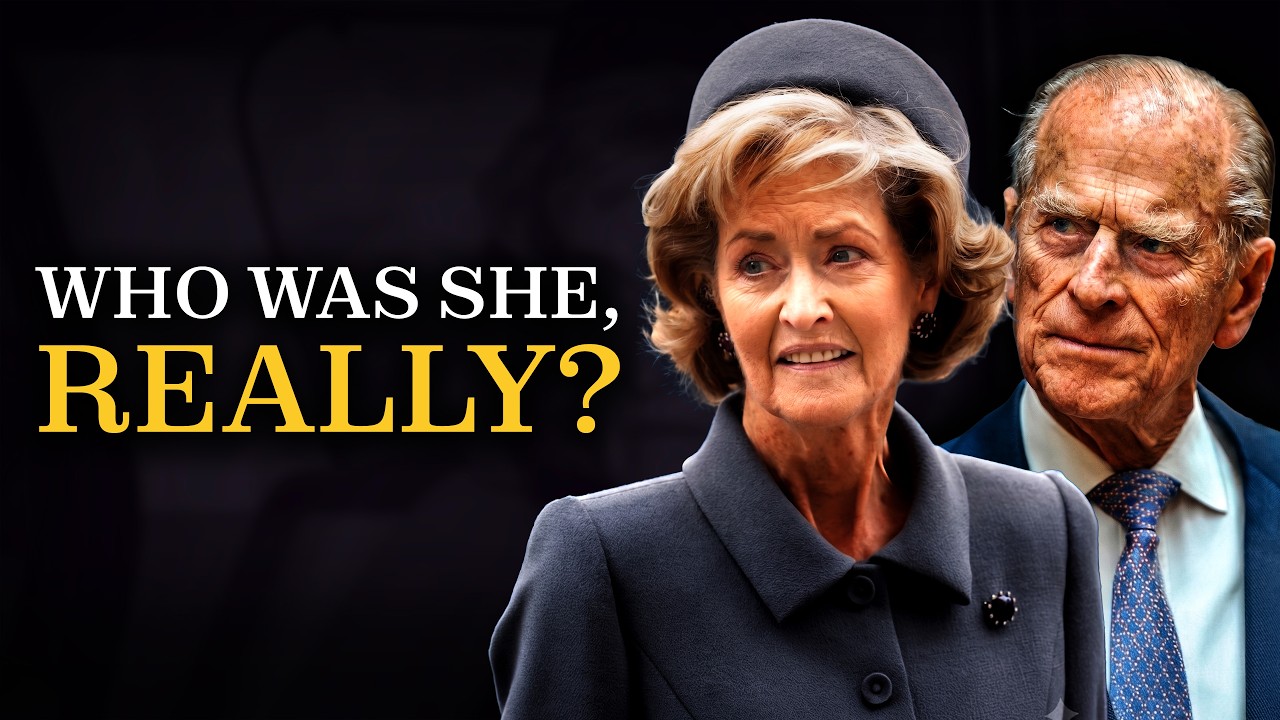
For roughly three decades, the British press built a sprawling narrative around the Duke of Edinburgh and a woman 32 years his junior. The story was never proven, never documented, and never confirmed by a single credible witness. Yet it persisted, evolving from gossip into a cultural assumption.
The woman at the center of it all was Penelope Knatchbull, known to everyone as Penny. Before her title, before the headlines, she was Penelope Eastwood. In 1979, she married Norton Knatchbull, a man whose family connections placed her directly inside the innermost circle of the British monarchy.
That wedding is worth examining closely. Norton’s grandfather was Lord Louis Mountbatten, the man Prince Philip regarded as a beloved mentor and father figure. Prince Philip was Norton’s godfather.
The best man at the wedding was Prince Charles, the future king. Penny did not marry into a distant branch of the aristocracy. She married into the very heart of the royal world.
This fact alone undermines the tabloid narrative that she was an outsider who somehow infiltrated the palace. She was never a stranger. She was family by marriage, and she spent more than a decade inside that world before anyone raised an eyebrow.
The turning point came in 1991. On October 22 of that year, Penny and Norton’s five-year-old daughter, Leonora, died of kidney cancer. There is no delicate way to frame that sentence.
A child was lost, and a family was shattered.
What happened next has been consistently misread by the press. Prince Philip began spending significantly more time with Penny after Leonora’s death. He offered emotional support to a woman who had just buried her daughter.
In 1994, he introduced her to carriage driving, a demanding and physically absorbing sport that requires total concentration.
Carriage driving is not a gentle Sunday pastime. It involves guiding multiple large horses through water, mud, and narrow obstacles at speed. It is physically punishing and mentally consuming.
For a grieving woman, it offered something invaluable: hours of focus that left no room for the mind to drift toward unbearable places.
This was not a seduction strategy. It was one of the oldest and kindest things one human can offer another. Grief hates an empty afternoon.
It is difficult to dwell on the worst day of your life while four horses are attempting to negotiate a turn nobody asked for.
The bond that formed between Philip and Penny over the following decades was rooted in shared passion, grief, and practical support. When Penny’s marriage to Norton encountered difficulties, Philip helped her manage the sprawling Broadlands estate. Norton eventually left for the Bahamas to live with his own mistress.
Penny stayed and ran the property.
The palace staff reportedly developed a nickname for Penny, born from a habit of Philip’s that appeared in nearly every account of how he managed his schedule. Whenever presented with a guest list for any occasion, he would add four words at the bottom: “and also Penny.” This happened so often that staff turned it into a running joke.
That detail is revealing. A secret affair does not generate paperwork. It does not involve repeatedly instructing your staff to add your alleged mistress to official guest lists until those staff members invent a nickname about it.
If Philip had wanted to hide something, he had access to unlimited discretion. Instead, he chose the loud version, leaving a paper trail and making the relationship known to roughly thirty people in the family.
The case for an affair rests on circumstantial evidence. The age gap. Time spent alone in royal residences.
A history of Philip being linked to women in the press. What never appears in the list is any actual proof. No hotel records.
No letters. No servant with a memory and a book deal. No long-lens photograph from across a fence.
The British press chased this family for decades with resources most newsrooms today can only dream of. On this specific matter, they returned with nothing but a number and a horse. No credible evidence of an affair ever appeared in print.
Over thirty years, inside a media environment where a distant relative’s dog walker could retire on the proceeds of a single royal story, no one produced anything at all.
Some biographers have made broader claims about Philip’s fidelity. Sarah Bradford stated directly that Philip had affairs, more than one. But she provided no documentary evidence of a relationship with Penny specifically.
No letters. No witnesses. No dates.
No locations. Her claim concerns Philip’s general conduct over a long marriage, not a specific relationship with the woman named in the headline.
That distinction is constantly blurred. A serious biographer says Philip had affairs. A newspaper notes that Philip spent a lot of time with Penny.
Print those two sentences side by side, add a photo, and the reader completes the accusation without anyone having to write it explicitly.
On the other side stand people who knew Philip personally. Royal historian Giles Brandreth, who knew Philip and wrote about him extensively, maintained that he remained faithful to the Queen. Mike Parker, Philip’s former private secretary, watched him from inside the operation and held the same position.
Dickie Arbiter, the Queen’s former press secretary, stated publicly that the relationship between Philip and Penny remained purely platonic.
Arbiter described Penny as an old family friend, period. He also offered a memorable comment about Philip’s behavior with attractive women, describing him as a man who enjoys “looking at the shop windows but doesn’t buy.” A crude image, perhaps, but one that fits a certain type of man from that generation: charming, flirtatious, endlessly interested in people, and utterly uninterested in destroying his life.
When a journalist asked Philip directly about the rumors, his response was characteristically blunt. “Oh God, woman,” he began, before pointing out that for years he had not moved anywhere without police accompaniment, wondering how on earth he could get away with anything under those circumstances.
That answer is more funny than reassuring. But it contains the only practical objection anyone raised in this entire saga. Philip lived inside a security apparatus.
That apparatus logged, drove, timed, and staffed every move he ever made, using people who saw everything and whose successors have proven entirely willing to talk to publishers later.
The idea of a thirty-year affair continuing inside that apparatus without a single protection officer, driver, servant, or palace worker selling the story requires a level of institutional loyalty this family has never enjoyed. Servants talk. Nannies talk.
Private secretaries talk at length in indexed hardbacks with serialization deals. Someone would have talked. Over three decades, with money on the table and no shortage of buyers, no one ever did.

The palace never issued an official statement confirming or denying the rumors. The Knatchbull family never issued anything either. Penny herself never said a single public word about it, through thirty years of articles describing her as the Duke’s mistress.
The logic behind this silence is understandable. Deny a rumor and you confirm its existence. The denial becomes the headline.
The doctrine assumes silence kills the story over time. It does not. Silence creates the gap that fuels the entire industry.
The unanswered question stays fresh forever. It never ages, never requires correction, never faces rebuttal because no one steps forward to rebut it.
In 2022, Netflix stepped into that carefully maintained void. The fifth season of “The Crown” depicted the friendship between Philip and Penny with the kind of dramatic license the show is known for. In the scene that drew the most criticism, Philip touches Penny’s hand and confides in her about his marital problems.
The scene is remarkably chaste by television standards. No undressing. No bedroom.
No declarations. Just a hand touching a hand and a man talking about his wife. The meaning arrives without a single line of dialogue explaining it.
It is skillful screenwriting, but it is also an extraordinary act toward a living woman who has never had the opportunity to respond.
Reactions from people who were inside the palace at the time were immediate and unusually sharp. Dickie Arbiter called the storyline “disgusting and frankly cruel nonsense.” Ingrid Seward described the scene as “pure fiction,” arguing that Philip would never have discussed his marriage with anyone, not with Penny, not with anyone else.
That objection aligns with everything documented about the man. When asked by a journalist about infidelity rumors, he responded with a joke about his security detail rather than anything resembling an answer. In seventy years of public life, he never opened up about his marriage.
Building an emotional climax on behavior everyone agrees he never engaged in seems a strange choice for a production marketed as research-based.
The Queen herself was aware of the friendship. She knew in the administrative sense, approving the arrangements around it. Her response included inviting Penny to royal events repeatedly.
Penny rode in cars with the royal family. She stood on the balcony of Buckingham Palace during official occasions. She attended private gatherings with no cameras and no agenda other than family behaving like family.
Every one of those appearances required someone to say yes. Access to the Buckingham Palace balcony never happens by accident. That balcony is managed with greater precision than any other image in British public life, calibrated to the millimeter and photographed by every news agency on earth.
Someone put her there.
Biographers describe the Queen as sharing her husband’s affection for Penny and actively encouraging her inclusion in family life. The invitations kept coming. The two women kept meeting even after Philip’s death, which no one can mistake for a widow maintaining appearances before a press that had stopped asking questions years ago.
The tabloid version of this story requires a deceived wife. No deceived wife appears anywhere in the record. Instead, we find a woman who kept the alleged mistress on the guest list, placed her on the balcony, sat beside her in cars, and continued to see her socially after the man they shared was buried.
Either Elizabeth II staged the most extraordinary cuckolding in European history, or the rumor never made sense.
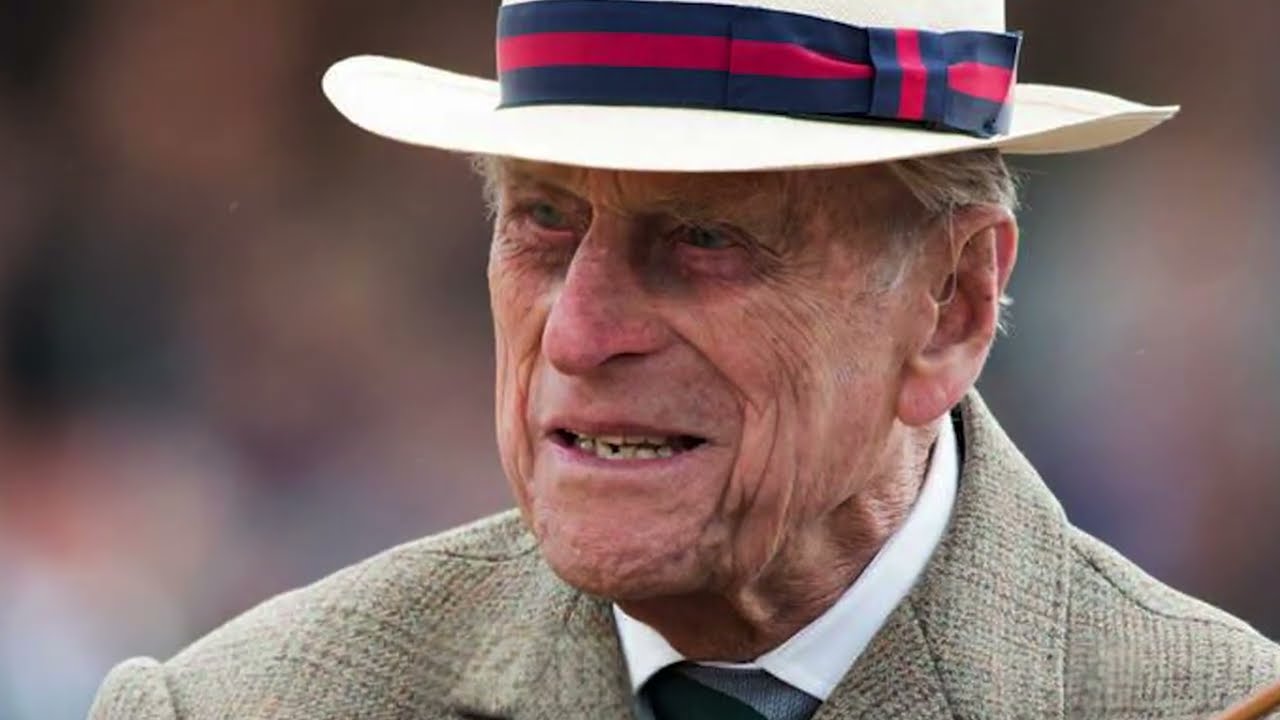
On April 17, 2021, COVID restrictions limited Prince Philip’s funeral at St George’s Chapel in Windsor to thirty mourners. Thirty. For a man who spent seventy years as consort, with relationships spanning palaces and relatives filling an entire continent, the guest list shrank to a number you could fit in a village hall.
Anyone who has organized a funeral under those rules knows what that number does to a family. The calculations become brutal. Thirty seats make every seat a cause for dispute.
Every name on that list displaced another name that did not survive the cut.
They allocated one of those thirty seats to Penny Knatchbull. One of the very few non-family mourners. With a maximum of thirty people, the world watching, and every seat carrying a price, they chose her.
Not a head of state. Not a foreign royal. Not an old colleague.
Not a former prime minister. Penny.
No one does that for a scandal. No one, during the most scrutinized week that family had experienced in decades, gives a seat to a woman the press spent thirty years describing as your father’s mistress. Unless the accusation was entirely untrue, and her place in that family was so established that the question of how it would look never seriously arose.
Seventeen months later, she returned. Penny attended the state funeral of Queen Elizabeth II on September 19, 2022. That event had no capacity restrictions and no shortage of people with a formal claim to a seat stronger than a family friend from Hampshire.
She attended anyway.
That settles a question the tabloids relied on for years. If her place in that world depended on the affection of one man, it would have evaporated the moment he died. Instead, the invitations kept coming after his death.
First from the woman the affair narrative cast as the wronged party, then from the institution itself once that woman lay beside him.
Two funerals in seventeen months. She attended both in the capacity she had always held: as a member of the family’s inner circle by marriage since 1979 and by friendship since 1991.
So here is the truth about Prince Philip and Penny Knatchbull. No documented affair exists after thirty years of the most aggressive, well-funded press coverage any family on earth has ever endured. What exists instead is a five-year-old girl named Leonora who died of kidney cancer on October 22, 1991, and a man in his seventies who started showing up after that.
A man who, three years later, handed a grieving woman the reins of a carriage and taught her a sport violent enough to occupy a mind completely. A friendship that lasted thirty years, built on horses and mud and estate management. A Queen who kept adding her name to guest lists.
A husband who left for the Bahamas. A nickname invented by exhausted palace staff. A seat at a thirty-person funeral.
And a thirty-year accusation no one ever proved.
What the press did with that friendship reveals more about the culture that consumed it than about the people who lived it. A child’s death was turned into a plot point in a drama. A man doing something quietly noble for a very long time was reinterpreted as something sordid because the alternative seemed impossible to imagine.
The records contain what they contain. They do not contain an affair. They contain a guest list with extra words written at the bottom, over and over, for thirty years, by a man who wanted his friend in the room.
And also Penny.