The world was told it was a love story. A wounded princess, recently divorced, finally finding happiness with a devoted man on a yacht under the sun. But most of that fairy tale collapsed the moment anyone examined it under oath.
Over six weeks in the summer of 1997, that romance was the biggest event on Earth. Beneath its surface lay a lawsuit from a woman the man himself was said to have promised to marry weeks earlier. A holiday entirely arranged by a billionaire.
A ring no one could agree on the meaning of.
This is what those six weeks were actually like.
In the summer of 1997, Diana, Princess of Wales, was 36 years old and starting over. Her divorce from Prince Charles had been finalized on August 28, 1996. She had lost her title, Her Royal Highness, and her last official link to the institution that had shaped her since she was 19.
She was a private woman with a public face she could not give up. That face was the whole problem. For 16 years, she had been the most photographed woman alive.
The divorce did not ease that. It may have intensified it, because the images now came without a palace managing them.
She was a mother to two sons who meant more to her than anything. Prince William, born in 1982, and Prince Harry, born in 1984. Whatever that summer was, it began as a mother trying to give her boys a normal holiday inside a life that was never normal.
By 1997, she had turned her fame into something larger than herself. In January, she walked through a partially cleared minefield in Angola. In mid-August, days before her death, she traveled to Bosnia for the same cause.
She had found a use for the attention that had always chased her.
Yet the woman beneath the activist's cloak was lonely, wary, and exhausted from being hunted. Sixteen years of telephoto lenses had taught her not to trust anyone who approached her. She had learned that a friend might sell a story, that a private word might become a headline.
What she wanted that summer was a place cameras could not reach and a person who would not sell her news. Those two wishes were simple. For a woman of her fame, they were nearly impossible.
The man about to become her great love had already, by another woman's testimony, set a wedding date for that very summer.
Dodi Fayed, born April 15, 1955, in Alexandria, Egypt, was the only son of Mohamed Al-Fayed, the billionaire who owned Harrods in London and the Ritz in Paris. He grew up inside wealth on a scale most people cannot imagine. He called himself a film producer and had one famous credit.
He was an executive producer on Chariots of Fire, which won the Oscar for Best Picture in 1981.
He was, more than anything, charming, generous, and quick-witted. His name had been linked over the years to a long list of actresses and models. The pattern was always the same.
It began fast. It glowed brightly. It was surrounded by the trappings of something serious long before anything serious had a chance to grow.
In the summer of 1997, that pattern was already running at full force with someone else. Her name was Kelly Fisher, an American model. According to her account, she and Dodi had been together for a year.
They met in Paris in July 1996. She said they were engaged. She wore a large ruby and diamond ring.
She said they had set a wedding date: August 9, 1997.
A date that would fall in the middle of the weeks Dodi spent on a yacht with the Princess of Wales.
At the moment Diana entered Dodi Fayed's life, there was another woman who believed she was about to become his wife. Kelly Fisher said Dodi asked her to give up much of her modeling career and move to Paris to be with him, promising her $500,000. She said the check he gave her, reportedly for $200,000, bounced.
While he was in the south of France with Diana in July, she said she was on a nearby boat waiting for him.
Two women. One summer. One man.
A boat waiting a short distance from the yacht where the famous romance began.
Diana traveled to the south of France with her sons in July 1997. She accepted an invitation to Mohamed Al-Fayed's villa near Saint-Tropez. It was a large private estate above the sea with its own security and private beach.
For a woman who could not walk on a public beach without hundreds of cameras following her, the enclosed villa was oxygen.
Part of the reason she went had nothing to do with romance. In England that July, Prince Charles was hosting a birthday party for Camilla Parker Bowles on the 17th. Diana did not want to be in the country while the papers buzzed about it.
The south of France gave her safe distance.
Her closest friends were worried. Andrew Morton, her biographer, documented that Rosa Monckton, one of the women Diana trusted most in the world, advised her not to accept the Al-Fayed invitation. Other friends repeated the same warning.
They were not worried about Dodi, whom Diana barely knew. They were worried about the association itself.
Diana listened to the advice. Then she went anyway.
Dodi arrived during the holiday. He was not the original purpose. The purpose was rest, the sea, and the boys.
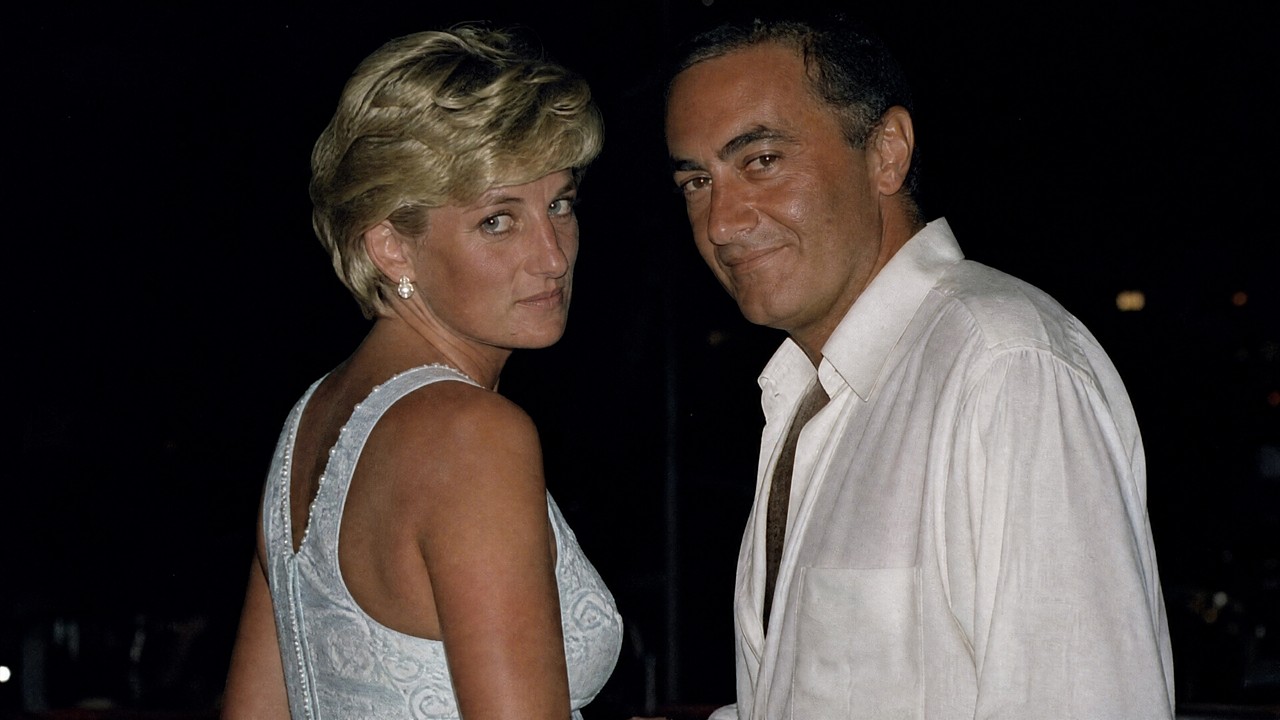
But he was attentive as he always was. And Diana, in the quiet of the isolated villa, responded.
What had been arranged as a family holiday became, quietly, over a few days in the sun, the beginning of a romance. She later described it as the best holiday of her life. There is no reason to doubt she meant it.
After that first holiday, the summer moved to open water. Mohamed Al-Fayed owned a motor yacht called the Jonikal, about 200 feet long. It carried Diana and Dodi through the Mediterranean over the following weeks, along the French and Italian coasts, between the quiet bays of Sardinia.
For Diana, it was the fullest expression of privacy money could buy. A yacht anchored in a quiet bay is one of the few places on Earth where a woman of her fame could move without crowds. She had spent 16 years learning that privacy was nearly impossible for her.
Here, for a few weeks, she finally felt it within reach.
But a yacht stays private only until someone finds a way to look at it. On August 4, 1997, someone found that way. His name was Mario Brenna, an Italian photographer who knew those waters well.
Working from a distance, from the middle of the water with a telephoto lens, he took pictures of the couple on deck. In one frame, they appeared to embrace.
On August 10, 1997, six days after it was taken, the Sunday Mirror published it on its front page under one word: "The Kiss." Within hours, the image circled the globe. The private, secluded world on the yacht became, overnight, the most public love story on Earth.
According to the Los Angeles Times, Brenna reportedly earned up to $5 million for the worldwide rights to that single image. One photograph, taken in seconds from far out in the water, sold for more than most people earn in a lifetime.
The photograph did something crueler than expose a romance. It changed the terms of the entire summer. Every photographer in Europe now knew there was a fortune to be made from the next image of Diana and Dodi.
The couple who had spent July hiding behind Mediterranean security became the two most hunted people alive.
Before 17 days had passed, a model stood in Los Angeles beside a famous lawyer and told the world the truth of that summer.
On August 14, 1997, Kelly Fisher appeared at a press conference in Los Angeles. Beside her stood Gloria Allred, one of America's most famous attorneys. There, before the cameras, Kelly Fisher announced she was suing Dodi over his promises.
Her account was specific. She met Dodi in Paris in July 1996, a full year before Diana. She said they were engaged.
They had set a wedding date: August 9, 1997. He asked her to give up much of her modeling career and move to Paris, promising her $500,000. A check, reportedly for $200,000, bounced.
While he was courting the Princess of Wales in the south of France in July, she said she was on a nearby boat waiting for the man she thought she was about to marry.
Her mother, Judith Donahue, stood beside her and spoke for the family. She said her daughter loved him and trusted him, but he treated her very cruelly.
Compare the timelines. The wedding date Kelly Fisher set, August 9, fell squarely within the weeks Dodi spent cruising the Mediterranean with Diana. The kiss photo was published on August 10.
Her press conference came on August 14.
In the space of two weeks, the same man was photographed embracing one woman on a yacht, missed a wedding date he had set with another, and was publicly sued by the latter for breaking his promise to her.
Years later, during the inquest into their deaths, a recording was played that made this overlap painfully clear. In it, Kelly Fisher confronted Dodi about that summer. She said: "We were together the whole time, and you knew that."
After the deaths, the lawsuit was withdrawn. Fisher said she did it out of respect for the tragedy. She remains alive today.
What she provided before quietly stepping away was the cruelest truth of that entire summer. The man at the center of that great romance had promised, in the same season, to marry another woman.
The romance the world read as a private matter between two people was not private at all. Nearly every location that summer belonged to one man: Mohamed Al-Fayed, the father of the lover and the owner of the stage.
The villa near Saint-Tropez where Diana first arrived as a guest was his. The yacht Jonikal, where the famous photos were taken, was his. The crew that served the couple answered to him.
The security personnel who protected them worked for him. The hotel where they spent their last night, and the car that carried them into that night, were all his.
Mohamed Al-Fayed owned Harrods, the most established store in the most established city in the world. He had spent years in bitter conflict with the British establishment, which refused him the citizenship he wanted. For a man carrying that grudge, his son's relationship with the mother of a future king carried enormous personal significance.
Diana's friends saw this before she did. They warned her about the association. Rosa Monckton advised her not to accept the invitation at all.
Other friends said the same thing in their own words. They were not afraid of a broken heart. They were afraid of this famous woman becoming a jewel in a rich man's summer.
The most telling detail is what was happening quietly to Diana's privacy even as she thought she had finally found it. The only form of surveillance documented around her that summer was not from the state or any intelligence agency. It was Mohamed Al-Fayed's own security personnel filing reports about her movements to him.
The woman who came to the Fayed world looking for a place where surveillance did not reach had entered a place where surveillance never stopped. Only the hands holding the watch had changed.
The photographs that made the romance famous guaranteed that every subsequent step the couple took would be chased. The paparazzi economy of the 1990s ran on one simple rule. The rarer and more private the image, the more valuable it was.
The Mario Brenna photo proved that rule at its highest level. Up to $5 million for one image told every photographer in Europe exactly what that summer meant to them. From the moment the kiss photo was published on August 10, there was no possibility of Diana and Dodi being left alone.

Wealth could buy a villa, a yacht, a wall of security. It could keep cameras at bay out at sea. But it could never remove the incentive, because the incentive lived in every newsroom and in the pocket of every freelance photographer on the continent.
The couple could be hidden. They could not be made worthless.
On the couple's last night in Paris, a crowd of about 30 photographers gathered outside their hotel. After the crash, seven photographers were detained at the scene. About 20 rolls of film were confiscated.
These are not the numbers of a chance encounter on a quiet street. They are the numbers of an organized, relentless pursuit.
A decade later, the inquest jury would describe that pursuit as one of the direct causes of death. The photographers who chased the car toward the tunnel contributed, through their highly reckless driving, to what happened inside it. The pursuit was not a backdrop to the tragedy.
It was part of its mechanism.
From the calm of a yacht anchored off Sardinia, Diana and Dodi chose to travel to Paris on August 30 for one night at the Ritz before Diana returned home to London and her sons. It was a small plan, an ordinary wish for one more quiet evening before the summer ended. In that single one-night stop, and the attempt to slip away from the crowds waiting outside the hotel, the entire summer collapsed.
On August 30, 1997, Diana and Dodi left the Mediterranean behind. They flew from Olbia in Sardinia to Le Bourget airport outside Paris, and from there were driven to the Ritz hotel in Place Vendôme, the hotel owned by Mohamed Al-Fayed. It was meant to be a brief stop.
One night in Paris. Then Diana would return to London and her boys in the morning.
During that last afternoon in Paris, a ring was purchased. It came from the Repossi jewelry shop near Place Vendôme, from a collection the company called "Tell Me Yes." The name of the collection would later play an extraordinary role in the myth.
A ring called "Tell Me Yes" looks like nothing so much as a marriage proposal waiting to be made.
There are two accounts of what that ring actually was, and both cannot be true at once. In the first account, presented by Mohamed Al-Fayed, Dodi and Diana chose the ring together as an engagement ring, a symbol of a marriage about to be announced. In the second account, presented at the inquest by Claude Roulet, an executive at the Ritz who actually handled the purchase, the romantic version was wrong from start to finish.
According to Roulet's account, Dodi chose the ring alone, barely looked at it, and picked the cheapest ring from a selection offered to him. The ring that was supposed to prove the engagement became, under oath, the strongest evidence that it never existed.
The ring was priced at about $23,000. For the son of a billionaire, it was a trivial amount. Compare this to what the summer had already generated.
One photograph of the couple was worth up to $5 million. A funeral days away would be watched by 2. 5 billion people.
A $23,000 ring sits strangely at the heart of a myth that size.
Outside the hotel, the summer's chasers had followed the couple all the way to Paris. A crowd of photographers gathered in Place Vendôme. The couple who had spent an entire summer trying not to be watched arrived on their last night alive at a hotel under quiet, patient siege.
Just after midnight, in the early hours of August 31, the plan was put into action. A decoy car left the front of the hotel to draw the waiting crowd of photographers in the wrong direction. Diana and Dodi instead left through the rear entrance on Rue Cambon at around 12:20 a.
m. They got into a black Mercedes waiting behind the hotel.
Behind the wheel was Henri Paul, the acting head of security at the Ritz. In the front passenger seat sat the bodyguard, Trevor Rees-Jones. Diana and Dodi sat together in the back.
None of the four people in that car was wearing a seatbelt.
The man behind the wheel should never have been driving. Henri Paul's blood was later found to contain alcohol at three and a half times the French legal limit, plus traces of prescription medication. He was, by plain law, severely intoxicated.
He was about to drive two of the most famous people alive through the city at night with a pursuit already forming behind him.
At around 12:23 a. m. , the Mercedes entered the tunnel under the Place de l'Alma on the right bank of the Seine.
What happened there took only seconds. The car was traveling at about 105 km/h, roughly 65 mph, more than double the tunnel's speed limit. It hit a white Fiat Uno whose driver was never conclusively found.
The car swerved. It struck the 13th pillar of the tunnel, spun, hit the wall, and came to rest.
Dodi Fayed and Henri Paul died instantly. Trevor Rees-Jones, severely injured in the face and head, was the only one of the four to survive. Diana was critically injured in the back seat.
She was alive, but her injuries were massive. She was taken across the city to the Pitié-Salpêtrière hospital, where efforts to keep her alive continued through the rest of the night.
Every part of that final journey was avoidable. Had the couple simply walked out the front door and let the photographers take their pictures, they would have survived. Had they waited an hour for the crowds to disperse, they would have survived.
Had the man driving been sober, or had the car obeyed the speed limit, or had anyone inside reached for a seatbelt, the odds would have shifted entirely.
There was no single villain who caused the crash. No hidden hand. Nothing at all for a conspiracy theory to explain.
There was a chain of small, ordinary decisions, each made to solve the immediate problem of the cameras outside, and that chain happened to end at a concrete pillar.
Diana died at 4 a. m. on August 31, 1997, at the Pitié-Salpêtrière hospital.

Just after 6 a. m. , an anesthesiologist named Bruno Riou announced her death to the world.
From that moment, the summer romance was no longer a story about two people. It became a story about everyone who had ever looked at her.
The funeral was held on September 6, 1997, at Westminster Abbey. An estimated 2. 5 billion people around the world watched it.
It was broadcast in 44 languages. About 3 million people lined the streets of London to see the coffin pass. It was one of the most watched events in the history of television.
Inside the abbey, her brother spoke. Earl Spencer delivered a eulogy that broke protocol openly. At its core, it was a direct attack on the press that had pursued his sister to the end of her life.
The crowds gathered outside, listening through loudspeakers along the route, began to applaud. The sound of that applause seeped through the great doors of the abbey to reach the mourners inside.
For William and Harry, aged 15 and 12, it was simpler and worse than any history surrounding it. It was the loss of their mother. They walked behind her coffin before the largest television audience ever assembled as two small boys.
Whatever the truth of that summer, whatever the final truth of that relationship, that was the human core of the entire story.
A grieving father could not accept that his son had died for no reason. So he built a different story and defended it for ten years.
Mohamed Al-Fayed had lost his only son. From the beginning, he refused to accept that Dodi died in an accident. Over the years that followed, he built and defended a completely different account of that night.
He said the couple were engaged. He said they were about to announce it. In some versions, he said Diana was carrying Dodi's child.
Above all, he said they had been murdered, and that the British establishment, in some versions Prince Philip himself, in others the intelligence services, had arranged the crash to prevent the mother of a future king from marrying an Egyptian, a Muslim, the son of a man the establishment had long despised.
It is not hard to understand why a father turned to that story. To believe that Dodi died for a reason, killed by powerful enemies to stop a great love story, was far easier than believing he died for no reason at all, in a car driven by a drunk man at excessive speed into a stationary pillar.
The problem was that the meaning he chose required the love story to be exactly as the fairy tale claimed. An engagement. A coming marriage.
A child on the way. The evidence for all three was thin from the start.
Against his account stood the people who were actually closest to Diana in her life. Her butler, Paul Burrell, testified that she showed no sign at all of any plan to marry Dodi. Her friend Rosa Monckton, who took her on a private cruise in the Greek islands in the middle of that same August, weeks before the crash, said the same thing.
The closer the engagement story grew in public after death, the weaker the private testimony supporting it became.
Then there was the ring. At the inquest, Claude Roulet, the Ritz executive who handled the purchase, was asked directly about the romantic account. The story that Dodi and Diana chose the ring together as an engagement ring.
Roulet said it was not true. Dodi chose the ring alone, barely looked at it, and picked the cheapest ring from a selection. The ring that was supposed to prove the engagement became, under oath, the strongest evidence that it never existed.
The first verdict came from France. A judicial inquiry lasting 18 months concluded in 1999 that the crash was caused by Henri Paul losing control at high speed while heavily intoxicated. There was no conspiracy in the French findings and no ambiguity.
Then came Operation Paget, a British inquiry that began on January 6, 2004, more than six years after the deaths. Led by Sir John Stevens, the former head of the Metropolitan Police, its task was to examine every conspiracy claim Mohamed Al-Fayed and others had made over the years and compare each one against the evidence. It lasted nearly three years.
When its results were announced at the end of 2006, the conclusion was blunt and comprehensive. The conspiracy claims were baseless.
On the most sensitive claim of all, that Diana was pregnant with Dodi's child, science had the final word. Forensic scientist Angela Gallop analyzed the contents of Diana's stomach and established that she was not pregnant at the time of her death. The pregnancy that appeared in the darkest versions of the conspiracy, the one said to be the reason the establishment silenced her, did not exist.
The official inquest into the deaths of Diana and Dodi began in January 2007. It moved to Lord Justice Scott Baker with a jury sworn in October, consisting of six women and five men. Over the following six months, those eleven people heard evidence on every question raised during ten years of argument.
On April 7, 2008, the jury delivered its verdict. Diana and Dodi had been unlawfully killed. The cause was the grossly negligent driving of the following vehicles, the photographers who chased the car through the streets, and Henri Paul, the driver of the Mercedes.
To that, the jury added the other factors that turned the crash into a fatal one. The driver's impairment through alcohol. The fact that the couple in the back seat were not wearing seatbelts.
The two people with the most right to speak responded quietly and clearly. Princes William and Harry said they agreed with the jury's verdict and were grateful for it. They had walked behind their mother's coffin as children.
Now, as young men, they had watched the court examine every claim raised about how and why she died. They accepted what it found.
Finally, Mohamed Al-Fayed, the man who built the myth and defended it for ten continuous years, let it go. After the verdict, he announced he would abandon his campaign to prove the couple had been murdered. A decade of accusations ended.
The father, who could not accept that his son's death was merely an accident, was told by a jury of ordinary people that it was nothing more than that. He stopped.
The truth was never a murder. It was quieter, more human, and in its own way, far sadder. The great love story of that summer was manufactured after the fact from a brief and complicated relationship, and that manufacturing served almost everyone except the two people at the center of it.
The evidence supports a smaller story, and it deserves to be told clearly. It supports the story of a lonely, recently divorced woman seeking privacy and finding it briefly inside a world of borrowed yachts and hired bodyguards. It supports the story of a generous, impulsive man who told more than one woman he would marry her in the same season.
It supports a lawsuit no one wanted to remember, a ring no one could agree on the meaning of, and a crash caused by alcohol, speed, and the pursuit of an image worth a fortune.
That is all there is. There is no hidden plot inside it. There is no fairy tale inside it either.
The world was told a love story. The record, in the end, told a different one. Quieter.
Crueler. Truer. And the woman at the center of it did not live long enough to say which one was really hers.