On March 2, 1976, a park ranger in the woods of western North Carolina noticed smoke and went to investigate. In a shallow pit he found five charred bodies, still burning in a fire that had been set to destroy them. A shovel lay nearby, later traced to a hardware store in Montgomery County, Maryland. Within a week, forensic work identified the dead: Annette Bishop, 40; Lobelia Bishop, 68; and her grandsons William Bradford Bishop III, 14; Brenton, 10; and Jeffrey, 5.
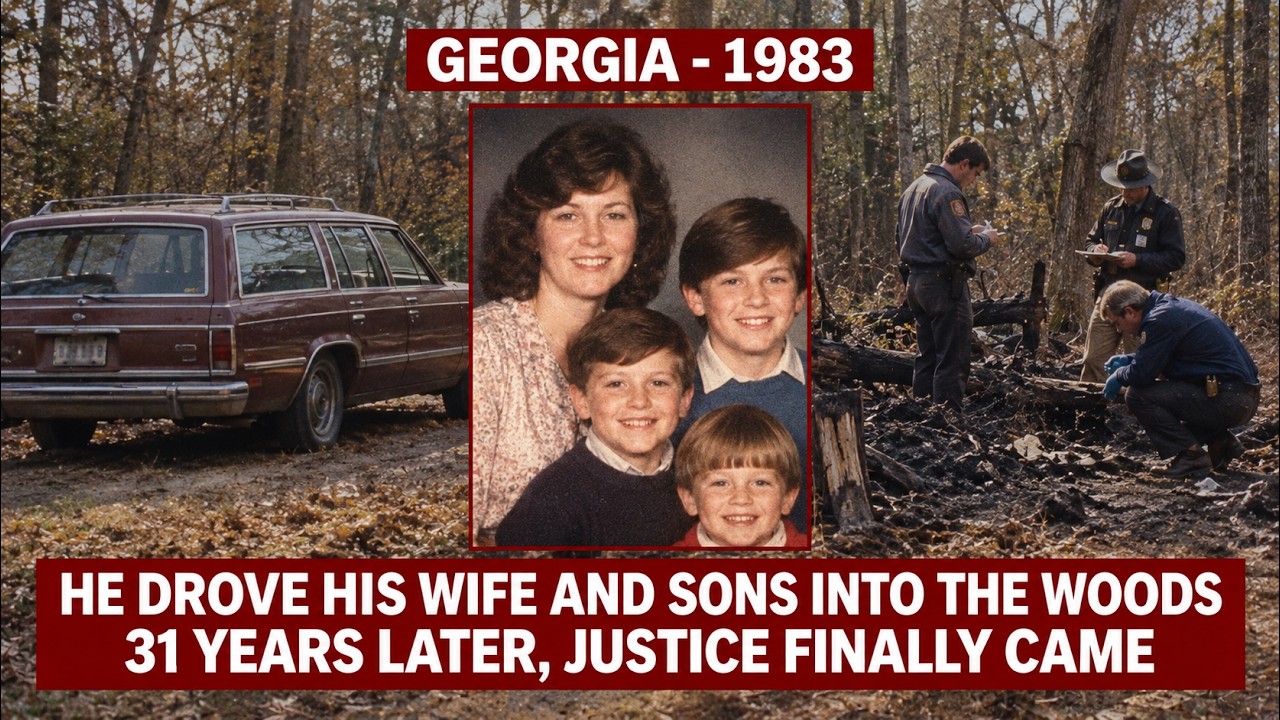
They were the wife, mother, and sons of William Bradford Bishop Jr. , a Yale-educated Foreign Service officer who had driven them from their home in Bethesda, Maryland, the night before, buried them in the ground he dug, and then disappeared. Nearly fifty years later, he has never been found. The story of the Bishop family is often told as a prelude to the fugitive’s story.
Bishop’s credentials, his five languages, his thirty-year placement on the FBI’s Most Wanted list, and his suspected flight to Europe have all received extensive attention. But the center of the case is not the man who escaped. It is the five people who trusted him and who have waited nearly five decades for an accounting that has not come. Annette Bishop was forty years old.
She had grown up in the postwar years, attended college, and married William Bradford Bishop Jr. in the late 1950s. She supported his Foreign Service career through postings and transitions that required constant rebuilding of household and social life in a new location every few years. By 1976, the career had brought them to Carderock Springs, a comfortable neighborhood in Bethesda, where Annette had built a home and raised three sons.
She had done this in the way that women of her era often did, without public recognition, as the supporting structure of someone else’s advancement. On the morning of March 1, 1976, she had no reason to expect the day would be any different from any other. Lobelia Bishop was sixty-eight, the mother of William Bradford Bishop Jr. She lived with her son’s family in the house on Lily Stone Drive, as aging parents of that era sometimes did.
She was present in the daily life of the household, a grandmother to boys growing up around her. She had a son who had done everything the system asked of him: the Yale degree, the advanced degree from Florence, the Foreign Service career, the fine house, the family. No one around him had any visible sign of what he would do. William Bradford Bishop III was fourteen, at the age when adolescence has its own full momentum, when a person has real friendships, real opinions, and a real sense of the future approaching.
He was the oldest of three brothers, the one who broke the ground of family firsts. He would have been in high school, in the particular social world of a fourteen-year-old in Bethesda in 1976. He did not have time to tell anyone what that world contained. Brenton was ten, the middle child, navigating between the territory of an older brother who was already a teenager and a younger brother who was the baby.
He was in the middle years of childhood, before adolescence, inhabiting the world with the uncomplicated fullness of a boy who had not yet had to think very hard about who he would become. Jeffrey was five. He had a personality, preferences, habits, a characteristic way of moving through the world. He had a grandmother who lived with them, two big brothers, and parents who were the center of his gravity.
He trusted the people in that house completely, with the full confidence of a five-year-old who had never been given reason to do otherwise. On March 1, 1976, William Bradford Bishop Jr. bought a small metal mallet at a Sears store at Montgomery Mall. He bought a gasoline can.
He filled his car and the can. He went to the bank and withdrew four hundred dollars, nearly the entire balance of the family checking account. He drove home, entered the house at 8103 Lily Stone Drive, and moved through it room by room with the mallet. He loaded the bodies of his family into the station wagon and drove them to a remote wooded area near the Great Smoky Mountains in North Carolina.
He put them in the ground, set them on fire, and left. The investigation established the sequence quickly and clearly. The physical evidence was abundant and told the story without ambiguity. What the investigation could not do was locate the man responsible.
There was one confirmed sighting of Bishop in Jacksonville, North Carolina, in the days immediately following the murders. Then came reports from Europe across the late 1970s, the 1980s, and into 1994, from three people who knew him personally and claimed to have recognized him in European settings. Each report was investigated. Each trail was lost.
The five members of the Bishop family were eventually identified and buried. The community in Bethesda mourned them. The Montgomery County Sheriff’s Department and later the FBI maintained the investigation and the warrant across the decades. In 2014, the FBI added Bishop to its Ten Most Wanted Fugitives list and released an age-progressed likeness of what he might look like at seventy-seven, with the distinctive pointed chin and the mole on his left cheek reconstructed from 1970s photographs.
In 2018, his name came off the active list, not because the case was resolved but because the listing had run its period without result. The warrant remains. The investigation remains open. The fugitive remains unfound.
The fundamental asymmetry of this case is stark. The man who killed five people has had a life, decades of mornings and meals and weather, living free and moving through the world in whatever way a person who did what he did moves through the world. His family has had forty-nine years in the ground in North Carolina. The fugitive has been the protagonist of his own story for almost five decades.
The five people he killed have not had any story at all, except the one defined by what was done to them. There is something that gets lost when fugitive cases are covered. The fugitive story is a pursuit story, with a shape of crime, flight, manhunt, near miss, years of nothing, and the possibility that an ending is still coming. That shape draws attention to the person being pursued and makes him the protagonist of his own crime.
William Bradford Bishop Jr. has been the protagonist of his own story for forty-nine years. His family has had forty-nine years in the ground. The case has not been allowed to go quiet.
Investigators have carried it across their careers, some of whom are now retired or gone themselves. The community where the Bishops lived has changed across five decades, and the house at 8103 Lily Stone Drive is occupied by different people who live in it without being defined by what happened there. But a murder warrant does not expire because time passes, and the legal obligation to answer for what was done on March 1, 1976 does not diminish because the calendar has moved forward. What the five members of the Bishop family have is this: their names are on headstones, and their names are still spoken publicly in the context of a case that has not been closed.
Annette and Lobelia, Brad, Brenton, and Jeffrey are still associated with the demand for justice that their deaths created, a demand that has not yet been satisfied. Montgomery County Sheriff Darren Popkin, in his 2014 press conference, spoke directly to Bishop across whatever distance separated them. He said, “I am the voice of your family who can no longer speak. ”
The investigation is not over.
The warrant is not expired. The FBI reward is not withdrawn. If William Bradford Bishop Jr. is alive and is somewhere in the world at eighty-nine years old, in a village in Italy, a city in France, or any of the five countries whose languages he speaks without an accent, the information is still wanted.
The Montgomery County Sheriff’s Department wants it. The FBI wants it. The five members of the Bishop family, who have been in the ground for forty-nine years without justice, deserve it. They were not an abstraction or a backdrop to the fugitive story.
They were people. They were a family. They deserve to be remembered as one. On March 2, 1976, a park ranger in the woods of western North Carolina noticed smoke and went to investigate.
In a shallow pit he found five charred bodies, still burning in a fire that had been set to destroy them. A shovel lay nearby, later traced to a hardware store in Montgomery County, Maryland. Within a week, forensic work identified the dead: Annette Bishop, 40; Lobelia Bishop, 68; and her grandsons William Bradford Bishop III, 14; Brenton, 10; and Jeffrey, 5. They were the wife, mother, and sons of William Bradford Bishop Jr.
, a Yale-educated Foreign Service officer who had driven them from their home in Bethesda, Maryland, the night before, buried them in the ground he dug, and then disappeared. Nearly fifty years later, he has never been found. The story of the Bishop family is often told as a prelude to the fugitive’s story. Bishop’s credentials, his five languages, his years on the FBI’s Most Wanted list, and his suspected flight to Europe have all received extensive attention.
But the center of the case is not the man who escaped. It is the five people who trusted him and who have waited nearly five decades for an accounting that has not come. Annette Bishop was forty years old. She had grown up in the postwar years, attended college, and married William Bradford Bishop Jr.
in the late 1950s. She supported his Foreign Service career through postings and transitions that required constant rebuilding of household and social life in a new location every few years. By 1976, the career had brought them to Carderock Springs, a comfortable neighborhood in Bethesda, where Annette had built a home and raised three sons. She had done this in the way that women of her era often did, without public recognition, as the supporting structure of someone else’s advancement.
On the morning of March 1, 1976, she had no reason to expect the day would be any different from any other. Lobelia Bishop was sixty-eight, the mother of William Bradford Bishop Jr. She lived with her son’s family in the house on Lily Stone Drive, as aging parents of that era sometimes did. She was present in the daily life of the household, a grandmother to boys growing up around her.
She had a son who had done everything the system asked of him: the Yale degree, the advanced degree from Florence, the Foreign Service career, the fine house, the family. No one around him had any visible sign of what he would do. William Bradford Bishop III was fourteen, at the age when adolescence has its own full momentum, when a person has real friendships, real opinions, and a real sense of the future approaching. He was the oldest of three brothers, the one who broke the ground of family firsts.
He would have been in high school, in the particular social world of a fourteen-year-old in Bethesda in 1976. He did not have time to tell anyone what that world contained. Brenton was ten, the middle child, navigating between the territory of an older brother who was already a teenager and a younger brother who was the baby. He was in the middle years of childhood, before adolescence, inhabiting the world with the uncomplicated fullness of a boy who had not yet had to think very hard about who he would become.
Jeffrey was five. He had a personality, preferences, habits, a characteristic way of moving through the world. He had a grandmother who lived with them, two big brothers, and parents who were the center of his gravity. He trusted the people in that house completely, with the full confidence of a five-year-old who had never been given reason to do otherwise.
On March 1, 1976, William Bradford Bishop Jr. bought a small metal mallet at a Sears store at Montgomery Mall. He bought a gasoline can. He filled his car and the can.
He went to the bank and withdrew four hundred dollars, nearly the entire balance of the family checking account. He drove home, entered the house at 8103 Lily Stone Drive, and moved through it room by room with the mallet. He loaded the bodies of his family into the station wagon and drove them to a remote wooded area near the Great Smoky Mountains in North Carolina. He put them in the ground, set them on fire, and left.
The investigation established the sequence quickly and clearly. The physical evidence was abundant and told the story without ambiguity. What the investigation could not do was locate the man responsible. There was one confirmed sighting of Bishop in Jacksonville, North Carolina, in the days immediately following the murders.
Then came reports from Europe across the late 1970s, the 1980s, and into 1994, from three people who knew him personally and claimed to have recognized him in European settings. Each report was investigated. Each trail was lost. The five members of the Bishop family were eventually identified and buried.
The community in Bethesda mourned them. The Montgomery County Sheriff’s Department and later the FBI maintained the investigation and the warrant across the decades. In 2014, the FBI added Bishop to its Ten Most Wanted Fugitives list and released an age-progressed likeness of what he might look like at seventy-seven, with the distinctive pointed chin and the mole on his left cheek reconstructed from 1970s photographs. In 2018, his name came off the active list, not because the case was resolved but because the listing had run its period without result.
The warrant remains. The investigation remains open. The fugitive remains unfound. The fundamental asymmetry of this case is stark.
The man who killed five people has had a life, decades of mornings and meals and weather, living free and moving through the world in whatever way a person who did what he did moves through the world. His family has had forty-nine years in the ground in North Carolina. The fugitive has been the protagonist of his own story for almost five decades. The five people he killed have not had any story at all, except the one defined by what was done to them.
There is something that gets lost when fugitive cases are covered. The fugitive story is a pursuit story, with a shape of crime, flight, manhunt, near miss, years of nothing, and the possibility that an ending is still coming. That shape draws attention to the person being pursued and makes him the protagonist of his own crime. William Bradford Bishop Jr.
has been the protagonist of his own story for forty-nine years. His family has had forty-nine years in the ground. The case has not been allowed to go quiet. Investigators have carried it across their careers, some of whom are now retired or gone themselves.
The community where the Bishops lived has changed across five decades, and the house at 8103 Lily Stone Drive is occupied by different people who live in it without being defined by what happened there. But a murder warrant does not expire because time passes, and the legal obligation to answer for what was done on March 1, 1976 does not diminish because the calendar has moved forward. What the five members of the Bishop family have is this: their names are on headstones, and their names are still spoken publicly in the context of a case that has not been closed. Annette and Lobelia, Brad, Brenton, and Jeffrey are still associated with the demand for justice that their deaths created, a demand that has not yet been satisfied.
Montgomery County Sheriff Darren Popkin, in his 2014 press conference, spoke directly to Bishop across whatever distance separated them. He said, “I am the voice of your family who can no longer speak. ”
The investigation is not over. The warrant is not expired.
The FBI reward is not withdrawn. If William Bradford Bishop Jr. is alive and is somewhere in the world at eighty-nine years old, in a village in Italy, a city in France, or any of the five countries whose languages he speaks without an accent, the information is still wanted. The Montgomery County Sheriff’s Department wants it.
The FBI wants it. The five members of the Bishop family, who have been in the ground for forty-nine years without justice, deserve it. They were not an abstraction or a backdrop to the fugitive story. They were people.
They were a family. They deserve to be remembered as one.