In the deep valleys of Appalachia, there is a type of silence that is hard to describe to anyone who has not felt it. It is not the silence of an empty place. It is the silence of something present that chooses not to reveal itself. Old-timers say you can feel the difference.
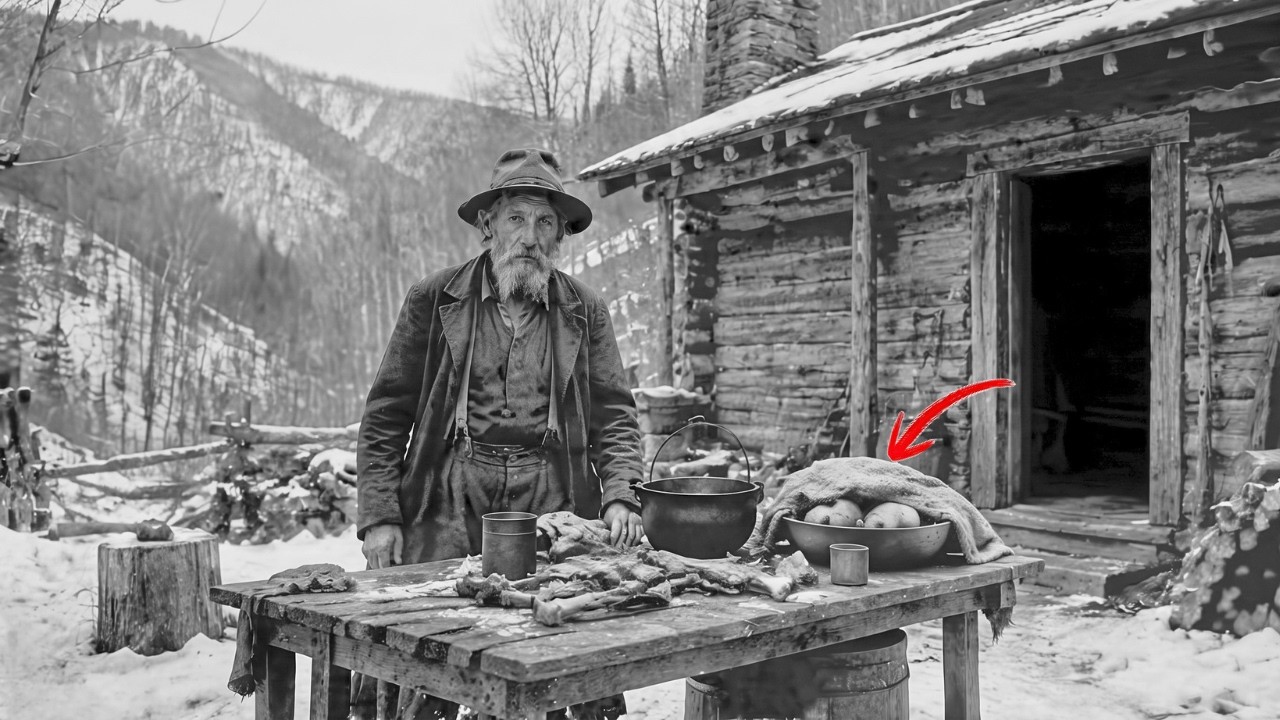
A hollow where nothing has ever happened is simply quiet. A hollow where something has happened is silent, and that silence carries a weight. For more than two hundred years, that silence has guarded one of the darkest chapters in American frontier history. The stories are told in whispers, if they are told at all.
The families who know the truth do not speak of it to outsiders. The institutions that could have investigated chose not to. And so the account of the Appalachian cannibals survived not in newspapers or history books, but in the hushed conversations of people who understood that certain things happen in these mountains that the outside world is not prepared to hear. The mountains themselves are ancient, the oldest range in North America, older than the bones that lie within them.
Formed roughly 480 million years ago, they once towered higher than the Himalayas before time and erosion ground them down into the dense, forested hills that exist today. What erosion left behind was not height but density, a thickness of forest and terrain that swallowed anyone who entered it. The valleys carved by ancient rivers remained among the most inaccessible landscapes on the continent. A person standing on one ridge could see a cabin on the next ridge less than a mile away in a straight line, yet reaching it on foot could take a full day of climbing through laurel thickets and crossing swollen streams.
This geography did something to the people who lived within it. It did not simply isolate them. It isolated them from the rest of the world with a completeness almost impossible for the modern mind to grasp. When European settlers first pushed into Appalachia during the eighteenth century, they were not following roads because no roads existed.
Many were Scots-Irish migrants who had already survived generations of deprivation in the borderlands between Scotland and England. They were accustomed to hardship, accustomed to violence, and accustomed to being forgotten by the authorities who were supposed to protect them. When they found these deep mountain hollows, places no tax collector could reach and no army could march against, they settled in and stayed. Within a single generation, many of these communities developed in complete isolation.
They had their own dialects, their own legal systems, their own medical practices, their own religious traditions. The mountains shaped everything, including what people were willing to do when winter turned brutal. The Little Ice Age, a period of global cooling lasting roughly from the fourteenth century to the mid-nineteenth century, brought winters that could become genuinely catastrophic. Snow piled to depths that made travel impossible.
Game vanished. Stored provisions meant for a normal winter ran out by January and were gone entirely by February. The earliest written accounts of what happened during these winters do not come from the mountain people themselves, most of whom were illiterate, but from itinerant preachers and government surveyors who ventured into the interior and returned with stories their communities refused to believe. One such account, preserved in a historical society archive in southwest Virginia, was written by a traveling Methodist preacher named Reverend James Caldwell in 1809.
Assigned to a circuit that took him through several communities in what is now Buchanan County, he arrived at a settlement of about thirty people in late February. In his diary, he described the inhabitants as skeletal, many unable to stand, children lying in bundles of rags near cold hearths too weak to cry. But what disturbed Caldwell most was not the starvation itself. It was what he found in the smokehouse behind the largest cabin.
He described cuts of meat that were not from any animal he could identify, bones that had been broken to extract marrow, and an arrangement of remains that suggested not the frantic desperation of people eating their dead but something systematic, something practiced. Caldwell did not confront the settlers. He held a brief service, prayed with those still able to speak, and left. His diary ends that day with a single sentence quoted in many academic studies of Appalachian frontier life.
He wrote: I do not believe these people have committed sin. I believe the mountains have sinned against them. This was not an isolated incident. Throughout the late eighteenth century and the first half of the nineteenth century, similar accounts appeared in scattered records across the Appalachian region.
A land surveyor in western North Carolina reported in 1792 finding a family living in a cave that had survived three consecutive winters by methods he could not describe in his official report but detailed in a private letter to his brother. A military officer traveling through east Tennessee in 1814 wrote to his commander about a community that had developed what he called a famine custom, which involved selecting certain members of the group to be sacrificed when food stores ran out. A teacher in southern West Virginia documented in 1837 a local tradition in which families who lost members during harsh winters refused to discuss the circumstances of death, instead marking graves with a specific arrangement of stones that other families in the region recognized and avoided. These accounts share several disturbing features.
First, they all describe communities that had remained isolated for at least two or three generations. The isolation was not temporary but structural. These people had been cut off from the outside world long enough to develop their own social norms, including norms about what was acceptable during periods of severe deprivation. Second, the accounts consistently describe behavior that went beyond the desperate one-time actions of starving people.
They describe systems, rituals, protocols. Third, and perhaps most troubling, many of these accounts suggest that the communities involved did not seem to view their practices with shame or horror. They regarded them as a necessary part of mountain life, something outsiders simply did not understand. This last point is crucial because it separates the Appalachian accounts from most other documented cases of survival cannibalism in human history.
The Donner Party is remembered as a tragedy. The survivors were traumatized, carried the weight of what they had done for the rest of their lives, and many refused to speak of it. The Appalachian cases show something different: communities that integrated extreme practices into their cultural frameworks so thoroughly that the practices became normalized. Not celebrated, not desired, but accepted as a grim reality of life in the mountains, no different from hunting or farming or burying the dead.
The mechanism that created this normalization was generational isolation combined with repeated exposure to severe deprivation. When a community is cut off from the broader society for three, four, or five generations, the cultural memory of the broader society begins to fade. The rules the settlers brought with them from Europe, religious prohibitions, social taboos, legal frameworks, begin to weaken. They do not disappear overnight.
They erode slowly, year after year, winter after winter, as each extreme event pushes the boundaries of acceptability a little further. Once a grandfather engages in a certain behavior, and God does not strike him down, and the family survives the winter because of it, the behavior begins to lose its horror. It becomes a precedent. In a society with no written law, no outside authority, and no contact with people who might offer a different perspective, precedent is the only law that matters.
The case that brought the reality of Appalachian cannibalism into something like public awareness did not occur in the deep valleys of the American South. It occurred in 1879 on the northern fringes of the Appalachian world, in the boreal forests of what is now Alberta, Canada, where the Cree people had lived for thousands of years along the same mountain chain that runs from the southeastern United States. A Cree man named Swift Runner, a hunter, husband, and father of six, had survived one of the worst winters in the recorded history of the northern plains. When spring finally came and the snow began to melt, Swift Runner emerged from the forest alone.
His wife was gone. His six children were gone. His mother was gone. His brother was gone.
He was in better physical condition than many men who had spent the winter with full provisions. A search party was sent to the camp where Swift Runner said he had spent the winter. What they found there ended any possibility that this was simply a case of starvation. The campsite showed clear evidence that Swift Runner had killed and eaten his entire family, not all at once, but over a period of weeks.
He had begun with his wife, then moved to his children, starting with the youngest. He had preserved the meat by freezing it in the snow, broken the bones to extract marrow, and kept the fire burning all winter to cook the remains as needed. The Cree elders who examined the evidence did not describe this as starvation. They called it wendigo.
They said Swift Runner had been possessed by a spirit that feeds on human flesh, and that once it takes control of a person, it is never satisfied. The person becomes an empty vessel, forever hungry, forever cold, forever driven to consume the people closest to him. Swift Runner was tried and executed in December 1879, the first person in Canadian legal history to be executed for a crime attributed to wendigo psychosis, but he was not the last. The concept of the wendigo, the idea that consuming human flesh can transform a person into something other than human, was not unique to the Cree.
Versions of this belief existed across all the Indigenous communities of the northern Appalachian region and beyond. What is striking about the wendigo is that Indigenous communities did not treat it as mere superstition. They treated it as a medical condition. A person who showed signs of wendigo, obsessive desire to eat human flesh, increasing emotional coldness, inability to feel satisfied by ordinary food, was considered genuinely ill.
In some communities, the treatment for this illness was death, not as punishment but as treatment, because the wendigo was understood as a condition that could not be cured and, if left unchecked, would spread. This understanding of cannibalism as a transmissible condition echoes in the Appalachian tales from settler communities. Multiple sources describe families that continued cannibalistic practices during harsh winters, not because later generations suffered the same level of deprivation, but because the practice itself had become ingrained in the family’s behavioral framework. The taboo had been broken so long ago that later generations did not fully recognize it as a taboo.
They regarded it as something outsiders would not understand, something to be kept within the family, not something that caused them the horror it would cause someone who had never been exposed to it. A child raised in complete isolation does not question the practices of the household in which they are raised. There is no alternative framework for comparison. No television broadcasts different values into the home.
No school offers a wider world of moral standards. No neighbors within walking distance might raise questions through their different practices. There is only the family, only the valley, only the mountain. And the mountain teaches a specific set of lessons, all harsh, all consistent, all reinforced by the daily experience of survival.
The mountain teaches that death is ordinary, that hunger is constant, that the body of a deer and the body of a human are made of the same essential substance. It teaches that waste is the only true sin, because waste leads to starvation, and starvation leads to the extinction of the family. Every value that develops within this framework is a logical value. Every practice that emerges from it is logical given the premises.
The premises are set not by philosophy but by geography. The most documented post-settlement case occurred in Greenbrier County, West Virginia, in 1901, though it was completely overshadowed by the famous Greenbrier Ghost case four years earlier. In 1897, a woman named Zona Heaster Shue was found dead in her home. Her death was initially attributed to natural causes, but her mother claimed Zona appeared to her as a ghost and revealed that her husband had killed her by breaking her neck.
The body was exhumed, the broken neck confirmed, and the husband convicted of murder. That case remains the only one in American legal history where ghost testimony was accepted as evidence. But the 1901 case is the one that matters here. A land surveyor mapping property boundaries in a remote area encountered a dwelling that no government official had visited in at least twenty years.
The family residing there consisted of an elderly couple, their three adult sons, and several grandchildren. The surveyor noticed that the family was in surprisingly good health despite their extreme isolation. They had a productive garden, livestock, and seemed largely self-sufficient. What troubled the surveyor was the small cemetery behind the property.
It contained far more graves than a family of this size would justify. When he asked about the extra graves, the family told him they were relatives who had died during past winters. The surveyor noted this in his report and moved on. But he returned the following year and noticed that two of the graves he had counted the previous year no longer existed.
The ground where they had been had been disturbed and then smoothed over again. When he asked about it, the family became hostile and ordered him off the property. He reported the incident to the county sheriff, who refused to investigate, telling the surveyor that people in that part of the county handled their own affairs and it was best not to interfere. This pattern of official disregard is one of the most consistent features of the Appalachian cannibalism accounts.
Time and again, authorities who received reports of suspicious activity in remote communities chose not to investigate. Sometimes it was simple pragmatism; the communities were genuinely difficult to reach, and the resources required for an investigation were not considered worth the effort. Sometimes it was fear; law enforcement officers in rural Appalachian counties were themselves products of these communities and understood to some degree what they might find if they looked too closely. Sometimes it was complicity; there are documented cases where sheriffs and other local officials were related by blood or marriage to the families involved and had a personal interest in ensuring certain practices remained hidden.
The result of this systematic avoidance was that the practices continued far longer than they should have. In the most isolated communities, there is evidence that ritualistic consumption of human remains continued into the 1930s and possibly beyond. The most disturbing accounts from this later period come not from government records or travelers’ memoirs but from oral histories collected by Works Progress Administration workers during the Great Depression. The WPA sent writers and researchers into Appalachian communities throughout the 1930s to document folk traditions, music, and daily life.
Scattered among thousands of interviews and field notes were accounts that the WPA workers themselves categorized as troubling. In 1938, an interviewer in a remote area of Mingo County, West Virginia, recorded a conversation with an elderly woman who described a tradition her family had maintained for as long as anyone could remember. She called it the extraction. When a family member died during the winter months, the body was not buried immediately.
Instead, certain parts were preserved and consumed by surviving family members as part of a ritual the woman described as ensuring the transfer of the dead person’s strength to the living. She spoke of it with complete seriousness, describing it the way anyone might describe a family tradition, a particular way of making bread or a specific prayer recited before meals. When the interviewer asked whether she realized this practice was illegal and considered morally wrong by the broader society, she replied that the broader society had given nothing to her family and therefore had no right to tell them how to honor their dead. The interview was flagged by the regional WPA supervisor and not included in the published collection of folklore.
The original transcript lay unexamined for decades until a graduate student discovered it in the 1980s while researching death customs in Appalachia. Similar accounts exist in WPA files from eastern Kentucky, southwest Virginia, and the mountainous parts of northern Georgia. They are not numerous, perhaps twenty accounts in total across all the WPA collections, but they are consistent in their details, consistent in their descriptions of practices, and consistent in the matter-of-fact tone with which individuals discuss these matters. These were not people who had been forced into cannibalism once during a desperate winter and carried the trauma for the rest of their lives.
They were people who had grown up in communities where the practice was part of the cultural fabric, where it had a name, rituals surrounding it, and was understood as a natural, if private, part of mountain life. The decline of these practices, to the extent that they declined, was driven not by moral awakening but by the slow erosion of the isolation that had fed them. The coming of the railroads in the late nineteenth and early twentieth centuries began to connect mountain communities to the outside world. Coal mining brought thousands of outsiders into the region.
Roads were built, schools established, churches affiliated with national denominations replaced the independent congregations that had developed their own theology. As isolation faded, so did the conditions that had made those practices necessary and the cultural frameworks that had made them acceptable. But this transition was not complete. It was a slow, uneven erosion that occurred at different rates in different communities.
The valleys closest to railroad lines changed first. The deepest valleys changed last. In between lay a gray zone of partial contact where communities maintained their traditional practices while simultaneously beginning to interact with a world that would have been horrified had it known. This gray period produced some of the most psychologically complex situations in the entire history of the phenomenon.
Families who had practiced these traditions for generations suddenly found themselves sending children to schools where they sat beside children from families that had never known such isolation. Young people raised with one set of norms went to work in coal mines alongside men operating under entirely different assumptions about acceptable behavior. Women who had learned the old ways from their mothers married into families that knew nothing about them and had to decide whether to continue the practices in secret or abandon them entirely. The weight of this double life is visible in the few accounts that survive from that period.
One WPA researcher in eastern Kentucky recorded a conversation with a woman who described attending a church supper in her community and realizing for the first time that the food she had grown up eating during the winter months was not something other families ate. She was in her fifties at the time of the interview. She said the realization came to her when she was twelve, and it was the most confusing experience of her life. Not because she felt guilt; she said she did not feel guilt.
But because she suddenly realized the world was far larger and more complex than she had imagined, and that her family occupied a place in it that could never be explained or defended to people who had not lived what she had lived. What troubles contemporary researchers about this pattern is not cannibalism itself. Survival cannibalism is well documented across human history and understood as a desperate measure taken under extreme pressure. The Donner Party ate their dead.
The survivors of the Andes plane crash ate their dead. These events are treated as tragedies, not moral failures, because the circumstances were understood to be temporary. But in the deep hollows of Appalachia, the circumstances were not temporary. Isolation was not a crisis to be endured and then escaped.
It was a permanent existential condition. When a practice that began as a survival mechanism is repeated across generations without interruption, without external influence, without any countervailing pressure, it undergoes a transformation that is difficult for anthropologists to classify. It ceases to be a response to a crisis. It becomes a tradition.
And traditions, once established, are extremely resistant to change, even when the original conditions that created them have long since disappeared. Logging companies that cut roads into the most isolated valleys in the late nineteenth and early twentieth centuries encountered this phenomenon directly. Company surveyors and engineers reported finding families that had lived in the same valley for four and five generations without any sustained contact with the outside world. These families had developed their own dialects, their own medical practices, their own funeral customs, and their own particular relationship with the dead, which resembled nothing practiced in the towns and cities of the coastal regions.
The experience of the woman at the church supper was certainly repeated across hundreds of families during the transition period: the moment of realization, the sudden awareness that what is normal inside the family is not normal outside it, and the decision, conscious or unconscious, to maintain silence, to protect the family, to carry the knowledge without sharing it. Some families handled this transition by gradually abandoning the old practices. They had access to food now, contact with the outside world. The circumstances that had called for those practices no longer existed, so the practices stopped.
For these families, the transition to modernity was painful but ultimately successful. The old ways became stories, then whispers, then silence, then nothing. Other families were not so fortunate. For them, the practices were so deeply rooted in their identity, so completely integrated into their spiritual and emotional lives, that abandoning them felt like abandoning their ancestors, like betraying the people who had survived because of those practices.
For these families, the coming of roads and schools and churches was not liberation but invasion. They responded the way they had always responded to threats from the outside world. They retreated deeper into the mountains. They closed their gates.
They stopped talking to anyone who did not share their blood. These are the families whose descendants may still practice some form of the old ways in the most isolated corners of Appalachia. Not out of desperation, not out of hunger, but out of fidelity to a tradition that predates every institution and every law and every moral framework the modern world has built to keep the darkness at bay. Throughout the twentieth century, reports from the most remote parts of the Appalachian range continued to suggest that the old practices had not entirely died out.
In 1952, a logging crew working in a remote area of McDowell County, West Virginia, discovered a cabin that appeared to have been recently abandoned. Inside, they found evidence of occupation by what they estimated to be four or five people. In a smokehouse behind the cabin, they found remains that the county medical examiner later identified as human. The medical examiner’s report noted that the remains showed signs of butchering consistent with food preparation.
No suspects were ever identified, and the case was closed unsolved. In 1967, a hiker in Daniel Boone National Forest in eastern Kentucky reported finding a camp deep in a hollow containing what he described as a drying rack from which hung strips of meat. He said the meat had an unusual appearance and smell. He reported the site to a forest ranger who investigated and found the camp had been cleaned out and abandoned by the time he arrived.
No further investigation was conducted. In 1983, a social worker conducting welfare checks in a remote area of Harlan County, Kentucky, reported conditions in one family that she described as beyond anything she was trained to handle. Her report was sealed by the county and never made public. When researchers attempted to access it through Freedom of Information requests in the 2000s, they were told the file had been lost.
These individual accounts, each vague on its own, form a pattern when viewed together. They describe a practice that did not end with a single dramatic revelation or decisive legal action. Instead, it retreated slowly into the most inaccessible corners of the mountains, persisting in faint form among the most isolated families, appearing only in occasional glimpses that people consistently chose to ignore or suppress. The modern implications of this history are deeply uncomfortable.
Appalachia is a region that has been stigmatized for centuries. Its people have been described as backward, primitive, uncivilized by outsiders who never understood the conditions under which they lived. The suggestion that cannibalism persisted as a cultural practice in some communities risks reinforcing every negative stereotype ever applied to Appalachian people. This is precisely why the subject has been treated with such caution by historians and anthropologists working in the region.
But caution does not mean denial. The evidence, though fragmentary, is real. The accounts come from sources with no clear motive to fabricate. The patterns are consistent across time and geography.
And the conditions that produced those practices, extreme isolation and repeated severe deprivation across generations, are well documented and well understood. What the Appalachian cannibals represent is not a moral failure of a particular group of people. They represent the outer limit of what human beings become when they are left entirely to themselves, without the social structures and external pressures that normally prevent behavior from crossing certain lines. The taboo against eating human flesh is among the strongest in almost every human culture, but it is not absolute.
When conditions are wrong, or rather when they are bad enough for long enough, even the strongest taboos can erode. The mountains themselves have not changed. The valleys are still deep. The hills are still steep.
The forests are still dense enough in places to swallow a person whole. What has changed is the degree of isolation. Modern roads, cellular communication, satellite imagery, these have made it almost impossible for any community to live in the complete isolation that characterized the frontier period and persisted in some areas well into the twentieth century. But the oral traditions remain.
The whispered stories told by old people when they have had enough to drink and the night is dark enough to loosen their tongues. The warnings about certain valleys, certain families, certain places you do not go after dark. These are not just ghost stories told for entertainment. They are the remnants of a history most people in the region would prefer to forget but cannot quite stop talking about.
Because deep down, they understand what the itinerant preacher understood more than two hundred years ago. The mountains did not create evil people. The mountains created impossible conditions. And the people who survived those conditions did so by doing impossible things.
Things that changed them. Things that changed their children. Things whose echoes still reverberate through the valleys in ways most of us would prefer not to think about. The families who practiced these traditions for generations did not consume strangers.
They consumed their own dead. Their mothers, their children, their husbands and wives. And they did not do it in the frenzy of madness but with the calm deliberation of people performing a ritual taught to them by someone they trusted. This is what makes the story so difficult to absorb.
Not the act itself, which is horrifying but ultimately understandable as a survival mechanism. What makes it difficult is the emotional context in which the act was performed. Imagine sitting at a table with your children, feeding them the remains of their grandmother, knowing that their grandmother would have wanted this. That their grandmother had done the same thing when she was young.
That this was not a violation of your family’s values but an expression of them. An act of love within the only framework of love you have ever known. This is why the story was suppressed for so long. Not because the people of Appalachia alone maintained the silence, but because every institution that was in a position to break it chose not to.
The churches that never sent missionaries into the deepest valleys. The schools that did not insist on attendance. The law enforcement agencies that did not investigate. The newspapers that did not publish the stories.
The universities that did not publish the research. Everyone participated in this silence, and everyone had their reasons. None of those reasons is good enough to justify the continuation of a practice that violates the most basic standards of human civilization. But the silence continues because breaking it would require confronting truths that none of the responsible parties want to confront.
The churches would have to admit their influence never reached the people who needed it most. The law enforcement agencies would have to admit they deliberately ignored evidence of crimes. The governments would have to admit their frontier settlement policies created the conditions that made those crimes inevitable. And the people of Appalachia, the vast majority of whom never participated in these practices or even knew about them, would have to bear the stigma.
So the silence continues. Not because it is right, but because the alternative seems worse. Yet silence has a cost. The truth festers.
It does not heal. It waits in sealed files, in unpublished interviews, in the oral traditions of families who will never speak to a researcher. The mountains keep their secrets. This has been true since before there were humans to have secrets.
The geological record shows these mountains have swallowed entire civilizations. If the mountains have memories, then they remember the cannibals. They remember the butchering. They remember the sound of a mother feeding her children during a winter that should have killed them all.
They remember the silence that followed, and the silence that followed the silence, and the silence that continues to this day. The Appalachian cannibals are not a myth. They are not a legend. They are not a cautionary tale designed to keep children out of the forest.
They are a mirror. And what they show us, if we are brave enough to look, is not the darkness of Appalachia. It is the darkness of humanity itself. The darkness that lives inside every one of us, held in check only by the thin and fragile structures of civilization we have built around ourselves like walls around a fire.
Remove the walls, and the fire will do what it has always done. It will consume.